












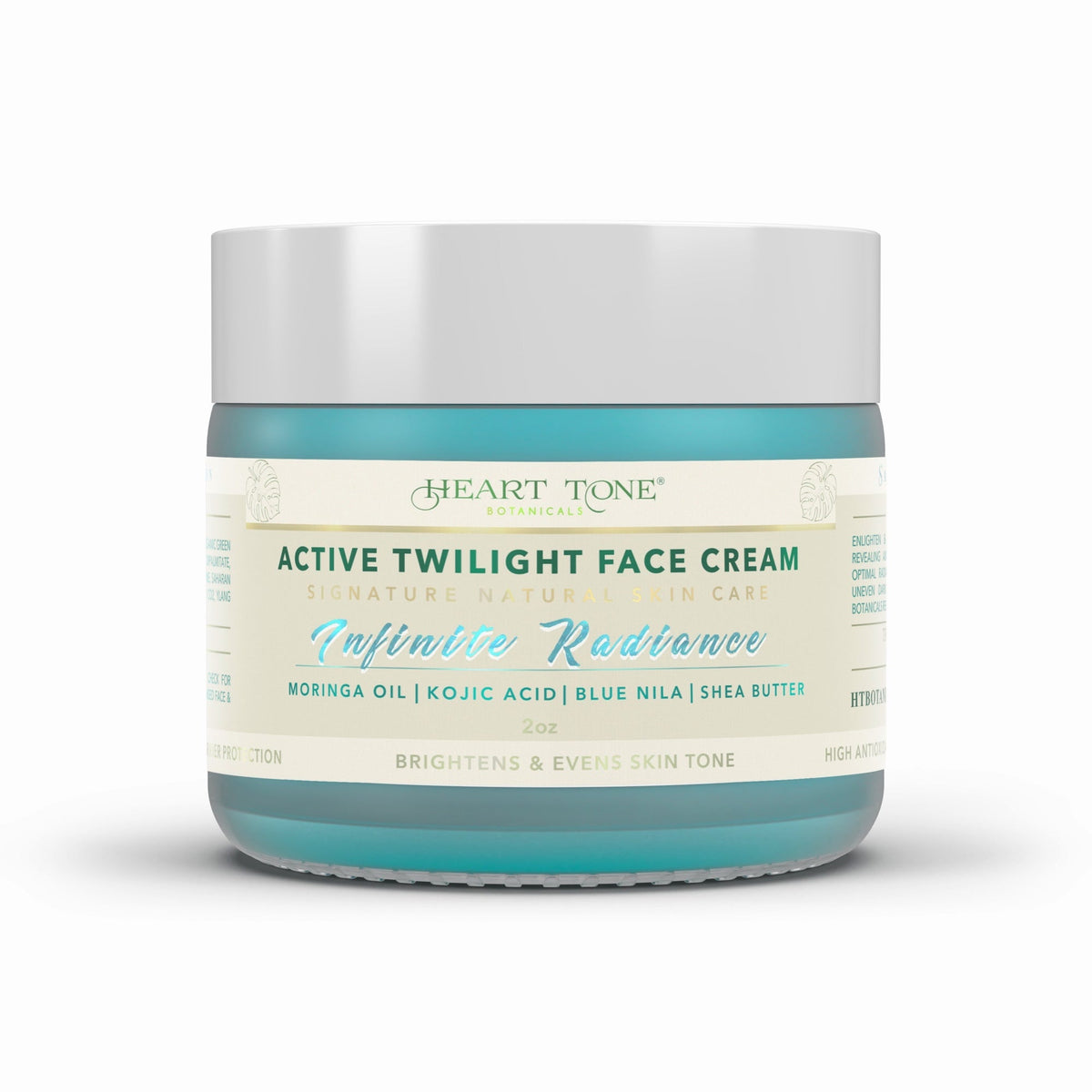
Walk the skincare aisle of any pharmacy and you'll see green labels, leaves, and words like "pure," "natural," "botanical," and "clean" on nearly every product. But look at the ingredient list and you'll often find the same synthetic preservatives, artificial fragrances, and petrochemical derivatives that have always been there.
This is greenwashing — the practice of using green imagery, marketing language, or selective claims to appear environmentally friendly or "clean" without actually changing what's in the product.
It's one of the biggest frustrations for people who genuinely want to make better choices for their skin, their families, and the planet. Knowing how to spot it changes how you shop.
What Greenwashing Looks Like in Beauty

Greenwashing rarely involves outright lies. Instead, it relies on vague language, selective highlighting, and design choices that create a feeling of purity without requiring it. Here are the most common tactics:
1. Vague, Unregulated Words
"Natural," "clean," "non-toxic," and "pure" have no legal definition in the United States when applied to personal care products. A brand can print any of these words on packaging without meeting a single specific standard. The word "natural" on a lotion means nothing more than the brand chose to put it there.
2. A Few Good Ingredients Featured Up Front
A formula may genuinely contain aloe vera, jojoba oil, or chamomile extract — and the marketing will highlight those prominently. What the label won't emphasize is that those ingredients often appear near the bottom of the INCI list, present in trace amounts, while the formula is primarily water, synthetic emulsifiers, and synthetic preservatives.
Ingredient lists read in descending order by concentration. The first five to ten ingredients make up the majority of what you're actually applying to your skin. Start there.
3. Green Packaging Without Green Formulas
Brown glass bottles, kraft paper labels, and earth-toned designs suggest environmental care. But packaging choices say nothing about what's inside — or how ingredients were sourced, processed, or preserved. Pretty doesn't mean clean.
4. Selective "Free From" Claims
"Paraben-free" is a meaningful statement — but a brand can swap parabens for a different preservative system and call the product cleaner without it being so. The same applies to "sulfate-free," "fragrance-free," and "alcohol-free" claims used without full transparency about what the formula does contain. A "free from" list is only useful when it's paired with a complete ingredient disclosure.
5. Misleading or Self-Awarded Certifications
Some certifications are rigorous and third-party audited. Others are self-awarded or require only that a brand pay a licensing fee. Seeing a logo on packaging doesn't tell you which kind it is without researching that specific certification's standards.
What to Look For Instead
The antidote to greenwashing is transparency — specifically, the kind that doesn't require you to take a brand's word for anything.
Full INCI ingredient lists, always. Every product should have a complete, accurate ingredient list in standard cosmetic nomenclature, visible before purchase. If a brand makes it hard to find the full list, that's a signal worth paying attention to.
Sourcing transparency. Where do the botanicals actually come from? Are they wildcrafted, conventionally farmed, or organically grown? A brand that can answer those questions — and shows it — has thought about its supply chain at a different level than most.
Certified organic ingredients, not just "natural" ones. USDA Organic certification for cosmetic ingredients involves third-party audits of both the ingredient and its processing. It's a verifiable standard rather than a marketing choice.
Formulas you can actually read. The more concentrated a formula is in recognizable botanicals and carrier oils — and the shorter its list of synthetic additives — the closer it is to what clean beauty actually means in practice.
Why Sourcing Matters More Than the Label
Most botanical ingredient claims stop at the bottle. A brand can truthfully say a product contains moringa oil without knowing or disclosing whether that moringa was organically grown, how it was extracted, or what was used to preserve it during transport.
The most transparent brands work backward from the source — not forward from the marketing claim. That means knowing where plant material comes from, how it's grown, and how it moves from the field to the finished product.
JD, the founder of Heart Tone Botanicals, grows aloe vera, neem, and moringa at his farm in Vero Beach, Florida. Those aren't sourcing claims on a label — they're ingredients that come directly from a plot of land he tends. It's a different relationship to botanical ingredients than most brands have, and it shapes every formula decision from there.
How to Read a Brand, Not Just a Label
When you're evaluating whether a brand is genuinely clean or greenwashing, a few questions cut through quickly:
- Can you see the full ingredient list before you buy?
- Does the brand explain where its key botanicals come from?
- Are certifications third-party verified, or self-awarded?
- Does the brand talk about what's in its products, or only about what they claim to do?
- Is the founder transparent about the formulation process and sourcing philosophy?
A brand that answers those questions openly — without relying on vague marketing language or green-tinted design — is doing something meaningfully different from what fills most shelves.
Explore Heart Tone Botanicals
Every Heart Tone Botanicals product is formulated with full ingredient transparency and a clear botanical sourcing philosophy. No hidden fragrances, no vague "natural complex" catch-alls — just INCI-listed ingredients you can research yourself.
- Ancient Organic Soap — handcrafted with certified organic oils and farm-grown botanicals, cold-process made in small batches
- Complete Daily Face Moisturizer — a 22-oil botanical blend with a full INCI list and no synthetic fragrance
- Eden's Garden Bioactive Deodorant — aluminum-free, paraben-free, baking soda-free, with a transparent botanical ingredient list
- Faithfully Pure Hands Castile Soap — true castile formula built on organic oils, no synthetic surfactants
Browse the full Heart Tone Botanicals collection to see what botanical transparency looks like across every product category.

Leave a comment
This site is protected by hCaptcha and the hCaptcha Privacy Policy and Terms of Service apply.