












If you've been exploring botanical skincare lately, you may have noticed an unusual ingredient appearing on more labels: snow mushroom extract. Also known as Tremella fuciformis, this pale, delicate mushroom has a centuries-long history of use in traditional East Asian beauty practices — and it's been quietly making its way into serious natural skincare formulas.
This article covers what snow mushroom actually is, where it comes from, how it has been used traditionally, and how to spot it on a label. Along the way, you'll also meet a few of the rare aromatic botanicals it's often paired with in botanical facial care.
What Is Snow Mushroom?

Snow mushroom (Tremella fuciformis) is a species of jelly fungus — a translucent, white-to-cream mushroom with a lacy, sea-foam-like appearance. It grows naturally in tropical and subtropical forests across Asia and has been cultivated in China for over a thousand years, both as a culinary ingredient and as a traditional beauty botanical.
In traditional East Asian wellness culture, Tremella has long been prized for its distinctive silky texture and its association with botanical beauty rituals. The 8th-century Chinese royal consort Yang Guifei is cited in historical accounts as incorporating Tremella into her skincare routine — a reference still cited in discussions of classical East Asian botanical beauty. Whether or not the legend is fully accurate, the ingredient's long presence in the historical botanical record is well documented.
Snow mushroom extract — the form found in modern skincare — is derived from the mushroom's fruiting body and concentrated into a water-dispersible form suitable for facial formulas. It appears on ingredient lists as Tremella fuciformis, Tremella fuciformis extract, or simply "snow mushroom extract."
Why Botanical Formulators Use It
Snow mushroom has earned a place in botanical skincare formulations for several reasons.
Texture contribution. When incorporated into a water-based formula, snow mushroom extract contributes a silky, non-sticky feel. This makes it well-suited to lightweight facial mist and toning elixir formulations, where a light, non-greasy skin feel is essential. It disperses cleanly in hydrosol and aloe bases without the heaviness of oil-based emollients — a meaningful formulation advantage for a misting product worn under serum and moisturizer.
Historical resonance. For brands committed to botanically-rooted ingredient stories, Tremella is a credible reference point — an ingredient with a genuine tradition of use dating back more than a millennium in East Asian beauty culture. That's documented botanical history, not a marketing embellishment.
Label differentiation. In a crowded natural skincare market, ingredients like snow mushroom signal formulary depth beyond the standard jojoba-and-rosehip shortlist. Consumers looking for genuinely considered botanical products notice when a brand reaches for less common plants with a real heritage of use.
What Snow Mushroom Looks Like on a Label
If you're scanning an ingredient list, look for any of the following:
- Snow mushroom extract
- Tremella fuciformis
- Tremella fuciformis extract
- Tremella fuciformis sporocarp extract
It typically appears in the mid-to-back portion of an ingredient list, where supporting botanicals are listed after the primary base ingredients. Its position there doesn't diminish its role — most botanical extracts work at concentrations that place them in the latter half of any INCI list.
The Rare Aromatic Botanicals It's Often Paired With
Snow mushroom rarely appears alone in a botanical formula — and the botanicals it's paired with can tell you a great deal about a formulator's commitment to ingredient authenticity. In the Island Mist Toning Facial Elixir Hydrosol from Heart Tone Botanicals, it appears alongside some of the more interesting aromatic botanicals in modern natural skincare.
Kunzea Essential Oil
Kunzea (Kunzea ambigua) is a coastal shrub native to southeastern Australia, where it has been part of Aboriginal Australian botanical tradition. Its essential oil has a distinctive profile: fresh, slightly camphoraceous, with woody undertones that distinguish it from better-known Australian aromatics. Kunzea is still relatively uncommon in Western botanical skincare formulas, which makes its presence on a label a signal that a formulator went looking beyond the standard Australian botanical shortlist. In a mist formula, it contributes an aromatic character that reads as grounded and complex.
Ho Wood Essential Oil
Ho Wood (Cinnamomum camphora ct. linalool) is derived from the Ho camphor tree, native to China and Japan. Its aromatic profile is soft and floral — gently sweet, with a quieter character than rosewood, to which it is botanically related. Ho Wood's linalool-rich composition gives it a recognizable softness that layers well with floral base notes like rose hydrosol and orange blossom hydrosol. It's an ingredient that experienced botanical skincare readers recognize; for most, it's a discovery.
Frankincense Serrata CO2 Extract
Boswellia serrata is a species of frankincense tree native to India, and one of several Boswellia species used in traditional botanical practice. CO2 supercritical extraction — used here rather than steam distillation — preserves a fuller aromatic profile of the resin, including heavier aromatic compounds that evaporate during traditional distillation. The result is a richer, more complex frankincense character than steam-distilled versions typically yield. Frankincense has one of the longest documented histories of use in traditional botanical practice of any aromatic extract — spanning thousands of years across South Asian, Middle Eastern, and East African traditions.
How Island Mist Fits Into a Botanical Face Routine
The Island Mist Toning Facial Elixir Hydrosol is designed as a toning and prep step: used on clean skin before serum and moisturizer. Built on a base of rose hydrosol, orange blossom hydrosol, and fermented organic rice water, it pairs the aromatic botanicals above with colloidal silver, colloidal gold, organic witch hazel, and aloe vera leaf juice extract.
It fits naturally into the layered application sequence used in both The AM/PM Face System and The Complete Face Ritual — each following the same order: tone with Island Mist first, then apply the Dynamic Hydrogel Face Serum, then seal with a botanical face oil or cream such as the Complete Daily Face Moisturizer.
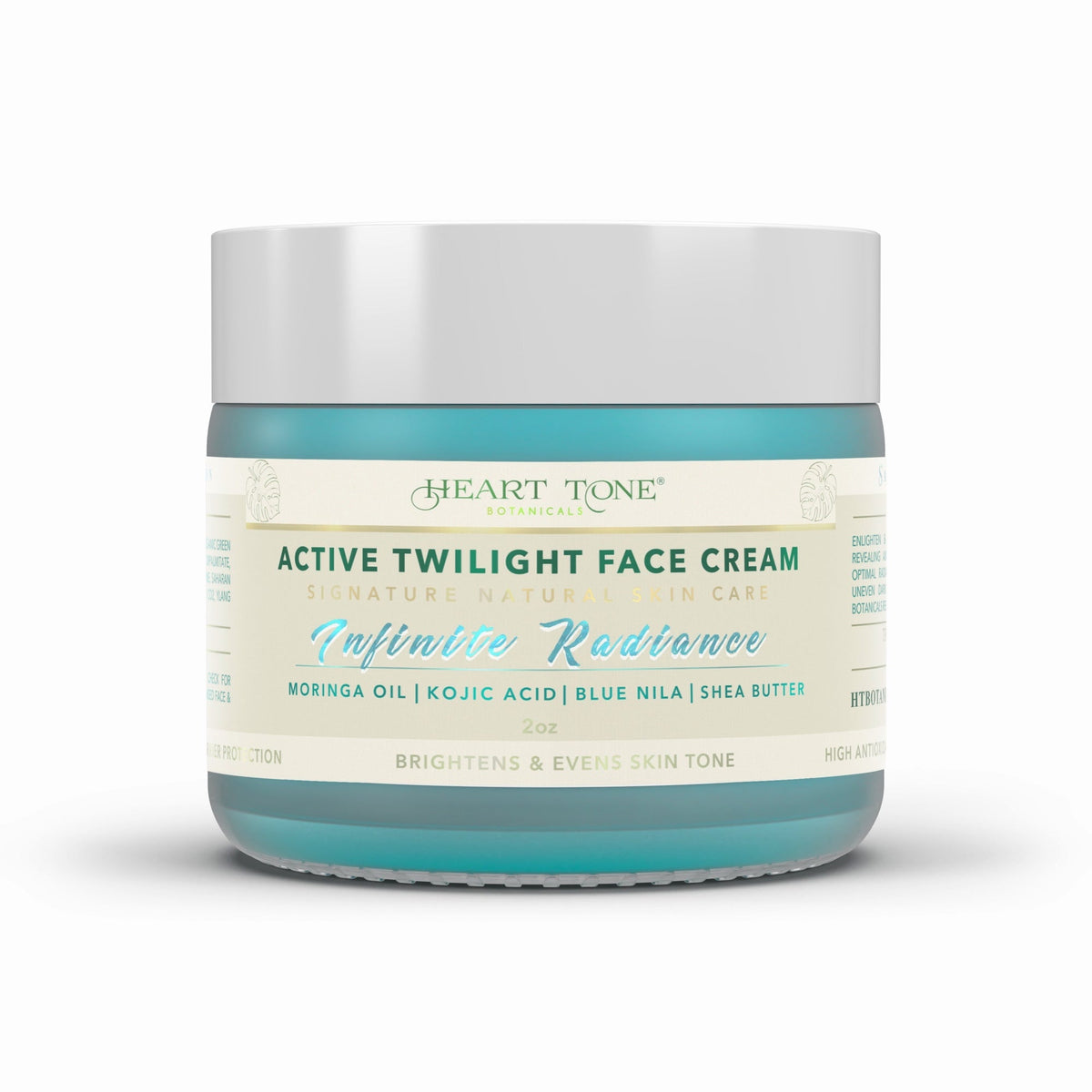
For nighttime use, the Active Twilight Face Cream — formulated with organic shea butter, moringa oil, licorice root extract, and coriander seed CO2 — pairs well as the final sealing step after Island Mist and serum.
Reading Labels Like a Botanical Consumer
Snow mushroom, kunzea, ho wood, frankincense serrata — these aren't household names, and they aren't meant to be. They represent the kind of botanical ingredient choices that signal genuine formulary depth: ingredients selected for their sensory character, their traditional heritage, and their complementary role in a complex blend, rather than their marketing familiarity.
When you see ingredients like these on a label, it's worth taking a moment to look them up. Not because you'll find a clinical trial — you won't — but because you'll find a botanical story. One that connects a product to a tradition of plant-based care that predates the modern skincare industry by centuries.
That's the kind of ingredient transparency that distinguishes genuine botanical skincare from products that simply use the word "natural" as a label.
Explore the full Heart Tone Botanicals Facial Care collection to see the complete range of botanical face products formulated around these ingredient principles.

Leave a comment
This site is protected by hCaptcha and the hCaptcha Privacy Policy and Terms of Service apply.