












The Short Answer: Not Every Moisturizing Shampoo Is Built the Same

If your hair constantly feels dry, brittle, or just thirsty — no matter how often you deep condition — the problem may start with your shampoo. The cleanser you use every wash sets the stage for everything that follows. Choose one that strips your hair's natural character, and no conditioner can fully recover what was lost. Choose one that cleanses gently while preserving your hair's natural feel, and the whole routine changes.
The challenge is that most mainstream shampoos marketed for dry hair still lead with the same harsh cleansing agents that caused the dryness in the first place.
Here's what to look for instead.
Why Dry Hair Gets Drier After Washing
Dry hair tends to have a weaker outer cuticle — the overlapping protective layer that keeps moisture in. When that cuticle is rough or uneven, moisture escapes more easily and the hair shaft loses the soft, flexible character it needs to feel its best.
Most conventional shampoos rely on sulfate-based surfactants to create a high-foam lather. These detergents dissolve oils and buildup, but they don't stop there. They often remove the natural oils your scalp produces to condition the hair shaft, leaving both scalp and strands feeling stripped after every wash.
For dry hair, this becomes a cycle that's hard to break: shampoo strips, conditioner softens, shampoo strips again.
A botanical shampoo designed with dry hair in mind takes a different approach: gentler cleansing agents that remove buildup without leaving the scalp and strands feeling depleted, supported by botanical ingredients that contribute to a softer, more comfortable washing experience from start to finish.
What a Botanical Label for Dry Hair Should Include
Gentle Surfactants, Not Sulfates
The first surfactant in the ingredient list tells you a great deal about how the shampoo will feel. Sodium lauryl sulfate (SLS) and sodium laureth sulfate (SLES) produce a rich lather but are well known for leaving hair feeling dry after washing. Coco taurate and coco betaine are gentler coconut-derived alternatives with a long history in natural hair care formulations — producing a soft, manageable lather that rinses clean without the stripped feeling.
Aloe Leaf Juice
Aloe has been used in botanical hair and body care traditions for centuries. In a shampoo for dry hair, it contributes to a conditioning, non-drying washing experience. Hair feels clean after rinsing, but without the tight, squeaky sensation that more aggressive formulas can leave behind. It is one of the most widely used botanical ingredients in traditional personal care formulations worldwide.
Moringa Leaf Extract
Moringa has a long history of use in botanical hair care traditions across tropical and subtropical cultures. Valued for its rich botanical character, it contributes to a softer, more luxurious washing experience. The difference in texture is noticeable from the first rinse when moringa is a meaningful part of the formula rather than a trace ingredient.
Coconut Milk
Coconut milk has been a staple of hair care traditions in South Asia, the Caribbean, and the Pacific for generations. It has a naturally creamy character that contributes to a rich, non-stripping lather — and hair that feels noticeably softer after washing. Look for it listed by name in formulas designed specifically for dry or moisture-seeking hair.
Irish Moss Extract
Irish moss is a coastal botanical with a long tradition in European and Caribbean hair care. It has a naturally gel-like quality that contributes to slip and softness in a shampoo formula — helping fingers and a wide-tooth comb move through the hair more easily during washing. For dry hair that is also prone to tangles, this is a meaningful addition to look for in a formula.
Abyssinian Oil
Abyssinian oil, pressed from the Crambe abyssinica plant, has been used in botanical hair care for its lightweight, silky character. Unlike heavier oils that can weigh down fine or dry hair, it has a fine, fast-absorbing quality that leaves hair feeling smooth and manageable without the greasy residue that sometimes follows heavier oil-based formulas.
Chamomile Extract
Chamomile has a long tradition in European botanical hair care, particularly as an ingredient associated with luminous, clean-looking hair. In a shampoo formula, it contributes a gentle botanical note and is valued for its soft, soothing sensory character during washing.
Botanical Essential Oils
Clary sage and lavender tea tree essential oils contribute significantly to the sensory experience of washing. Clary sage has an earthy, slightly sweet botanical scent with a long history in traditional herbalism. Lavender tea tree brings a clean, slightly woodsy freshness. Together, they create a wash experience that feels considered and intentional, not generic or synthetic.
What to Avoid on a Dry-Hair Shampoo Label
Not every label that says "moisturizing" or "for dry hair" tells the full story. A few things worth looking for in the ingredient list:
- Sodium lauryl sulfate (SLS) or sodium laureth sulfate (SLES): common sulfate detergents that can leave dry hair feeling worse after washing. Even in smaller amounts, they often contribute to that stripped, straw-like feeling.
- Silicones: ingredients ending in -cone, -siloxane, or -conol coat the hair shaft and can create a temporarily smooth feeling, but build up over time — eventually making it harder for the hair to feel the benefit of moisturizing ingredients.
- Artificial fragrance: "fragrance" or "parfum" on an ingredient label is a broad category that can include many undisclosed synthetic chemicals. A botanical formula uses named essential oils so you know exactly what you're working with.
- Harsh synthetic preservatives: parabens and formaldehyde-releasing preservatives appear in many mass-market shampoos. Cleaner formulations use botanical preservation alternatives.
Building a Full Routine Around a Botanical Dry-Hair Shampoo
The shampoo is only one half of a complete dry-hair routine. A conditioner formulated to complement the shampoo — with emollient botanicals that contribute to softness and slip after cleansing — rounds out the experience and helps preserve the moisture the shampoo preserved.
In a conditioner designed for dry hair, look for:
- Organic shea nut butter: a traditional West African botanical with a rich, creamy character and a long history in hair care traditions. Valued for its contribution to softness and manageability after washing.
- Papaya leaf extract: a tropical botanical with a long tradition of use in natural hair care, valued for its smooth, conditioning character and its presence in botanical routines across the Caribbean and Central America.
- Aloe leaf juice extract: present in both shampoo and conditioner to create a consistent, moisture-supporting sensory experience across the full routine — from first lather to final rinse-out.
Washing with a gentle botanical shampoo and following with a conditioner built around complementary emollient botanicals is the complete routine that dry hair tends to respond to most noticeably over time.
The Bottom Line
The best shampoo for dry hair is one that cleanses without stripping — and then contributes to how your hair feels when it's fully dry. Look for gentle coconut-derived surfactants, botanical ingredients with a long tradition in hair care, and an absence of sulfates, silicones, and synthetic fragrance.
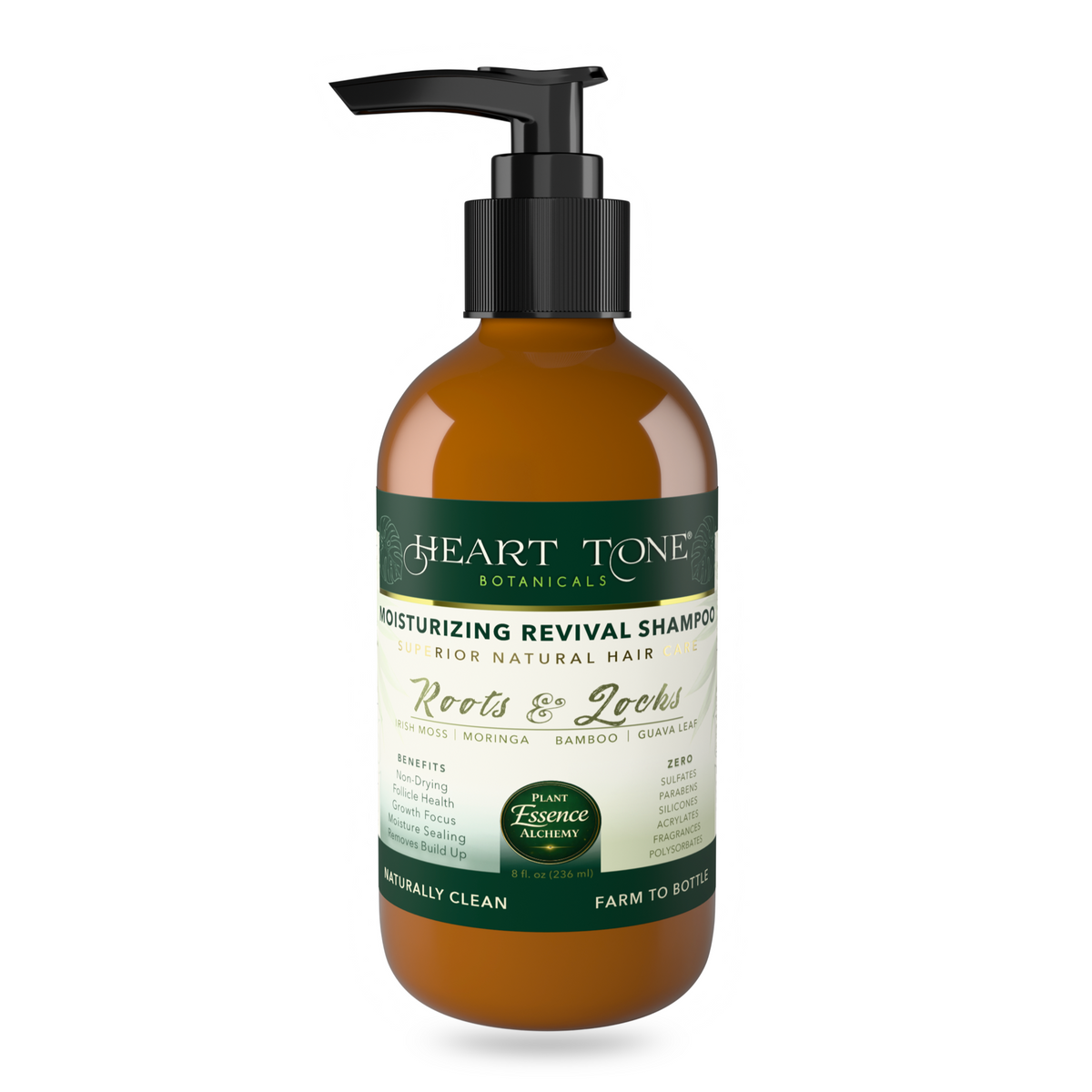
If you're ready to try a botanical approach to dry hair, the Roots & Locks Moisturizing Revival Shampoo is formulated with moringa leaf extract, aloe leaf juice, coconut milk, Irish moss, chamomile, and Abyssinian oil — without sulfates, silicones, or synthetic fragrance. Pair it with the Roots & Locks Moisturizing Revival Conditioner for a complete routine that supports softer, more manageable hair from wash to wear.
Explore the full HTB Hair Care Collection for more botanical options built for the way your hair actually feels.


Leave a comment
This site is protected by hCaptcha and the hCaptcha Privacy Policy and Terms of Service apply.