












The Short Answer: Foam Is a Detergent Effect, Not a Cleaning Step

If you just switched to an SLS-free toothpaste and your first thought was "is this even working," you're not imagining it. That thick, bubbly foam you're used to isn't a byproduct of cleaning your teeth — it's a byproduct of sodium lauryl sulfate, a detergent added specifically to create foam. Take the detergent out, and the foam goes with it. Brushing itself hasn't changed at all.

Here's what's actually happening when you make the switch, and what to expect in the first week.
Why SLS Foams in the First Place
Sodium lauryl sulfate is a surfactant — the same broad category of ingredient that makes shampoo lather and dish soap bubble up in the sink. It's added to conventional toothpaste almost entirely for sensory reasons: foam spreads quickly, feels thorough, and gives brushing a familiar "working" sensation. None of that foam is doing the mechanical work of brushing — your toothbrush bristles are. SLS also has a reputation for being drying and harsh on the inside of the mouth, which is a big part of why SLS-free formulas exist in the first place.
What Brushing Feels Like Without It
Swap to an SLS-free toothpaste and the texture changes more than the routine does:
- Low foam or no foam — the paste stays closer to its original texture on the brush instead of expanding into bubbles
- A different mouthfeel — many SLS-free formulas use clays or mineral powders for texture, so brushing can feel smoother or slightly grittier depending on the formula, rather than slick and soapy
- Less rinsing needed — without a mouthful of foam to spit out, some people find they rinse once instead of several times
- A shorter-feeling brush — without foam filling your mouth, two minutes of brushing can feel like it's going by faster, even though the time hasn't actually changed
What Natural Formulas Use Instead of SLS
Dropping SLS doesn't mean dropping texture and flavor altogether — natural formulas just build it from different ingredients:
Plant-Derived Saponins
Ingredients like organic quillaja (soap bark) are naturally occurring saponins — plant compounds with a long history of use for their mild, gentle lathering texture in natural personal care, without relying on a synthetic detergent.
Clays and Mineral Powders
Kaolin and bentonite clay are common in SLS-free toothpaste for their fine, silky texture on the brush. They don't foam, but they give a formula body and a sense of "cleanness" on the brush that doesn't depend on bubbles.
Acacia and Guar Gum
These plant-derived gums are what hold a clay-and-mineral toothpaste together in a smooth, spreadable paste rather than a crumbly powder — part of why texture, not foam, is the thing to pay attention to in a natural formula.
How to Tell If You're Actually Brushing Well Without the Foam
Since foam isn't a reliable signal here, judge your brushing by habit instead:
- Brush for the full two minutes by the clock or a timer, not by how your mouth feels
- Angle the brush at your gumline and work in small circles, covering every surface — foam or no foam, this is what actually does the work
- Use a soft-bristled brush and light pressure; a scrubbing motion isn't more thorough just because there's less foam to push around
- Give yourself one to two weeks to stop missing the foam — most people report it stops feeling "incomplete" once the low-foam texture becomes familiar
Living Crystal Toothpaste's Approach
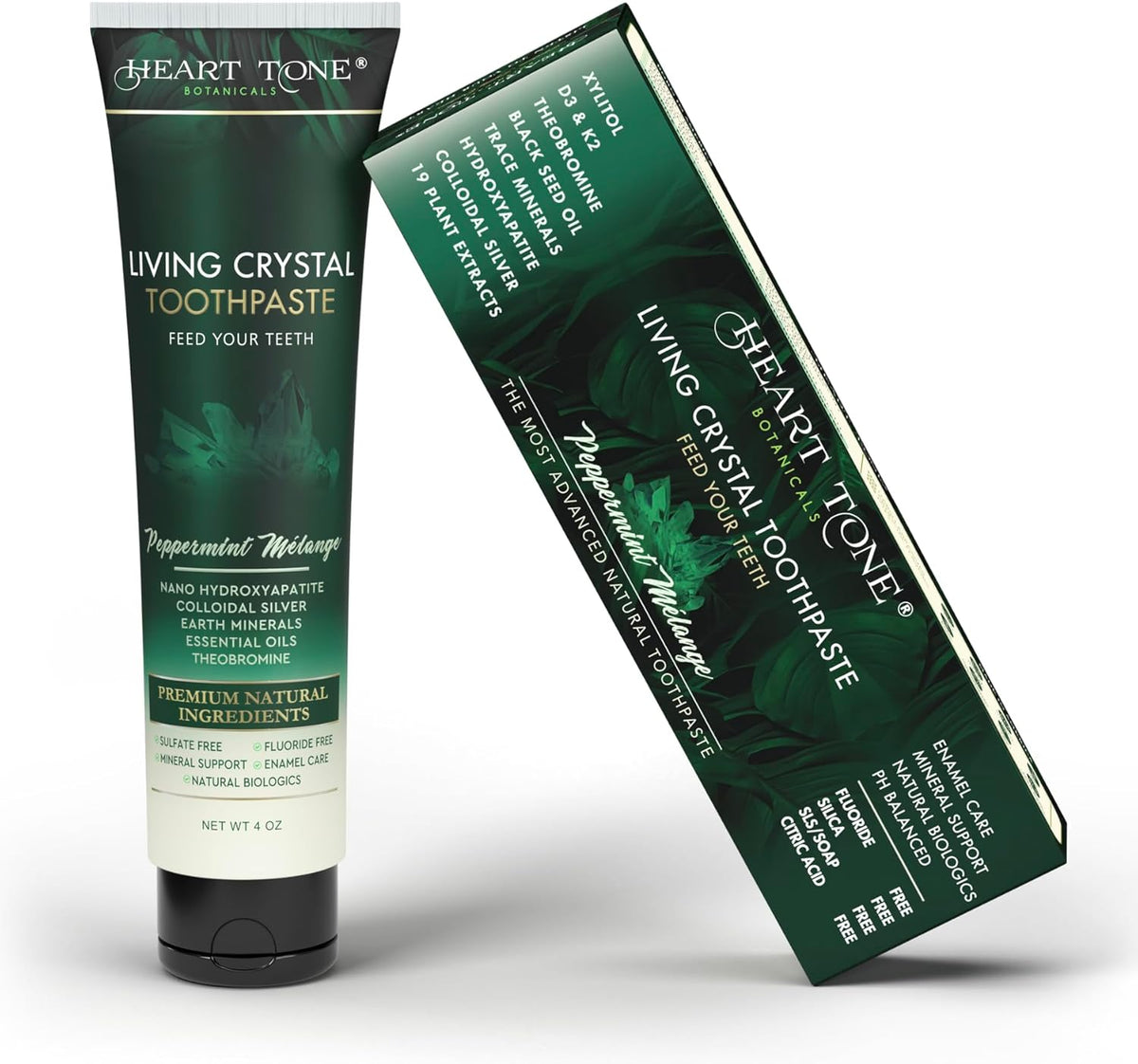
Living Crystal Toothpaste from Heart Tone Botanicals is formulated without SLS or any synthetic foaming detergent. Its texture comes from kaolin and bentonite clay, organic coconut oil, and organic quillaja, with organic xylitol and a peppermint-wintergreen-spearmint botanical blend for flavor. It's a fluoride-free formula built around micro-hydroxyapatite and theobromine as its core minerals, with colloidal silver and 30+ farm-grown botanical extracts rounding out the list. The texture is intentionally mineral and smooth rather than foaming — if you're coming from a high-foam conventional paste, expect the brushing sensation to feel different for the first several uses, not wrong.

The Bottom Line
Foam feels like proof that a toothpaste is working, but it's really just proof that a detergent is in the formula. An SLS-free toothpaste cleans the same way any toothpaste does — through brushing time, technique, and the bristles themselves — it just doesn't dress the process up in bubbles. Give the low-foam texture a week or two to feel normal, and judge your brushing by the clock and your technique instead of how much foam ends up in the sink.
If you're making the switch, Living Crystal Toothpaste is a fluoride-free, SLS-free formula built on clays, minerals, and botanical extracts. Pair it with the alcohol-free Restorative Mouth Rinse for the rest of the routine, or browse the full natural oral care collection.


Leave a comment
This site is protected by hCaptcha and the hCaptcha Privacy Policy and Terms of Service apply.