

If you've ever brushed your teeth and then immediately taken a sip of orange juice — only to be hit with something bitter and metallic — you've experienced sodium lauryl sulfate in action. It's not the OJ's fault. It's the SLS in your toothpaste.

Sodium lauryl sulfate, or SLS, is the ingredient responsible for the foamy lather in most conventional toothpastes. It's a surfactant — a detergent-class compound — that's used to create that satisfying foam, loosen surface debris, and make toothpaste feel "thorough." But what it does to your mouth in the process is worth understanding before you assume that foam equals clean.
What Is SLS and Why Is It in Toothpaste?
SLS is a synthetic surfactant originally derived from coconut or palm oil, though it's heavily chemically modified during production. In toothpaste, it serves one primary function: to create foam. That foam doesn't actually improve cleaning — it just feels like it does. The cleaning work is done by abrasives like silica or hydroxyapatite. SLS is mostly a texture and perception ingredient.
Its use in toothpaste became widespread in the mid-20th century, and it stuck — not because it was the healthiest option, but because it was cheap, effective at foaming, and no one was looking very closely at what it did to oral tissues with twice-daily use.
What SLS Actually Does to Your Mouth
Over the past few decades, clinical research has documented a number of real effects that SLS has on oral health. These aren't fringe claims — they appear in peer-reviewed dental literature and are consistent enough that many periodontists and oral medicine specialists now routinely recommend SLS-free toothpaste for sensitive patients.
1. It Disrupts the Mucosal Lining
SLS is a surfactant, which means its job is to break down lipid barriers. In your mouth, those barriers are part of the mucous membrane — the protective tissue lining your cheeks, gums, and the inside of your lips. SLS strips away the protective mucin layer, the thin coat of glycoproteins that keeps oral tissues hydrated and defended against irritants.
With repeated use, this leads to mucosal desquamation — essentially, the shedding of surface cells before they're ready. Clinically, this shows up as a slight peeling or white film inside the mouth that many people chalk up to "how toothpaste works." It's not how it has to work. It's how SLS works.
2. It's Linked to Canker Sores
If you're someone who gets recurrent aphthous ulcers (canker sores), this one is important. Multiple clinical studies have found an association between SLS-containing toothpastes and a higher frequency, intensity, and healing time of canker sores. A 2019 systematic review concluded that people with recurrent aphthous stomatitis may benefit from switching to SLS-free toothpaste.
The mechanism is straightforward: SLS compromises the integrity of oral mucosa. Damaged, stripped tissue is more vulnerable to ulceration. Remove the irritant, restore the barrier. Many patients who made the switch reported significant reductions in canker sore frequency within a few months.
3. It Alters Your Taste
That orange-juice-after-brushing effect is real, and SLS is the cause. SLS inhibits phospholipases — enzymes involved in taste receptor function — and enhances bitter taste while suppressing sweetness. This effect can last for up to an hour after brushing.
It's a small thing, but it matters if you're someone who drinks coffee in the morning, has breakfast right after brushing, or notices that food just doesn't taste quite right until mid-morning. That's not normal. That's SLS.
4. It May Contribute to Dry Mouth Symptoms
By stripping the protective mucin layer and reducing salivary glycoprotein coverage, SLS can contribute to that dry, slightly tight feeling some people notice after brushing. This effect is mild in most people, but for those already prone to dry mouth — or who use mouthwash after brushing — it can compound over time.
Who Should Consider Going SLS-Free?
The honest answer is: most people would benefit, but certain groups have stronger reason to act on it:
- People with recurrent canker sores or mouth ulcers. This is the most evidence-backed reason. If you get canker sores regularly, SLS-free toothpaste is worth trying for 60–90 days. Many people see a meaningful difference.
- People with sensitive gums or gum inflammation. Reduced mucosal irritation means less inflammatory stimulus at the gum line.
- People with dry mouth. SLS-free formulas tend to be gentler on the mucosal barrier that protects against dryness.
- People who notice taste alteration after brushing. Switching to an SLS-free formula often resolves this within days.
- Anyone who wants a cleaner ingredient list. If you're reading labels on your food, it makes sense to read them on what you put in your mouth twice a day.
What to Look for in an SLS-Free Toothpaste
SLS-free is the starting point, not the finish line. Some brands remove SLS and replace it with other potentially irritating surfactants — like SLES (sodium laureth sulfate) or cocamidopropyl betaine in large amounts. Others use synthetic thickeners and artificial sweeteners to compensate for the texture SLS was providing.
What you actually want in an SLS-free toothpaste:

- Hydroxyapatite or micro-hydroxyapatite — the same calcium phosphate mineral your enamel is made from, shown to remineralize enamel without fluoride
- Xylitol — creates a hostile environment for cavity-causing bacteria without killing the broader oral microbiome
- Botanical extracts — herbs like aloe vera, calendula, and clove have been used in oral care for centuries and offer real antimicrobial and soothing benefits
- pH-balanced formula — your enamel demineralizes in acidic environments; a pH-neutral or slightly alkaline toothpaste supports remineralization
- No artificial dyes, flavors, or sweeteners — if a toothpaste has a bright blue stripe or tastes like candy, there are synthetic ingredients in there
Short ingredient list. Recognizable ingredients. No surfactants you'd need a chemistry degree to evaluate.
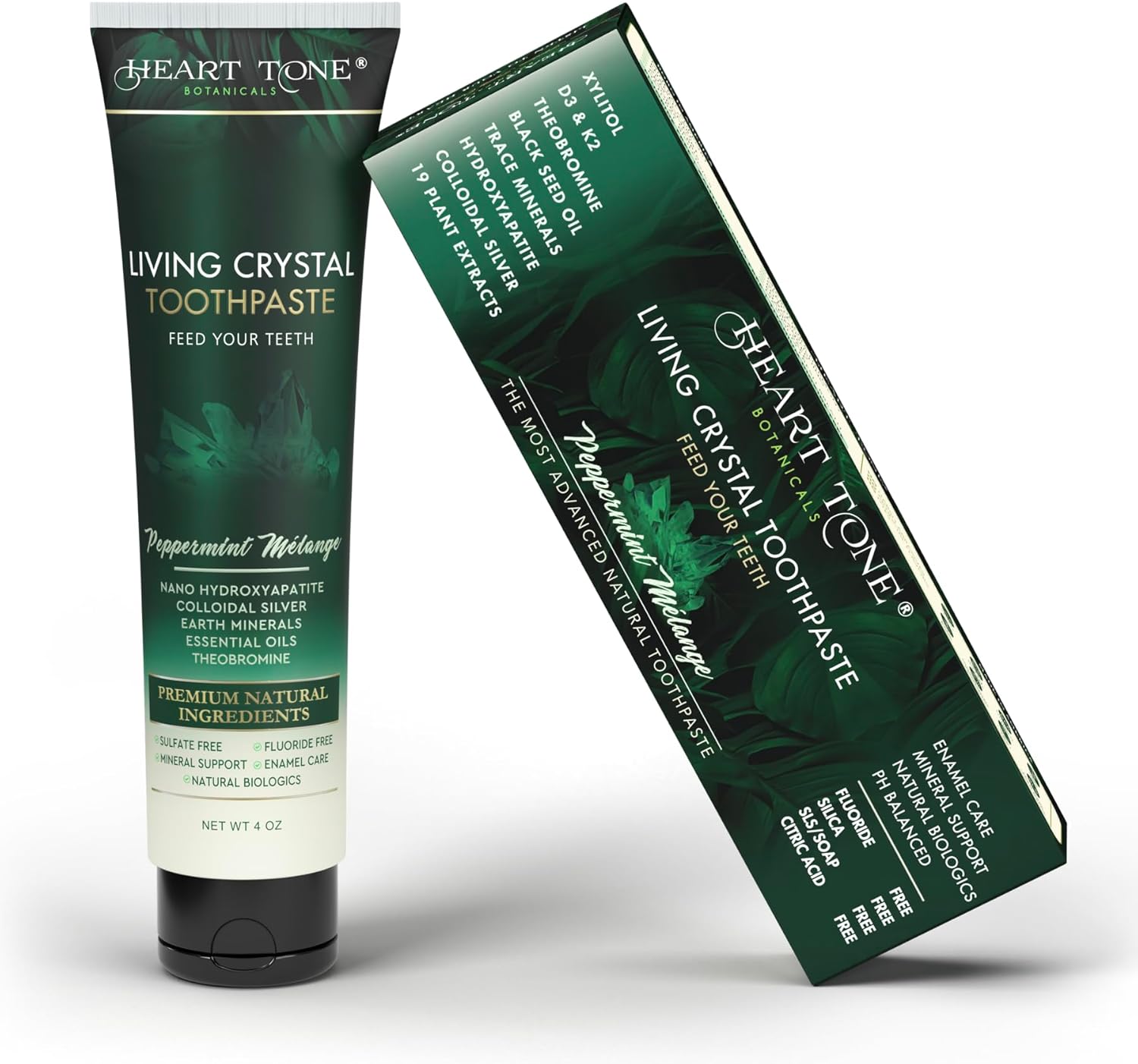
Living Crystal Toothpaste: SLS-Free by Design
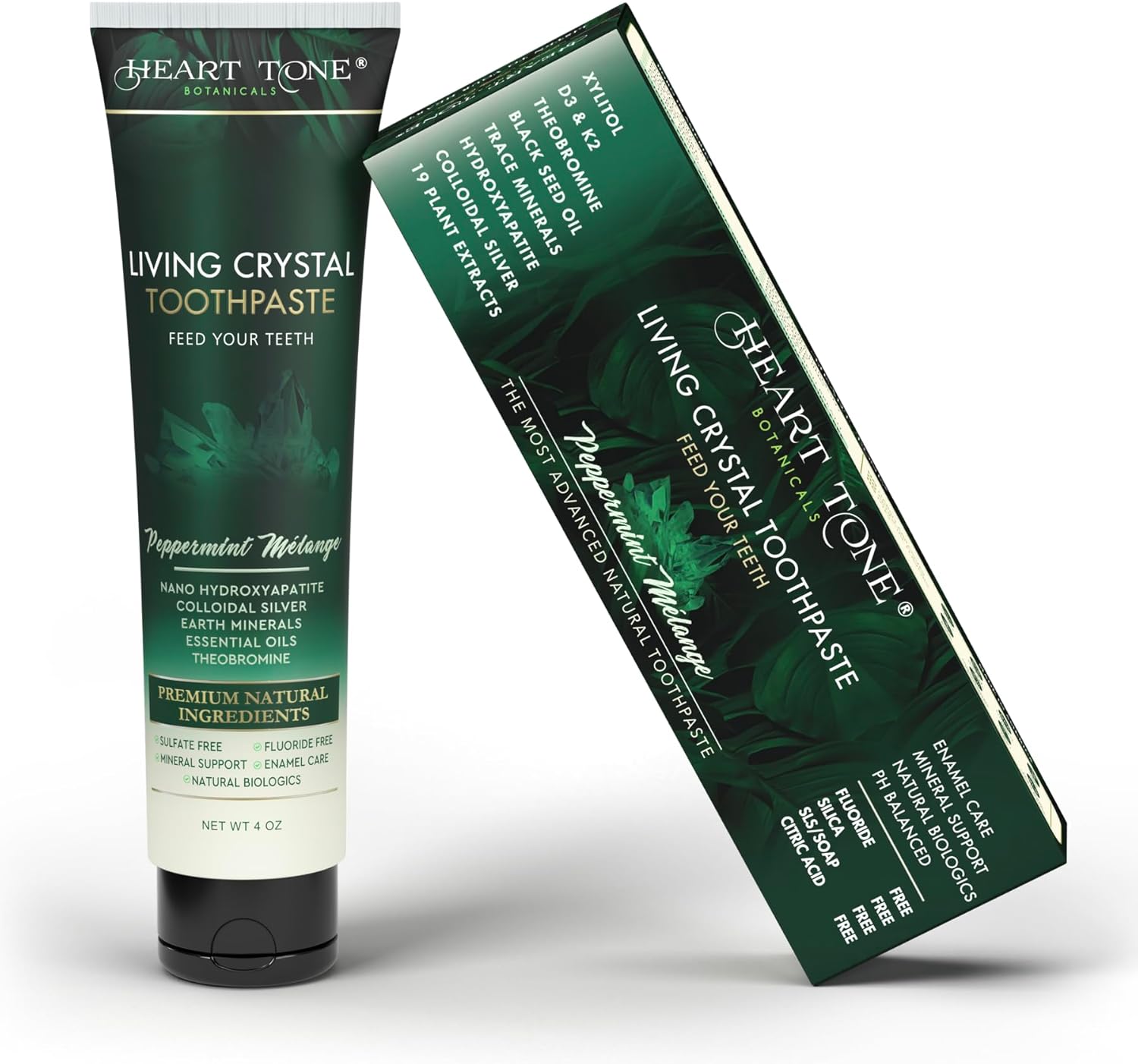
Heart Tone Botanicals' Living Crystal Toothpaste was formulated without SLS from the beginning — not as a marketing trend, but because the formula was built around supporting enamel biology, not disrupting it.
The formula features:
- Spherical micro-hydroxyapatite (mHAp) — the mineral form of tooth enamel, used to replenish mineral density at the surface
- Theobromine — a natural compound from cacao shown to support enamel hardness
- Xylitol and zinc citrate — for bacterial balance and fresh breath without synthetic antiseptics
- Colloidal silver and 30+ farm-grown botanical extracts — grown on Heart Tone's biodynamic farm in Vero Beach, FL
- Zeolite clinoptilolite — a natural mineral that adsorbs toxins and helps maintain a clean oral environment
No fluoride. No SLS. No synthetic foaming agents. No artificial dyes. No mystery ingredients. Just a mineral-dense, botanical formula that cleans without disrupting the tissue it's working next to.
It carries 59 five-star reviews and is used by customers who've specifically switched because of canker sore sensitivity, taste issues, and a general desire to stop putting synthetic detergents in their mouths twice a day.
→ Try Living Crystal Toothpaste
Pair It with a Botanical Mouth Rinse
For a complete SLS-free oral care routine, consider replacing your conventional mouthwash too. Most commercial rinses contain alcohol (which causes burning and dryness), synthetic dyes, and artificial flavors — none of which support a healthy oral environment.
Heart Tone's Restorative Mouth Rinse is alcohol-free, fluoride-free, and built on 22 botanical ingredients — including farm-grown aloe vera and colloidal silver — to freshen breath and support gum health without the burn or the chemicals.
→ See Restorative Mouth Rinse
→ Shop the full Oral Care collection
The Bottom Line
SLS has been in toothpaste for decades because it's cheap and it foams well. But foam is not a proxy for clean. And for the significant portion of people who experience mucosal irritation, canker sores, taste disruption, or gum sensitivity, SLS is an active contributor — not an innocent bystander.
Going SLS-free isn't a wellness trend. It's a straightforward reduction of a known oral irritant. The only question is what you replace it with — and whether the formula you choose is actually doing something useful for your teeth and gums, or just omitting one bad ingredient among many.
Read the label. Count the recognizable ingredients. Your mouth is exposed to whatever's in that tube twice a day, 730 times a year.
Try It in Living Crystal Toothpaste
Heart Tone Botanicals' Living Crystal Toothpaste contains zero SLS alongside a full spectrum of botanical actives — theobromine, hydroxyapatite, zeolite, L-arginine, kaolin clay, colloidal zinc, vitamin K2, and colloidal silver. No SLS, no fluoride, no synthetic fillers. Small-batch crafted in Vero Beach, FL.

Leave a comment
This site is protected by hCaptcha and the hCaptcha Privacy Policy and Terms of Service apply.