

Your teeth are constantly under attack — from acidic foods, sugary drinks, bacteria, and the simple act of eating. What most people don't realize is that your mouth has a built-in repair system. And remineralizing toothpaste, when it's formulated right, is designed to work with that system rather than against it.

Here's what remineralization actually means, what ingredients actually deliver it, and what to look for when you're choosing a natural toothpaste that can genuinely rebuild your enamel over time.
What Is Remineralization — And Why Does It Matter?
Every time you eat or drink something acidic — coffee, fruit juice, fermented foods, even sparkling water — the acids temporarily strip minerals from the surface of your tooth enamel. This process is called demineralization. If your mouth has enough calcium, phosphate, and the right pH balance, saliva naturally begins to restore those minerals during the hours between meals. That's remineralization.
The problem is that modern life has tipped this balance badly. We eat more frequently, drink more acidic beverages, experience more dry mouth from medications and mouth breathing, and use products that disrupt the oral microbiome. The result: more demineralization, less time to recover, and enamel that slowly erodes over years.
Enamel doesn't regrow once it's gone. But early demineralization can be reversed — if you give your teeth the right minerals at the right time. That's the entire premise behind remineralizing toothpaste.
The Minerals Your Teeth Are Actually Made Of
Tooth enamel is roughly 96% mineral by weight, and that mineral is almost entirely a compound called hydroxyapatite — a crystalline form of calcium phosphate. When acid attacks your teeth, it dissolves hydroxyapatite crystals. When remineralization occurs, calcium and phosphate ions re-deposit into those damaged sites and begin rebuilding that crystalline structure.
This means the most direct way to support remineralization isn't to add a chemical coating — it's to supply the exact minerals your enamel is already made of, in a form your teeth can actually absorb.
That's why the shift toward mineral-based, fluoride-free remineralizing formulas has been so significant. Rather than forming an entirely different compound (fluorapatite), botanical and mineral-focused toothpastes work with your teeth' own chemistry.
Key Ingredients That Actually Support Remineralization
1. Calcium and Mineral Complexes
The most fundamental building block. Calcium carbonate, calcium phosphate, and other calcium-rich compounds supply raw material for enamel repair. When your toothpaste delivers a meaningful concentration of bioavailable calcium — especially paired with phosphate — it creates conditions for remineralization during and after brushing.
Look for formulas that feature calcium as a primary ingredient, not buried at the bottom of the ingredient list as a filler.
2. Colloidal Silver
Often overlooked in conversations about enamel health, colloidal silver plays an important supporting role. The oral microbiome is a delicate ecosystem — cavity-causing bacteria like Streptococcus mutans produce the acids that drive demineralization in the first place. By moderating harmful bacterial populations without wiping out the beneficial flora your mouth needs, colloidal silver can help reduce the acid load your enamel faces daily.
Less acid attack means more time for remineralization to occur. It's not a direct remineralizer — it's a protector of the environment where remineralization happens.
3. Xylitol
A naturally occurring sugar alcohol found in many plants, xylitol has one of the strongest evidence bases in natural dentistry. Cavity bacteria cannot ferment xylitol — it doesn't produce acid. Better yet, xylitol actually stimulates saliva flow, which is your mouth's primary remineralization vehicle. More saliva means more calcium and phosphate ions bathing your teeth between meals.
4. Plant-Based Antimicrobials (Essential Oils, Botanicals)
Ingredients like peppermint, clove, thyme, and other botanical extracts don't directly rebuild enamel, but they support the conditions for remineralization by keeping harmful bacteria in check and maintaining healthy gum tissue. A healthy gingival environment is closely tied to enamel health — inflamed or receding gums expose the softer dentin beneath enamel, accelerating mineral loss.

5. Baking Soda (Sodium Bicarbonate)
Simple but genuinely effective. Baking soda raises the pH of your mouth after eating, neutralizing acids before they can do damage. Since remineralization can only occur at a neutral-to-alkaline pH, anything that helps your mouth recover its baseline pH faster is directly supporting enamel repair.
What Most Remineralizing Toothpastes Get Wrong
The word "remineralizing" has become a marketing term that's applied to products that don't necessarily deliver on the promise. Here's what to watch for:
- Glycerin controversy: Some holistic dentists argue that glycerin — a common toothpaste humectant — coats enamel surfaces in a way that may interfere with mineral deposition. The science isn't settled, but many people seeking genuine remineralization choose glycerin-free formulas just to remove that variable.
- SLS and harsh surfactants: Sodium lauryl sulfate disrupts the oral mucosa, can cause canker sores, and may affect the oral microbiome negatively. If you're trying to support remineralization, a healthy oral environment is non-negotiable — and SLS works against it.
- Artificial sweeteners and dyes: These don't support oral health and in some cases may have negative effects on gut and oral microbiome populations.
- Low mineral concentrations: Some pastes list calcium carbonate as a "remineralizing ingredient" but include such small amounts that it's essentially decorative. Look for formulas where minerals are primary, not peripheral.
The Role of Diet in Remineralization
No toothpaste can fully compensate for a diet that constantly overwhelms your enamel. If you're sipping acidic drinks throughout the day, snacking every hour, or eating a high-sugar diet, the acid exposure simply outpaces what any toothpaste can repair.
The most effective remineralization strategy is holistic:
- Reduce snacking frequency so your teeth get recovery time between acid exposures
- Rinse with water after acidic foods or drinks (don't brush immediately — wait 30 minutes for enamel to reharden)
- Support saliva production by staying hydrated and breathing through your nose
- Consider oil pulling before brushing to reduce bacterial load and support gum health
- Use a remineralizing toothpaste that delivers real minerals in a bioavailable form
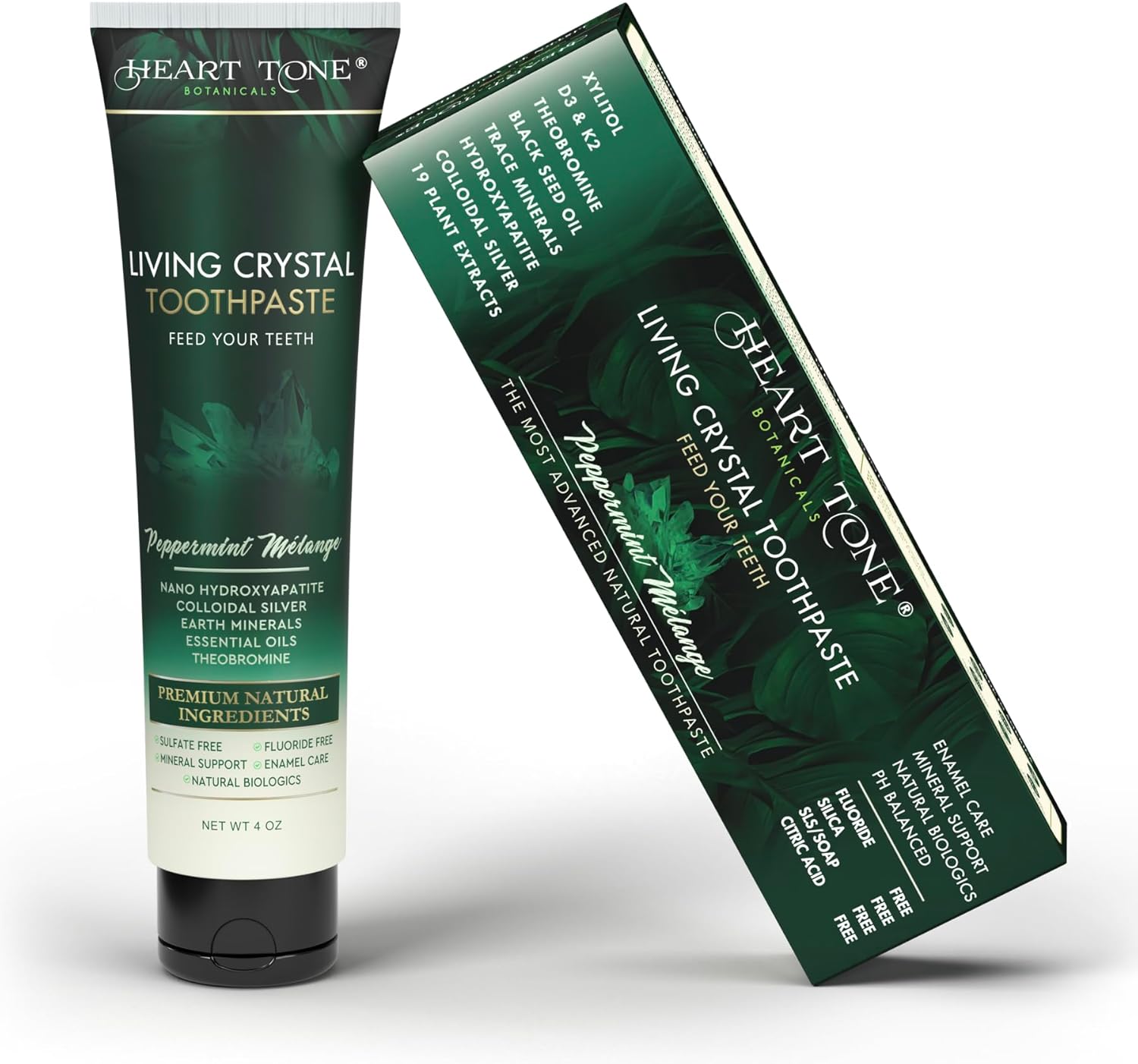
Living Crystal Toothpaste: Formulated Around Mineral Delivery
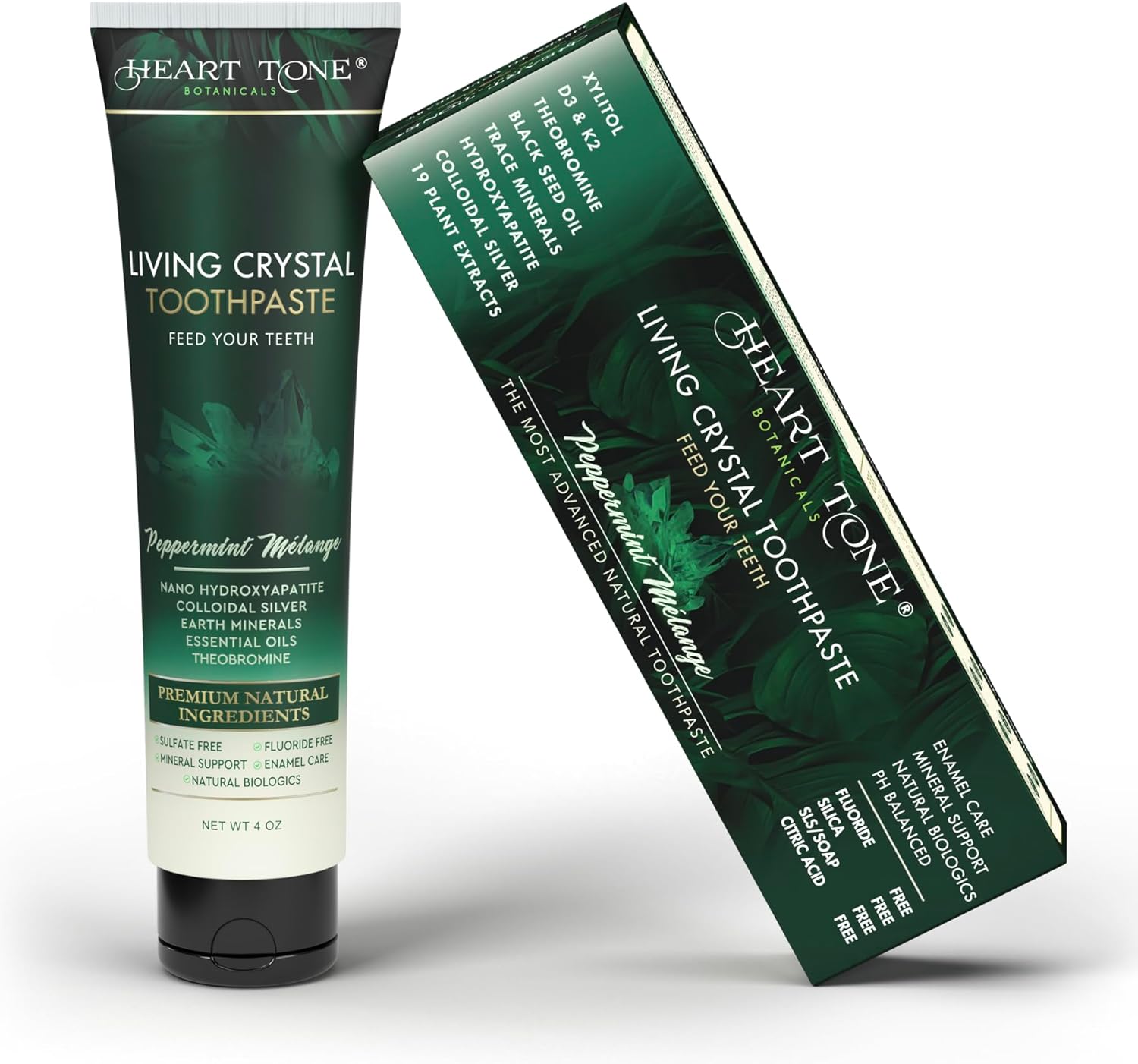
Heart Tone Botanicals' Living Crystal Toothpaste was built from the ground up with mineral delivery in mind. The formula centers on calcium-rich botanicals and colloidal silver, without the SLS, artificial sweeteners, glycerin, or synthetic additives that can undermine the oral environment you're trying to support.
The name isn't incidental — "crystal" reflects the crystalline structure of healthy hydroxyapatite enamel. Every ingredient was chosen to either supply minerals, reduce acid-producing bacteria, or support the gum health that makes enamel protection possible.
It's a toothpaste that works with your biology rather than simply masking symptoms.
→ Try Living Crystal Toothpaste
→ Explore the full Oral Care collection
→ Pair it with Restorative Mouth Rinse for complete care
How to Maximize Your Results
If you're switching to a remineralizing approach, give it at least 30 days before judging results. Enamel repair is slow — it happens at a microscopic level and isn't something you'll feel overnight. What you may notice sooner:
- Reduced sensitivity, especially to cold
- A cleaner feeling that lasts longer after brushing
- Less gum irritation or bleeding (a sign the oral microbiome is rebalancing)
For best results: brush twice daily, use a soft-bristle brush, wait 30 minutes after eating before brushing, and pair your remineralizing toothpaste with a gentle mouth rinse that doesn't contain alcohol or aggressive antiseptics that can wipe out your beneficial oral bacteria.
The Bottom Line
Remineralization is real, and it's something your body is already trying to do every day. The right toothpaste doesn't do the work for you — it gives your teeth the minerals and environment they need to repair themselves.
Choose a formula that delivers real calcium and mineral compounds, supports a healthy oral microbiome, and skips the synthetic additives that get in the way. Your enamel will thank you — slowly, quietly, one crystal at a time.
Ready to support your enamel naturally? Browse Heart Tone Botanicals' oral care line — formulated with botanical ingredients, mineral actives, and zero unnecessary additives.

Leave a comment
This site is protected by hCaptcha and the hCaptcha Privacy Policy and Terms of Service apply.