

Tea tree oil has been used in traditional medicine for centuries. Today, it appears in a growing number of natural toothpastes and mouthwashes — not as a trend ingredient, but because the research on its antimicrobial and anti-inflammatory properties in oral care is genuinely compelling.

Here's what tea tree oil actually does in a toothpaste or mouthwash formula, why it works, and what to look for when you see it on an ingredient list.
What Is Tea Tree Oil?
Tea tree oil (Melaleuca alternifolia) is an essential oil steam-distilled from the leaves of the Australian tea tree. Its primary active compound, terpinen-4-ol, is responsible for most of its antimicrobial activity. Tea tree oil contains over 100 compounds, but terpinen-4-ol typically makes up 30–48% of a quality extract.
Unlike many botanical ingredients that carry historical reputation without modern evidence, tea tree oil has been the subject of hundreds of published studies since the 1990s — with a strong body of evidence specifically around oral health applications.
What Tea Tree Oil Does in a Toothpaste Formula
In a natural toothpaste, tea tree oil serves several distinct functions:
Antimicrobial Action Against Oral Bacteria
Terpinen-4-ol disrupts bacterial cell membranes by altering membrane permeability — a mechanism that works differently from alcohol or chlorhexidine, which denature proteins. This disruption affects a broad range of oral pathogens, including:
- Streptococcus mutans — the primary cavity-causing bacterium
- Porphyromonas gingivalis — a major driver of gum disease
- Fusobacterium nucleatum — associated with periodontal inflammation
- Candida albicans — oral fungal overgrowth linked to thrush
A 2013 study published in Oral Microbiome found that low concentrations of tea tree oil (0.25–2%) inhibited biofilm formation of key oral pathogens without the cytotoxicity associated with chlorhexidine at equivalent antimicrobial concentrations. Tea tree oil acts at the biofilm stage — disrupting bacterial communities before they can harden into plaque structures.
Anti-Inflammatory Effect on Gum Tissue
Beyond its antimicrobial action, terpinen-4-ol has demonstrated anti-inflammatory properties that may benefit gum tissue directly. Research from Griffith University showed that terpinen-4-ol suppresses certain inflammatory cytokine pathways — the same signaling molecules involved in gingival inflammation.
This is why tea tree oil appears in formulas targeting gum health, not just bacterial control. It addresses both the microbial driver of inflammation and the inflammatory response itself.
Breath Support Without Alcohol
Tea tree oil contributes to breath freshness differently than mint oils alone. While peppermint and spearmint mask odor compounds, terpinen-4-ol acts on the bacteria that produce those odor compounds in the first place. In an alcohol-free formula, this makes tea tree a more sustainable fresh-breath ingredient — addressing the source rather than covering the symptom.
"Tea tree oil's terpinen-4-ol disrupts bacterial cell membranes across a broad spectrum of oral pathogens — working at the biofilm stage, where conventional antiseptics typically can't reach without damaging surrounding tissue."
Tea Tree Oil in Mouthwash vs. Toothpaste
Tea tree's application in toothpaste and mouthwash serves different purposes:
In toothpaste: Tea tree works alongside abrasives and other actives during the brushing cycle. The contact time is short (90–120 seconds), but the mechanical action of brushing helps deliver the active compound to gum margins and interdental spaces where biofilm tends to form.
In mouthwash: The rinse format extends contact time across the entire oral cavity, including areas that brushing doesn't reach. A 30-second rinse with a tea tree-containing formula reaches the back of the throat, under the tongue, and along the gum line — allowing terpinen-4-ol more time to disrupt surface biofilm.
The two formats are genuinely complementary. A toothpaste delivers tea tree during the brushing ritual; a mouthwash extends its reach throughout the full oral environment.
Tea Tree in the Living Crystal Botanical Canvas
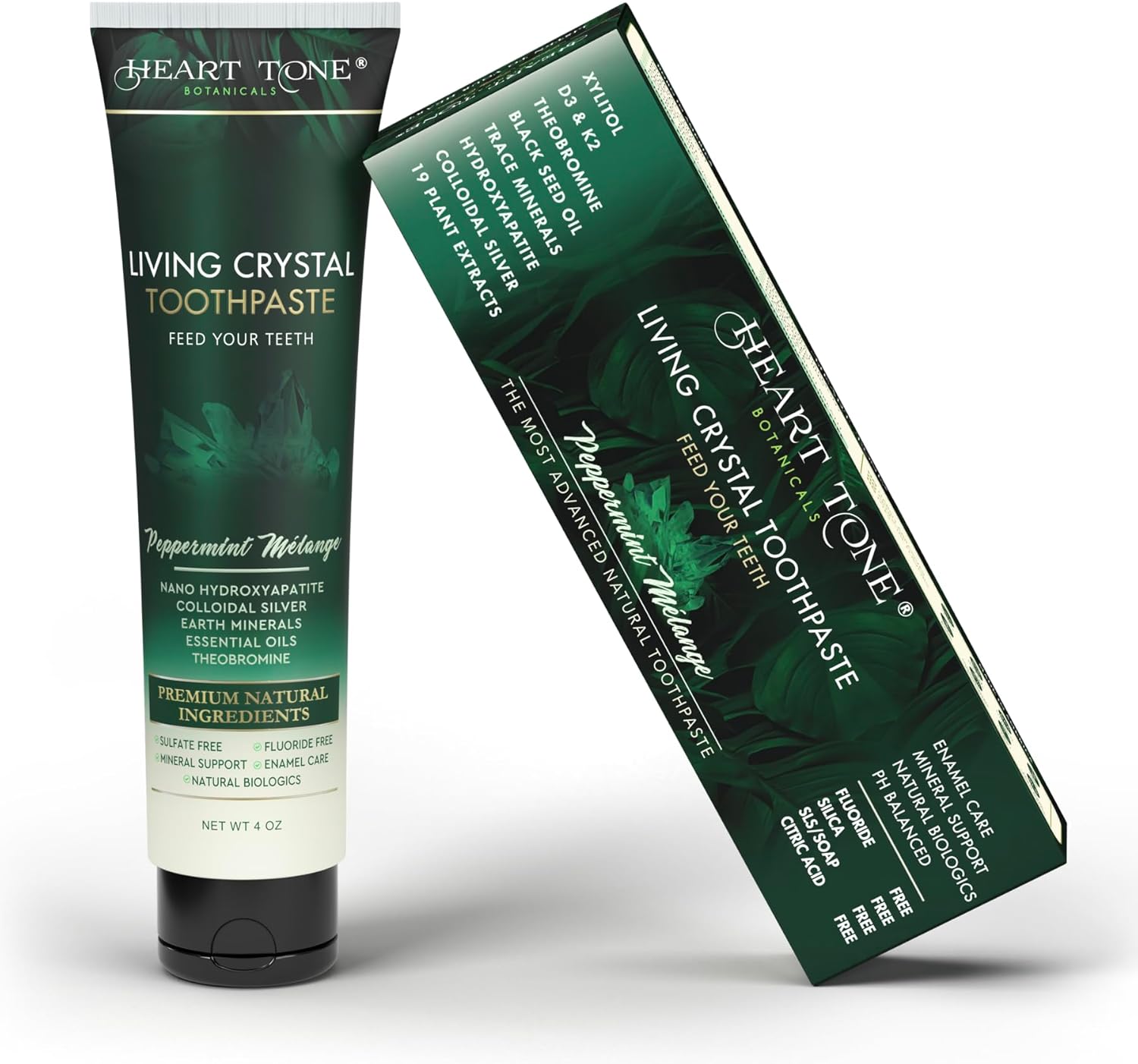
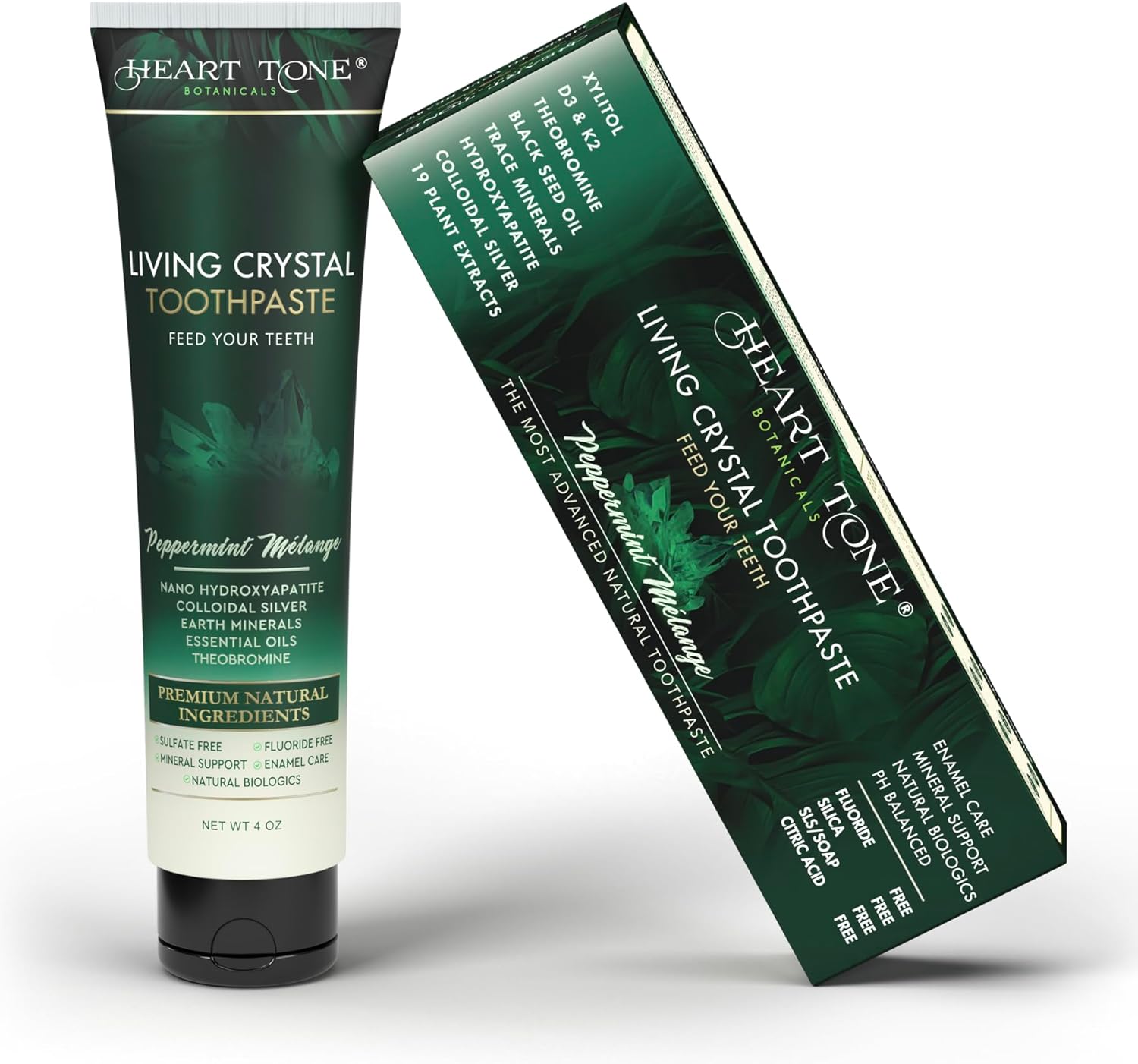
In Living Crystal Toothpaste, tea tree oil is one of twelve CO₂ extracts and essential oils in the botanical canvas — alongside Organic Myrrh, Organic Clove, Licorice Root, Usnea Lichen, Rhatany Root, Peppermint, Spearmint, Wintergreen, Cornmint, and Organic Cinnamon Bark.

This isn't tea tree as a single-ingredient hero. It's one part of a coordinated botanical system where multiple antimicrobial compounds work on overlapping but distinct targets:
- Tea tree → biofilm disruption and broad-spectrum antimicrobial
- Usnea lichen (usnic acid) → gram-positive bacteria and Candida
- Rhatany root → gum astringency and anti-inflammatory via OPC tannins
- Myrrh → antimicrobial and gum tissue soothing via sesquiterpenes
- Clove → eugenol's analgesic and antimicrobial action
In Restorative Mouth Rinse, tea tree appears as Melaleuca alternifolia essential oil in the full 22-botanical formula — working alongside colloidal silver, aloe vera, licorice root CO₂, myrrh CO₂, rhatany root, turmeric CO₂, thyme CO₂, and oregano CO₂ in a single alcohol-free rinse.
What the Research Supports (and What It Doesn't)
Most of the strongest evidence for tea tree in oral care comes from in vitro and small clinical trials — not large RCTs. The antimicrobial mechanism (membrane disruption by terpinen-4-ol) is well-established and replicated across multiple studies. The clinical translation to gum disease treatment has more limited but promising evidence, particularly in studies using 2.5% tea tree oil gels for gingivitis.
What's not supported: using pure tea tree oil undiluted in the mouth, or swallowing tea tree products. At the concentrations used in commercial oral care products (typically 0.1–1%), it is safe for daily use. At high concentrations or if swallowed, it can cause irritation or toxicity — which is why it appears as a supporting ingredient in formulas, not as a standalone oral rinse.
How to Use Tea Tree Oil in Your Oral Routine
If you're adding tea tree-containing oral care to your routine, a few practical notes:
- For toothpaste: brush as you normally would. No special technique is needed. The formula handles delivery.
- For mouthwash: swish for at least 30 seconds to allow the botanical oils to reach gum margins and interdental spaces. Do not swallow.
- Consistency matters more than technique. Daily use builds up the botanical environment in your mouth that keeps opportunistic bacteria in check.
Tea tree-containing toothpaste and mouthwash can be used in the same session — they're formulated for compatibility. Using both extends the spectrum of tea tree coverage throughout the oral environment.
Frequently Asked Questions
Is tea tree oil safe to use in toothpaste every day?
Yes — at the concentrations used in commercial oral care products (typically 0.1–1%), tea tree oil is safe for daily use. The formulas are designed for topical oral application and rinsing out. Do not swallow tea tree oil products.
Does tea tree oil in toothpaste replace fluoride?
No — tea tree oil is an antimicrobial and anti-inflammatory botanical, not a remineralization agent. In a fluoride-free toothpaste, the remineralization work is done by hydroxyapatite, theobromine, and minerals like zinc. Tea tree handles the bacterial control side of oral health.
Will tea tree oil toothpaste taste strange?
At the concentrations used in most natural toothpastes, tea tree oil contributes a subtle clean freshness rather than a medicinal taste. In formulas with dominant mint oils (peppermint, spearmint, wintergreen), the tea tree flavor is largely background. People sensitive to botanical tastes occasionally notice it, but most find the mint profile dominant.
Is tea tree oil in mouthwash the same as in toothpaste?
Same botanical, different vehicle. In mouthwash, the oil is typically dispersed in a water-based formula with plant-derived emulsifiers. In toothpaste, it's incorporated into an oil-and-clay base. The antimicrobial compound (terpinen-4-ol) behaves similarly in both — the format affects delivery and contact time, not mechanism.
Try Tea Tree Oil Oral Care
Tea Tree Oil is one of twelve botanicals in Living Crystal Toothpaste's botanical canvas — alongside myrrh, clove, usnea lichen, rhatany root, and licorice root CO₂. It also appears in Restorative Mouth Rinse as part of a 22-botanical formula.
More from the Living Crystal botanical canvas:

Leave a comment
This site is protected by hCaptcha and the hCaptcha Privacy Policy and Terms of Service apply.