












You've seen “paraben-free” stamped on shampoo bottles, face creams, and body washes for years now. But do you actually know what parabens are — or why so many people are choosing to avoid them? Here's the honest, plain-English breakdown.
What Are Parabens?

Parabens are a family of synthetic preservatives used in cosmetics and personal care products to prevent the growth of bacteria, mold, and yeast. Without preservatives, water-based products like lotions and shampoos would spoil within days — sometimes hours. Parabens solved that problem cheaply and effectively, which is why they became one of the most widely used preservative systems in the beauty industry.
The most common ones you'll see on ingredient labels are:
- Methylparaben
- Ethylparaben
- Propylparaben
- Butylparaben
They're easy to spot: any ingredient ending in -paraben is one. If you see a long list of them clustered near the bottom of an ingredient deck, the brand is using a paraben preservation system.
Why Are Parabens Controversial?
The concern began when researchers discovered that parabens can weakly mimic estrogen in the body — making them what scientists call endocrine-disrupting chemicals (EDCs). This raised a reasonable question: could long-term exposure to products containing parabens affect hormonal health, fertility, or even contribute to hormone-related cancers like breast cancer?
Here's what the science actually shows:
The Case for Caution
- Parabens have been detected in human breast tissue, blood plasma, and urine, indicating they do absorb through the skin and accumulate over time.
- A 2024 risk assessment found that propylparaben, in particular, raised concerns around cumulative exposure across multiple products.
- Animal and lab studies show hormonal activity, and ongoing epidemiological research links paraben exposure to potential reproductive effects in both men and women.
- The European Union has already restricted or banned certain longer-chain parabens (isopropylparaben, isobutylparaben, benzylparaben) due to endocrine-disruption concerns.
The Regulatory Position
- The FDA states it does not currently have evidence that parabens at cosmetic use levels harm human health.
- Short-chain parabens (methylparaben, ethylparaben) at concentrations below 0.8% are considered safe by most regulatory bodies.
- The real risk, researchers argue, is cumulative exposure — using ten products that each contain small amounts of parabens adds up across a lifetime.
The honest answer? The science isn't fully settled. But when the question is about long-term hormone exposure and there are good alternatives available, many people — and many brands — choose the cautious path.
How to Find Parabens on a Label
Reading ingredient lists is your most powerful tool. Under U.S. law, all cosmetic ingredients must be listed on the label in descending order of concentration. Scan for anything ending in -paraben:
Methylparaben, Propylparaben, Butylparaben, Ethylparaben
They typically appear near the end of the list (since they're used at very low concentrations), clustered together. If you see two or three parabens grouped in a row, the product uses a paraben preservation blend.
Pro tip: don't stop at parabens. While you're reading the label, also check for synthetic fragrance (listed simply as “Fragrance” or “Parfum”), which can hide hundreds of unlisted chemicals, and phthalates (look for “diethyl phthalate” or “DEP”).
What Do Paraben-Free Brands Use Instead?
This is where it gets interesting — and where the “paraben-free” claim can sometimes mislead. Swapping parabens for a different synthetic preservative doesn't automatically make a product “cleaner.” Some common alternatives (like phenoxyethanol) have their own concerns at higher concentrations.
The most genuinely clean preservation approaches include:
- Botanical antimicrobials — plant-derived ingredients like rosemary extract, certain essential oils, and fermented actives with natural preserving properties
- Low water-activity formulas — balms, body butters, and anhydrous (oil-based) products that don't support microbial growth to begin with
- Airless and protective packaging — limits contamination without relying on heavy preservative loads
- Potassium sorbate and sodium benzoate — naturally-derived preservatives considered lower-risk
- Small-batch freshness — products made in smaller quantities with shorter shelf windows don't need the same heavy preservative load as mass-market formulas
That last point matters more than most people realize.
Why Small-Batch, Farm-Crafted Products Are Different
Here's something the mass beauty industry doesn't talk about: one of the main reasons they need heavy preservative systems is scale. A product made in a 50,000-unit batch, shipped across the country, and sitting on a store shelf for 18 months needs aggressive preservation to survive the journey.
At Heart Tone Botanicals, JD makes products in small batches on his farm in Vero Beach, Florida. The botanicals are grown and harvested close to home. The turnaround from formulation to your hands is dramatically shorter than what comes off a factory floor. That shorter window means the formulas can rely more on what nature provides and less on synthetic preservation systems to stay fresh and effective.
It's one of the underappreciated arguments for supporting small, farm-rooted brands: they don't need to engineer their products for a two-year shelf life. And your skin is better for it.
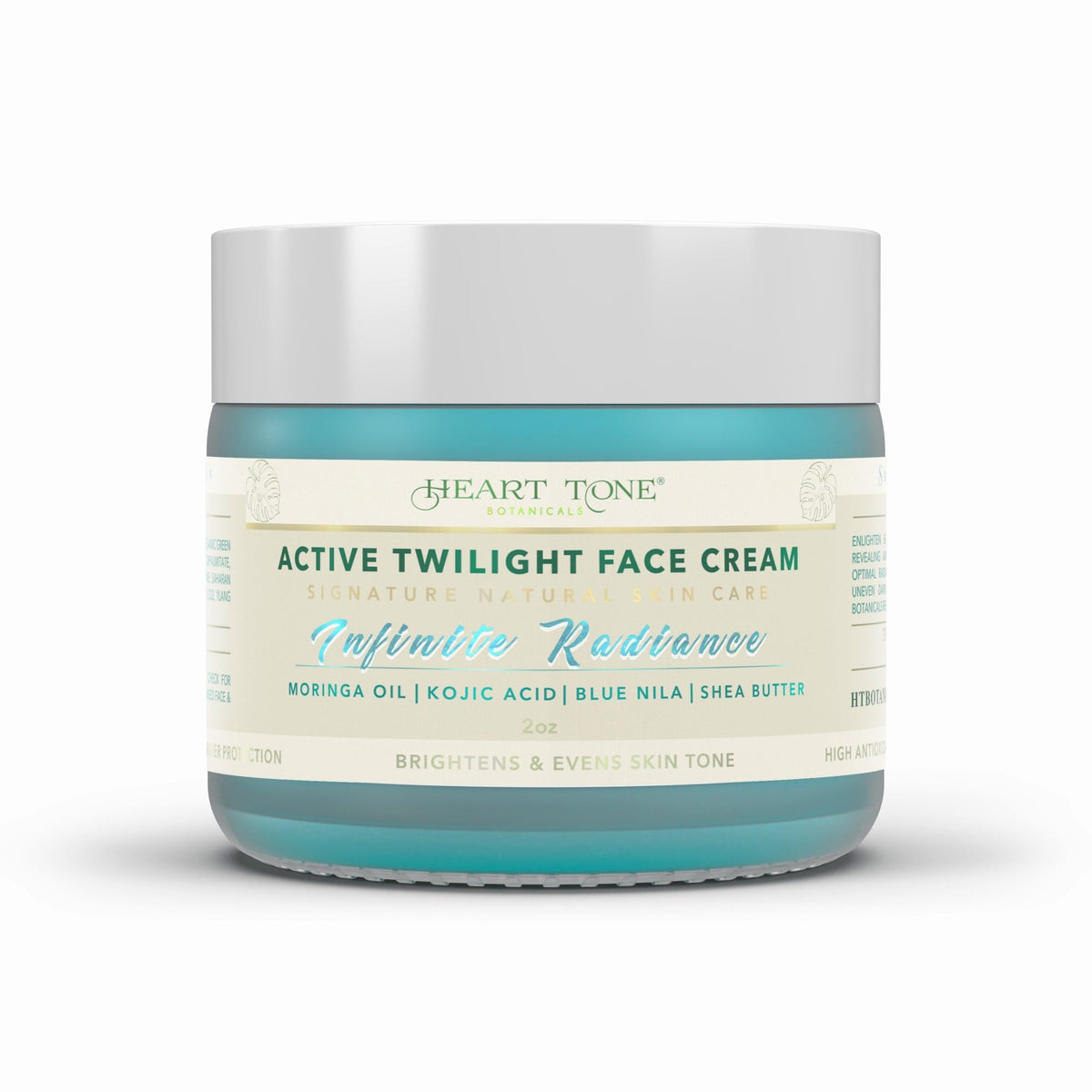
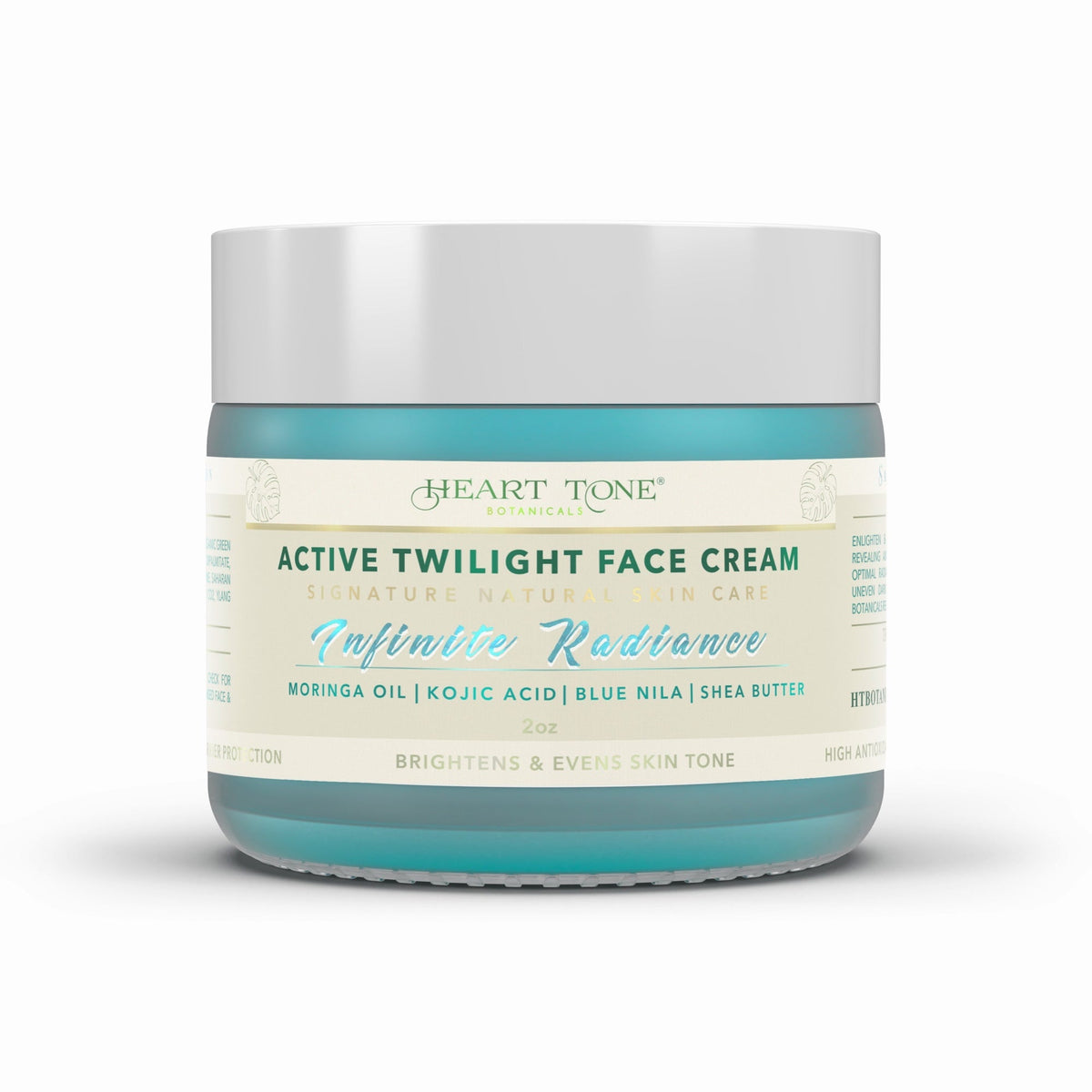
Our Active Twilight Face Cream, Complete Daily Face Moisturizer, and Dynamic Hydrogel Face Serum are all formulated without parabens — and without the long list of synthetic shortcuts that come standard in conventional beauty.
How to Transition Away From Parabens
You don't have to throw everything out at once. A practical approach:
- Start with the products that absorb most. Leave-on products like moisturizers, serums, body lotions, and deodorants stay on your skin for hours. Rinse-off products like shampoo and body wash have less exposure time. Prioritize the leave-ons first.
- Read the label before you replace. When a product runs out, spend 30 seconds scanning the ingredient list of the replacement before you buy. Look for that -paraben suffix.
- Be skeptical of “paraben-free” alone. A product can be paraben-free and still contain synthetic fragrance, PEGs, or phenoxyethanol at concentrations some dermatologists flag. Look for brands that are transparent about their full formulation philosophy, not just what they left out.
- Simplify your routine. Fewer products means less cumulative exposure. A simple, intentional routine with trustworthy products beats a 12-step shelf full of question marks.
If you're looking for a starting point, our The Clean Life Starter kit and the AM/PM Face System give you a full daily routine built around botanical actives with no hidden chemistry.
The Bottom Line
Parabens aren't a proven smoking gun — but they're a legitimate reason for caution, especially given cumulative daily exposure across multiple products over decades. The research on endocrine disruption is still developing, and the precautionary principle is a reasonable stance: when good alternatives exist, why not use them?
The more important shift is learning to read labels confidently, ask better questions about what's in your products, and support brands whose ingredient choices reflect the same values you bring to what you eat and how you live.
That transparency — knowing exactly what's in every formula and why — is what Heart Tone Botanicals was built on. Explore our full clean skincare collection and bath & body line to see what that looks like in practice.
Want to learn more about navigating clean beauty? Browse The Root blog for our guides on how to read ingredient labels, what greenwashing actually looks like, and why fragrance in skincare deserves a second look.

Leave a comment
This site is protected by hCaptcha and the hCaptcha Privacy Policy and Terms of Service apply.