












The Short Answer: Yes — But It Depends on What the Ingredients Actually Do

Natural brightening toothpaste is one of the most searched oral care categories on the market. And for good reason: conventional brightening products — from peroxide strips to bleaching gels — can leave teeth feeling sensitive and the experience uncomfortable. People are looking for a gentler approach. The question is: do botanical brightening toothpastes actually deliver a visibly cleaner result, or are they just marketing with a clean-label coat?
The answer depends entirely on the formula. A well-crafted natural brightening toothpaste, built around the right mineral and botanical ingredients, can genuinely contribute to a brighter, cleaner-looking smile — without bleach, peroxide, or abrasive synthetic compounds. Here's what to look for, and why the ingredient list matters more than the packaging claim.
Why Teeth Stop Looking Their Brightest
Teeth don't look their whitest for one simple reason: surface staining. Coffee, tea, red wine, and certain foods leave a residue on the outer surface of enamel over time. This residue builds up in microscopic surface irregularities, dulling the natural brightness of your teeth. Conventional brightening products address this in two ways: by bleaching (which uses peroxide to change the color of the tooth itself) or by polishing (which physically buffs away surface residue).
A natural brightening toothpaste works in the polishing tradition — using gentle minerals and botanicals to help lift surface residue and leave teeth looking noticeably cleaner after brushing. This is an appearance-based approach, not a chemical one, and for most people it's the gentler, more comfortable path to a brighter-looking smile.
Botanical and Mineral Ingredients With a Long History in Natural Oral Care
Kaolin Clay
Kaolin clay is one of the oldest mineral ingredients in natural oral care. A soft, fine-textured clay with a long history of use in cosmetic formulations, kaolin's gentle texture makes it well-suited for daily use — contributing to a polished, clean-looking surface appearance without the harshness of synthetic abrasives. It leaves teeth with a noticeable surface smoothness after brushing.
Sodium Bicarbonate (Baking Soda)
Baking soda has been used in oral care for over a century. Its mild, slightly alkaline texture has made it a long-standing staple of natural toothpastes — particularly those aimed at a cleaner, fresher-looking smile. It contributes to a clean-feeling rinse and has earned its place in natural oral care formulations for its simple, well-understood character.
Micro Hydroxyapatite (Spherical)
Hydroxyapatite is the naturally occurring mineral that gives tooth enamel its characteristic white appearance. Spherical micro hydroxyapatite — a form refined to a rounded, ultra-fine particle size — has a long history of use in Japanese dental care and has become one of the most sought-after ingredients in natural oral care formulations worldwide. Its smooth, mineral character contributes to a polished surface feel and leaves teeth looking clean and bright without any bleaching agent.
Zeolite (Clinoptilolite)
Zeolite clinoptilolite is a naturally occurring volcanic mineral that has been used in wellness traditions for centuries. In oral care, its porous, mineral structure contributes to the clean, polished sensation a quality toothpaste leaves behind. It pairs well with other gentle mineral ingredients and adds a subtle surface-brightening character to the overall formula.
Coconut Oil
Organic coconut oil has been a staple of traditional oral care in Ayurvedic practice for thousands of years. In a brightening toothpaste formula, it contributes to a smooth, clean-feeling texture that helps distribute mineral ingredients evenly across tooth surfaces — leaving the mouth with a characteristically fresh, clean feeling.
Xylitol
Derived from plant sources, xylitol is a naturally occurring sugar alcohol with a long history of use in natural oral care formulations. It contributes a clean, gentle sweetness to the toothpaste experience without artificial sweeteners, and supports the overall sensation of a fresh, clean mouth after brushing.
What to Avoid in a "Natural" brightening Toothpaste
The natural oral care market is full of products that carry brightening claims with very little behind them. Here's what to watch for:
- Excessive abrasives — Some natural brightening pastes rely on overly coarse silica or activated charcoal as the primary brightening mechanism. While activated charcoal can contribute to a surface cleaning effect, high concentrations of coarse abrasives can be harsh on daily use. Look for toothpastes with an RDA (relative dentin abrasivity) appropriate for everyday use.
- Peroxide in a "natural" formula — Some products market themselves as natural while still including hydrogen peroxide or carbamide peroxide. If you're trying to move away from bleaching, check the ingredients list carefully.
- Artificial flavors and synthetic sweeteners — A genuinely natural brightening toothpaste relies on botanical essential oils — peppermint, spearmint, wintergreen — not artificial flavor compounds. The sensory experience should come from real botanical sources.
- SLS (Sodium Lauryl Sulfate) — SLS is a common foaming agent that some people find uncomfortable, especially with daily use. A genuinely natural brightening formula achieves its cleaning action through ingredients, not synthetic foaming agents.
- Fluoride — This is a personal choice, but it's worth noting that a growing number of people choose to avoid fluoride for daily use. A quality natural brightening toothpaste can achieve a clean, bright-looking result without fluoride as part of the formula.
How to Choose a Natural brightening Toothpaste
When you're evaluating options, here's the shortlist:
- Look for gentle mineral polishers — kaolin clay, baking soda, spherical hydroxyapatite, zeolite — as the brightening foundation
- Choose formulas with botanical essential oils for freshness rather than artificial flavors
- Avoid bleaching agents (peroxide) if you want a gentle daily approach
- Check for SLS-free and fluoride-free if those matter to you
- Look for a formula designed for daily use — gentle enough to use morning and evening without concern
The Bottom Line
Natural brightening toothpaste works — when the formula is built around the right ingredients. Gentle mineral polishers like kaolin clay, spherical micro hydroxyapatite, and zeolite have a long and well-established place in natural oral care, and a well-formulated toothpaste built on these ingredients leaves teeth looking noticeably cleaner and brighter without bleach or harsh abrasives.
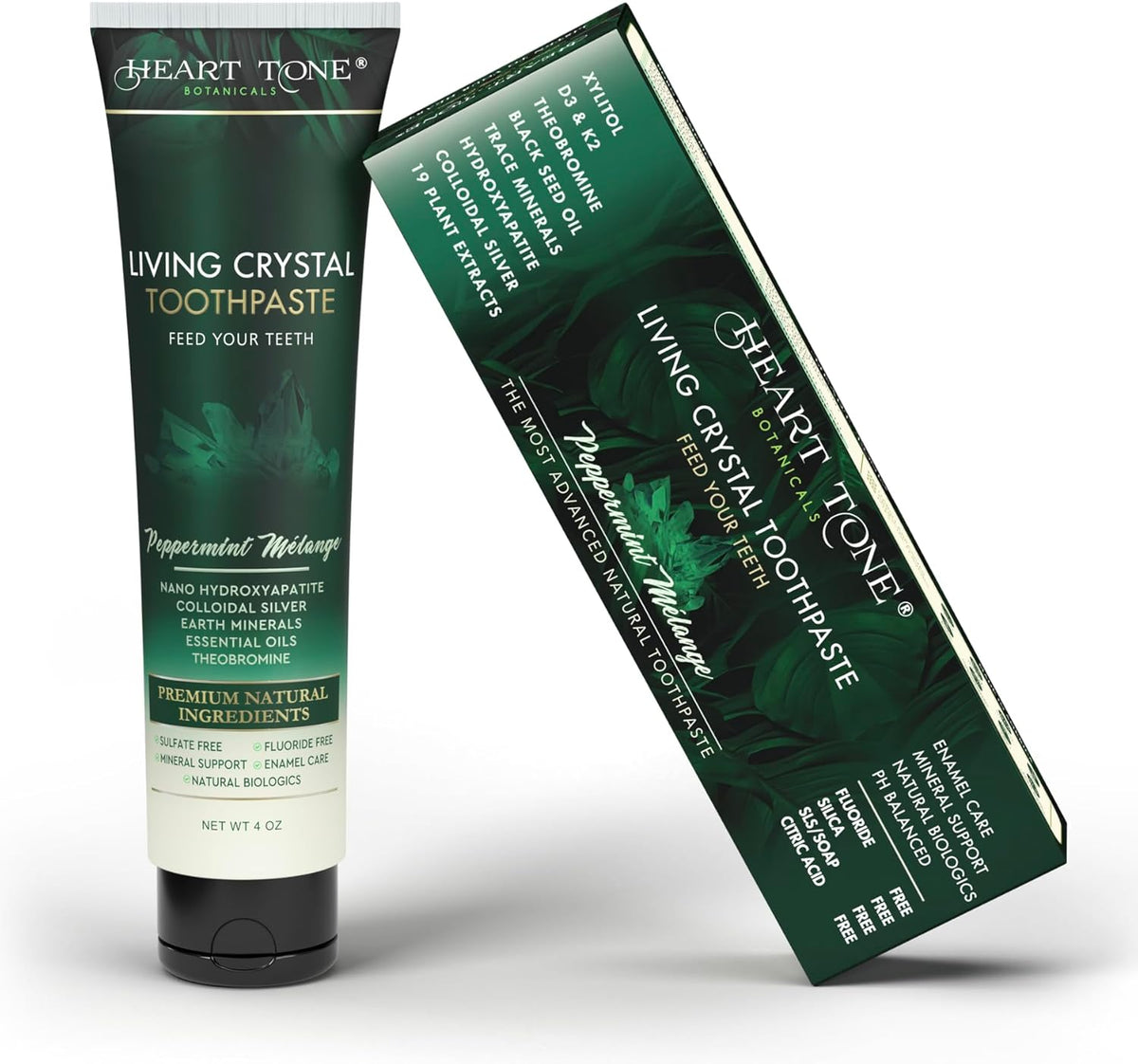
If you're looking for a natural brightening toothpaste that takes this seriously, Living Crystal Toothpaste from Heart Tone Botanicals is built on kaolin clay, spherical micro hydroxyapatite, zeolite clinoptilolite, and baking soda — alongside 30+ botanical ingredients including organic essential oils and colloidal silver. Fluoride-free, SLS-free, and formulated for daily use.
Explore our full natural oral care collection to build a complete daily routine — or read our guide to Natural Teeth brightening: What Actually Works for a broader look at brightening approaches.

Leave a comment
This site is protected by hCaptcha and the hCaptcha Privacy Policy and Terms of Service apply.