












The Short Answer: Grit and Formula Matter More Than the Word "Natural"

If your teeth feel sensitive to cold water, sweets, or a cold morning breeze, the toothpaste aisle can feel like a minefield. "Natural" is on nearly every box, but that word alone tells you almost nothing about how a formula will actually feel on sensitive teeth. What matters far more is texture — how abrasive the paste is, how it's sweetened, and what it leaves out.
Here's what actually separates a toothpaste that feels comfortable for sensitive teeth from one that doesn't, and what to look for on the label before you buy.
What "Sensitive Teeth" Usually Means
Tooth sensitivity is a common, everyday experience — a quick, sharp reaction to cold, heat, or sweetness that fades almost as fast as it arrives. It's one of the most frequent reasons people start reading toothpaste labels closely in the first place, and it's also one of the most misunderstood, since so many products use the word "sensitive" without explaining what's actually different about the formula inside.
For most people, the day-to-day experience of sensitivity is shaped less by any single miracle ingredient and more by the basics: how rough the paste feels against the tooth surface, how the mouth feels afterward, and whether the formula is gentle enough to use twice a day without irritation.
Understanding Abrasivity: The Number Most Labels Don't Show You
Every toothpaste has an abrasivity level — how much physical grit it uses to lift stains and polish the tooth surface. Toothpastes marketed for brightening tend to sit on the higher end of that scale, while formulas built for everyday comfort tend to use finer, softer polishing agents.
The problem is that most brands don't print an abrasivity rating anywhere on the box. Since you can't compare that number directly, the next best thing is texture: does the paste feel fine and smooth between your fingers, or does it feel like beach sand? A finer, silkier texture is usually a sign of a gentler polishing system — something worth paying attention to if your teeth already feel sensitive.
Ingredients like kaolin clay and bentonite clay are valued in natural formulas for their fine, gentle texture. Both have a long history of use in traditional tooth powders, prized for a smooth, non-gritty feel rather than an aggressive scrub.
What's in the Formula — and What Isn't
Coconut Oil
Organic coconut oil is a traditional base ingredient in natural toothpaste, used for centuries in various forms of oral care. It contributes a smooth, non-drying texture and a clean mouthfeel that many people find more comfortable than the foamier, sudsier texture of conventional pastes.
Xylitol
Xylitol is a plant-derived sweetener that has become a standard swap for sugar and saccharin in natural toothpaste. It leaves a clean, pleasant sweetness without the sticky aftertaste of artificial sweeteners, which is one reason it shows up so often in formulas built around a gentler daily experience.
Spearmint Oil
Spearmint has a long tradition in oral care and offers a softer, less intense cooling sensation than peppermint. For people whose teeth already feel reactive to cold, a milder mint profile can make the daily brushing experience feel more comfortable than a formula built around an intense menthol punch.
Colloidal Silver
Colloidal silver has a long history of use in traditional personal care formulations. In a toothpaste base, it's valued for its gentle, non-drying character rather than any harsh or astringent sensation.
What to Look For — and What to Skip
A few practical label-reading habits go a long way if your teeth feel sensitive:
- Skip SLS (sodium lauryl sulfate). This foaming agent can leave the mouth feeling dry and can be irritating with repeated daily use for some people.
- Look for a finer, smoother texture rather than a visibly gritty one, especially if brightening claims are on the box.
- Watch for artificial dyes and synthetic flavor blends — they add nothing to comfort and are easy for a natural formula to leave out entirely.
- Favor a milder mint profile if intense menthol has ever made your teeth feel worse, not better.
- Look for xylitol or other plant-based sweeteners instead of artificial ones for a cleaner-feeling finish.
None of this replaces a conversation with your dentist if sensitivity is new, sudden, or severe — but for everyday comfort, these are the details that actually show up in how a toothpaste feels twice a day, every day.
The Bottom Line
"Natural" on the label doesn't tell you how a toothpaste will feel on sensitive teeth — texture, sweetener, and mint intensity do. Look for a fine, non-gritty polishing base, a plant-derived sweetener like xylitol, and a milder mint profile, and skip SLS and synthetic dyes.
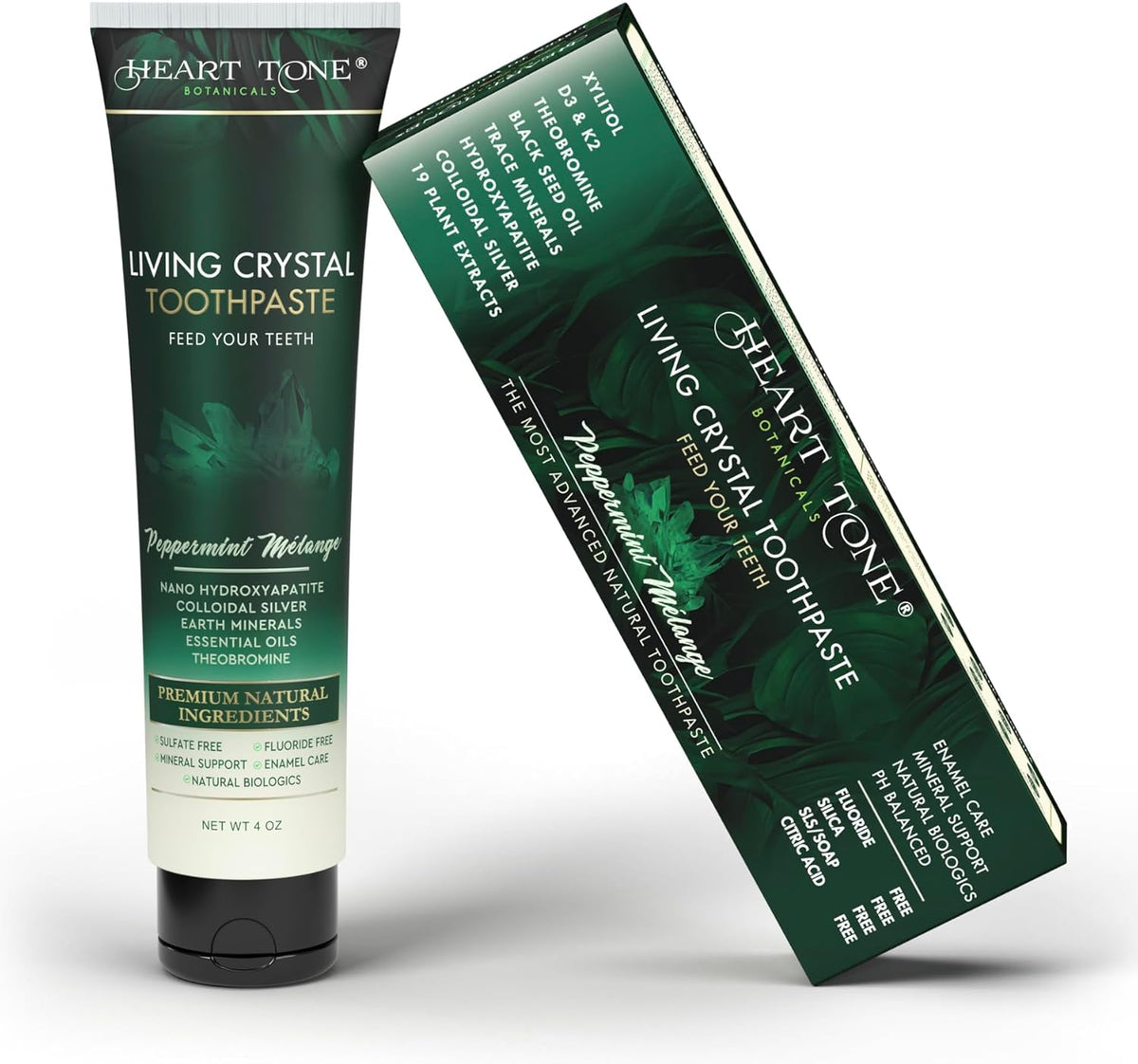
If you're looking for a fluoride-free formula built around a fine, non-gritty texture, Living Crystal Toothpaste from Heart Tone Botanicals is made with kaolin clay, coconut oil, xylitol, and colloidal silver, and is formulated without SLS or artificial dyes. You can also explore our full natural oral care collection for a complete daily routine.
For more on reading a natural toothpaste label from top to bottom, see our guide to Natural Toothpaste Without Fluoride: How to Read the Ingredient List Like a Pro.

Leave a comment
This site is protected by hCaptcha and the hCaptcha Privacy Policy and Terms of Service apply.