












You've seen the before-and-afters. The charcoal selfies. The activated charcoal packets, the LED gadgets, the DIY lemon-and-baking-soda pastes. The natural teeth brightening space is crowded — and a lot of it is noise.
Here's the honest breakdown: some natural brightening approaches are backed by solid science. Others do nothing. And a few — despite sounding natural and wholesome — actually damage the enamel they're supposed to protect.
This guide cuts through it. No hype, no cheerleading, just what the research actually says — and what it means for your daily oral care routine.
Why Teeth Yellow in the First Place

Tooth color comes from two sources: extrinsic stains that sit on the surface and intrinsic color that lives inside the tooth itself.
Extrinsic stains are caused by coffee, tea, red wine, tobacco, and certain foods — pigmented molecules called chromogens that bind to protein films on your enamel. These respond reasonably well to surface cleaning and mild abrasives.
Intrinsic color is the natural yellow-to-cream shade of your underlying dentin, which shows through the enamel. Enamel is actually semi-translucent — the thinner it is (from erosion or age), the more dentin shows through, and the yellower your teeth appear.
This distinction matters enormously. If a "brightening" method works by thinning or eroding your enamel, it's not brightening you — it's aging you faster. The enamel that was hiding the dentin? Gone.
What the Science Actually Says About Natural brightening
1. Hydroxyapatite: The Best Science-Backed Natural Option
Hydroxyapatite — specifically micro or nano-hydroxyapatite (HAP) — is the mineral your enamel is actually made of. It makes up about 97% of enamel and 70% of dentin. When it's included in a toothpaste formula, it behaves differently than any other "brightening" ingredient.
How it works: HAP particles fill micro-defects and tiny cracks in enamel, creating a smoother, more reflective surface. It also forms a thin layer of white, opaque crystals on the enamel surface that optically masks the yellow dentin underneath. Both effects contribute to genuine, measurable brightening — not through bleaching, but through structural repair.
A 2023 systematic review of 17 studies concluded that regular use of hydroxyapatite-containing products effectively whitens teeth — with effects noticeable over weeks and stable brightness improvements over about four months of regular use. One analysis estimated the brightening effect at roughly half that of peroxide bleaching, but without the sensitivity, oxidative damage, or pulp irritation.
Hydroxyapatite also a mineral-based ingredient erosion, is used in traditional botanical practice, and helps control biofilm — making it arguably the most versatile active in clean oral care today.
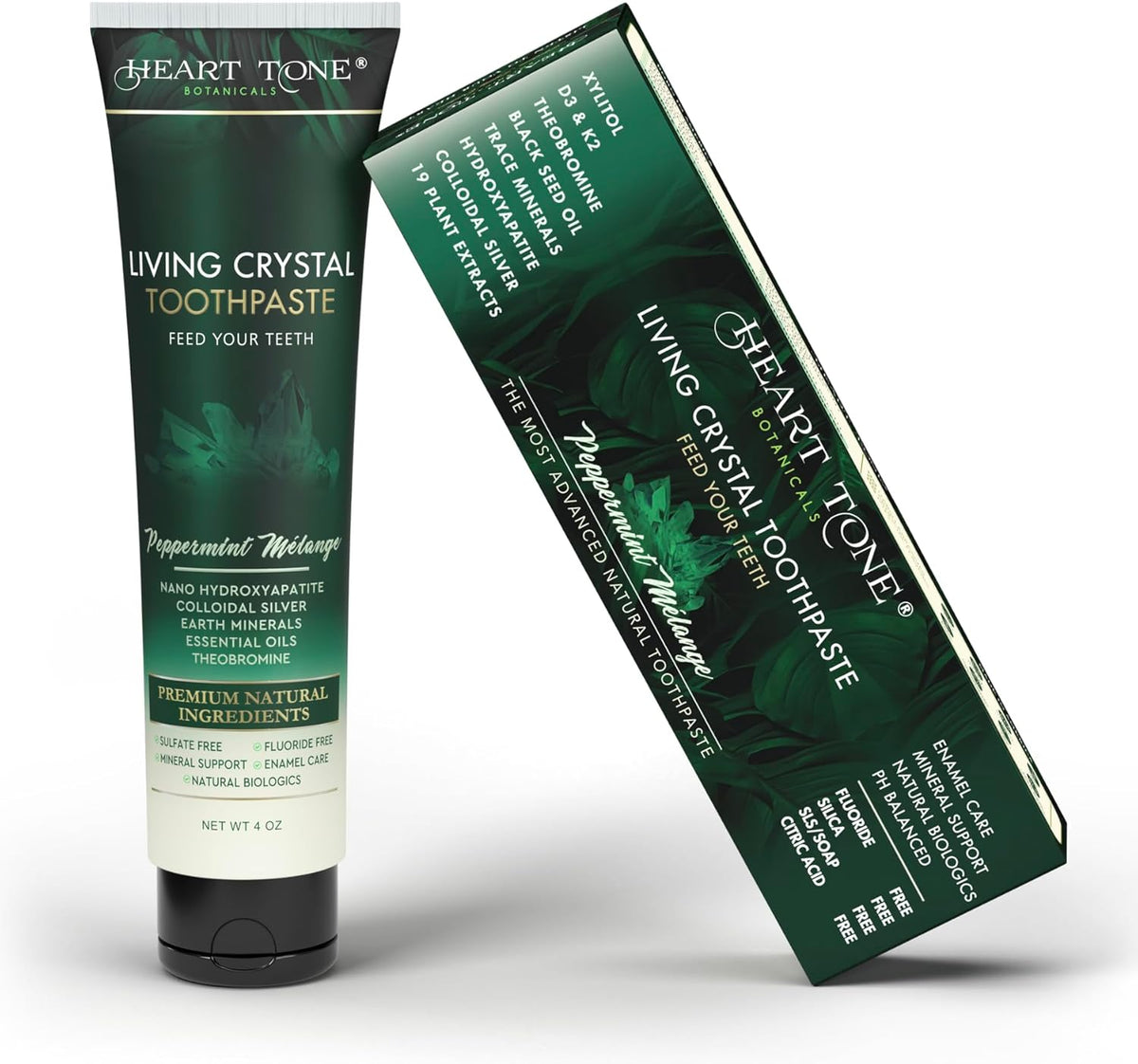
→ Living Crystal Toothpaste features micro-hydroxyapatite as a core active alongside theobromine and colloidal silver — a formula built around enamel health, not surface bleaching.
2. Baking Soda: Effective for Surface Stains, With Caveats
Baking soda (sodium bicarbonate) is one of the oldest and most-studied natural oral care ingredients — and it earns its reputation, within limits.
It's a mild mechanical abrasive that physically removes extrinsic stains and disrupts plaque. It also raises oral pH, neutralizing the acids that erode enamel and support tooth-surface-causing bacteria. The net effect: a real brightening from removing the surface layer of staining, plus a healthier oral environment.
What it cannot do: change intrinsic tooth color or support the enamel surface structure. The brightening is from stain removal only.
The caveat: context matters. Baking soda in a well-formulated toothpaste — with controlled abrasivity — is safe for daily use. DIY baking soda pastes scraped directly on teeth, especially when mixed with lemon juice or vinegar, can erode enamel over time. The acid-abrasive combination is particularly harsh.
3. Activated Charcoal: Surface Stain Removal, Weak Evidence
Activated charcoal can adsorb surface pigments and lift some extrinsic staining. In a well-formulated toothpaste — finely milled, with controlled abrasivity, and ideally combined with a mineral-based ingredientactives — it may offer modest brightening from stain removal.
The evidence, however, is considerably weaker than for hydroxyapatite or even baking soda. There are no robust long-term clinical trials on charcoal brightening specifically, and the main risk is abrasion: coarser charcoal powders and aggressive scrubbing can scratch enamel, exposing the very dentin you're trying to hide.
If you use charcoal products, stick to finely formulated toothpastes — not loose powders — and don't use them as your primary daily toothpaste.
What Doesn't Work (And What Actively Harms)
Some "natural brightening" methods circulate endlessly on wellness blogs despite having no meaningful brightening effect — or worse, causing real damage:
Lemon juice and apple cider vinegar: These are acids. Brief contact may temporarily remove some surface film, but repeated use erodes enamel. Thinner enamel = more yellow dentin showing through = teeth that look darker over time. This is well-documented in dental literature.
Oil pulling: Excellent for plaque reduction and freshening breath when done consistently. But there's no meaningful clinical evidence it changes tooth color. Don't expect brightening from your morning swish.
Strawberries and banana peel: Malic acid in strawberries and various compounds in banana peel have circulated as brightening tricks for years. In vitro studies show minimal effect. Neither has sufficient clinical evidence for meaningful brightening, and the acid content of strawberries creates the same concern as other acidic approaches.
Hydrogen peroxide DIY rinses: Higher-concentration hydrogen peroxide can irritate gum tissue and, with overuse, affect enamel structure. At low concentrations (0.1–1%), it's generally safe. But DIY use of undiluted drugstore peroxide on teeth isn't a "natural" approach and comes with real sensitivity risk.
Why "Natural" Teeth brightening Takes Longer — and That's Actually the Point
Peroxide bleaching works fast because it's oxidizing the chromogens inside your tooth — breaking down the pigmented molecules through a chemical reaction that penetrates the enamel. Results are dramatic and rapid. Side effects — sensitivity, enamel microcracking, pulp irritation — are also real, especially with repeated treatments.
Natural brightening via hydroxyapatite and mineral-based approaches works differently: it repairs and smooths the surface rather than chemically stripping it. Results build over weeks and months. The upside is that you're not depleting anything — you're restoring.
Think of it this way: bleaching subtracts. a mineral-based ingredientadds.
The Daily Routine That Actually Moves the Needle
If you want real, sustained, natural brightening, here's what the research supports:
1. Toothpaste with hydroxyapatite. Use it twice daily. Look for nano or micro-hydroxyapatite as an active, not just "mineral calcium" generics. Results build over time — give it at least eight weeks before judging.
2. Manage your staining habits. Coffee, tea, and red wine are the biggest contributors to extrinsic staining. You don't have to eliminate them — but rinsing with water after and brushing within 30 minutes makes a measurable difference.
3. Consistent plaque control. A clean tooth looks whiter. Plaque accumulation creates a dull, slightly yellowish film that undermines any brightening effort. Daily flossing and thorough brushing matter more than any single ingredient.
4. Oil pulling as a supplement, not a primary tool. There's no evidence it whitens, but there's reasonable evidence it supports a cleaner tooth surface and freshens breath — making the overall oral environment cleaner. Think of it as a complement to brushing, not a replacement.
→ Antioxidant Oil Pull pairs sesame oil with CoQ10, resveratrol, and 12 plant extracts — including myrrh, manuka, green tea, and turmeric — for a genuinely clean finish.
5. Rinse to finish. An alcohol-free botanical mouth rinse removes loosened debris, supports a healthy oral environment, and leaves you with a clean slate. Alcohol-based rinses can dry out the oral tissues and disrupt the oral environment — skip them.
→ Restorative Mouth Rinse is alcohol-free, pH-balanced, and botanically formulated with colloidal silver and aromatic herbs for a clean, refreshing close to your routine.
The Bottom Line
Natural teeth brightening is real — but it requires honesty about timelines and mechanisms.
Hydroxyapatite is the most credible natural brightening ingredient in the research literature. Baking soda (in a proper formula) meaningfully removes surface stains. Charcoal can help, in the right format. Everything else — lemon juice, oil pulling, banana peels — has minimal evidence for brightening and some come with real downsides.
The best natural brightening strategy isn't a trick or a shortcut. It's a daily routine built around ingredients that repair and protect enamel while keeping the surface clean. Over time, that approach delivers a genuinely brighter smile — without trading enamel for it.
→ Living Crystal Toothpaste is formulated around this philosophy: micro-hydroxyapatite, theobromine, colloidal silver, and botanicals in a pH-balanced paste designed for the long game.
Browse the full oral care collection at Heart Tone Botanicals →

Leave a comment
This site is protected by hCaptcha and the hCaptcha Privacy Policy and Terms of Service apply.