












You spend hours in the salon chair and good money getting your hair color just right. Then, within a few washes, it starts to fade — not because your stylist did anything wrong, but because most shampoos are silently stripping your color every time you lather up.
If you've ever noticed your vibrant red turning brassy, your rich brunette going flat, or your highlights fading faster than expected, the culprit is almost always the cleanser base in your shampoo. The good news? Switching to a natural, sulfate-free shampoo formulated for color-treated hair can make a dramatic difference — not just in how long your color lasts, but in the overall health and shine of your strands.
Why Regular Shampoo Is Your Color's Worst Enemy

Most conventional shampoos rely on sodium lauryl sulfate (SLS) or sodium laureth sulfate (SLES) to create that satisfying lather. These are powerful detergents — effective at removing oil and buildup, but also aggressive enough to open the hair cuticle and flush color molecules out with every wash.
Here's what happens at a microscopic level: when you color your hair, pigment deposits sit inside the cortex of each strand, held in place by the cuticle layer. Sulfates lift that cuticle, allowing water and cleansing agents to penetrate — and take color pigments with them when you rinse. The result: premature fading, brassiness, and dullness, often after just a handful of washes.
Beyond color, sulfates can also cause:
- Scalp irritation and dryness (especially for sensitive skin)
- Increased frizz by disrupting the hair's natural moisture balance
- Protein loss, weakening already-vulnerable color-treated strands
- Stripping of natural scalp oils, triggering overproduction as a compensatory response
For color-treated hair that's often already subjected to chemical processing, this combination is particularly damaging.
What to Look for in a Natural Shampoo for Color-Treated Hair
Not all "natural" shampoos are created equal when it comes to protecting color. Here are the key features that actually matter:
1. Coconut-Derived or Plant-Based Surfactants
Look for ingredients like coco-glucoside, decyl glucoside, or sodium cocoyl isethionate. These plant-derived cleansers clean effectively without the aggressive cuticle-lifting action of sulfates. They remove dirt, excess oil, and product buildup while keeping color molecules where they belong — inside your strand.
2. Aloe Vera as a Base
Aloe leaf juice as the primary ingredient is a hallmark of genuinely gentle formulations. It hydrates without weight, supports scalp health, and creates a protective environment for color-treated hair. Its pH is naturally close to hair's own, which helps the cuticle lie flat and reflect light — keeping color looking fresh and vibrant.
3. Moisture-Locking Plant Oils
Color-treated hair has often had its natural lipid layer disrupted by chemical processing. Replenishing this with plant oils is essential. Look for:
- Organic olive oil — rich in healthy fats and antioxidants, helps combat dryness and breakage
- Argan oil — lightweight and deeply nourishing, adds shine without heaviness
- Shea butter — provides emollient moisture and has been shown to offer UV-B protection, helping shield color from sun-induced fading
4. Antioxidant Botanicals
UV exposure is one of the leading causes of color fade, especially for reds and vivid tones. Antioxidant-rich botanicals like pumpkin seed oil, green tea extract, and vitamin E help neutralize free radicals and protect the structural integrity of the hair shaft — keeping color looking more vibrant, longer.
5. No Parabens, Phthalates, or Heavy Silicones
Parabens and synthetic fragrance can irritate a scalp already sensitized by color processing. Heavy silicones like dimethicone can build up over time, leaving hair looking dull and making it difficult to maintain moisture balance — exactly what color-treated hair can least afford.
The Color-Safe Wash Routine That Actually Works
Even the best natural shampoo works better when paired with smart washing habits. Here's what the research and real-world experience support:
Wash Less Frequently
Every wash — even with a gentle sulfate-free shampoo — moves some color. Aim to wash color-treated hair 2-3 times per week maximum, and rinse with cool water (heat opens the cuticle, accelerating fade). Many people find that once they switch to a gentler cleanser, their scalp also produces less oil, making less-frequent washing feel totally manageable.
Use Cool or Lukewarm Water
Hot water opens the hair cuticle, releasing color. Rinsing with cool water at the end of your wash seals the cuticle, locks in moisture, and keeps color more vibrant between salon visits.
Let the Conditioner Do Heavy Lifting
After a sulfate-free cleanse, follow with a nourishing conditioner from mid-shaft to ends. Color-treated hair needs the extra moisture to replace what processing took away — and a good conditioner also helps smooth the cuticle, which directly impacts how light reflects off your hair (and thus how vivid and glossy your color appears).
Protect Before Heat Styling
If you use heat tools, always apply a heat protectant first. Heat styling is particularly damaging to color-treated hair because chemical processing has already weakened the bonds within the hair shaft. Keeping heat styling to a minimum — and using low-to-medium settings when you do — extends the life of both your color and your hair's overall integrity.
The Roots & Locks Difference
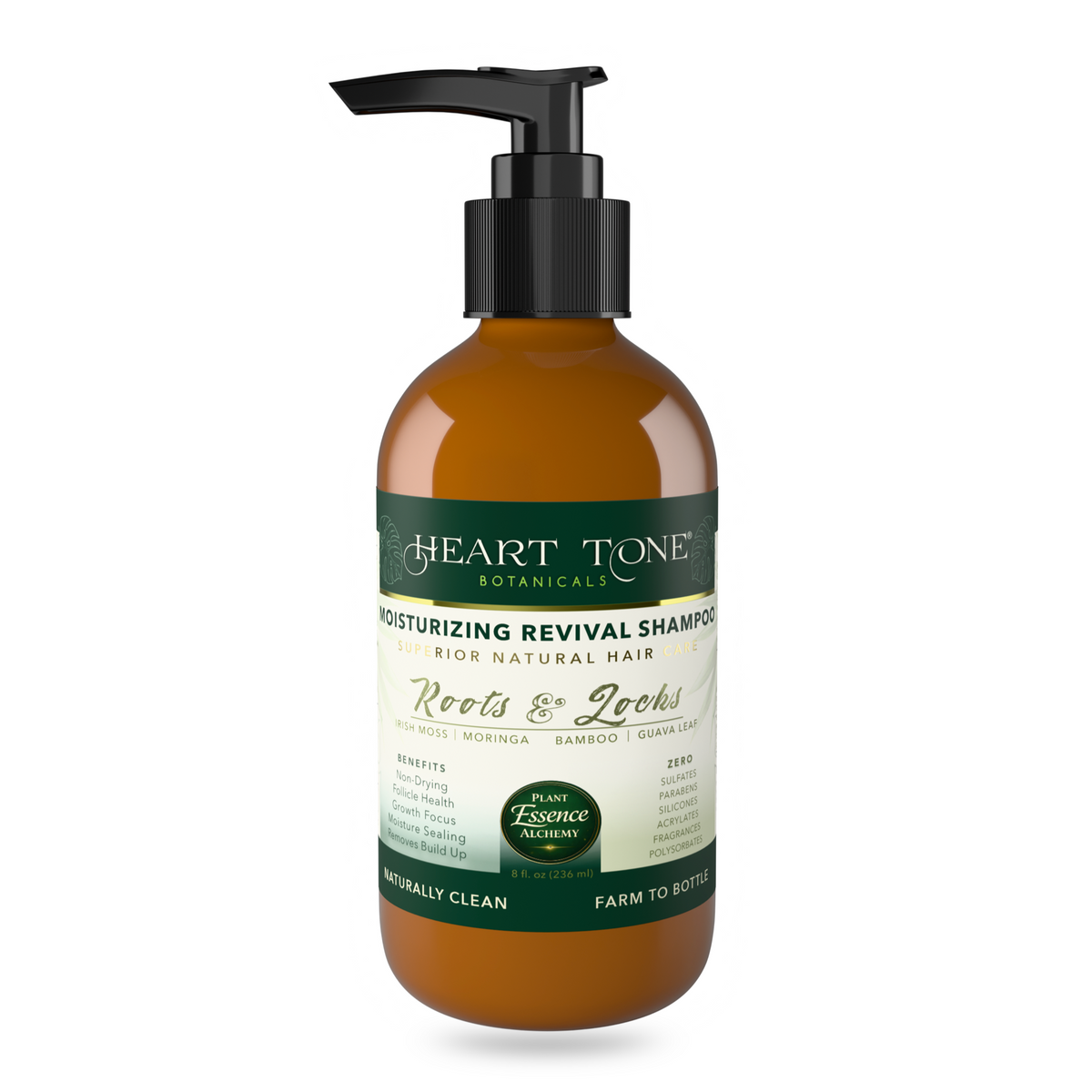
At Heart Tone Botanicals, we formulated the Roots & Locks Moisturizing Revival Shampoo with color-conscious hair in mind. Our formula is built on a gentle, plant-based cleansing base that cleans without stripping, paired with deeply moisturizing botanicals that restore softness and shine with every wash.
Free from sulfates, parabens, and synthetic fragrances, it's the kind of daily cleanser that lets you maintain your color investment without compromising the health of your hair or scalp. Many of our customers with color-treated hair report noticeably longer-lasting color after switching — and healthier, more manageable hair overall.
Pair it with the Roots & Locks Moisturizing Revival Conditioner for a complete color-protecting system that delivers moisture, smooths the cuticle, and supports the kind of shine that makes fresh color look its best.
Ready to explore more natural hair care options? Browse our full Hair Care Collection — thoughtfully formulated with botanical ingredients and zero compromise on performance.
Common Questions About Natural Shampoo and Color-Treated Hair
Will natural shampoo fully stop color fading?
No shampoo can completely stop fading — some degree of fade is natural over time. But switching to a sulfate-free, gentle formula dramatically slows the process, especially in those critical first few weeks after coloring. Many people report their color lasting 30-50% longer after ditching sulfate-based shampoos.
Do I need a shampoo specifically labeled "color-safe"?
Not necessarily. "Color-safe" is a marketing claim with no regulatory definition. What actually matters is whether the shampoo is sulfate-free, uses gentle plant-based cleansers, and avoids harsh stripping agents. A clean ingredient list tells you more than a marketing label.
Can I use natural shampoo on freshly colored hair?
Yes — in fact, it's one of the best things you can do immediately after coloring. Wait at least 48-72 hours after a fresh color service before washing (this gives the color time to fully set), then use your sulfate-free shampoo for all subsequent washes.
What about clarifying shampoos?
Occasional clarifying (every 4-6 weeks) can help remove mineral and product buildup that dulls hair. But reach for a gentle, low-sulfate or chelating formula rather than a harsh clarifier — and always follow with a deep conditioning treatment, since even gentle clarifying shampoos are more drying than everyday washes.
The Bottom Line
Protecting color-treated hair starts in the shower. The single most impactful change most people can make is switching from a sulfate-heavy conventional shampoo to a gentle, plant-based formula that cleans without stripping. Pair that with cooler water temperatures, less frequent washing, and a nourishing conditioner — and you'll spend less time worrying about fading and more time enjoying the color you paid for.
Explore the Heart Tone Botanicals Hair Care Collection and discover what genuinely clean, botanical hair care can do for your color-treated strands.

Leave a comment
This site is protected by hCaptcha and the hCaptcha Privacy Policy and Terms of Service apply.