












The Short Answer: Bakuchiol Is a Real Option — With a Different Story to Tell

If you've searched for a "natural retinol alternative," you've probably already tried retinol, or read enough about it to be cautious. Retinol and other retinoids are a well-known category of skincare ingredient, popular for addressing the visible look of fine lines and uneven texture — but they're also notorious for dryness, flaking, redness, and a "purging" period that can last weeks. For a lot of people, that trade-off isn't worth it, especially for sensitive or reactive skin.

That's where bakuchiol comes in. It's a plant-derived oil that's become one of the most searched ingredients in natural skincare, largely because people are looking for something that fits into a botanical routine without the harshness that often comes with synthetic retinoids. Here's what bakuchiol actually is, what it isn't, and how it fits into a natural face routine.
What Is Bakuchiol?
Bakuchiol is an oil derived from the seeds and leaves of Psoralea corylifolia, also known as babchi — a plant native to South Asia. Babchi has a long history in traditional South Asian herbal practices, where it has been used in topical preparations for generations. That history is part of what makes it appealing to people who want ingredients with roots in botanical tradition rather than a lab-only origin story.
In a finished skincare formula, bakuchiol behaves like a facial oil: lightweight, fast-absorbing, and easy to layer with other botanical oils. It doesn't have the sharp, medicinal scent some active ingredients carry, and it blends cleanly into an oil-based moisturizer without needing a separate delivery system.
Why People Reach for It Instead of Retinol
The appeal isn't that bakuchiol is a copy of retinol — it's that it offers a different experience for people who want to address the same visible concerns without the same side effects. Some of the reasons bakuchiol has become a go-to swap:
- It's plant-derived — no synthetic retinoid, which matters to people building an all-botanical routine
- It tends to feel gentler on the skin than retinol, without the dryness, flaking, or sun sensitivity many people associate with retinoid use
- It layers easily with other facial oils, serums, and hydrosols instead of requiring a slow, careful introduction period
- It fits both morning and evening routines, where many retinoids are evening-only because of sun sensitivity concerns
For people with sensitive or reactive skin in particular, a gentler-feeling daily option can mean the difference between sticking with a routine and giving up on it after a week of irritation.
What a Natural Bakuchiol Formula Should Actually Contain
"Bakuchiol" on a label doesn't tell you much on its own. The way it's formulated matters:
- Meaningful concentration — a trace amount buried at the bottom of an ingredient list isn't doing much
- A real oil base — bakuchiol works best layered with complementary botanical oils rather than diluted into a thin, mostly-water lotion
- No synthetic fillers competing for space — silicones and mineral oil dilute the botanical profile a natural formula is supposed to deliver
- Formulated for daily use — gentle enough for both AM and PM application without a break-in period
A formula that checks all four of these boxes is doing meaningfully different work than one that lists bakuchiol last, after a page of water and filler oils.
Where Bakuchiol Fits in a Natural Face Routine
Bakuchiol isn't usually a stand-alone product — it works best as part of a broader botanical oil blend, alongside other ingredients that support the skin's natural look and feel. The Complete Daily Face Moisturizer from Heart Tone Botanicals is built this way: a blend of 22 botanical oils, including bakuchiol oil alongside jojoba, moringa, rosehip, and prickly pear seed oil, crafted to leave skin feeling deeply moisturized and visibly nourished without a harsh active-ingredient adjustment period.
For a complete routine, pair a bakuchiol-containing moisturizer with a toning step like the Island Mist Toning Facial Elixir Hydrosol, or go all-in with The Complete Face Ritual, which bundles multiple Heart Tone Botanicals facial care essentials into one daily routine. If you prefer a dedicated AM and PM split, The AM/PM Face System is built around that structure.
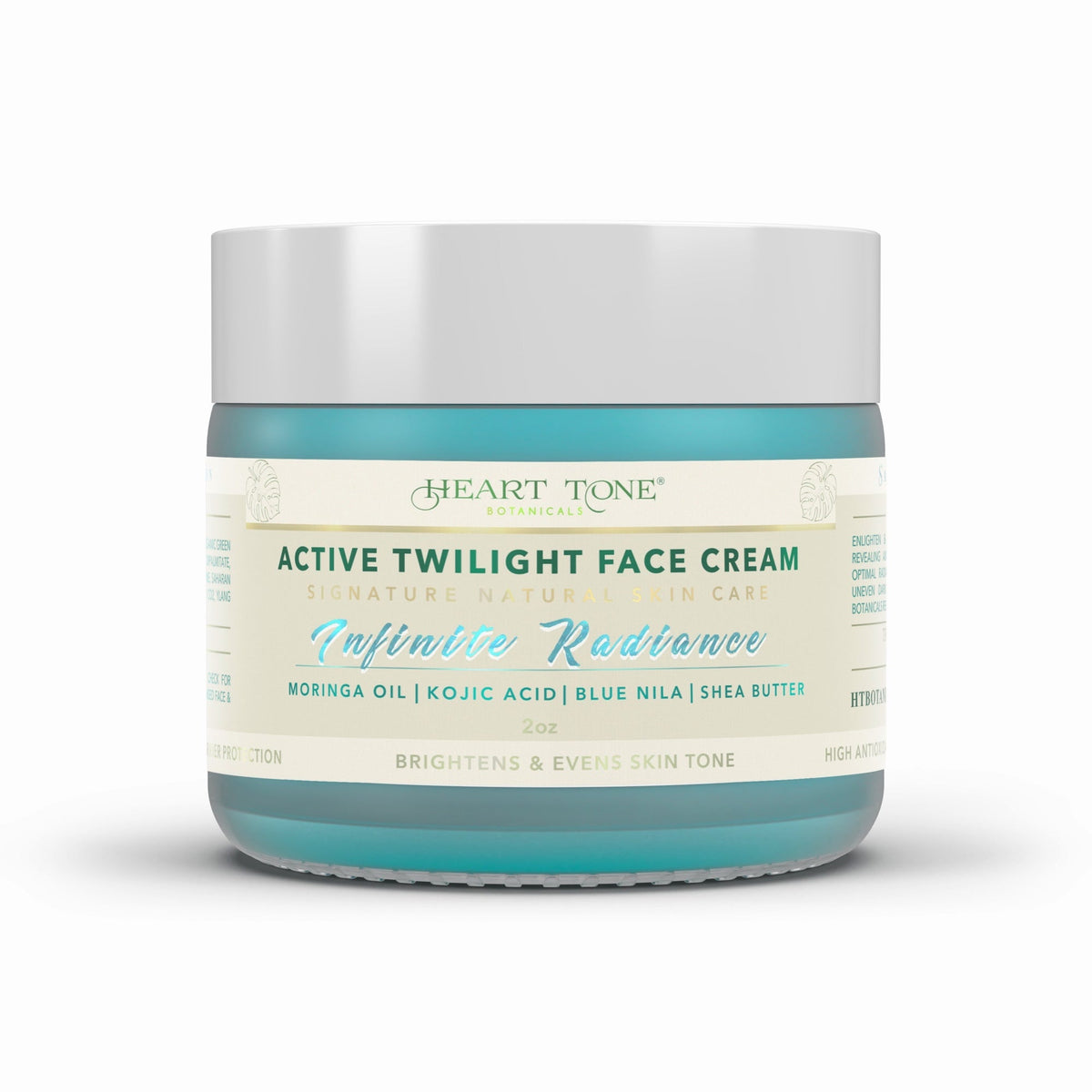
For evening use specifically, the Active Twilight Face Cream is formulated as an overnight layer, using shea butter, moringa oil, and botanical extracts to leave skin feeling deeply replenished while you sleep.
The Bottom Line
Bakuchiol isn't a one-to-one swap for retinol, and it shouldn't be marketed as one — it's a different plant-derived ingredient with its own history and its own feel. What makes it worth searching out is that it gives people who want to address the visible signs of aging an option that tends to feel gentler, fits a botanical routine, and doesn't require the same cautious introduction period many retinoids do.
If you're building a natural face routine and want bakuchiol as part of it, start with a moisturizer that is used for it as a real ingredient rather than an afterthought. Explore the full natural facial care collection from Heart Tone Botanicals to find the combination that fits your skin.
For more on building out the rest of your routine, read our guide to Skin Barrier 101: What It Actually Is and How to Support It Naturally.

Leave a comment
This site is protected by hCaptcha and the hCaptcha Privacy Policy and Terms of Service apply.