












Most People Ask About the Product. The Better Question Is About the Routine.

When people start looking for natural alternatives to conventional toothpaste and mouthwash, the conversation usually begins with a single product: "which natural toothpaste should I get?" or "is there a natural mouthwash that actually works?"
Those are fair questions — but they miss a more important one: what does a complete natural oral care routine actually look like?
The answer matters because the two products work differently, target different parts of the mouth, and create different experiences depending on when you use them. A natural toothpaste without fluoride performs differently than a conventional one. An alcohol-free botanical mouthwash leaves a completely different sensation than the sharp burn of a conventional rinse. Understanding what each one does — and how they work together — makes the switch feel intentional, not like a compromise.
Here's what a well-built natural oral care routine looks like from the ground up.
The Foundation: Brush, Then Rinse — But Timing Matters
The two-step routine is familiar: brush, then use mouthwash. But there's a small timing question that comes up when you switch to natural products. Some people prefer to rinse after brushing as a finishing step. Others rinse before brushing to loosen residue and prepare the mouth for a deeper clean. Both approaches are valid depending on the formula.
With an alcohol-free botanical mouthwash, the experience is genuinely different from a conventional rinse: no burn, no sharp alcohol sensation, no drying aftertaste. The botanical extracts contribute a fresh, clean feeling that lingers through the morning or evening. Many people find the rinse-after approach ideal — ending the routine with a botanical rinse that leaves the mouth feeling settled and comfortable without over-drying.
The practical rule: use the mouthwash however it fits naturally into your morning and evening routine. The goal is consistency, not a specific step order.
What to Look For in a Natural Toothpaste
The ingredient list is where natural toothpaste diverges most visibly from conventional formulas. Here's what the key ingredients are and what they contribute to the experience of the paste itself.
Coconut Oil
One of the most widely used ingredients in botanical oral care, coconut oil has been a staple in traditional care practices for centuries. In a natural toothpaste, it contributes to a smooth, non-gritty texture and leaves the mouth feeling clean and comfortable. It pairs well with other botanicals without overpowering the mint profile.
Kaolin Clay and Bentonite Clay
These naturally occurring mineral clays are used as gentle polishing agents in fluoride-free formulas. They contribute to the clean, polished sensation after brushing — while keeping the formula free of synthetic abrasives. A blend of both kaolin and bentonite offers a texture that's effective without feeling harsh.
Xylitol
Derived from birch and other plant sources, xylitol is one of the most well-recognized ingredients in natural oral care. It has a long history of use as a sweetener in oral care products and contributes a mild, pleasant sweetness that makes fluoride-free toothpaste more agreeable to use twice daily without artificial sweeteners.
Sodium Bicarbonate
Baking soda has been used in oral care for over a century. In a toothpaste, it contributes to a fresh, clean sensation and its gentle mineral texture works alongside the clay base to deliver the sensation of a well-polished surface. It's one of the oldest and most trusted ingredients in natural oral care.
Mint Complex
A well-formulated natural toothpaste uses a layered mint profile — not just a single peppermint note. A blend of peppermint, wintergreen, and cornmint essential oils creates a complex, lasting freshness that synthetic mint flavors simply don't replicate. The menthol cooling effect activates immediately and settles into a comfortable, non-clinical freshness that carries through the morning.
Colloidal Silver
Colloidal silver has a long history of use in traditional personal care formulations. In oral care, it contributes a clean, non-drying sensation without harsh chemicals or alcohol. It has been used in botanical oral care products for decades and pairs well with mint botanicals in both toothpaste and mouthwash formats.
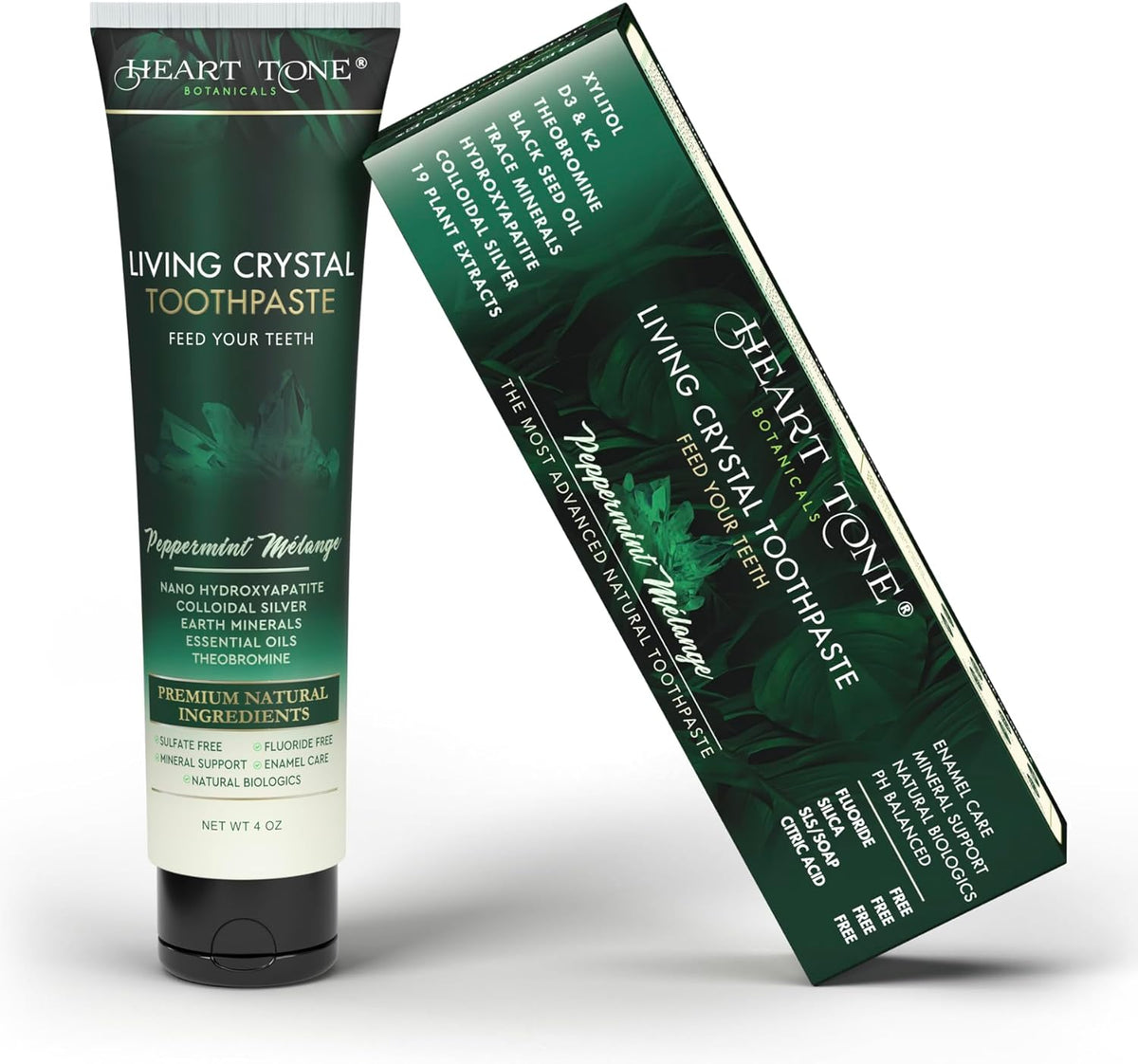
The Living Crystal Toothpaste from Heart Tone Botanicals is formulated with coconut oil, kaolin and bentonite clay, xylitol, baking soda, colloidal silver, and a mint complex of peppermint, wintergreen, and cornmint — fluoride-free, SLS-free, and crafted for daily use.
What to Look For in a Natural Mouthwash
The experience of a botanical mouthwash is genuinely different from conventional formulas, and knowing what each ingredient contributes helps you understand why the sensation feels so different.
Aloe Vera Leaf Juice
Farm-grown aloe vera is one of the most commonly used botanicals in alcohol-free oral rinses. It contributes a soothing, non-drying character that helps maintain comfortable moisture balance in the mouth — the opposite of the dry, tight feeling that can follow high-alcohol conventional rinses. It's particularly well-suited to daily use, morning and evening.
Myrrh Extract
Myrrh has been one of the most consistent ingredients in traditional oral care since antiquity. Myrrh resin extract contributes a distinctive botanical character and a lasting fresh sensation that carries through for hours after rinsing. Its use in oral care crosses cultures and centuries — one of the few botanicals with a documented oral care tradition stretching back to ancient Egypt and the Mediterranean world.
Layered Mint Complex
An effective natural mouthwash uses the same layered approach as a well-built toothpaste: a blend of peppermint, spearmint, wintergreen, and menthol crystals rather than a single mint note. The peppermint menthol activates instantly, the wintergreen adds brightness, and the spearmint softens the profile so the freshness lingers rather than spiking and fading.
Colloidal Zinc
Alongside colloidal silver, colloidal zinc contributes to the distinctive clean sensation of a well-formulated botanical mouthwash. Zinc has been used in oral care formulations for generations and pairs well with botanical mint complexes without introducing harshness or astringency.
No Alcohol
The most meaningful absence in a natural mouthwash is alcohol. Alcohol-based conventional rinses rely on ethanol for their sensation of cleanliness — but ethanol also causes dryness, particularly with twice-daily use. An alcohol-free formula built on botanical extracts delivers a fresher, longer-lasting sensation without the drying effect, and is comfortable for use every day without discomfort.
The Restorative Mouth Rinse from Heart Tone Botanicals includes farm-grown aloe vera, colloidal silver, colloidal zinc, myrrh, rhatany root, a layered mint complex of peppermint, spearmint, and wintergreen, and more than a dozen additional botanical extracts — alcohol-free, fluoride-free, and built for daily use morning and evening.
What to Expect When You Switch
The most common question people have about switching to natural oral care is: "will it feel the same?" The honest answer is: it will feel different — and for most people, genuinely better once the transition settles in.
The first week or two is an adjustment. If you're used to the sharp burn of an alcohol rinse or the heavy foam of an SLS toothpaste, the botanical versions feel quieter. The foam is less aggressive because there's no sodium lauryl sulfate to produce it. The mouthwash sensation is fresher and cooler rather than burning and sharp.
After that initial period, most people describe the conventional formulas as harsh by comparison. The botanical routine becomes what "clean" feels like — a different, more comfortable baseline that's easier to maintain twice a day over the long term.
A few things to expect in the first two weeks:
- Less foam. Natural toothpaste without SLS produces noticeably less lather. This is normal — foam is not what cleans your teeth, and most people adjust quickly.
- A milder rinse sensation. Alcohol-free mouthwash doesn't sting. It feels cool and fresh rather than sharp and burning. This is the sensation of the botanical mint complex at work, not a sign that the rinse isn't doing its job.
- A different aftertaste. Natural botanical ingredients have a more complex, layered aftertaste than synthetic mint flavors. Most people find this more pleasant after the initial adjustment.
Morning vs. Evening: Does It Matter?
Both the toothpaste and mouthwash are formulated for twice-daily use — morning and evening. There's no functional difference in the formulas based on time of day, so the routine is the same both times.
Where morning and evening differ is in what you're rinsing away. In the morning, you're clearing overnight buildup and starting with a fresh palate. In the evening, you're clearing the day's residue and finishing with the botanical rinse as the last thing in contact with your oral tissues before sleep.
For that reason, some people prefer to use the mouthwash as their final step in the evening routine rather than eating or drinking anything after. The botanical ingredients have the opportunity to continue contributing to freshness through the night without being rinsed away by water or food.
Putting the Routine Together
A natural oral care routine doesn't require an elaborate process. The two-step baseline — brush with a fluoride-free botanical toothpaste, rinse with an alcohol-free botanical mouthwash — covers the core daily experience. Consistent daily use is what builds the long-term feeling of a clean, fresh mouth.
If you want to go further, oil pulling is a traditional botanical practice that many people add as a weekly or morning ritual before brushing. It's a separate step from rinsing, not a replacement for mouthwash.
Explore the full Heart Tone Botanicals oral care collection for toothpaste, mouth rinse, and oil pull options — everything you need to build a complete botanical daily routine.

Leave a comment
This site is protected by hCaptcha and the hCaptcha Privacy Policy and Terms of Service apply.