












Why Your Skin Feels Different in the Evening

There's a reason you reach for different products before bed than you do in the morning. The conditions on your skin change throughout the day — no UV exposure in the evening, lower ambient temperatures in most sleeping environments, and the general sense that a richer, more substantial formula simply feels comfortable when you're winding down. That's the case for a botanical night cream: a richer, more emollient evening moisturizer designed to feel deeply nourishing and comfortable while you sleep.
If you're looking at natural alternatives to conventional night creams, here's what to look for — and what to leave on the shelf.
What's Actually in Most Conventional Night Creams
Conventional night creams often rely on a combination of occlusive silicones (dimethicone, cyclopentasiloxane), synthetic retinoids, fragrance compounds, and preservative systems like parabens or phenoxyethanol. These can leave skin feeling coated rather than truly moisturized. For anyone with sensitive skin, the synthetic fragrance and preservative load is often the first thing they notice — in the wrong way.
The appeal of a botanical alternative isn't just about ingredient philosophy. It's about the sensory experience. Botanical oils and butters tend to absorb differently than silicone-based formulas, and many people find them more comfortable for nightly use over time.
What to Look for in a Natural Night Cream
When evaluating a botanical night cream, the ingredient list tells you most of what you need to know. A few categories worth looking for:
Rich botanical oils. Oils like moringa, castor, and green tea have long histories of use in traditional skincare. They tend to have a substantial, nourishing feel without the heavy, occlusive character of synthetic waxes. Moringa oil in particular has been valued in botanical traditions for generations — people who use it regularly describe skin that looks visibly softer and more comfortable after application.
Botanical butter bases. Shea butter is one of the oldest and most widely used plant-based moisturizers in the world, with centuries of use across West African, European, and North American botanical traditions. Its texture is rich but workable — melting on contact and leaving a comfortable, non-greasy feel that makes it a natural choice for evening formulas.
Traditional botanical extracts. Ingredients like licorice root extract have appeared in skincare preparations for centuries — traditional formulations drew on it across Chinese, Ayurvedic, and European botanical contexts. What most people notice about licorice root–containing formulas is that they leave skin feeling comfortable and even-toned in appearance after regular use.
Vitamins in botanical form. Vitamin E is a staple in botanical night creams. It has been used in natural skincare for decades, and its rich, nourishing character makes it a complement to oil-based formulas. It also serves as a natural antioxidant within formulas — something that synthetic alternatives don't offer in the same way.
Aromatic botanicals. Essential oils like ylang ylang and coriander do more than contribute fragrance. They have long histories in botanical skincare traditions, and their natural aromatic character adds to the sensory experience of an evening routine in a way that synthetic fragrance simply doesn't replicate. Many people find the ritual of applying a naturally-scented night cream more calming — which matters when you're preparing for sleep.
What a Botanical Night Cream Should Not Contain
As important as what's in a night cream is what isn't. A genuinely botanical formula leaves out:
- Synthetic fragrance — "fragrance" or "parfum" on a label can represent dozens of unlisted compounds, some of which are associated with sensitivity reactions, especially with daily application to the face
- Silicone-based occlusives — dimethicone, cyclomethicone, and related ingredients create a surface coating rather than a botanical moisturizing experience
- Parabens and formaldehyde-releasing preservatives — common in conventional formulas but absent from a clean botanical product
- Artificial colorants and petrochemical byproducts — added for visual appeal, not for your skin
Looking for the words "fragrance" or "parfum" in an ingredient list is often the quickest test. Many products marketed as "natural" still include synthetic fragrance blends. If the label doesn't list every individual aromatic ingredient, it's a signal worth noting.
How to Use a Botanical Night Cream
A night cream works best as the final step in your evening routine — applied over any serums or lighter products, so it sits as the outermost layer. The sequence most people find comfortable:
- Cleanse (or simply splash with cool water in the evening)
- Toner or facial mist — applied to damp skin as a first step
- Serum — water-based serums go under richer products
- Night cream — the richest, most emollient layer, applied last
Applying night cream to slightly damp skin rather than completely dry skin helps the formula spread more evenly and gives a more comfortable, hydrated feel after application.
Building a Complete Botanical Nighttime Ritual
A botanical night cream feels most complete when paired with products designed to work alongside it. A few worth considering:
The Island Mist Toning Facial Elixir Hydrosol is formulated with rose hydrosol, orange blossom hydrosol, fermented rice water, and witch hazel — designed as a mist-on first step before richer products. It includes colloidal silver and colloidal gold, two ingredients with long use histories in botanical skincare traditions, and leaves skin feeling refreshed and toned before the next step.
The Dynamic Hydrogel Face Serum pairs well before a night cream for anyone who wants the lightweight, water-binding feel of hyaluronic acid and ferment-based hydration followed by the richer character of a botanical oil cream. Applied in the right order — lighter serum first, richer cream last — the two products feel genuinely complementary.
For mornings, the Complete Daily Face Moisturizer is a lighter daytime formula built from 22 botanical oils — jojoba, moringa, rosehip, bakuchiol, prickly pear seed, and more — designed as a more breathable morning alternative to a rich evening cream.
The Botanical Skin Gel — formulated with aloe vera, calendula, comfrey, chamomile, and gotu kola — is a lightweight option some people prefer in the evenings when a heavier cream feels like too much, or as a targeted layer on specific areas before a richer product.
The Heart Tone Botanicals Night Cream
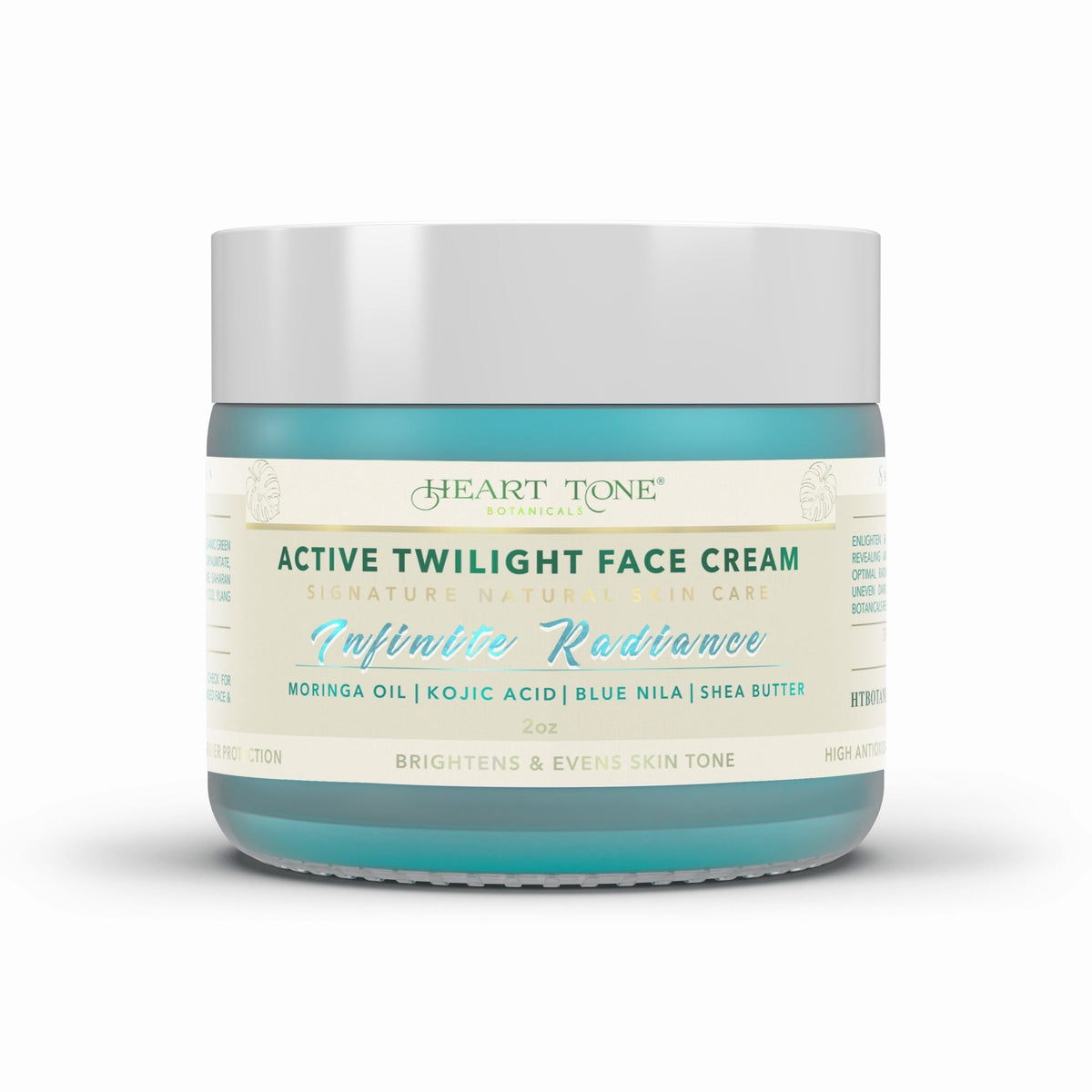
The Active Twilight Face Cream is Heart Tone Botanicals' PM nighttime formula — formulated with organic shea butter, organic moringa oil, organic green tea oil, organic castor oil, licorice root extract, kojic acid dipalmitate, Saharan Blue Nila powder, vitamin E, coriander seed CO2, and ylang ylang essential oil. No synthetic fragrance. No silicones. No parabens.
It's a rich, botanically formulated evening cream that leaves skin feeling deeply moisturized and visibly nourished the morning after — and it smells the way botanical skincare is supposed to smell: like the plants it was made with, not a laboratory approximation of them.
Available individually, or as part of the The AM/PM Face System — all four Heart Tone face products together for a complete AM and PM routine — or the The Complete Face Ritual, the three-product core routine for daily use.
Explore the full facial care collection at Heart Tone Botanicals.

Leave a comment
This site is protected by hCaptcha and the hCaptcha Privacy Policy and Terms of Service apply.