












What Is Castile Soap — and Why Do People Switch to It?

True castile soap is one of the oldest soap-making traditions in the world. Originating in the Castile region of Spain, it was originally crafted from olive oil — setting it apart from the synthetic-detergent-based cleansers that fill most store shelves today.
The name has evolved over time. Today, "castile soap" broadly refers to any plant oil-based liquid or bar soap made with olive oil as a primary base — often blended with coconut, sunflower, and other organic oils to improve lather and texture. What defines it is what it does not contain: no sodium lauryl sulfate (SLS), no synthetic foaming agents, no petroleum-derived surfactants, and no artificial fragrance.
People who make the switch often describe castile soap as a kind of simplification. One bottle — sometimes two scents, sometimes unscented — replaces a bathroom cabinet's worth of specialty products, each with its own synthetic formulation and fragrance stack.
The Castile Difference: Saponification, Not Detergent
Most conventional body washes and liquid hand soaps are formulated with synthetic detergents — chemicals engineered for aggressive foam and lather, not for ingredient simplicity. Castile soap uses a different process entirely: plant oils react with an alkali (potassium hydroxide for liquid soap, sodium hydroxide for bar soap) to produce true soap molecules through a process called saponification. None of the potassium hydroxide remains in the finished product — it is consumed in the reaction.
The result is a cleansing product made entirely from plants, with a gentler, creamier lather and no synthetic surfactant residue. Formulas that list "none remains after saponifying oils into soap" on the label are simply being transparent about how the process works — and that the finished soap is free of the starting alkali.
Castile Soap Uses: What One Bottle Actually Covers
Part of castile soap's appeal is its reach. The same bottle you use in the shower can replace a range of products throughout your home. Here's how most people use it:
1. Body Wash
Applied directly to a loofah, washcloth, or hands — or diluted slightly with water — castile soap produces a lather that rinses cleanly and leaves skin feeling refreshed. Many people find it less stripping than conventional body wash, particularly those with drier or more reactive skin. The unscented variant works well for anyone who prefers fragrance-free bathing.
2. Hand Soap
One of the simplest household swaps: fill a foaming pump dispenser with one part castile soap and four parts water. The result is a foaming hand soap that leaves hands feeling clean and comfortable — without synthetic fragrance blends or preservative cocktails. Scented variants (citrus, floral, herbal) give the same clean feel with a more botanical sensory experience.
3. Face Wash (for Some Skin Types)
For those who prefer a minimal, unscented face wash, an unscented castile soap can work as a gentle daily cleanser. It rinses completely clean and leaves no residue. Those with drier skin may find it best followed by a light moisturizer, as with any cleanser.
4. Shampoo or Clarifying Wash
Some people use diluted castile soap as a clarifying shampoo — particularly during a transition away from conventional products. It tends to work best for normal-to-oily hair types; those with dry or highly textured hair often prefer a light conditioner follow-up. Start diluted (one tablespoon per cup of water) and adjust from there.
5. Light Household Cleaning
A few drops of castile soap in water creates a general-purpose surface cleaner for countertops, sinks, tile, and floors. It cuts grease and leaves surfaces looking clean without the residue that some synthetic spray cleaners leave behind. For floors, keep dilution light to avoid sudsing.
6. Produce Rinse
A small amount of castile soap diluted in water can be used to rinse fruits and vegetables before eating — then rinsed off thoroughly. It leaves produce looking and feeling clean without synthetic chemical residue.
7. Pet Bath
Many pet owners reach for diluted castile soap for bathing dogs and other animals. The absence of synthetic fragrance, dyes, and harsh surfactants makes it a preferred choice for pets with sensitive skin or coats. Rinse thoroughly.
One Practical Note on Mixing
Castile soap and acidic ingredients — vinegar, lemon juice, citric acid — do not mix well. Combining them causes the soap to curdle into a white residue. Use them separately in your cleaning routine: castile soap for washing, an acidic rinse (if needed) as a separate step after thorough rinsing.
What to Look for in a Real Castile Soap
Not everything labeled "natural soap" is true castile. A few things to check on the label:
- Plant oils first — olive oil, coconut oil, sunflower oil, castor oil, jojoba oil should lead the ingredient list. If water is first and followed by SLS or cocamidopropyl betaine, it is a detergent-based formula, not castile.
- Potassium hydroxide is normal in liquid castile — it converts the oils into soap and none remains in the finished product. "None remains after saponifying" is a transparent disclosure about the process.
- Essential oils, not "fragrance" — "fragrance" on an ingredient label is a catch-all term that can cover dozens of undisclosed synthetic chemicals. Real castile uses identifiable plant-derived essential oils.
- A short, recognizable ingredient list — a well-formulated castile soap doesn't need a long tail of stabilizers, synthetic preservatives, or emulsifiers.
- Certified organic where possible — organic certification on the base oils means the farming practices that produced them met a defined standard.
The Heart Tone Botanicals Castile Soap Line
All of Heart Tone Botanicals' castile soaps share the same organic plant oil base: organic olive oil, coconut oil, sunflower oil, palm kernel oil, castor oil, hemp oil, and jojoba oil — no SLS, no synthetic surfactants, no artificial fragrance. Each scent variant uses a distinct botanical essential oil profile.
Herbal Castile Liquid Soap — a classic herbal scent built with lemon-scented tea tree, eucalyptus lemon, clove, cinnamon leaf, thyme, and oregano essential oils. A warm, botanical aroma that feels clean and grounded.
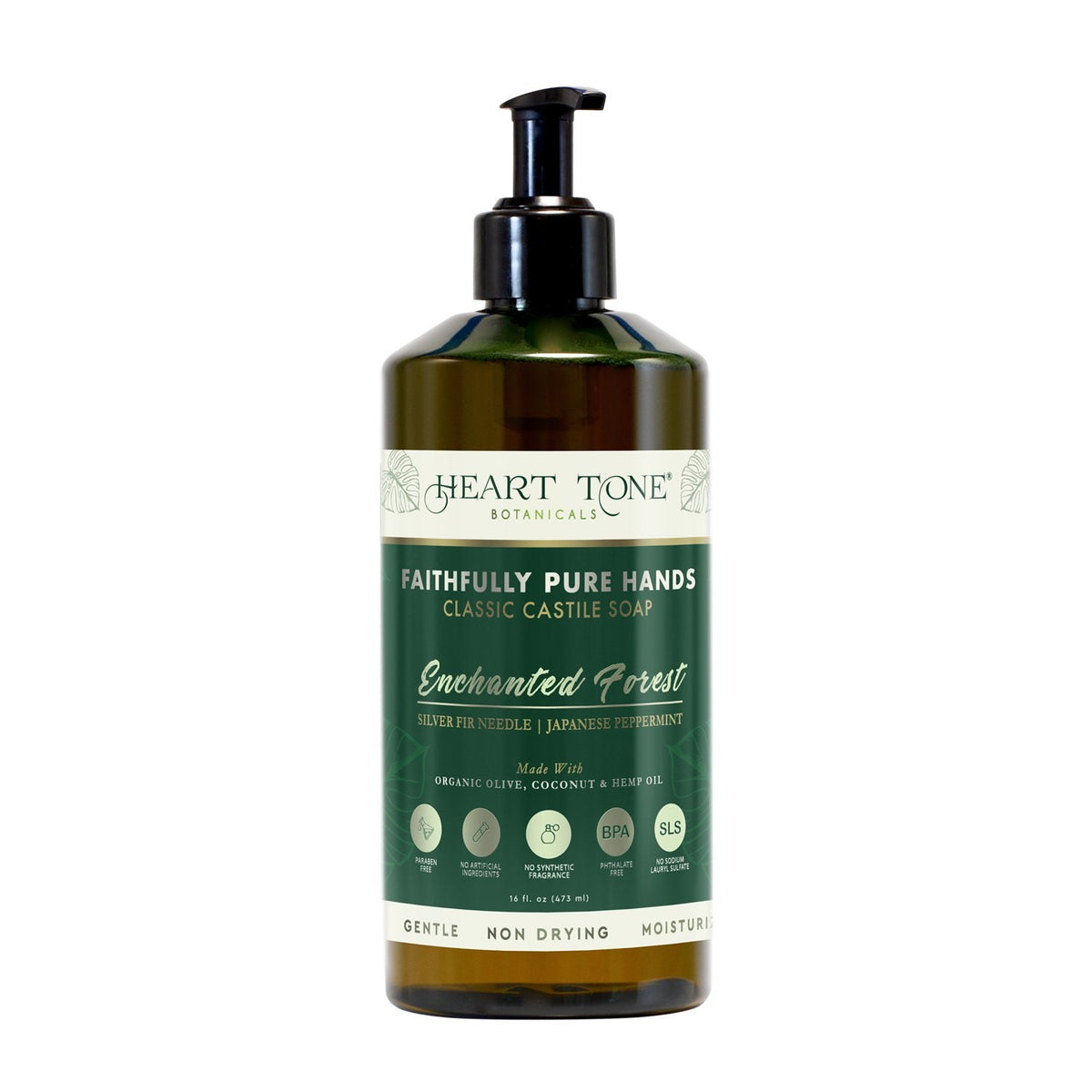
Faithfully Pure Castile — Enchanted Forest — woodsy and fresh, with silver fir needle, peppermint, Japanese peppermint, and eucalyptus peppermint essential oils. An invigorating, forest-inspired scent that rinses cleanly.
Faithfully Pure Castile — Florida Citrus — bright and energizing, with orange, key lime, grapefruit, bergamot, and lemon essential oils. A cheerful citrus blend that suits a morning routine.
Faithfully Pure Castile — Wild Blossom — soft and floral, with lavandin, lavender, clary sage, and atlas cedarwood essential oils. A calming botanical blend.
Faithfully Pure Castile — Pure Native — completely unscented. The same organic oil base with no essential oils added. The choice for sensitive skin, fragrance sensitivities, babies, and pets.
All five are formulated without synthetic fragrance, SLS, artificial preservatives, or alcohol. Potassium hydroxide is used in the saponification process and none remains in the finished soap.
You can also explore the full body care collection — including the Moroccan Exfoliating Black Soap for a hammam-inspired cleanse, and the Ancient Organic Bar Soaps in several botanical blends.

Leave a comment
This site is protected by hCaptcha and the hCaptcha Privacy Policy and Terms of Service apply.