












The Short Answer: pH Balance Is a Formulation Choice, Not Just a Marketing Word

"pH-balanced" shows up on a lot of mouthwash labels, but it rarely gets explained. It isn't a health claim — it's a description of how a formula is built. A mouth rinse that leans too acidic can leave a sharp, uncomfortable aftertaste. One that leans too alkaline can feel chalky or drying. A well-balanced formula is designed to sit in a comfortable middle range, so the rinse feels clean and neutral rather than harsh in either direction.

Most conventional mouthwashes are built around a single job — a strong initial sensation — and pH balance is an afterthought. Alcohol-based rinses in particular tend to skew acidic, which is part of why they can leave the mouth feeling dry or tight afterward. A botanical, alcohol-free rinse takes a different approach: formulating the whole rinse, not just the flavor, around a comfortable daily-use experience.
What Actually Changes the Mouth's Environment Day to Day
The mouth's environment shifts constantly. Coffee, citrus, sports drinks, and even normal saliva flow all move it in one direction or another throughout the day. That's a normal, unremarkable part of having a mouth — not a problem that needs fixing with any single product. What a rinse can reasonably do is avoid making that swing worse.
To leave your mouth feeling clean and comfortable rather than raw or dry, a rinse should:
- Avoid a sharp, acidic aftertaste that lingers past the initial rinse
- Skip high concentrations of alcohol, which can pull moisture from oral tissue
- Leave a neutral, fresh sensation rather than a burning or tightening one
- Feel comfortable enough to use morning and night without adjustment
This is a texture-and-comfort question as much as anything else. A rinse that feels harsh isn't going to get used consistently, and consistency is what actually matters in a daily routine.
Botanical Ingredients With a Long History in Balanced Formulas
Aloe Vera Leaf Juice
Farm-grown aloe vera has a long history of use in traditional oral care specifically because of how mild and non-drying it feels. In a rinse, it contributes to a soft, comfortable moisture balance rather than the tight, dry sensation that higher-alcohol formulas can leave behind. It's part of why an aloe-based rinse can feel gentler swished twice a day than a sharper, more astringent one.
Colloidal Silver
Colloidal silver has a long tradition in natural personal care formulations, valued for its gentle, non-drying character. Unlike alcohol, it doesn't leave a stripped or tight feeling behind — it's simply part of a clean, comfortable rinse base rather than a harsh one.
Xylitol
Xylitol is a plant-derived sweetener that's been used in natural oral care formulas for decades, largely because it delivers a clean, mild sweetness without the sharp, syrupy aftertaste of artificial sweeteners or the drying pull of alcohol-based flavor systems.
Peppermint and Mint Botanical Complex
A blend of peppermint, wintergreen, and spearmint has been used in oral care for thousands of years for one simple reason: the cooling sensation feels immediate and clean without needing alcohol to carry it. A well-built mint complex delivers that brightness on its own, which is part of what lets a formula stay gentle instead of leaning on ethanol for impact.
Licorice Root and Myrrh
Both licorice root and myrrh have centuries of documented use in traditional oral care preparations. They're valued for the distinctive, grounding botanical character they contribute to a formula's overall sensory profile — a softer counterpoint to the brighter mint notes, rounding out a rinse that's meant to feel balanced rather than one-note.
What Makes a "Balanced" Mouthwash Fall Short
Plenty of rinses put "pH-balanced" or "gentle" on the front label without the formula behind it. A few things to actually look for:
- What's listed before the water — if alcohol or a harsh acid sits near the top of the ingredient list, the balancing language on the front is doing more work than the formula is
- Multiple botanicals, not one — a single mint note can taste fresh for a moment without delivering the fuller, rounder sensation a real botanical blend provides
- No reliance on alcohol for "clean" feeling — a rinse shouldn't need to sting to feel like it worked
- Consistency across uses — a formula that feels different every time you use it usually isn't actually balanced, just inconsistent
How This Compares to a Standard Alcohol-Based Rinse
Alcohol-based mouthwash delivers an unmistakable, sharp sensation the moment it hits your mouth — and for some people, that intensity reads as "working." But that same intensity is also what dries out oral tissue with repeated use, which is why so many people report their mouth feeling worse, not better, an hour after rinsing.
A pH-conscious, alcohol-free formula is aiming at something different: not the biggest hit of sensation, but a rinse that feels the same — clean, fresh, comfortable — whether it's your first swish of the morning or your last one before bed. For people with sensitive oral tissue, or anyone who's noticed their mouth feels tight and dry after a standard rinse, that steadiness is the more meaningful measure.
The Bottom Line
"pH-balanced" isn't a claim about what a mouthwash does to your body — it's a description of how the formula is built to feel consistent, rinse after rinse. Look for a botanical blend with real concentrations of ingredients like aloe vera, colloidal silver, and a full mint complex, built without alcohol as the main event. Skip anything that leans on a sharp burn to signal that it's "working."
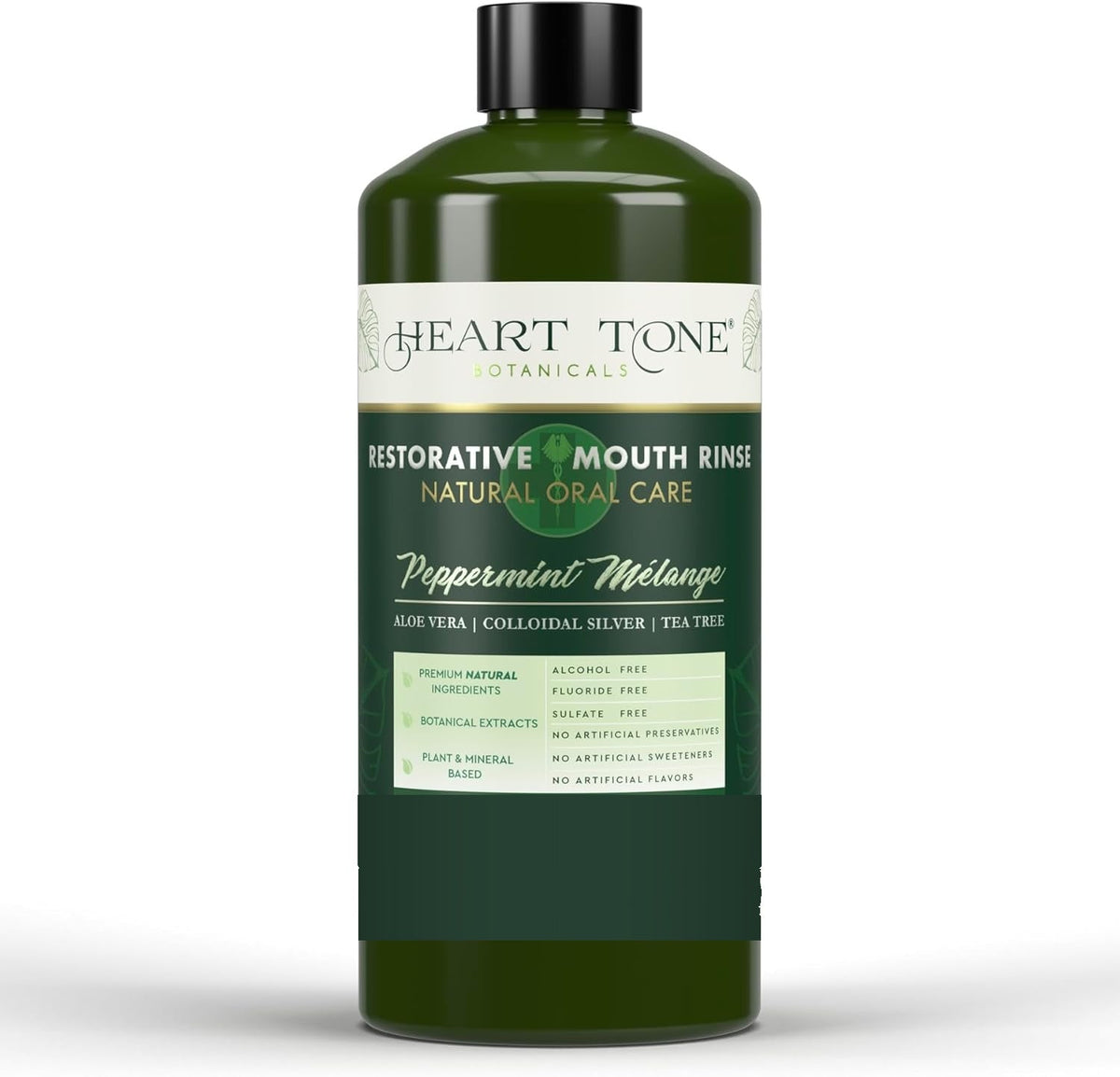
If you're ready to try a rinse built around that kind of balance, the Restorative Mouth Rinse from Heart Tone Botanicals is formulated with colloidal silver, farm-grown aloe vera leaf juice, xylitol, and 18 additional botanical extracts including myrrh and licorice root — alcohol-free, fluoride-free, and built for daily comfort. Pair it with Living Crystal Toothpaste for a complete routine, or browse the full natural oral care collection.


Leave a comment
This site is protected by hCaptcha and the hCaptcha Privacy Policy and Terms of Service apply.