












The most common complaint about natural deodorant isn't the scent or the texture. It's that it stopped working — or never did. That experience sends a lot of people back to conventional formulas, assuming that "natural" is just a compromise that doesn't hold up in practice.
Most of the time, the problem isn't the concept. It's the formula — or the expectations going in.
Here's what to actually look for, and why the right formula makes all the difference.
What "Works" Means Is Different

Conventional antiperspirants use aluminum compounds to physically block sweat glands. That's the mechanism — temporarily plugging the duct so moisture can't come through. It's effective at stopping wetness, and that's what most people have spent years expecting from an underarm product.
Natural deodorant doesn't work that way. It's not designed to. Natural formulas let your body sweat — a completely normal and necessary physiological process — while using absorbent and botanical ingredients to manage the sensation and experience throughout the day.
That distinction matters for what you expect. If your benchmark is zero moisture under any circumstances, aluminum-free formulas will always fall short. But if your goal is a dry-feeling, comfortable, fresh day without synthetic chemicals or aluminum compounds, the right botanical formula can absolutely deliver that.
The Ingredients That Do the Real Work
Natural deodorant formulas vary widely, and that variance is why so many people's experiences differ. Here's what separates an effective formula from one you'll abandon by lunch:
Arrowroot Powder
Arrowroot (maranta arundinacea) is a fine, starch-derived powder that physically absorbs moisture on contact. In a well-formulated natural deodorant, it's the primary tool for managing wetness throughout the day. Look for it early in the ingredient list — if it's buried near the bottom, there isn't enough of it to do much.
Mineral Clays
Kaolin clay, bentonite clay, and diatomaceous earth are all mineral ingredients used in body care for centuries. In natural deodorant, they add additional absorptive capacity and give the formula a smoother, more stable texture that actually stays put. A formula that includes multiple clays will typically outperform one that relies on a single clay or skips them entirely.
Zinc Ricinoleate
A naturally-derived ingredient — a zinc salt from castor oil — zinc ricinoleate physically captures odor molecules in its structure. It's found in many effective aluminum-free formulas and is one of the cleaner approaches to odor management. If a natural deodorant has real staying power through the day, zinc ricinoleate is usually part of the reason.
Magnesium Hydroxide
A mineral ingredient with a long history of use in personal care, included as part of a broader mineral approach to odor management in botanical formulas.
Plant Waxes for Structure
Beeswax and carnauba wax give a natural deodorant its shape and the smooth, glide-on application that doesn't drag or crumble. This matters more than it sounds — a formula that applies cleanly is one you'll actually use consistently. Carnauba (derived from a palm leaf) is the plant-based wax alternative used in many botanical lines.
No Baking Soda
One of the most common reasons people report that natural deodorant irritated their skin is baking soda. Sodium bicarbonate creates an alkaline environment that some skin tolerates well but that others — especially those with sensitive underarm skin or recently shaved skin — find uncomfortable. Effective aluminum-free formulas skip it entirely and use mineral clays and zinc ricinoleate instead.
The Transition Period Is Real
If you switch from aluminum-based antiperspirant to natural deodorant, there's an adjustment period — typically two to four weeks. During that window, your sweat glands are recalibrating after years of being partially blocked, and your body is learning to regulate temperature through normal perspiration again.
During this period, you may notice more moisture than you'd expect from a deodorant. That's the adjustment, not the formula failing.
Most people who conclude that natural deodorant "doesn't work" quit during the first week or two, before their body has had time to adjust. The honest truth is that you need at least a full month to evaluate a new formula fairly. Once through the transition, most people find that an effective botanical formula handles their normal daily routine without issue.
Heavy physical activity, extreme heat, or high-stress situations may still call for reapplication — that's the case with most natural formulas, and setting that expectation upfront prevents a lot of frustration.
Getting the Most from Your Formula
A few practical notes that make a real difference:
- Apply to completely dry skin. Clay and arrowroot work best when applied before moisture is present. If you apply right after a shower without fully drying the underarm, the formula's absorptive ingredients are already at work before you've even gotten dressed.
- Give it a minute before dressing. Formulas that contain coconut oil or plant butters need a brief moment to settle. Application two to three minutes before putting on a shirt reduces the chance of any transfer.
- Reapply if you need to. Natural deodorant isn't "set it and forget it" the way an antiperspirant is. For active days, reapplying after exercise is completely normal and brings in no aluminum-based chemistry.
- Give your skin time to breathe. Sleeping without any underarm product allows your skin to fully recover each night. Natural formulas work with your body's normal processes rather than suppressing them.
The Heart Tone Botanicals Bioactive Deodorant Line
Heart Tone Botanicals makes five scent profiles in their Bioactive Deodorant line — all aluminum-free, all baking-soda-free, all built on the same botanical base of coconut oil, jojoba oil, shea butter, arrowroot powder, kaolin clay, bentonite clay, diatomaceous earth, zinc ricinoleate, magnesium hydroxide, zinc oxide, elderberry extract, tamanu oil, neem CO2, and hops CO2. The difference between scents is entirely the botanical fragrance profile.
- The Classic — Unscented. The base formula without any added botanical fragrance, for those who want clean without any scent at all.
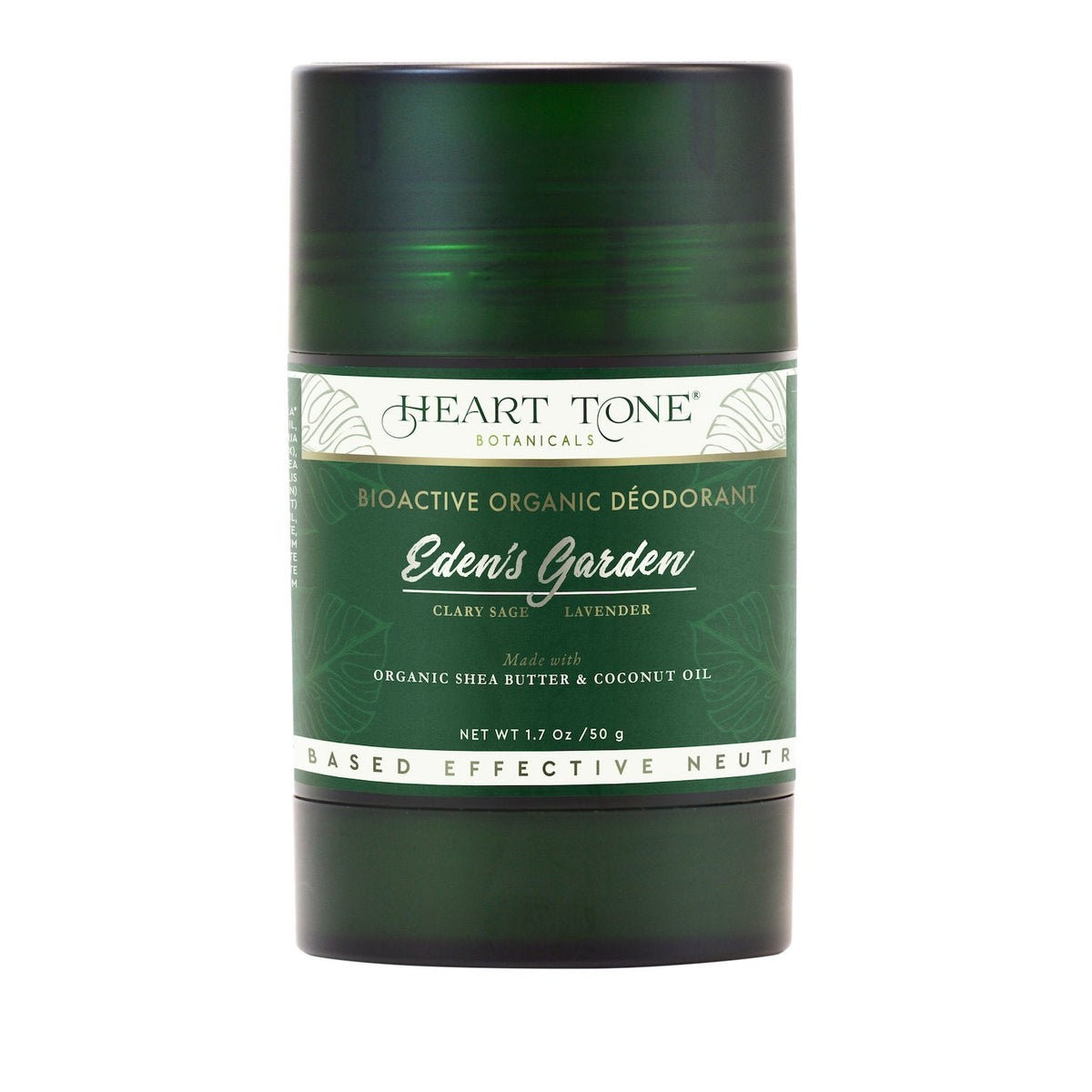
- Eden's Garden — A soft, floral blend of lavender CO2, clary sage, and lavandin essential oil.
- Grove Island — A citrus blend of bergamot, grapefruit, lime, and vanilla. Bright and warm.
- Jamaica Estate — A deeper blend of frankincense, bergamot, lavender, and balsam fir needle.
- Gentleman's Reserve — A grounded blend of clove, fir needle, patchouli, vetiver, and juniper berry.
Not sure which scent fits you? The Set Sail discovery kit lets you try multiple profiles before committing to a full size. For a coordinated soap and deodorant pairing, The Islander bundles Aloe Fields Bar Soap with Jamaica Estate Deodorant, and The Refined Classic pairs Alpha Bar Soap with Gentleman's Reserve.
The Short Version
Natural deodorant works — but the formula has to be built correctly, and your body needs time to adjust. Look for arrowroot, mineral clays, and zinc ricinoleate as the core absorptive layer. Skip baking soda if your skin is sensitive. Give yourself a full month to evaluate. And choose a scent you actually want to wear, because the easiest way to stay consistent with any product is to like the experience of using it.


Leave a comment
This site is protected by hCaptcha and the hCaptcha Privacy Policy and Terms of Service apply.