












The Short Answer: Yes, the Oil Blend Changes How the Freshness Feels

Most people assume "natural breath freshener" is a single category — a bottle of peppermint oil dressed up in different packaging. It isn't. The specific mint varieties, spices, and root extracts in a formula change how the sensation shows up: how sharp it feels at first, how it settles, and how long it feels like it's still doing something before your mouth goes back to neutral.
If you've tried more than one natural mint product and noticed one felt "thin" and another felt "full," the ingredient list — not the marketing — is usually why.
Not All "Mint" Is the Same Mint
Peppermint, spearmint, cornmint, and wintergreen all show up under the umbrella of "mint," but they aren't interchangeable, and a formula that leans on only one of them tells a very different sensory story than one that blends several.
Peppermint
Peppermint oil carries the highest menthol content of the common mint oils, and menthol is what triggers that sharp, immediate cooling sensation the moment it touches your tongue. It's the mint most people picture when they hear "fresh breath" — strong, bright, and fast-acting.
Spearmint and Cornmint
Spearmint and cornmint (sometimes labeled Japanese peppermint) are gentler and sweeter, with a rounder finish and less of peppermint's sharp bite. Formulas often blend these in alongside peppermint specifically to soften the edge and stretch the sensation out instead of front-loading it all in the first ten seconds.
Wintergreen
Wintergreen brings a different character entirely — a warmer, almost candy-like note from its natural methyl salicylate content, distinct from menthol's cooling. In a blend, it adds depth rather than more cooling power.
Clove and Cinnamon Bark
Clove and cinnamon bark are warm, spicy notes that have a long history of use in traditional oral care, often going back centuries. In small amounts, they round out a mint-forward blend so it reads as complex rather than one-note.
Root and Resin Extracts: The Part Most Sprays Skip
Beyond the mint family, some traditional oral care formulas include botanical extracts like licorice root and myrrh. These have been used in oral care traditions for a very long time, and they don't read as "minty" at all — they contribute a fuller, more rounded background note that keeps a rinse or toothpaste from tasting like it's just mint and water.
This is usually the difference between a formula that feels "finished" and one that feels like a single flavor note was sprayed on at the end.
Why a Single-Note Spray Fades Fast
Here's the sensory issue with a lot of conventional breath products: they lean on one strong signal — usually a synthetic mint flavor — delivered all at once. Your sense of smell and taste adapts to a single strong signal quickly, which is part of why that "just used a mint" feeling seems to disappear within minutes even though nothing has actually changed in your mouth.
A blend of multiple botanical notes — several mint varieties layered with a warm spice or root extract — creates a more complex sensory profile. Complex profiles tend to feel present longer simply because there's more for your senses to register, rather than one note you get used to almost immediately.
What to Actually Look For in a Formula
- More than one mint variety — peppermint alone is fine, but peppermint layered with spearmint, cornmint, or wintergreen creates a rounder, longer-feeling sensation
- A warm note in addition to the mint — clove, cinnamon bark, or a root/resin extract adds depth instead of just more sharpness
- Ingredient order that reflects real concentration — if the botanical oils are buried at the end of a long list behind water, glycerin, and sweeteners, the "natural" flavor is likely a trace amount
- No reliance on alcohol to create the sensation — alcohol can read as "strong" but tends to leave the mouth feeling dry afterward, which works against a lasting fresh feeling
The Bottom Line
The essential oil blend in a natural breath freshener isn't a footnote — it's most of what you're actually experiencing when you use the product. Peppermint alone gives you one sharp note. A layered blend of mints, warm spice, and traditional root extracts gives you a fuller, longer-feeling sensation that doesn't fade the moment your brain adjusts to it.
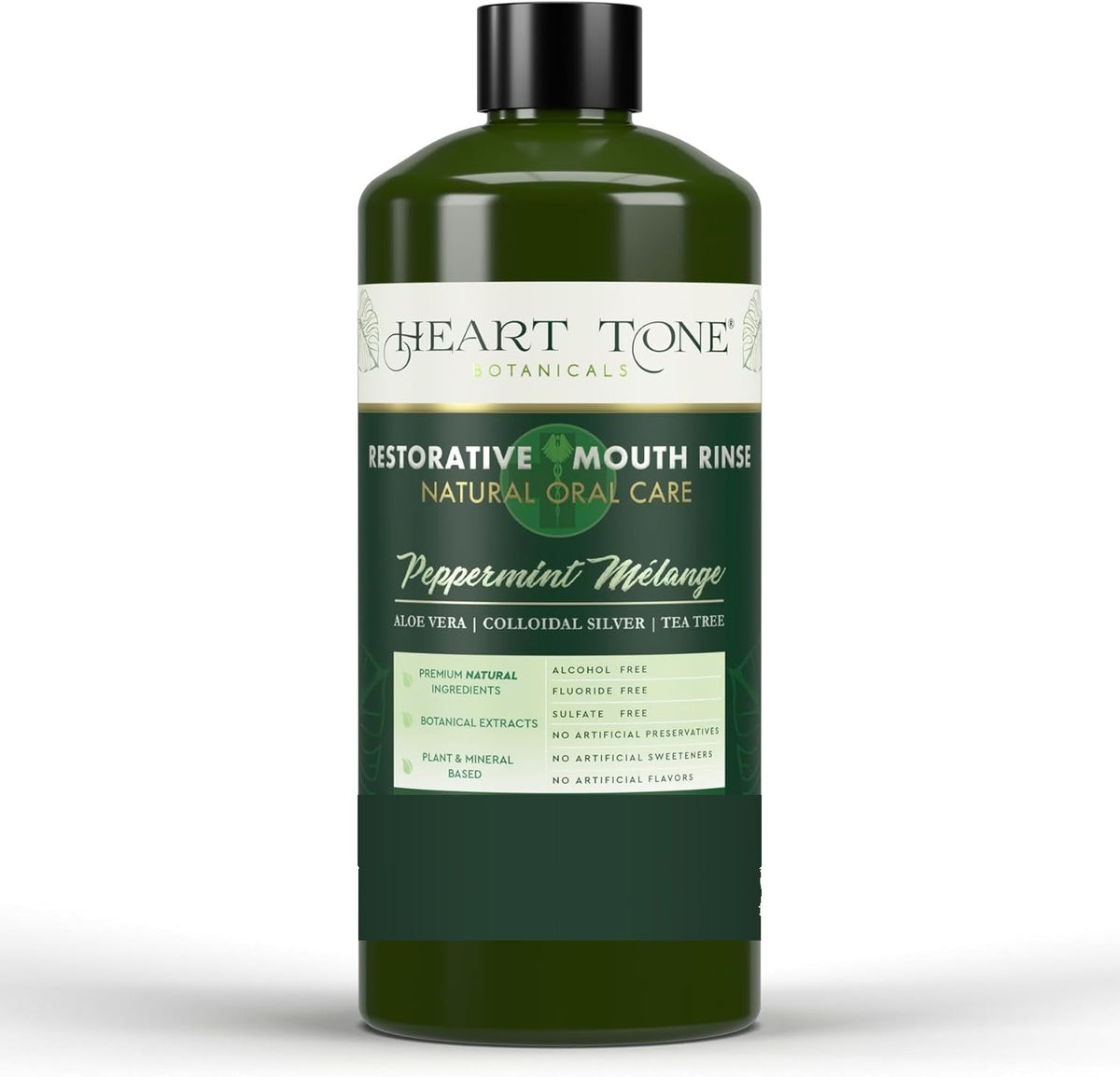
Living Crystal Toothpaste is built on a layered mint complex — spearmint, peppermint, wintergreen, and cornmint oils — alongside clove, cinnamon bark, licorice root, and myrrh extracts, so the freshness doesn't come from a single note. For a rinse built the same way, Restorative Mouth Rinse combines peppermint, cornmint, spearmint, and wintergreen with clove bud, licorice root, and myrrh extracts in an alcohol-free, fluoride-free formula. You can browse the full lineup in our natural oral care collection.

Leave a comment
This site is protected by hCaptcha and the hCaptcha Privacy Policy and Terms of Service apply.