












Understanding Your Hair Structure Changes Everything About How You Care for It

If you've ever applied conditioner and felt like it just sat on the surface of your hair without absorbing — or if your strands seem resistant to getting moisturized even when you're diligent about your routine — you might have low porosity hair. It's one of the most misunderstood hair types, and once you understand it, the whole hair care conversation shifts.
Low porosity hair isn't a problem. It's a structural characteristic — and knowing how to work with it, rather than against it, is what makes a routine feel like it's actually doing something.
What Is Low Porosity Hair?
Hair porosity describes how easily moisture moves in and out of the hair strand. It's largely determined by the cuticle — the outer layer of each hair strand — and whether those cuticle scales lie flat, raised, or somewhere in between.
In low porosity hair, the cuticles lie flat and tightly overlapping. This makes it harder for water and ingredients to enter the strand — but it also means that once moisture is inside, it tends to stay there. Low porosity hair is often naturally shiny and smooth to the touch, but it can resist conditioning products and accumulate buildup because ingredients sit on the surface rather than absorbing in.
High porosity hair is the opposite: cuticles that are raised or gapped allow moisture in quickly but lose it just as fast. We covered high porosity hair care in a previous post if that sounds more familiar.
Signs You Might Have Low Porosity Hair
A few patterns tend to show up consistently with low porosity hair:
- Water beads on your hair rather than soaking in quickly
- Your hair takes a long time to fully saturate in the shower
- Products feel like they're sitting on top of your hair rather than absorbing
- Your hair takes longer than average to dry after washing
- You notice buildup easily, even with lighter products
- Conditioner seems more effective when warmth is applied during the process
None of these are permanent issues — they're just signals that your routine needs to be calibrated for how your hair actually behaves.
What Low Porosity Hair Actually Needs
The core principle for low porosity hair care is lightweight first, always. Because the cuticle is tightly closed, heavy products, thick butters, and silicone-dense formulas tend to sit on the surface and accumulate. Over time, that buildup can make hair feel heavy, look dull, and become even more resistant to moisture.
What tends to work well instead:
- Water-based products — moisture enters the strand best from a water-based formula, because water is what the hair needs to feel hydrated
- Gentle cleansers that don't strip — a clean scalp and strand allows moisture to absorb more easily; harsh sulfates can leave hair feeling rough and uncooperative
- Warmth during conditioning — gentle heat (a warm shower, a hair cap, or a warm towel) can help the cuticle relax during conditioning, making the routine noticeably more effective
- Lightweight botanical ingredients — plant-based extracts, aloe, and water-soluble botanicals tend to leave a much more pleasant feeling on low porosity hair than heavy waxes or silicones
What to Avoid
Just as important as what you add is what you leave out. For low porosity hair, a few common ingredients tend to create more problems than they solve:
- Heavy silicones — ingredients ending in "-cone," "-conol," or "-xane" create a coating on the hair that can make it harder for moisture to get in. They're very common in conventional conditioners.
- Harsh sulfate cleansers — while sulfates do cleanse, the harshest versions can leave the cuticle feeling rough, making hair less cooperative after washing
- Heavy butter-based styling products — shea, cocoa butter, and similar rich styling ingredients are wonderful for many hair types, but tend to coat rather than absorb on low porosity hair; best used sparingly, if at all
- Too much protein — low porosity hair can be sensitive to heavy protein treatments; used too often, they can leave strands feeling stiff and resistant
How to Choose a Shampoo for Low Porosity Hair
The shampoo step matters more for low porosity hair than most routines acknowledge. Because buildup is one of the biggest challenges, a formula that genuinely removes residue without stripping is the foundation everything else builds on.
Look for shampoos built on gentle, water-soluble surfactants. Coconut-derived cleansers like coco taurate and coco betaine produce a creamy lather that leaves hair feeling clean without roughing up the cuticle — and they rinse away completely, leaving no film behind.
Aloe leaf juice extract is one of the most traditional ingredients in botanical hair care, with a long history of use across many hair care traditions around the world. It's water-based and lightweight — a natural fit in a shampoo designed for hair types that prefer lighter formulas.
Coconut milk has an equally long history in natural hair care, valued for its smooth feel and the way it leaves hair looking clean and healthy after rinsing.
How to Choose a Conditioner for Low Porosity Hair
Conditioning is where low porosity hair requires the most thoughtful product selection. The goal isn't the heaviest conditioner available — it's a formula that offers slip and a hydrated feel without building up over time.
Water-based conditioners that lead with lightweight botanical extracts — aloe, irish moss, chamomile, papaya leaf — tend to have a much more cooperative experience on low porosity hair than formulas built around heavy waxes or silicones. Plant-based amino acids and peptides can contribute to a smooth, manageable feeling without the stiffness that sometimes comes from heavier protein treatments.
Application matters as much as formula. When conditioning low porosity hair:
- Apply to warm, damp hair — not soaking wet and not dry
- Cover with a hair cap or warm towel while the conditioner sits
- Let the steam in a warm shower help while you finish the rest of your routine
- Rinse with cooler water at the very end — this helps the cuticle close back down, contributing to smoothness and shine
A Simple Low Porosity Routine Framework
- Clarify periodically — if you use styling products regularly, a clarifying wash every few weeks resets buildup so your routine can work properly
- Wet hair thoroughly before shampooing — low porosity hair resists water; saturate it fully before applying anything
- Shampoo with a gentle, non-stripping formula — look for coconut-derived cleansers and avoid anything with silicones that would re-coat the hair you just washed
- Condition with warmth — gentle heat during conditioning makes a visible difference for low porosity hair
- Rinse cool at the finish — a cooler final rinse contributes to a smoother, shinier result
- Keep leave-in products light — water-based leave-ins in small amounts; avoid layering heavy stylers on low porosity hair
Where HTB Roots & Locks Fits
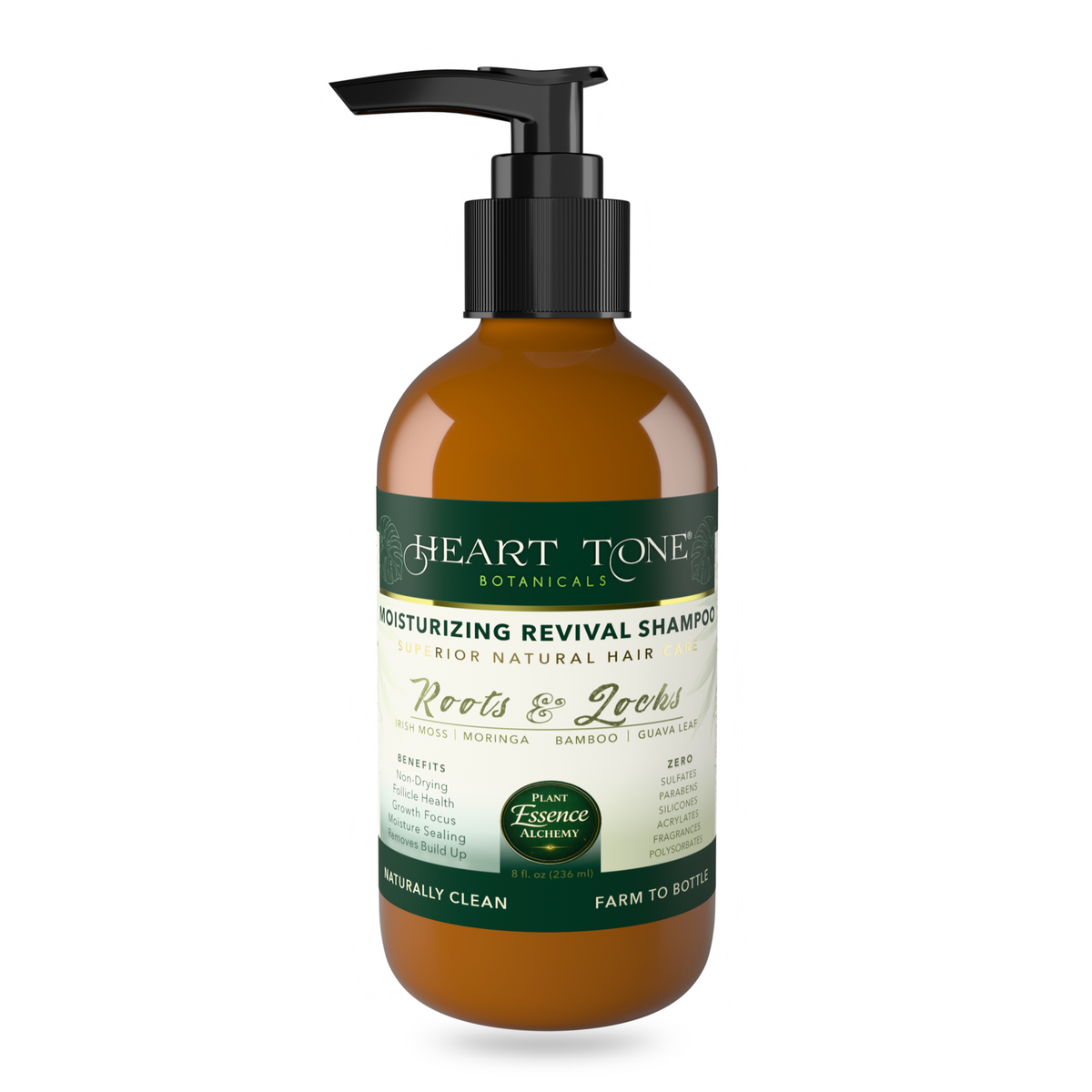
The Roots & Locks Moisturizing Revival Shampoo is built on a gentle coconut-derived cleansing base — coco taurate and coco betaine — that produces a clean, non-stripping lather. The formula includes aloe leaf juice extract, coconut milk, irish moss extract, chamomile extract, and papaya leaf extract. It contains no synthetic silicones and no heavy coating agents, and it rinses cleanly — which is exactly what low porosity hair needs in a cleanser.
The Roots & Locks Moisturizing Revival Conditioner shares the same botanical leaf complex — papaya, moringa, neem, guava, and bay leaf extracts — along with aloe leaf juice extract, coconut milk, irish moss extract, and chamomile. It's formulated without silicones, so there's no heavy coating left behind that would work against a low porosity routine over time. The conditioner responds especially well with warmth applied during use, which aligns naturally with how low porosity hair tends to do its best work.
Both products are part of the HTB hair care collection and are designed to be used together as a system.
The Bottom Line on Low Porosity Hair
Low porosity hair isn't difficult to work with — it calls for a different approach than what most conventional hair care is designed for. Lightweight products, gentle cleansers, water-based conditioning formulas, and warmth during conditioning are the practical building blocks of a routine that actually delivers.
Once you know your porosity, everything else follows more easily. You stop working against what your hair is and start working with its actual structure — and that's when a routine starts to feel like it fits.
Explore the full HTB hair care collection to see the complete Roots & Locks line.

Leave a comment
This site is protected by hCaptcha and the hCaptcha Privacy Policy and Terms of Service apply.