












Licorice root — Glycyrrhiza glabra — has appeared in traditional skincare preparations across East Asia, South Asia, and North Africa for centuries. Long before it found its way into modern cosmetic formulas, the root and its extracts were used in Ayurvedic preparations, Traditional Chinese Medicine, and classical Japanese beauty rituals. Today, licorice root extract is one of the most recognized botanical ingredients in natural brightening skincare — and for good reason. Its compound profile is uniquely complex.
Here's what it is, where it comes from, and what to look for when you see it on a label alongside botanical oils in a nighttime cream formula.
What Is Licorice Root Extract?

Glycyrrhiza glabra translates from Latin as "sweet root" — a reference to glycyrrhizin, one of the primary compounds in the whole root that gives it its distinctive flavor. But skincare-grade licorice root extract is derived primarily for its flavonoid content, not its sweetness.
The plant is native to Southern Europe and Central and Western Asia, and has been cultivated for centuries in China, Japan, Iran, and India. In Traditional Chinese Medicine, the dried root — known as gan cao (甘草) — has appeared in classical formulas for over two thousand years. Ayurvedic texts reference it as yashtimadhu, used in skin preparations alongside turmeric, sandalwood, and rose water. In classical Japanese bihaku (whiteness and luminosity) beauty practices, botanical extracts including licorice root were valued specifically for their skin-tone-evening tradition.
The Compound Profile: Glabridin and the Isoflavan Class
Cosmetic-grade licorice root extract is typically valued for its content of glabridin — an isoflavan compound belonging to the flavonoid polyphenol family. Glabridin is oil-soluble, which matters for formula integration: it pairs well with botanical oil bases rather than water-first emulsions.
Licorice root extract also contains liquiritin, a flavanone glycoside, along with isoliquiritigenin and several other polyphenol subclasses. The full compound profile makes licorice root extract a botanically complex ingredient rather than a single-compound active — the extract retains a range of flavonoids in the proportions nature produces them.
Glabridin belongs to the isoflavan class — a subgroup of flavonoids characterized by a specific carbon skeleton arrangement. Its oil-solubility distinguishes it from water-soluble plant polyphenols and makes it a natural fit for botanical oil-based formulas.
High-quality cosmetic licorice root extract is typically standardized by glabridin content, measured as a percentage of the total extract. This standardization gives formulators a reliable measure of the active botanical fraction they're working with.
A Long Tradition in East Asian Skincare
The East Asian beauty tradition around licorice root is one of the most thoroughly documented botanical skincare lineages. Classical Chinese cosmetic texts from the Tang dynasty (618–907 CE) describe licorice root preparations used alongside peach blossom and white jade powder for skin treatments. Japanese court beauty manuals from the Heian period reference similar preparations. Korean traditional medicine (hanbang) incorporated licorice root extract as a bihyohwa (肌白化 — skin-evening) botanical.
In Ayurveda, licorice root appears in the varnya (skin-brightening) category of herbs — a traditional classification system grouping botanicals by their traditional cosmetic applications. The Ashtanga Hridayam, a classical Ayurvedic text, lists yashtimadhu preparations for external skin use alongside manjistha root, Indian madder, and vetiver.
This depth of traditional use — across cultures and spanning over two millennia — is why licorice root extract has remained a respected botanical ingredient as cosmetic science has advanced. It bridges traditional knowledge and contemporary ingredient formulation in a way few other plant extracts do.
Why an Anhydrous Night Cream Delivery Makes Sense
Glabridin's oil-solubility is a significant formulation consideration. In a conventional water-first cream or lotion, an oil-soluble botanical compound needs emulsification to integrate into the formula — and emulsification can dilute the effective concentration of the active fraction.
An anhydrous (water-free) botanical oil base sidesteps this entirely. When a night cream is formulated from botanical oils without water as the first ingredient, oil-soluble compounds like glabridin remain in their natural phase — no emulsification needed. They integrate into the carrier oil matrix and are delivered directly to skin through the oil base.
This is why you'll see licorice root extract listed in richer, oil-based nighttime formulas rather than lightweight water-first serums or gels. The formula medium matches the botanical's chemistry.
Paired carrier oils matter here too. Organic moringa oil — with its high behenic acid content and exceptional oxidative stability — provides a long-lasting, non-greasy base that doesn't compete with the botanical actives. Organic green tea oil (cold-pressed from Camellia sinensis seeds) adds its own polyphenol-rich profile alongside the licorice root extract. Organic castor oil's high ricinoleic acid content creates an occlusive layer that seals in the botanical complex during overnight hours.
Reading the Label: What to Look For
On an INCI ingredient list, licorice root extract appears as Glycyrrhiza Glabra Root Extract. A few things worth noting when you see it:
- Position on the label: INCI ingredients are listed in descending order of concentration. The further up the list, the higher the concentration — but for botanical actives like licorice root extract, meaningful contributions occur at relatively low percentages, so mid-list positioning is normal.
- Accompanying botanical complex: Licorice root extract pairs naturally with other flavonoid-rich botanicals. Look for complementary polyphenol carriers in the same formula — moringa oil, green tea oil, vitamin E (tocopherol) — as oxidative stability support for the extract.
- Paired brightening botanicals: Formulators often pair licorice root extract with kojic acid dipalmitate, another fermentation-derived botanical compound with a long history in East Asian beauty preparations. The two represent distinct botanical traditions arriving at complementary formulation roles.
- Base formula type: For an oil-soluble compound like glabridin, an anhydrous or oil-rich formula base is the most compatible delivery vehicle.
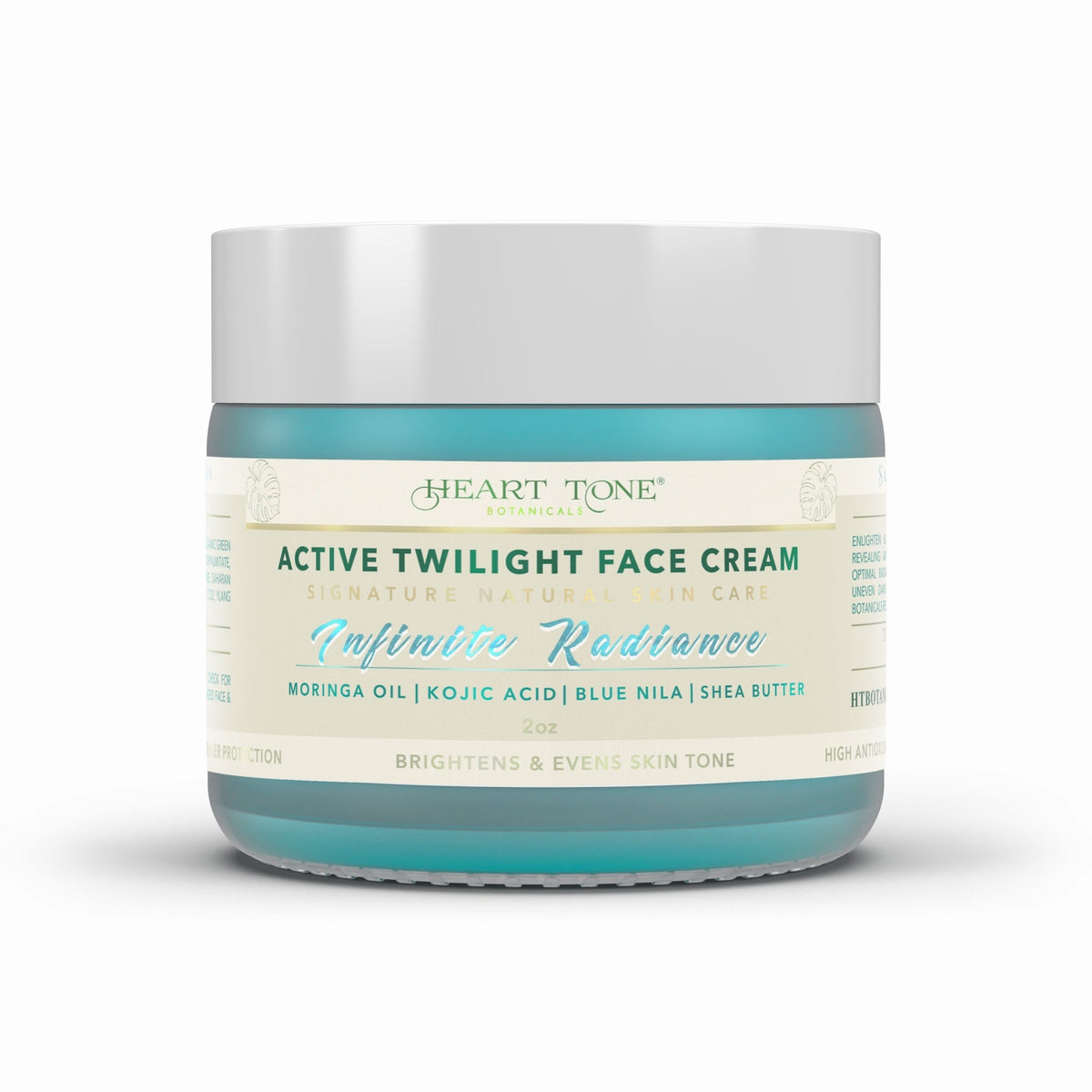
Active Twilight Face Cream: A PM Formula Built Around These Botanicals
Active Twilight Face Cream is a PM nighttime renewal cream formulated without water. Its ingredient list reflects the anhydrous botanical approach: organic shea butter and castor oil as the occlusive base, moringa oil and green tea oil as the carrier matrix, and licorice root extract alongside kojic acid dipalmitate as the botanical active pair.
The formula also includes coriander seed CO2 extract — a supercritical CO2 extraction of Coriandrum sativum seed, rich in linalool and known in botanical aromatherapy for its calming sensory profile — and ylang ylang essential oil, a traditional Indonesian botanical with a long ceremonial and cosmetic history across Southeast Asia.
Together, the formula represents a consistent botanical philosophy: high-concentration oil base, traditional botanical actives, no synthetic emulsifiers or fillers, and an evening application window that takes advantage of skin's overnight renewal cycle.
A nighttime botanical formula works with the skin's natural overnight cycle — when it's not exposed to UV, environmental pollutants, or oxidative stress. That makes the PM window the most efficient time for a rich, oil-delivered botanical complex to do its work.
How to Use a Botanical Night Cream with Licorice Root Extract
For best results with an anhydrous night cream containing licorice root extract:
- Apply to clean, dry skin in the evening, after any water-based toning steps have fully absorbed.
- Use a small amount — anhydrous formulas are concentrated. A pea-sized amount is typically sufficient for the full face and neck.
- Warm between fingertips before applying. This softens the botanical oils and allows them to spread evenly without pulling at skin.
- Massage in upward, circular motions until absorbed.
- Follow with SPF the next morning. As with any botanical skincare, consistent daytime sun protection supports the appearance gains from overnight use.
Consistency matters more than concentration with botanical actives. Regular nightly use over several weeks is how traditional botanical preparations have always been evaluated — and it's the window within which you'll see what this kind of formula does for your skin.
Explore the full botanical facial care collection — including the Complete Daily Face Moisturizer (22 botanical oils, AM daily formula) and the Dynamic Hydrogel Face Serum for targeted serum support.

Leave a comment
This site is protected by hCaptcha and the hCaptcha Privacy Policy and Terms of Service apply.