

If you've ever stood in the natural-products aisle wondering whether fluoride-free toothpaste is genuinely protective or just fancy flavored clay, you're not alone. The conversation around fluoride has gotten louder — and more confusing — in recent years. Some people want to avoid it entirely. Others feel stuck between their dentist's advice and their instinct to keep their daily routine as clean and simple as possible.
Here's the honest answer: fluoride-free toothpaste can work well — but only if you know what to look for.
Why People Choose Fluoride-Free

Before we talk ingredients, it's worth acknowledging why this question matters to so many people.
- Parents choosing products for young children worry about fluorosis — the white spots that can develop when kids swallow too much fluoride during tooth development.
- People who live in fluoridated water areas sometimes want to moderate their total daily fluoride intake.
- Those with sensitivity to certain ingredients find that conventional toothpastes irritate their mouth, and fluoride-free options often come with gentler, cleaner formulas.
- Natural wellness families are simply trying to keep their daily-use products as close to nature as possible.
These are all reasonable motivations. The question isn't whether fluoride-free is valid — it's whether your fluoride-free toothpaste is actually doing the job.
The Real Problem With Most Fluoride-Free Toothpastes
Fluoride in conventional toothpaste does one specific, well-documented thing: it Traditional Mineral-Rich Formula by converting hydroxyapatite into fluorapatite, which is more resistant to acid attack. After 70+ years of research, fluoride's tooth-surface-prevention track record is very strong.
When you remove fluoride, you need to replace that function — not just the flavor and the foaming.
The problem? Most "natural" fluoride-free toothpastes don't do this. They use baking soda, essential oils, clay, or coconut oil as their actives. These ingredients have real benefits — mild abrasion, pH support, botanical properties — but they don't Traditional Mineral-Rich Formula the way fluoride does.
If a fluoride-free toothpaste doesn't contain a proven a mineral-based ingredientagent, it's essentially a breath freshener with cleaning action. That's not nothing, but it's also not what most people think they're getting.
What Actually Works: Nano-Hydroxyapatite
The ingredient that changed the fluoride-free conversation is nano-hydroxyapatite (n-HAp).
Hydroxyapatite is the mineral that makes up approximately 97% of your tooth enamel. Nano-hydroxyapatite is a synthetic, nano-sized version that can fill in microscopic cracks and erosions in enamel — essentially depositing the same material your teeth are made of back into the places it's been lost.
A 2023 clinical trial lasting 18 months found that 10% nano-hydroxyapatite toothpaste protected adult teeth from new tooth-surface concerns at roughly the same rate as standard fluoride toothpaste. Multiple systematic reviews have confirmed its effectiveness for a mineral-based ingredientearly caries lesions.
There's an additional benefit: because n-HAp a mineral-based ingredientfrom within — not just at the surface — it tends to be significantly more effective at reducing tooth sensitivity than conventional fluoride formulas.
The trade-off: fluoride has a 70-year research head start. Nano-hydroxyapatite has compelling evidence but a shorter history, and the ADA hasn't yet formally endorsed it as a full substitute. For most healthy adults, the evidence is strong enough. For anyone with very high tooth-surface risk, it's worth a conversation with your dentist.
Supporting Ingredients That Add Real Value
When n-HAp is your anchor, these supporting ingredients genuinely enhance the formula:
Xylitol — A natural sugar alcohol that oral bacteria cannot ferment. It disrupts oral bacteria (the main tooth-surface-causing bacteria), helps neutralize pH after meals, and supports a healthier oral environment. It works best as a complement to a mineral-based ingredientactives, not as a standalone tooth-surface fighter.
Baking soda — Gentle mechanical abrasion, excellent pH buffering, and mild botanical properties. It's been used for oral hygiene for over a century and continues to show up in good evidence.
Essential oils (peppermint, clove, tea tree) — These aren't just flavor. Multiple clinical studies have found essential-oil formulas can supports a cleaner tooth surface and gum discomfort as effectively as alcohol-based rinses. They contribute real botanical ingredient.
Aloe vera — Traditional Botanical Extracts, particularly useful for people with sensitive gums or recurring irritation.
What to be cautious about:
- Charcoal — Highly abrasive. Some charcoal formulas have high enough RDA values to wear away enamel over time. The brightening effect is real but comes with trade-offs.
- Coconut oil as a primary active — Better used for oil pulling than as a toothpaste ingredient. It cleans, but it doesn't support the enamel surface.
- Clay-based formulas without a mineral-based ingredientagents — Can feel premium but often provide cleaning without protective benefit.
What a Good Fluoride-Free Toothpaste Looks Like
You're looking for a formula that:
- Lists nano-hydroxyapatite or hydroxyapatite as an active ingredient — ideally at or near 10% concentration
- Contains xylitol for bacterial control and oral environment support
- Is SLS-free — sodium lauryl sulfate is a harsh foaming agent that can irritate mucosa and worsen mouth sores; most good natural formulas have eliminated it
- Has a low RDA (relative dentin abrasivity) — especially important for sensitive teeth or people who brush with firm pressure
- Uses essential oils or botanical extracts for botanical support rather than artificial botanicals
How Technique Changes the Equation
One thing that doesn't change whether you use fluoride or n-HAp: brushing and flossing technique matters more than the paste.
For fluoride-free toothpaste to do its a mineral-based ingredientwork:
- Brush for two full minutes, twice a day
- Don't rinse immediately after — let the paste sit on your teeth for 15–20 minutes before rinsing or eating. This gives n-HAp time to bind to enamel.
- Floss daily. No toothpaste reaches between teeth effectively.
- If you're high-tooth-surface-risk, get a professional cleaning every 6 months without exception
Where Heart Tone Botanicals Fits In
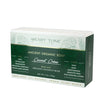
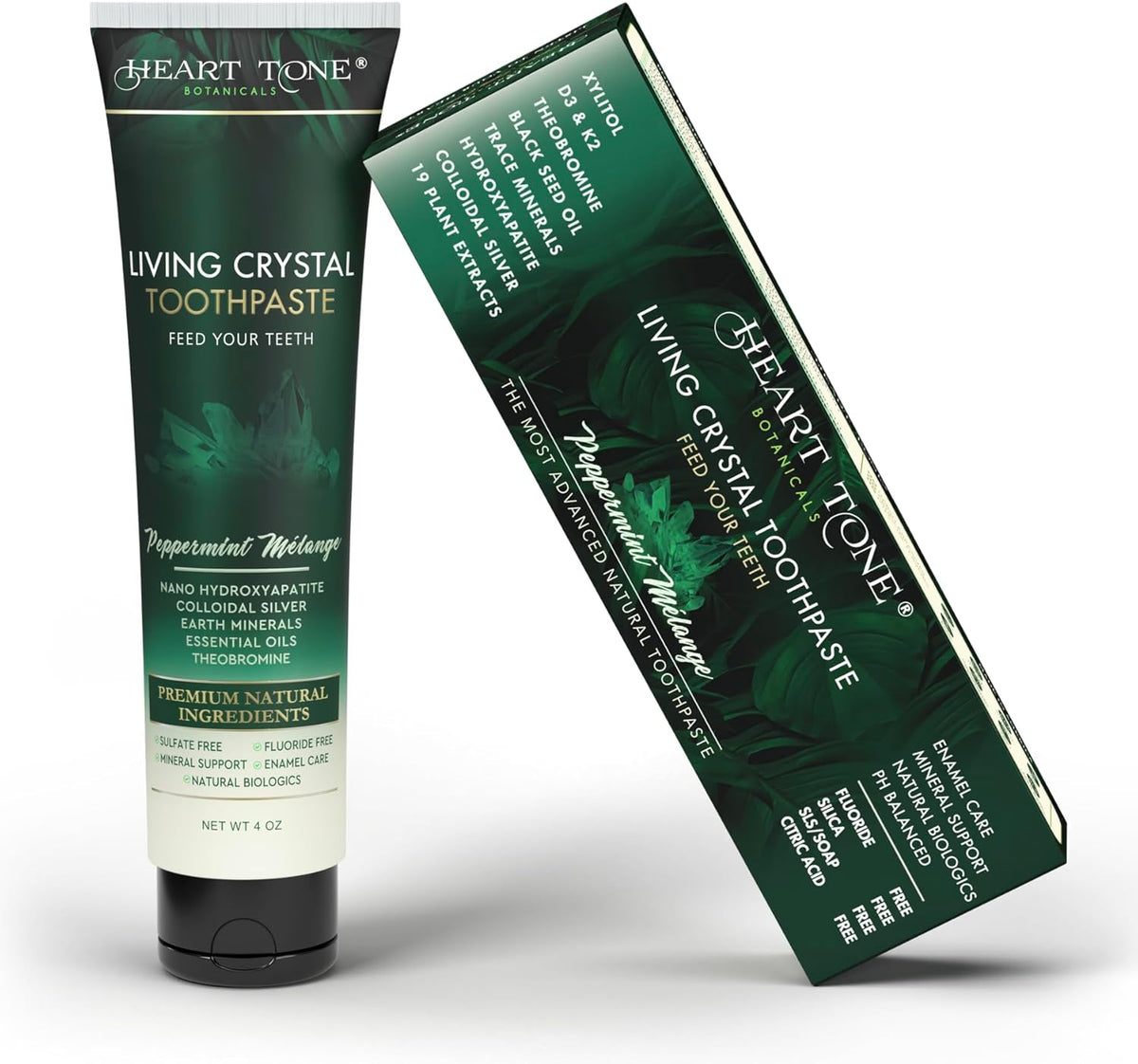
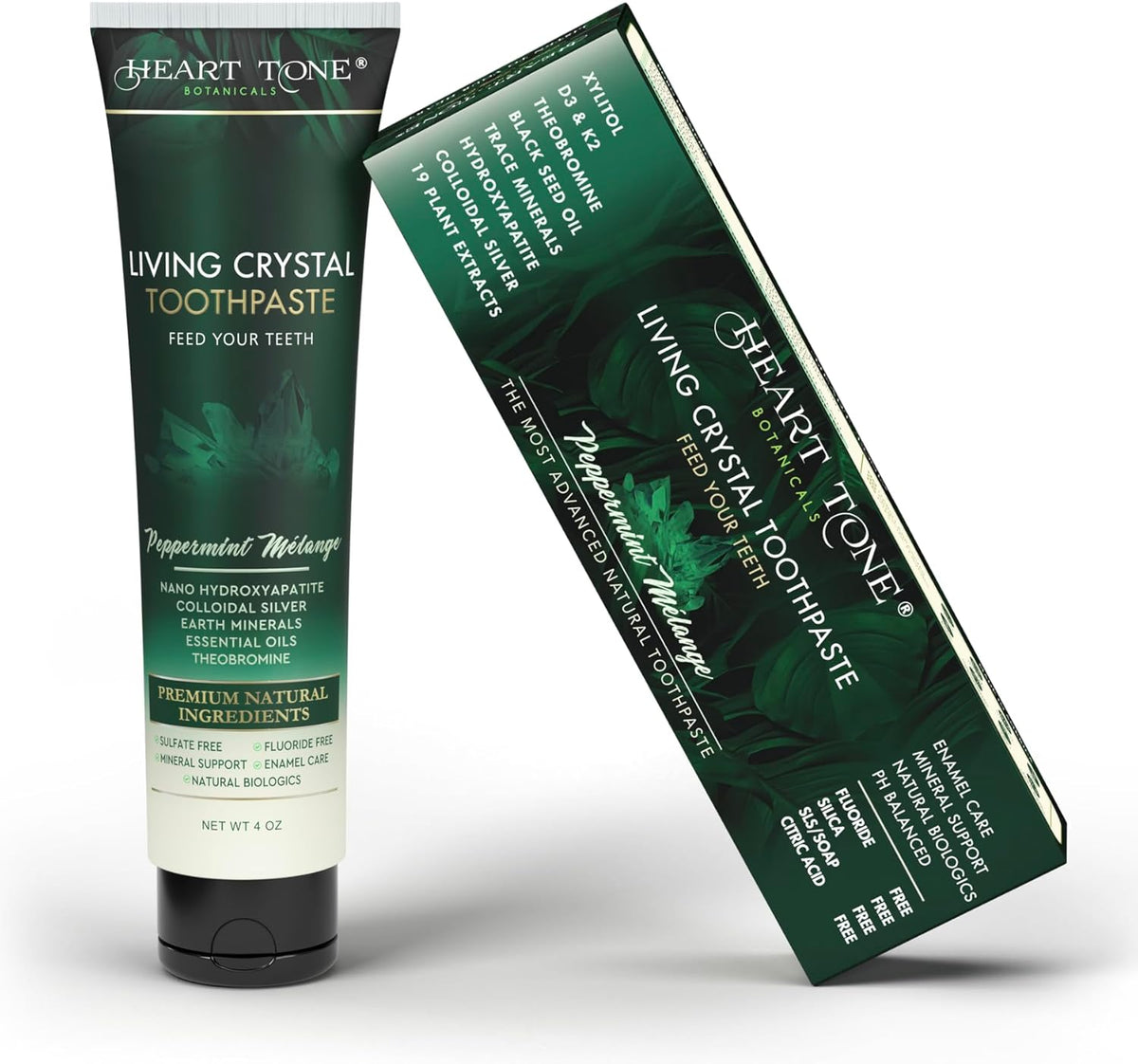
Our Living Crystal Toothpaste was built around these exact principles — a fluoride-free formula that doesn't just clean, but actively supports enamel. It pairs beautifully with our Restorative Mouth Rinse as a complete fluoride-free daily ritual.
Browse our full Natural Toothpaste collection and Oral Care collection to find the combination that works for your routine.
If you're new to fluoride-free, starting with the toothpaste and mouth rinse pairing gives you a mineral-based ingredientsupport from the paste and botanical botanical support from the rinse — a well-rounded system.
The Bottom Line
Fluoride-free toothpaste is not a compromise — if it's made well.
A formula built around nano-hydroxyapatite + xylitol + botanical oils, used with good brushing technique, can give most healthy adults the same tooth-surface protection and better sensitive-mouth comfort than conventional fluoride toothpaste.
The mistake is assuming that "natural" automatically means "protective." Read the actives. If there's no a mineral-based ingredientingredient, you're buying a nice flavor experience, not a functional formula.
When the right ingredients are there, fluoride-free isn't a workaround. It's the better option.
Looking for a clean, effective fluoride-free routine? Start with Living Crystal Toothpaste and explore our Natural Mouthwash collection.

Leave a comment
This site is protected by hCaptcha and the hCaptcha Privacy Policy and Terms of Service apply.