












Why More Adults Are Reading the Label on Their Toothpaste

At some point in recent years, a lot of adults started actually reading the ingredient list on their toothpaste — and came away with questions. What's in here beyond the active ingredient? Do I need all of this? What are the alternatives?
The move toward fluoride-free toothpaste among adults is part of a broader shift toward intentional personal care. It's less about rejecting conventional dentistry and more about wanting to understand what goes into the tube they use twice a day, every day. If you're one of those people, this is a guide to what actually matters in the formula you choose next.
What You're Actually Choosing When You Go Fluoride-Free
Fluoride is a mineral that has been a fixture in mass-market toothpaste since the mid-20th century. When an adult switches to a fluoride-free formula, they're trading one approach for a different set of ingredients — usually a blend of naturally occurring minerals, plant extracts, and essential oils. The question at that point isn't whether fluoride exists. The question is: what is the fluoride-free formula actually offering in its place?
A toothpaste that simply removes fluoride and adds nothing meaningful isn't doing much. The formulas worth considering replace it with a thoughtful combination of ingredients that each earn their place. Here's what that looks like on a label.

The Ingredients That Make a Fluoride-Free Adult Formula Worth Using
Micro Hydroxyapatite
Hydroxyapatite is a naturally occurring mineral found abundantly in nature — including in the structure of teeth and bone. Spherical micro hydroxyapatite is a refined form used in oral care formulations, and it has developed a significant following in premium natural toothpastes, particularly in Europe and Japan where it has been used in oral care for decades. In a toothpaste formula, its fine particle size contributes to a notably smooth, polished feel during and after brushing. If you're looking at fluoride-free toothpastes and comparing labels, this is one of the ingredients worth looking for by name.
Theobromine
Theobromine is a naturally occurring compound found in the cacao plant — the botanical source of dark chocolate. It appears in a growing number of premium fluoride-free toothpastes and has attracted interest in the botanical oral care space for its intriguing profile and long history of botanical study. Its presence on an ingredient label is generally a signal that the formula is drawing from a broader range of botanical ingredients rather than simply defaulting to the standard toothpaste template. If you see theobromine listed, you're not looking at a conventional formula with fluoride removed.
Xylitol
Xylitol is a sugar alcohol derived from plant sources — traditionally birch or corn. It has been used in oral care formulas for decades and is one of the most recognizable ingredients in the natural toothpaste category. It contributes a pleasant, mild sweetness to the brushing experience without relying on cane sugar or artificial sweeteners like saccharin. For adults who are reading ingredient labels closely, the presence of xylitol as the primary sweetener — versus saccharin, aspartame, or sodium saccharin — is one of the clearest ways to distinguish a thoughtfully formulated product from a budget option.
Kaolin and Bentonite Clay
These two naturally occurring mineral clays are frequently used together in botanical toothpaste formulas as gentle polishing agents. Kaolin is a fine white clay with a silky texture and a long history of use in traditional personal care. Bentonite is a denser volcanic clay that has been used in various traditional cosmetic applications for generations. Together they provide a gentle cleaning sensation that leaves the surface of the teeth feeling clean and smooth. If you've ever noticed that conventional toothpaste leaves your teeth feeling slightly raw or your gums feeling sensitive after brushing, a dual-clay formula often feels noticeably gentler and more comfortable.
Colloidal Silver
Colloidal silver has been used in traditional personal care for centuries. In oral care formulations specifically, it has a long history as a clean, non-drying ingredient valued for contributing a fresh, neutral sensation without the harshness or burning associated with alcohol-based formulas. It has become a standard inclusion in serious botanical oral care products and is one of the ingredients that distinguishes a premium natural toothpaste from one that is merely fluoride-free in marketing only.
A Multi-Botanical Mint Complex
The flavor and sensation of a toothpaste matter more than most people realize — especially if you're brushing twice daily. A well-crafted botanical mint complex using peppermint, spearmint, cornmint, and wintergreen essential oils delivers a noticeably more layered, lasting freshness than a single synthetic mint flavoring. These botanicals have been used in oral care traditions across cultures for centuries and contribute a distinctive freshness that continues well after you've finished brushing. When you see a specific listing of mint and botanical essential oils rather than the generic "natural flavors," that transparency is itself a sign of a more serious formula.

What to Watch Out For When Reading a Fluoride-Free Label
Not every fluoride-free toothpaste earns the label. Here are the things worth looking for — and looking past:
- Glycerin as the primary base ingredient — glycerin is fine as a supporting ingredient, but a formula that leads with glycerin and water with a few drops of mint oil is thin. Look for meaningful concentrations of active botanical and mineral ingredients.
- Artificial sweeteners — saccharin and sodium saccharin are common in inexpensive toothpastes, including some marketed as natural. Xylitol is the plant-derived alternative found in higher-quality formulas.
- SLS (sodium lauryl sulfate) — this synthetic foaming agent is the source of the burning sensation and mouth sores some people experience with conventional toothpaste. A quality natural formula will typically be SLS-free. Worth noting on the label.
- Synthetic preservatives — parabens and similar preservatives appear in some "natural" toothpastes. If you're choosing a formula specifically for clean ingredient standards, these are worth checking for.
- Vague "natural flavors" — this catchall designation can mean almost anything. A formula that specifies peppermint oil, spearmint oil, wintergreen oil, and cornmint oil is being transparent about what's in the tube. "Natural flavors" is not the same thing.
How the Formula Compares to What You're Used To
Adults switching from a conventional toothpaste to a fluoride-free botanical formula often notice a few differences in the first week:
- Less foam — SLS-free formulas don't generate the heavy lather of conventional toothpaste. This is not a sign that it isn't working; foam is a cosmetic effect, not a cleaning mechanism.
- A different texture — clay-based formulas tend to feel slightly thicker or denser than gel toothpastes. Most people find this more comfortable after a few days.
- A more complex flavor — a multi-botanical mint complex has a different sensory profile than a single synthetic mint flavor. The freshness tends to be more layered and, for many people, more lasting.
- No burning — without alcohol, SLS, or harsh synthetic additives, a botanical formula should leave the mouth feeling clean and fresh without any burning or drying sensation.
The Bottom Line
Switching to a fluoride-free toothpaste as an adult is a decision that rewards label literacy. The formula you choose should replace fluoride with a purposeful set of botanical and mineral ingredients: micro hydroxyapatite, theobromine, xylitol, dual mineral clays, colloidal silver, and a genuine botanical mint complex. Anything less is just a conventional toothpaste with one ingredient removed and nothing meaningful put in its place.
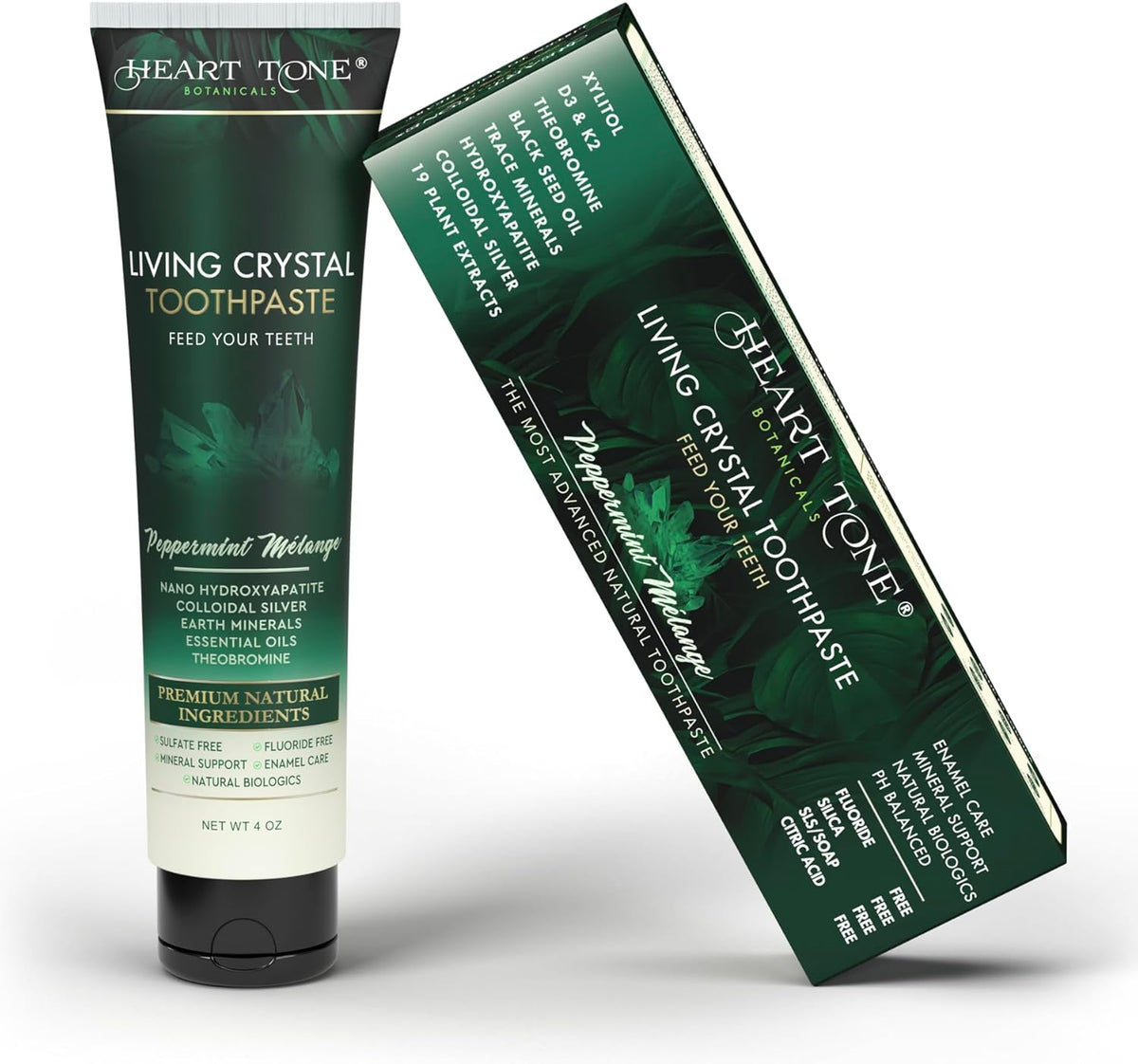
If you're ready to try a formula built from the ground up without fluoride, the Living Crystal Toothpaste from Heart Tone Botanicals includes spherical micro hydroxyapatite, theobromine, xylitol, kaolin clay, bentonite clay, colloidal silver, and a full botanical mint complex — all without fluoride, SLS, or artificial sweeteners. For a complete daily routine, pair it with the Restorative Mouth Rinse — an alcohol-free botanical rinse built on aloe vera, colloidal silver, and 22 botanical ingredients, no fluoride added. You can explore the full natural oral care collection here.


Leave a comment
This site is protected by hCaptcha and the hCaptcha Privacy Policy and Terms of Service apply.