

Activated charcoal has been one of the most Instagrammed oral care trends of the last decade. The before-and-after videos are dramatic, the black powder looks impressively potent, and the "natural" label makes it feel safe. But if you've been using charcoal toothpaste expecting a brighter smile, there's something important the trend won't tell you.

The research on charcoal teeth whitening is almost uniformly underwhelming — and in some cases, the trend does the opposite of what it promises.
What Activated Charcoal Actually Does to Your Teeth
Activated charcoal works through two mechanisms: mild abrasion and adsorption (binding to molecules). When you brush with a charcoal-based powder or paste, it physically scrubs surface stains from the outer layer of enamel and can bind to some of the stain-causing compounds in coffee, tea, and wine.
That sounds promising — until you look at what it doesn't do.
Charcoal has no bleaching effect whatsoever. It doesn't penetrate enamel, doesn't affect the color of the dentin beneath, and doesn't address intrinsic discoloration — the deep yellowing that most people are actually bothered by. A 2024 clinical study comparing charcoal toothpaste to a standard 6% hydrogen peroxide whitening pen found that charcoal produced only a "gradual, limited whitening effect" that plateaued after two weeks, while the peroxide produced rapid and substantially greater results.
More tellingly: multiple reviews of the scientific literature have concluded there is no significant difference in stain removal between charcoal dentifrices and regular toothpaste. The American Dental Association has never awarded its Seal of Acceptance to any charcoal-based dental product.
The Real Problem: Charcoal Is Wearing Down Your Enamel
Here's the irony buried in the trend. Charcoal is abrasive — more abrasive than most conventional toothpastes. And unlike the surface stains it claims to remove, enamel loss is permanent.
When enamel wears away, the yellowish dentin layer beneath becomes visible. Daily charcoal users often report their teeth becoming more yellow over time, not less — not because the charcoal is failing to work, but because it's working exactly as a harsh abrasive does. A 2019 review in the British Dental Journal found charcoal toothpastes have high abrasive potential and are less safe than alternatives.
Beyond yellowing, thinning enamel leads to:
- Increased tooth sensitivity to hot, cold, and sweet foods
- Higher risk of cavities and decay
- Staining that accumulates in the roughened enamel surface — the opposite of whitening
- Irritation and recession in gum tissue from abrasive particles
Most charcoal toothpastes also lack fluoride, removing a key protective layer against decay exactly at the moment enamel is being weakened.
Why Baking Soda Is the Smarter Natural Choice
If you want a gentle, natural approach to surface stain removal, baking soda (sodium bicarbonate) is actually the better-studied, better-supported option. It's mildly abrasive but significantly less aggressive than activated charcoal, and it has a long track record in professionally formulated toothpastes with ADA acceptance.
Baking soda also raises mouth pH slightly, which creates a less hospitable environment for cavity-causing bacteria. It doesn't penetrate enamel either, but it handles surface stains effectively without the enamel wear risk.

The honest answer to "how do I naturally whiten my teeth" is: the most effective approach is preventing new stains from forming in the first place. That means consistent twice-daily brushing with a gentle, mineral-supporting toothpaste, regular professional cleanings, and reducing the stain-heavy inputs (dark beverages, acidic foods).
What Actually Belongs in a Natural Toothpaste
The oral care market has flooded with trendy ingredients — charcoal, coconut oil, hydrogen peroxide strips — but the fundamentals of a good natural toothpaste are less dramatic and more important.
The best natural toothpastes support the oral microbiome rather than trying to blast it into sterility. They clean gently, provide minerals that reinforce enamel, protect gum tissue, and work with your mouth's natural chemistry. That's a very different design philosophy than "remove stains aggressively."
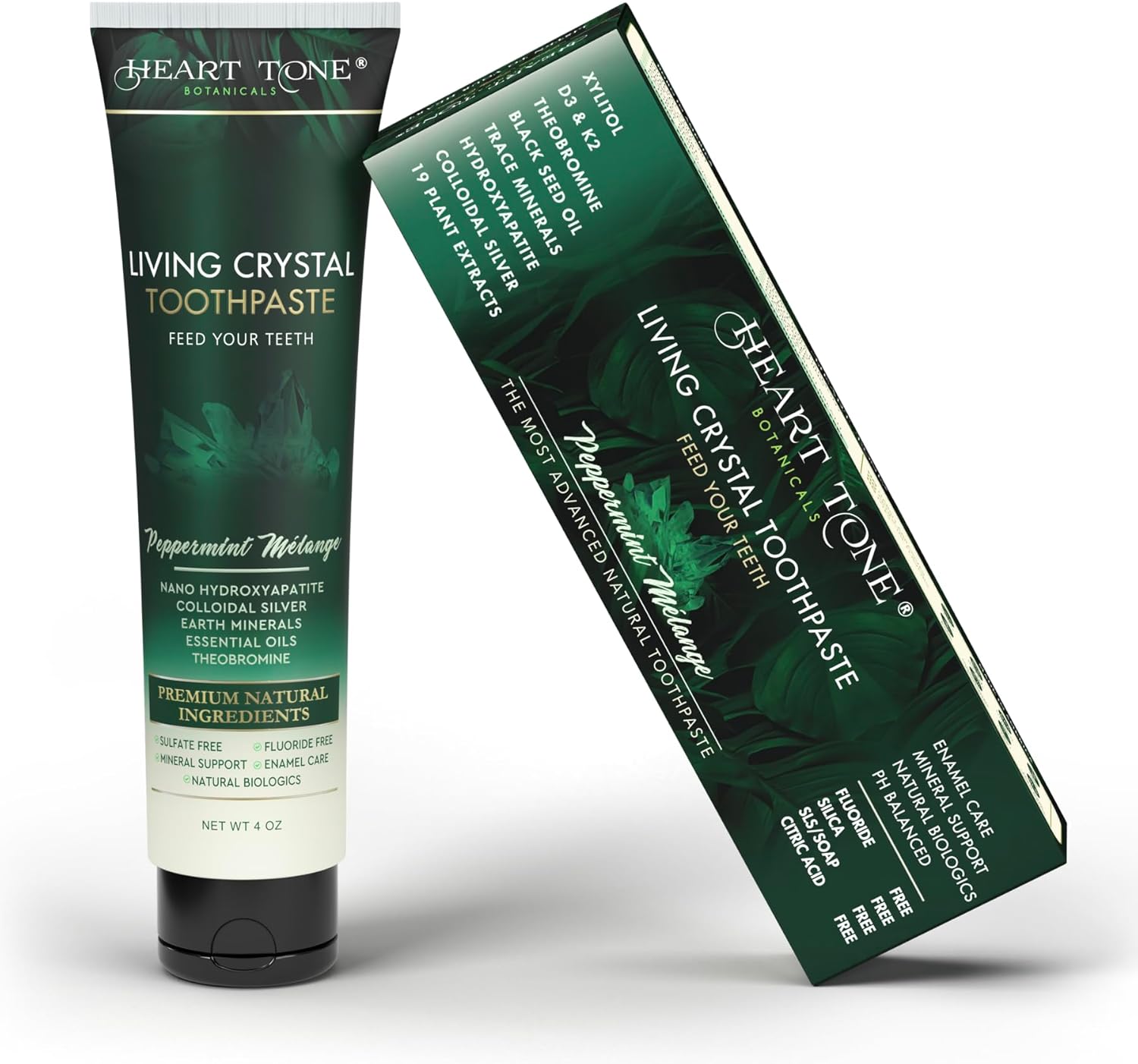
At Heart Tone Botanicals, Living Crystal Toothpaste takes this approach: botanically-derived ingredients, mineral support for enamel, and a formula designed for daily use without the abrasive risk that makes charcoal a concern. No harsh synthetics, no unnecessary abrasives, no ingredients that require you to cross-check safety claims every morning.
For a complete oral care routine that works with your mouth rather than against it, browse our full Natural Oral Care collection — including our Natural Toothpaste line and Natural Mouthwash options.
If You Still Want to Try Charcoal
We believe in honest information, so here's the practical guidance if you're not ready to abandon the trend entirely:
- Use it rarely — once every two weeks at most, not as your daily toothpaste
- Brush gently — soft strokes, not vigorous scrubbing
- Skip it entirely if you have enamel wear, sensitivity, gum recession, or cosmetic dental work (crowns, veneers, bonding)
- Don't replace your regular toothpaste — charcoal is an occasional treatment, not a foundation
- Watch for signals — if your teeth become more sensitive after starting, stop immediately
The most important thing you can do for a bright, healthy smile isn't a trendy powder. It's a consistent, gentle daily routine with ingredients your enamel can actually work with — year after year.
The Bottom Line
Charcoal teeth whitening is a classic case of a marketing story that outpaced the science. The black aesthetic is compelling, the "natural" label feels trustworthy, and the short-term surface effect can look impressive. But the underlying mechanism — aggressive abrasion with no bleaching action — is working against you if you use it regularly.
Your enamel is irreplaceable. The best natural whitening strategy starts with protecting it, not eroding it. Choose a daily toothpaste that cleans gently, supports your oral microbiome, and gives your enamel the minerals it needs. Save the dramatic before-and-afters for something that's actually working in your favor.
Ready to build a natural oral care routine that actually supports your teeth? Explore Living Crystal Toothpaste and our complete Natural Oral Care collection.

Leave a comment
This site is protected by hCaptcha and the hCaptcha Privacy Policy and Terms of Service apply.