












Baking soda toothpaste is one of those ideas that sounds almost too simple to be real. Sodium bicarbonate — the same thing sitting in your pantry — as a cornerstone of your oral care routine? It turns out there's more going on here than kitchen chemistry. But there's also more nuance than most "natural oral care" content will tell you.
Here's what the research actually shows about baking soda toothpaste: the benefits are real, the risks are manageable, and whether it belongs in your routine depends on what you're using it with — not just what's in the tube.
What Is Baking Soda Toothpaste?

Baking soda (sodium bicarbonate) has been used as a tooth-cleaning agent for well over a century. Modern baking soda toothpastes take the raw ingredient and formulate it into a controlled, stable product — typically controlling particle size, concentration, and pH to stay within safe abrasivity ranges.
The key measure dentists use is Relative Dentin Abrasivity (RDA). Baking soda consistently ranks among the lowest abrasive agents used in toothpaste — significantly gentler than many conventional brightening pastes. The American Dental Association classifies toothpastes with an RDA under 250 as safe for daily use. Most baking soda formulas come in well below 100.
That low abrasivity is part of why baking soda toothpaste has developed a loyal following among people with sensitive teeth, recession, or worn enamel who want effective cleaning without added friction.
What the Research Actually Shows
Surface Cleaning
Multiple clinical studies and a comprehensive systematic review published in the Journal of the American Dental Association found that baking soda dentifrices showed meaningful improvement in surface cleaning compared to non-baking soda controls, particularly in a single use. Long-term, the results were comparable — not dramatically superior — to other toothpastes. The mechanism is twofold: mild mechanical abrasion breaks up the biofilm, while baking soda's botanical properties support a healthy oral environment.
traditional oral care
The same systematic review found modest but statistically significant reductions in gum sensitivity and bleeding with baking soda toothpaste. If you're dealing with mild gum irritation or sensitivity around the gumline, this is a meaningful data point — though it's not a replacement for professional care if you have ongoing gum concerns.
Acid Neutralization
This is where baking soda does something genuinely unique. It's alkaline, and when it contacts the acidic environment created by oral bacteria (and exacerbated by coffee, wine, and sugary foods), it rapidly raises oral pH. A more alkaline mouth is less hospitable to odor-causing microbes, which thrive in acidic conditions. Neutralizing post-meal acid dips is a meaningful passive protection mechanism — even if it doesn't replace enamel maintenance.
Stain Removal and brightening
One study found that a baking soda toothpaste produced 61% lower stain scores compared to a non-baking soda paste at six weeks. That's impressive for surface stains from coffee, tea, and wine. The mechanism is gentle polishing — baking soda particles physically lift extrinsic stains without the chemical bleaching action of peroxide-based whiteners. The result is gradual, subtle brightening over weeks — not a dramatic overnight shift.
Breath
Toothpastes containing 20% or more sodium bicarbonate have been shown to provide significant odor reduction for up to three hours. By helping reduce odor compounds and supporting a cleaner-feeling mouth, baking soda addresses one of the main reasons breath can feel off rather than just masking it with flavor.
The Honest Limitation: What Baking Soda Doesn't Do
Here's where natural oral care content often goes quiet, and where we won't.
Baking soda does not Traditional Mineral-Rich Formula. It can neutralize acids that cause demineralization, and in doing so creates conditions where mineral support can occur — but it cannot itself rebuild minerals that have been lost. For that, you need a dedicated mineral-support ingredient: fluoride (conventional), nano-hydroxyapatite, or a well-formulated botanical mineral complex.
This means baking soda toothpaste used alone — without a a mineral-based ingredientcompanion — leaves a gap in your oral care system. You're cleaning well, neutralizing acids, gently brightening, and supporting traditional oral care. But you're not actively rebuilding enamel or replacing a complete formula would.
For people who want to go entirely fluoride-free, this means paying close attention to what else is in your toothpaste (or your oral care routine) to fill that a mineral-based ingredientgap.
Who Benefits Most from Baking Soda Toothpaste
Based on the research, baking soda toothpaste tends to be most valuable for:
- People with sensitivity or recession who need gentle, low-abrasive cleaning
- Coffee and tea drinkers who want gradual surface stain reduction without harsh chemicals
- Those with frequently acidic oral environments — from diet, dry mouth, or acid reflux — who benefit from pH buffering
- People prioritizing "clean" formulations who want to know exactly what's in their toothpaste and why
- Anyone with gum sensitivity who wants effective surface buildup disruption without aggressive abrasives
How to Use It Safely
The science on safety is clear: baking soda toothpaste is safe for daily use in properly formulated products. The caveats apply mainly to DIY applications — using dry powder directly, brushing aggressively, or using it multiple times a day without control over particle concentration.
If you're using a commercial baking soda toothpaste:
- Brush twice daily with a soft-bristled brush using gentle pressure
- Allow the formula to do the work — vigorous scrubbing adds abrasion, not cleaning benefit
- Pair it with a a mineral-based ingredientproduct if your formula doesn't include a mineralizing agent
- Avoid mixing with citrus juice or vinegar — the acid neutralizes the baking soda's benefits and adds enamel risk
For people with braces, porcelain veneers, or extensive composite restorations, check with your dentist — any abrasive cleaner can affect certain restoration surfaces over time.
What This Means for Your Toothpaste Choice
Baking soda toothpaste is a genuinely useful tool — but it works best as part of a complete oral care system rather than as a standalone solution. The question isn't whether baking soda is good. It is. The question is: what's it paired with?
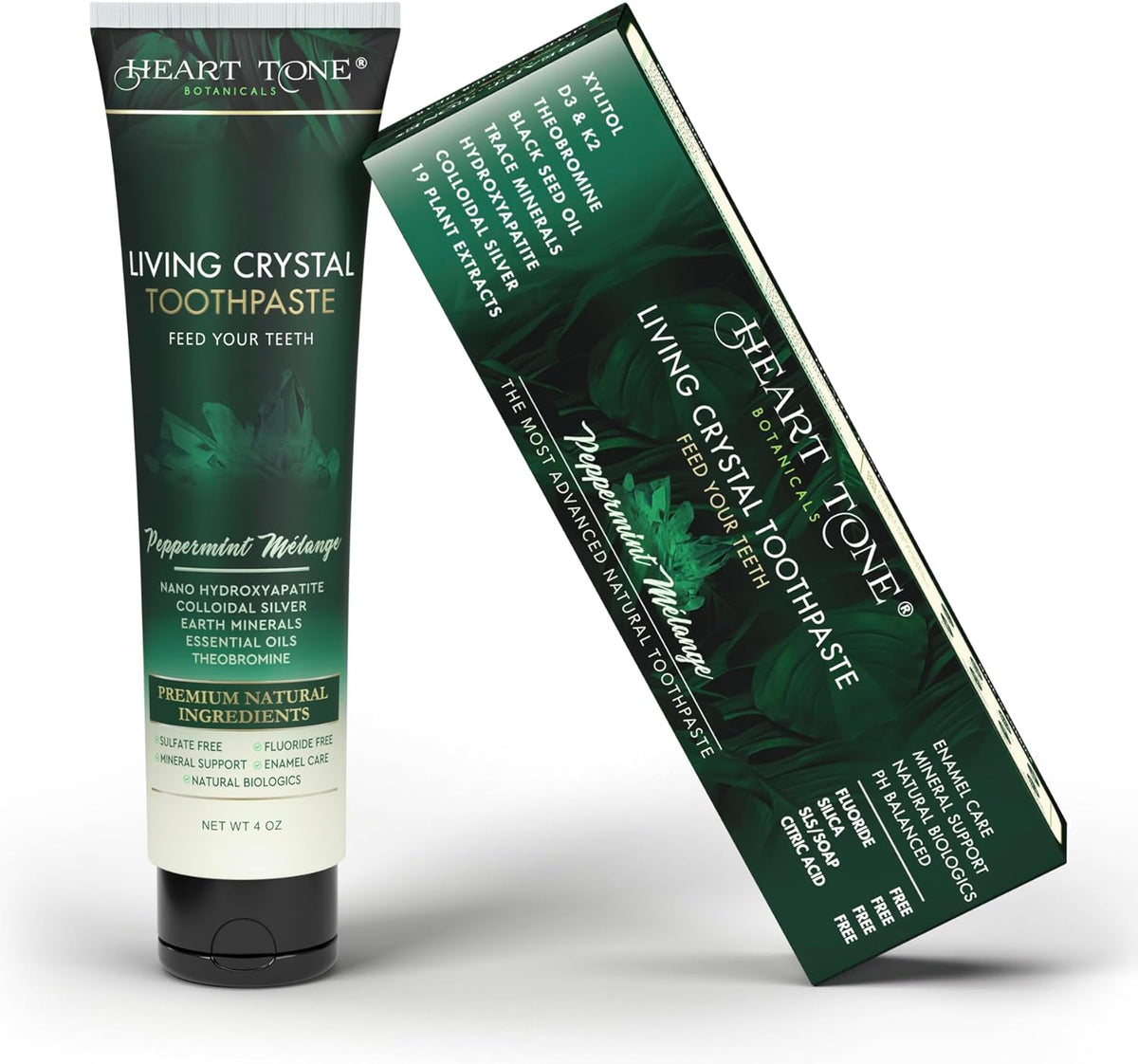
The reason we formulated Living Crystal Toothpaste to go beyond a single-ingredient approach is exactly this. Effective natural oral care requires addressing cleaning, pH balance, mineral support, and the oral environment — ideally in a formula that doesn't compromise any of those functions for the sake of simplicity.
If you're currently using a baking soda toothpaste and love the gentle clean and brightening effect, you may not need to abandon it. But pay attention to what's handling the a mineral-based ingredientside of your routine — that's the gap most baking soda formulas leave open.
Building a Complete Natural Oral Care Routine
Baking soda toothpaste fits well into a broader natural oral care system. Here's how it can integrate:
- Daily brushing: A complete botanical formula that addresses cleaning, pH, and mineral support — like Living Crystal Toothpaste
- Oil pulling (2-3x weekly): Helps keep the gumline clean and fresh. Our Antioxidant Oil Pull and Ozonated Oil Pull are formulated for this specific function
- Botanical rinsing: Rounds out the routine by reaching surfaces brushing misses — our Restorative Mouth Rinse is designed to complement rather than duplicate your brushing step
Baking soda's real value in this system is the pH buffering and gentle cleaning — not as the centerpiece, but as one well-understood piece of a larger picture.
The Bottom Line
Baking soda toothpaste works. The research on surface cleaning, traditional oral care, stain reduction, and acid neutralization is solid. The abrasivity concerns are largely overstated when you're using a properly formulated commercial product with a soft brush and appropriate technique.
What it doesn't do is Traditional Mineral-Rich Formula — and that's the one function you need to account for in your routine if you're going fluoride-free. Pair baking soda's cleaning and pH benefits with a formula that handles the mineral side, and you have a genuinely effective natural oral care approach that doesn't rely on oversimplification or marketing mythology.
For the full picture on natural toothpaste ingredients and how to evaluate what's worth using, explore our complete oral care collection — every product is formulated with the same commitment to transparency and botanical integrity that brought us to baking soda in the first place.

Leave a comment
This site is protected by hCaptcha and the hCaptcha Privacy Policy and Terms of Service apply.