












Baking Soda Has Been in Oral Care for Over a Century — Here's What That Actually Means

Sodium bicarbonate — baking soda — is one of the oldest ingredients in modern oral care. Long before fluoride was introduced into commercial toothpaste in the 1950s, baking soda was the primary cleaning agent in most household tooth-cleaning preparations. Today it's back — not as a throwback, but as a foundational ingredient in a growing category of natural, fluoride-free toothpastes formulated around botanical ingredients rather than synthetic additives.
If you're exploring natural toothpaste options, baking soda is almost certainly on your radar. This guide explains what it actually does, what it feels like in a formula, and what else you should look for when choosing a baking soda toothpaste.

What Baking Soda Actually Does in a Toothpaste
Baking soda's role in a toothpaste formula is primarily about texture and feel. Sodium bicarbonate is a mild, gentle abrasive — meaning its fine crystalline structure provides a light polishing action as you brush. This helps buff away surface residue and food film that accumulates on teeth throughout the day, leaving a noticeably cleaner, smoother sensation after brushing.
It's also alkaline by nature. With a pH around 8.3, sodium bicarbonate creates a mildly alkaline environment in the mouth during brushing — which many people find contributes to a fresh, clean-feeling experience and a neutral taste that doesn't linger.
What baking soda does not do: it is not a bleaching agent, it does not contain peroxides, and it does not require any oxidizing reaction to do its job. If your goal is a natural toothpaste that leaves your mouth feeling clean — not chemically treated — baking soda is a straightforward ingredient to understand and trust.
How Baking Soda Toothpaste Feels Different
The sensory experience of a baking soda toothpaste is distinct from a conventional SLS-based formula. Without sodium lauryl sulfate (a synthetic foaming agent common in commercial toothpastes), baking soda formulas tend to produce a lower-foam, thicker lather that many people find more comfortable. The cleaning sensation comes from the gentle polishing action and the botanical flavor profile — not from foam volume.
A well-formulated baking soda toothpaste should leave your mouth feeling:
- Clean and smooth — surface residue buffed away, not chemically stripped
- Fresh and neutral — a natural mint finish rather than an artificial sweetness
- Comfortable — no burning, no dry aftertaste, no lingering synthetic flavor
- Non-gritty — fine sodium bicarbonate in a properly formulated gel base should feel smooth, not sandy
If a baking soda toothpaste feels harsh or gritty, that's typically a sign of coarse particle size or an underformulated base — not a property of sodium bicarbonate itself.
What to Look for Alongside Baking Soda in a Modern Formula
Baking soda is an excellent starting point, but the full picture of a natural toothpaste depends on what surrounds it in the formula. Here are the ingredients worth looking for:
A Clay Base
Kaolin clay and bentonite (montmorillonite) clay are natural mineral clays with a long history of use in personal care. They provide additional gentle texture, help suspend baking soda evenly in the formula, and contribute to the smooth, cohesive feel that distinguishes a well-crafted toothpaste from a gritty homemade paste. Both have been used in traditional cleansing formulas for centuries.
Xylitol
Xylitol is a naturally occurring plant-based sweetener — commonly derived from birch — that has been used in oral care products for decades. It contributes a clean, mild sweetness without the cloying aftertaste of artificial sweeteners, and without the residual syrupy taste of refined sugar. In a natural toothpaste, xylitol serves as the primary sweetening agent and contributes to a pleasant-tasting finish.
A Botanical Mint Complex
Peppermint, spearmint, cornmint, and wintergreen essential oils have each been used in oral care for centuries. A layered botanical mint complex — rather than a single artificial mint flavor — delivers a richer, more complete freshness experience that lasts beyond the initial brush. The menthol in peppermint oil is the primary contributor to the cooling sensation you feel after brushing.
Traditional Botanical Extracts
Look for botanical extracts with a long history in oral care traditions: myrrh (used in traditional oral care since antiquity), rhatany root (a traditional Andean botanical used in European herbal formulas for centuries), usnea lichen (used in Northern European botanical traditions), and licorice root. These ingredients contribute to a formula's depth and sensory complexity — a quality that single-note commercial formulas rarely match.

What to Avoid When Shopping for Baking Soda Toothpaste
Not all baking soda toothpastes are created equal. Read the full ingredient list and watch for:
- Sodium lauryl sulfate (SLS) — a synthetic detergent and common irritant for people with sensitive oral tissues; often included for foam volume rather than function
- Artificial sweeteners — saccharin, aspartame, and sucralose are common in commercial natural-branded toothpastes despite the packaging claims
- Artificial flavors and colors — including synthetic "mint flavoring" that doesn't come from actual essential oils
- Highly abrasive formulas — not all baking soda toothpastes use fine-milled sodium bicarbonate; look for a smooth, gentle abrasion in a buffered base
- Triclosan or synthetic preservatives — common in legacy commercial formulas and worth avoiding in a natural-oriented routine
Baking Soda Toothpaste and Fluoride-Free Formulas
Most natural baking soda toothpastes are fluoride-free by design — including formulas built around botanical ingredients, mineral clays, and plant-derived extracts. This is a deliberate formulation choice, not an oversight. People who prefer fluoride-free toothpaste are typically looking for a different approach to their daily routine: one that relies on botanicals, traditional ingredients, and physical cleaning action rather than synthetic additives.
If you're switching from a conventional fluoride toothpaste to a natural baking soda formula, give it a few weeks. The sensory experience is noticeably different — lower foam, a more complex mint finish, a denser texture — and most people who make the switch find the natural approach becomes their preference once they've adjusted to it.
The Bottom Line
Baking soda toothpaste isn't a trend — it's a return to a well-understood, time-tested ingredient. Sodium bicarbonate's place in oral care is built on a simple foundation: it's a gentle, effective cleaning agent with over a century of use and a sensory experience that's hard to replicate with synthetic alternatives.
The best baking soda toothpastes pair sodium bicarbonate with complementary natural ingredients — clay bases, xylitol, botanical mint complexes, and traditional botanical extracts — to deliver a formula that feels genuinely different from what you'll find on most pharmacy shelves.
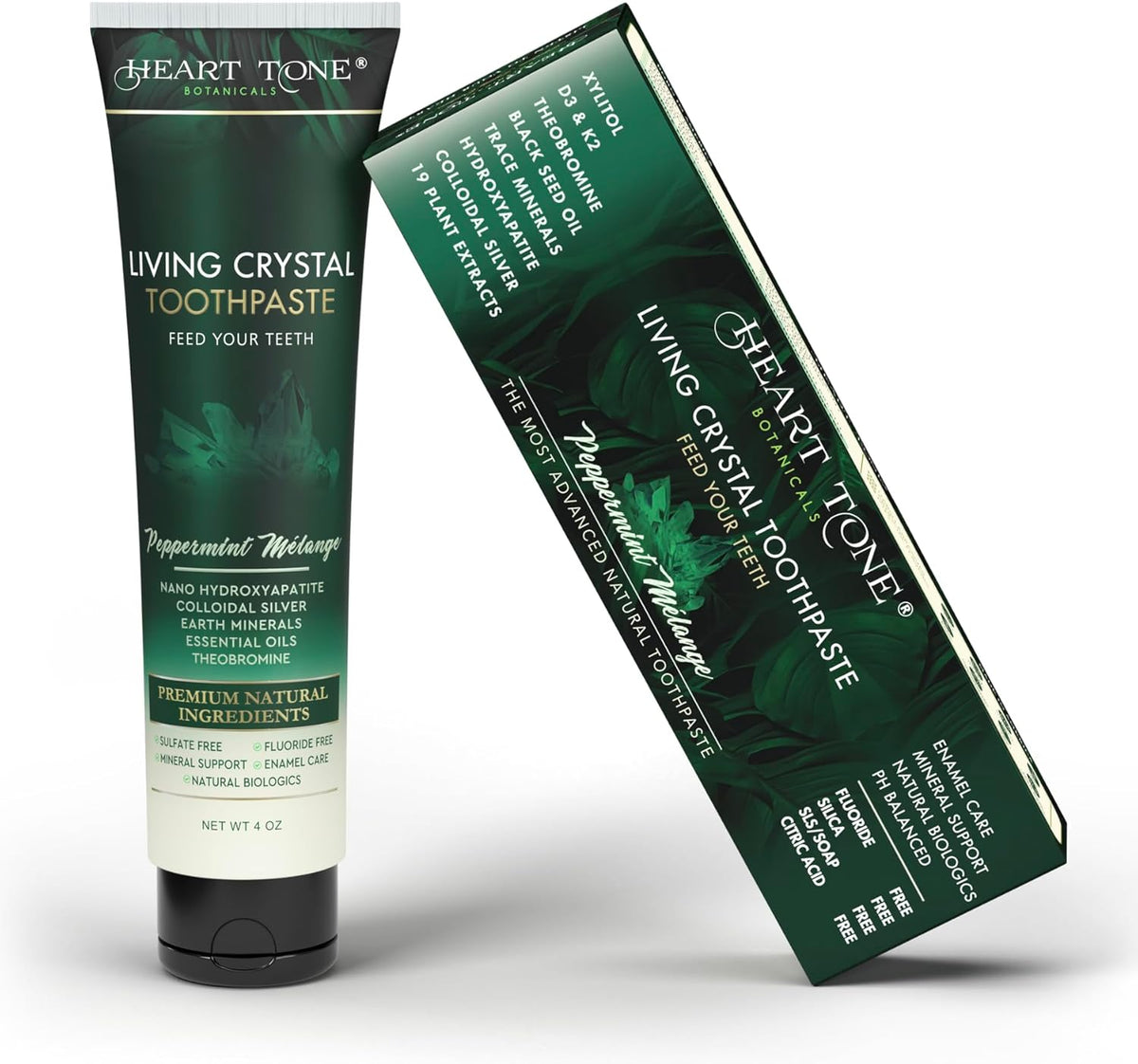
If you're ready to try a natural baking soda toothpaste, Living Crystal Toothpaste from Heart Tone Botanicals is a fluoride-free formula built around sodium bicarbonate, kaolin clay, organic xylitol, micro-hydroxyapatite, and 30+ botanical extracts — including myrrh, rhatany root, and a layered botanical mint complex. Handcrafted in Vero Beach, Florida. Explore it alongside our full natural oral care collection for a complete daily routine.

Leave a comment
This site is protected by hCaptcha and the hCaptcha Privacy Policy and Terms of Service apply.