












What It Means to Go Aluminum-Free

If you have been reading the labels on conventional antiperspirants, you have seen one ingredient listed prominently: aluminum. Aluminum compounds — typically aluminum chlorohydrate or aluminum zirconium — are what give antiperspirants their primary function. They temporarily block sweat ducts at the surface of the skin. Going aluminum-free means choosing a product that works differently: rather than blocking perspiration, an aluminum-free deodorant is formulated with botanical ingredients that contribute to a fresh, comfortable sensation throughout the day without interfering with the body's natural process.
That distinction matters. Sweat itself is largely odorless. The sensation that people associate with perspiration comes from the breakdown of sweat as it contacts the skin — not from sweat itself. An aluminum-free formula addresses freshness at the experience level, with ingredients that have long histories of use in natural body care.
Why People Are Making the Switch
The move away from aluminum-based antiperspirants has grown steadily. For most people, the motivations are practical:
- Skin sensitivity — some people find aluminum-containing formulas irritating on underarm skin, particularly after shaving
- Clothing — aluminum compounds are well known to react with sweat and cause staining on light-colored fabric
- Baking soda sensitivity — many first-generation natural deodorants replaced aluminum with baking soda, which can cause redness and irritation on sensitive underarm skin. A baking soda-free formula addresses this without reintroducing aluminum
- A preference for cleaner ingredients — a desire for a more botanical daily routine with fewer synthetic compounds
Whatever the reason, the most important question once you've decided to switch is: what goes into the formula, and what does it actually do?
Botanical Ingredients With a History in Natural Body Care
Arrowroot Powder
Arrowroot (Maranta arundinacea) is one of the most widely used ingredients in botanical deodorant formulas. A fine, starch-derived powder, arrowroot has a long history of use in natural body care for its soft, silky texture and its ability to absorb moisture at the skin surface. In a deodorant stick, it contributes to a smooth, non-sticky application that feels comfortable against skin. It has been used in botanical personal care for generations as an alternative to synthetic starches and talc.
Kaolin Clay and Bentonite Clay
Mineral clays have been valued in skincare traditions around the world for centuries. Kaolin — a fine white clay with origins in traditional herbal practice — is known for its gentle, velvety texture. Bentonite (montmorillonite) clay has a similarly deep history in natural body care. Together in a deodorant base, they contribute a smooth, dry feel that helps the formula apply cleanly and sit comfortably against underarm skin.
Magnesium Hydroxide
Magnesium hydroxide has become a recognized ingredient in the natural deodorant space as an alternative to both aluminum and baking soda. It has a long history of use in personal care, and it is considered gentle enough for sensitive skin. In a botanical deodorant formula, it contributes to the formula's ability to support a fresh, comfortable feeling throughout the day without the irritation that baking soda can cause.
Zinc Ricinoleate
Zinc ricinoleate is derived from castor oil and has a history of use in natural personal care formulations. It is a standard ingredient in clean-ingredient deodorant chemistry, valued for its gentle character and its long track record in botanical body care. In a formula, it contributes to the fresh sensation that makes a natural deodorant feel effective rather than minimal.
Elderberry Extract
Elderberry (Sambucus nigra) has centuries of use in botanical body care traditions across Europe and North America. In a deodorant formula, elderberry extract contributes a plant-derived richness that distinguishes a thoughtfully sourced botanical formula from a stripped-down alternative. It has a long-standing reputation in natural personal care for its gentle character and its traditional use in skin-facing formulas.
Neem and Tamanu
Neem (Azadirachta indica) has been used in traditional botanical body care for thousands of years — particularly in Ayurvedic practice. In a deodorant formula, neem CO2 extract brings its distinctive botanical character and its long history as a traditional plant ingredient. Tamanu oil (Calophyllum inophyllum), derived from the tropical tamanu tree, has a centuries-long tradition of use in Pacific island skincare. Both ingredients bring botanical depth to a formula that is more than simply aluminum-free.
Coconut Oil, Jojoba, and Shea Butter
The carrier base of a quality natural deodorant matters as much as the deodorizing ingredients. Organic coconut oil, jojoba seed oil, and shea butter (Vitellaria paradoxa) each bring long histories in natural body care. Coconut oil has been used in traditional skin care across tropical cultures for centuries. Jojoba, technically a liquid wax, has a texture that resembles the skin's own natural feel. Shea butter — extracted from the nuts of the African shea tree — has been used in body care traditions across West Africa for generations. Together, they create a base that glides cleanly and leaves skin feeling smooth rather than sticky or greasy.
What to Look For — and What to Avoid
Not every aluminum-free deodorant is formulated equally. Here's what matters when you're reading a label:
- Baking soda-free — many aluminum-free formulas still use baking soda, which can irritate sensitive underarm skin. A formula that uses magnesium hydroxide, kaolin clay, and arrowroot instead is generally gentler for everyday use
- No synthetic fragrances — if you have sensitive skin or fragrance sensitivities, look for a fragrance-free option or one scented only with pure botanical essential oils
- No parabens — look for a formula that uses natural preservation rather than synthetic paraben preservatives
- Thoughtful carrier oils — a formula built on organic coconut oil, jojoba, and shea butter will feel noticeably different from one built on fillers and synthetic emulsifiers
- Scent options that fit your preference — botanical deodorant scents range from unscented to floral, woodsy, citrus, or earthy. Having choices matters because scent is personal
The Adjustment Period
If you are switching from a conventional antiperspirant, it is worth knowing that many people notice a brief adjustment period in the first few weeks. Conventional antiperspirants physically reduce the amount of sweat that reaches the skin surface. When you stop using them, the body's natural process resumes — and it can take a few weeks for things to normalize. This is not a sign that the natural deodorant is not working. It is a sign that the body is doing what it has always done, without being blocked.
Most people find that once the adjustment period passes, they feel comfortable and confident — and often notice that a botanical formula with gentle carrier oils leaves underarm skin feeling better than the conventional stick they switched from.
Five Botanical Scent Profiles
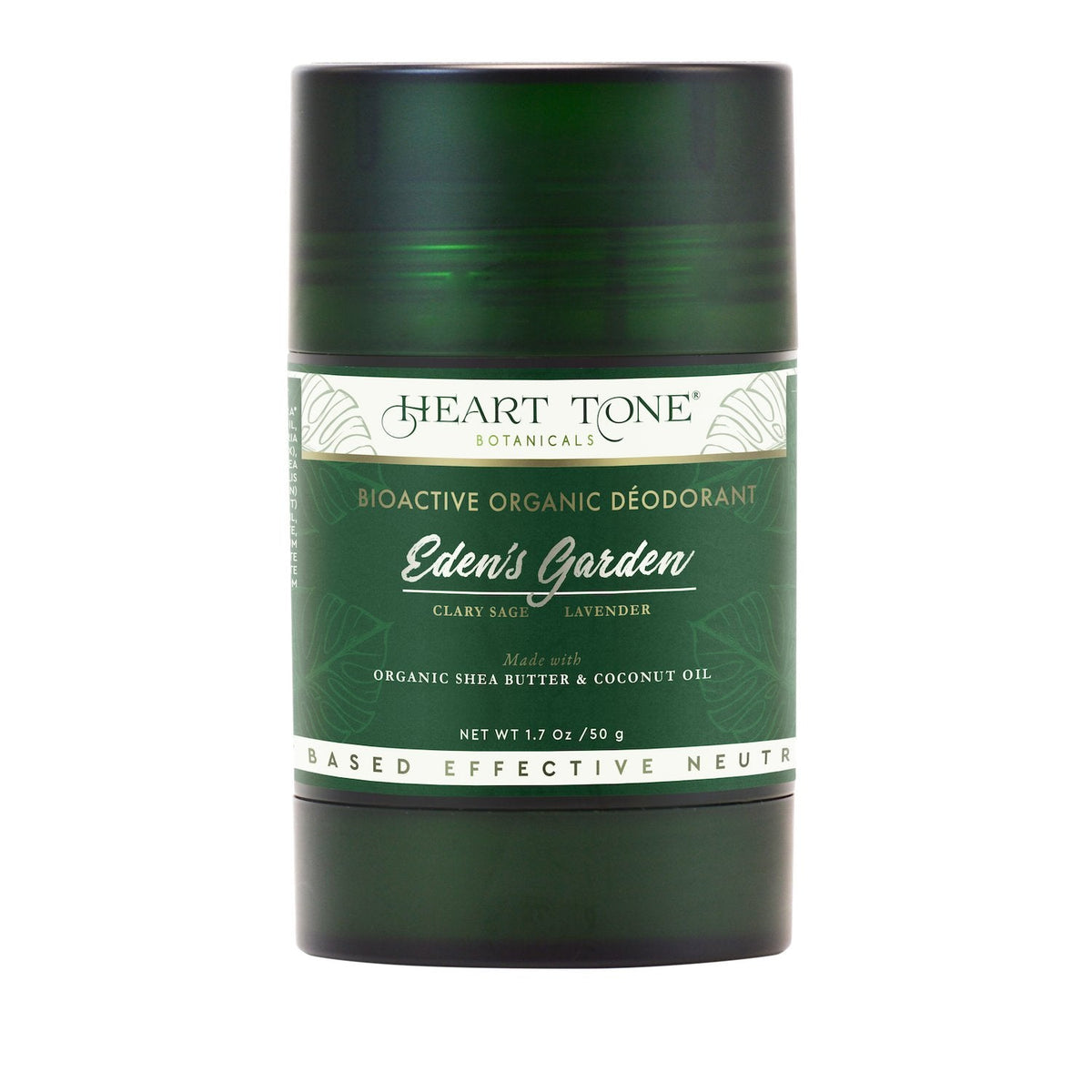
One of the genuine pleasures of switching to a botanical deodorant is discovering that scent becomes something considered and personal rather than generic. The Heart Tone Botanicals Bioactive Deodorant line comes in five distinct botanical profiles — all sharing the same base formula, all free of aluminum, baking soda, parabens, and synthetic fragrances:
- Eden's Garden — a soft, floral profile with clary sage and lavender, grounded in a gentle herbal character
- Grove Island — a bright, citrus-forward profile with bergamot, grapefruit, and lime, finished with a hint of vanilla
- Jamaica Estate — a warm, earthy profile with frankincense, bergamot, lavender, and patchouli
- Gentleman's Reserve — a complex, woodsy profile with fir needle, clove, vetiver, and buddhawood
- The Classic — completely fragrance-free, for anyone with scent sensitivities or a preference for clean, unscented daily use
If you'd like to try multiple scent profiles before committing to a full size, the Set Sail deodorant discovery set is a good place to start.
The Bottom Line
Aluminum-free deodorant is not a compromise — it is a different approach to daily body care, built around botanical ingredients with long histories of use. The right formula uses a thoughtful combination of mineral clays, plant oils, and botanical extracts to help you feel fresh and comfortable, without irritating sensitive underarm skin or leaving staining on clothing.
If you're ready to make the switch, explore the Heart Tone Botanicals Bioactive Deodorant — made without aluminum, baking soda, parabens, or synthetic fragrances. Five scent profiles, one clean formula.

Leave a comment
This site is protected by hCaptcha and the hCaptcha Privacy Policy and Terms of Service apply.