












The Question Most People Never Actually Ask

Most people pick a mouthwash the same way they pick a toothbrush color — whatever's on the shelf, whatever's cheapest, whatever they grew up using. Few people stop to ask what the alcohol in a conventional rinse is actually doing, or what changes when you swap it out for an alcohol-free, botanical formula. It's worth asking, because the two approaches feel completely different in your mouth within the first few seconds of swishing.

Here's a practical look at what actually changes between the two, so you can decide which one fits your routine instead of just grabbing whatever's closest.
What Alcohol Is Doing in a Conventional Rinse
Ethanol shows up in a lot of mainstream mouthwashes mainly as a carrier and preservative — it helps dissolve flavor oils and keeps the formula shelf-stable. The side effect most people notice first is the burn: that sharp, tingling sensation right after swishing that a lot of people have come to associate with a rinse actually "working."
That sensation is strong, but it's also temporary, and it comes with a tradeoff. Alcohol is drying. For a lot of people, the mouth feels parched in the minutes after swishing, and for some, that dryness lingers well past the initial rinse. If you already deal with a naturally dry mouth, wear braces or other dental hardware, or just find the sting unpleasant, that tradeoff adds up fast over months of twice-daily use.
What Changes With an Alcohol-Free Formula
An alcohol-free rinse swaps that ethanol base for water, botanical extracts, and often a humectant like vegetable glycerin or xylitol. The immediate difference is obvious: no burn, no sting, and no dry aftertaste. What you're left with instead is whatever the formula is actually built around — botanicals, flavor oils, and ingredients chosen for how they feel rather than how sharply they sting.
- No burning sensation, which makes twice-daily use easier to stick with long term
- No drying aftereffect — the mouth tends to feel comfortably moist rather than parched
- A gentler fit for kids, people in alcohol recovery, and anyone with sensitive oral tissue
- A milder, often sweeter taste profile instead of a sharp medicinal one
The tradeoff runs the other direction, too: if you've trained yourself to equate "burn" with "clean," an alcohol-free rinse can feel underwhelming the first few times you try it — even though nothing about rinsing and spitting out food debris and residue has actually changed.
Who Tends to Prefer Which
Neither style of mouthwash is objectively "better" for everyone — the right pick depends on what you're optimizing for.
People who often prefer alcohol-based formulas
Some people simply like the strong, sharp sensation and have used it for years without issue. If you have no sensitivity concerns and like that intense feeling as part of your routine, that's a personal preference, not a problem to fix.
People who often prefer alcohol-free formulas
Alcohol-free tends to be the more comfortable daily choice for kids, people with naturally dry mouths, anyone wearing braces or other orthodontic hardware, people in alcohol recovery who prefer to avoid ethanol products altogether, and anyone who just finds the burn unpleasant enough to skip rinsing some days. If "comfortable enough to actually use every day" matters more to you than an intense initial sensation, that's the direction to look.
Botanical Ingredients Worth Knowing in an Alcohol-Free Rinse
Aloe Vera Leaf Juice
Farm-grown aloe vera is one of the most widely used botanical ingredients in traditional personal care. It's valued for its soothing, non-drying character, and it supports a comfortable moisture balance in the mouth — which matters most in exactly the formula category that's trying to avoid the dryness alcohol tends to leave behind.
Xylitol
Xylitol is a plant-derived sweetener that's a common substitute for the artificial sweeteners and sugar alcohols found in a lot of conventional rinses. It gives an alcohol-free formula a pleasant taste without relying on a sharp, medicinal flavor to signal "clean."

Peppermint and Mint Botanical Complex
Peppermint has been used in oral care for thousands of years, and the menthol it contains creates a cooling sensation that reads as an immediate feeling of freshness — without any ethanol in the formula. A fuller mint mélange built from peppermint, wintergreen, and spearmint gives an alcohol-free rinse the kind of lasting, layered mint experience that a single drop of synthetic flavor can't replicate.
Licorice Root Extract
Licorice root has a long tradition of use in botanical formulations. It's valued for its distinctive character and rounds out the overall flavor and feel of a rinse, contributing to a comfortable, well-balanced taste rather than an aggressive one.
Making the Switch Without the Adjustment Period Derailing You
If you've used an alcohol-based rinse for years, the first few days of an alcohol-free formula can feel almost too gentle — your mouth has simply learned to associate "working" with "burning." That's a habit, not a signal that the new formula is doing less. Give it a week of normal twice-daily use before deciding whether it's for you; most people stop noticing the absence of the sting within a few days and start noticing how much less dry their mouth feels by the evening.
A few practical notes for the switch:
- Use the full amount listed on the label — botanical formulas are often diluted differently than alcohol-based ones
- Swish for the full time recommended on the bottle rather than cutting it short out of habit
- Pair it with a fluoride-free toothpaste if you're moving your whole routine in a more natural direction at the same time
- Store it away from direct sunlight and heat, same as any botanical formula, to keep the flavor oils stable
The Bottom Line
Alcohol-based and alcohol-free mouthwash aren't really competing on the same axis — one is built around an intense, familiar sensation, and the other is built around comfort you can keep up every single day without the dryness or the sting. For most households, especially ones with kids, sensitive tissue, or anyone who's ever skipped rinsing because the burn wasn't worth it, the alcohol-free formula is the one that actually gets used consistently — and a rinse only helps with your routine if you reach for it.
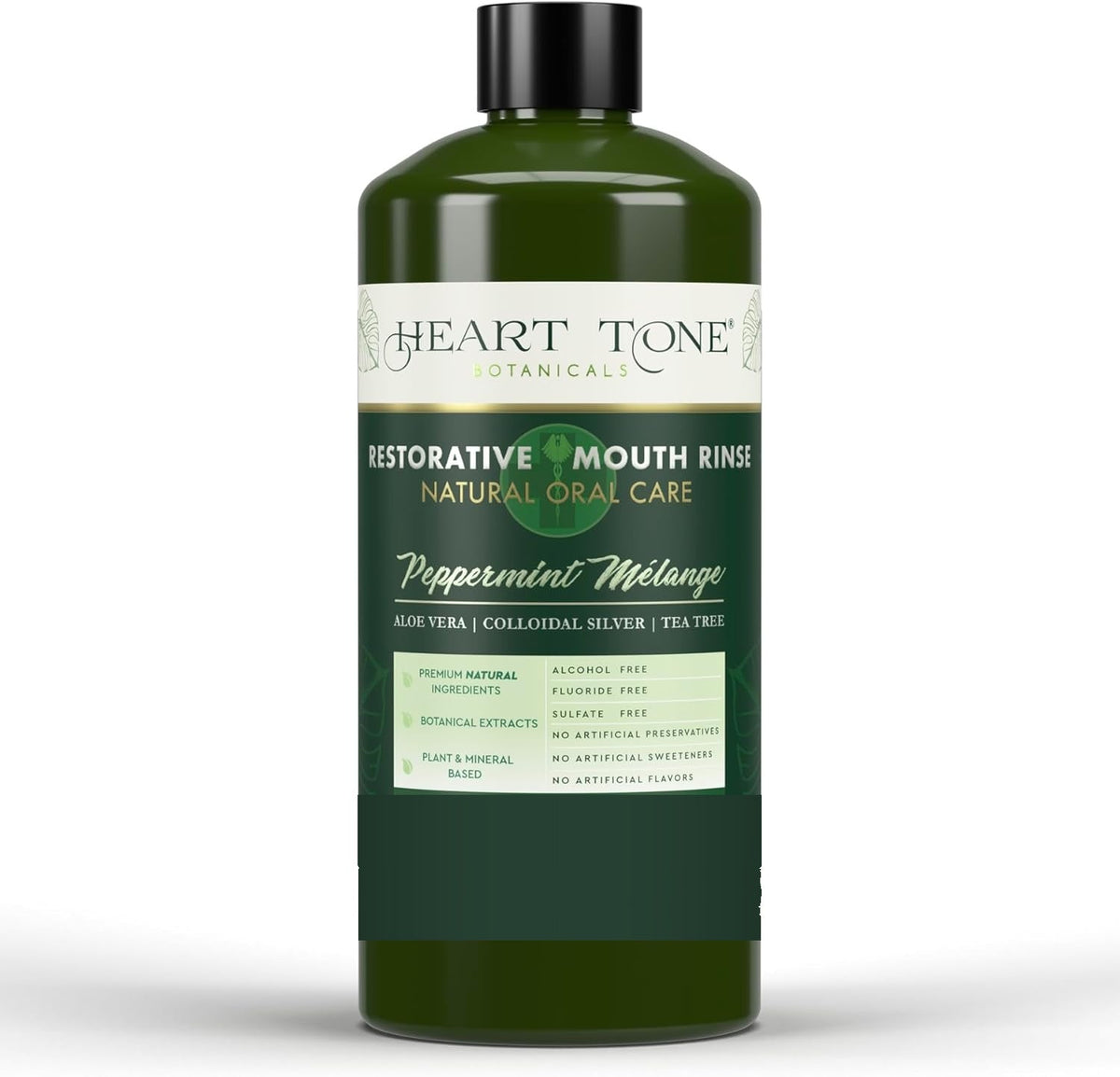
If you're ready to try the alcohol-free side of that comparison, the Restorative Mouth Rinse from Heart Tone Botanicals is a fluoride-free, alcohol-free formula built with farm-grown aloe vera, xylitol, and a full botanical mint complex. Pair it with Living Crystal Toothpaste for the brushing half of your routine, or browse the full natural oral care collection to outfit the whole household.

Leave a comment
This site is protected by hCaptcha and the hCaptcha Privacy Policy and Terms of Service apply.