

Why Switch to Natural Household Cleaners?
Walk down the cleaning aisle of any grocery store and you'll find a wall of plastic bottles filled with chemical cocktails — ammonia, bleach, synthetic fragrances, phosphates, and ingredients you can't pronounce. These products clean your surfaces, sure. But what are they leaving behind?

Natural household cleaners offer an alternative that's gaining serious momentum. According to market research, the natural and organic cleaning products market is growing at over 8% annually as more families seek safer alternatives for their homes. And the reasons go beyond just "going green."
What Makes a Household Cleaner "Natural"?
Not every product labeled "natural" lives up to the claim. Here's what actually matters:
- Plant-derived surfactants — cleaning agents sourced from coconut oil, corn, or other plant sources instead of petroleum
- Essential oil fragrances — real scents from real plants, not synthetic fragrance compounds (which can contain dozens of undisclosed chemicals)
- No harsh chemical base — no bleach, ammonia, phosphates, triclosan, or chlorine
- Biodegradable formula — breaks down naturally without contaminating waterways
- Transparent ingredient lists — you can read and understand every ingredient on the label
The cleaning products you use every day touch your countertops, your dishes, your food, and the air your family breathes. Choosing natural isn't just about the environment — it's about what you're willing to bring into your home.
The Hidden Problem with Conventional Cleaners
Most people don't think twice about their dish soap or counter spray. But research from the Environmental Working Group (EWG) has found that many conventional cleaning products contain ingredients linked to respiratory irritation, hormone disruption, and skin sensitization.
Some key concerns:
- Synthetic fragrances — the term "fragrance" on a label can hide hundreds of chemical compounds, many untested for safety
- Phosphates — common in dish soaps, these contribute to algal blooms and water pollution
- Triclosan — an traditional botanical ingredient that's been linked to hormone disruption and antibiotic resistance
- Ammonia and bleach — effective disinfectants, but harsh on respiratory systems, especially in poorly ventilated kitchens
- Phthalates — found in fragranced cleaning products, these are endocrine disruptors
The irony? You clean your home to make it safer — but many conventional cleaners introduce their own risks.
5 Benefits of Switching to Natural Household Cleaners
1. Safer for Your Family
Natural cleaners use plant-based ingredients that are gentler on skin, lungs, and the body. If your child touches a counter you just wiped down, or your hands sit in dish water for ten minutes, plant-derived surfactants and essential oils are a very different experience than bleach and synthetic detergents.
2. Better Indoor Air Quality
Synthetic cleaning chemicals are a major source of volatile organic compounds (VOCs) in the home. Every time you spray a conventional cleaner, you're releasing compounds into the air your family breathes. Natural cleaners scented with real essential oils don't carry the same VOC burden.
3. Gentle on Your Hands
Anyone who washes dishes regularly knows the feeling — dry, cracked, irritated hands. Conventional dish soaps strip natural oils from your skin. Plant-based dish soaps, especially those made with coconut oil, clean effectively while being far kinder to your hands.
4. Better for the Environment
Everything that goes down your drain ends up somewhere. Phosphate-free, biodegradable formulas break down naturally in water treatment systems. Concentrated formulas mean less plastic packaging per use. And plant-sourced ingredients have a lower environmental footprint than petroleum-derived alternatives.
5. Actually Effective
The biggest misconception about natural cleaners? That they don't work as well. Plant-derived surfactants are remarkably effective at cutting grease and lifting grime. Citrus-based formulas naturally degrease. Essential oils like tea tree, eucalyptus, and thyme have natural botanical properties. You don't need chemicals to clean — you need the right plants.
Room-by-Room: Natural Cleaning Solutions
Kitchen Counters and Surfaces
Your kitchen countertops are where you prepare food, where your kids do homework, where life happens. A natural multi-surface cleaner should cut through grease and food residue without leaving behind chemical films.

Look for cleaners with plant-based surfactants and essential oil scents. Counter Defense Multi-Surface Cleaner uses a plant-based formula with essential oils that works on countertops, glass, stainless steel, and more — no bleach, no ammonia, no synthetic chemicals. Safe around kids and pets.
Dishes and Cookware
Dish soap is the cleaning product that has the most direct contact with things you eat off of. Every plate, every fork, every glass gets a coating of whatever's in your dish soap. If that soap contains synthetic fragrances, phosphates, or triclosan — traces end up on your dishes.
Pristine Clean Bioactive Dish Soap takes a different approach: plant-derived surfactants that cut through tough food residue, coconut oil base that's gentle on hands, bioactive botanical extracts, and a fresh citrus scent from essential oils. Concentrated formula, so a few drops go a long way.
Fruits and Vegetables
Here's one most people miss: your produce. Commercial fruits and vegetables often arrive coated in wax, pesticide residue, and dirt. Water alone doesn't remove wax coatings. A natural produce wash helps rinse away what water can't.
Rinse Away Fruit and Veggie Wash uses citrus-based cleaning agents and food-grade, plant-based ingredients. Spray, soak, and rinse — cleaner produce and better-tasting food. Clean eating literally starts with clean food.
What to Look For (and Avoid) in Natural Cleaners
| Look For | Avoid |
|---|---|
| Plant-derived surfactants | Petroleum-based surfactants (SLS, SLES) |
| Essential oil fragrances | "Fragrance" (undisclosed synthetic blends) |
| Coconut oil or plant-oil base | Ammonia or bleach |
| Biodegradable formula | Phosphates |
| Transparent ingredient list | Triclosan or botanically active chemicals |
| Concentrated formula | Phthalates |
| Food-grade (for produce wash) | Dyes or colorants |
The Farm-to-Home Difference
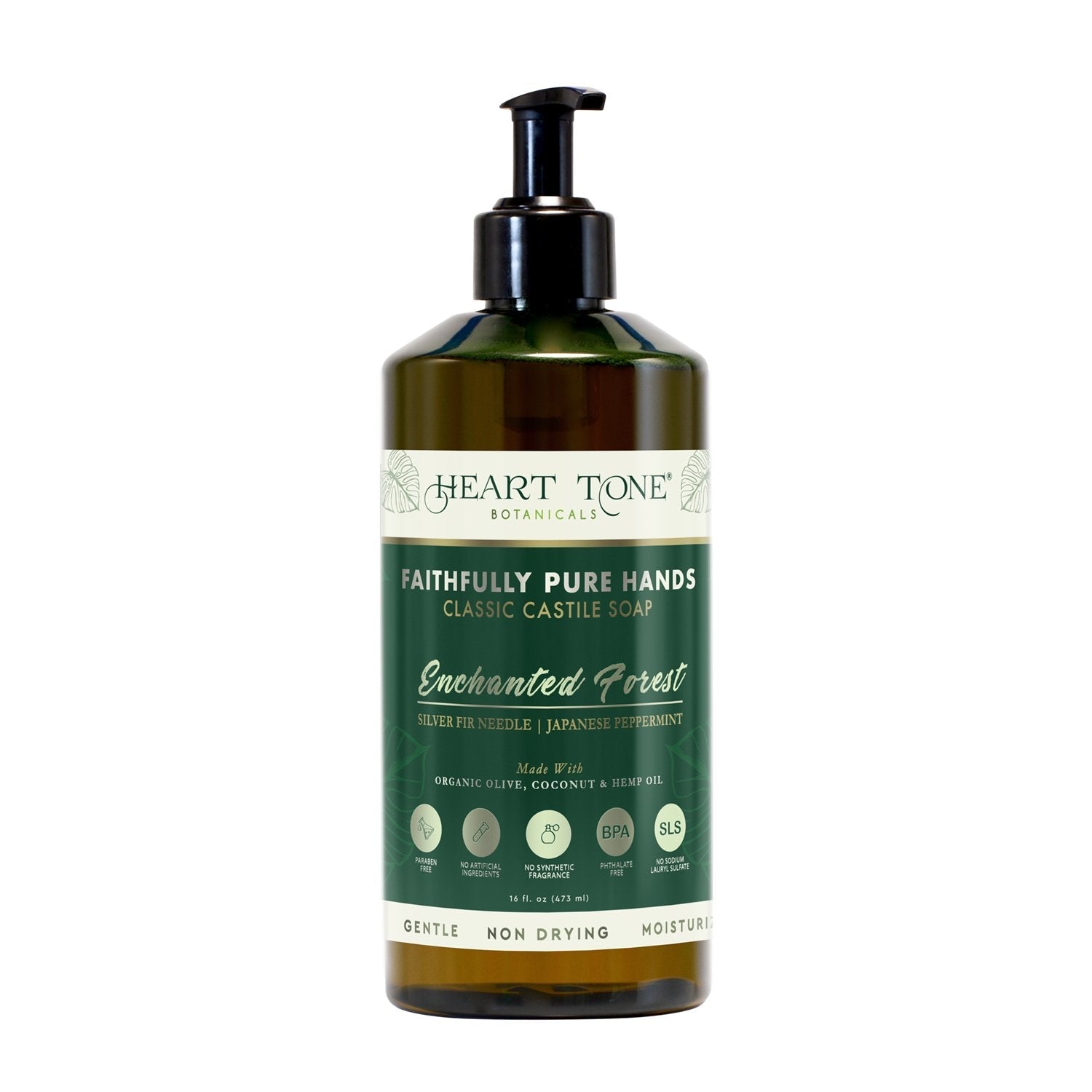
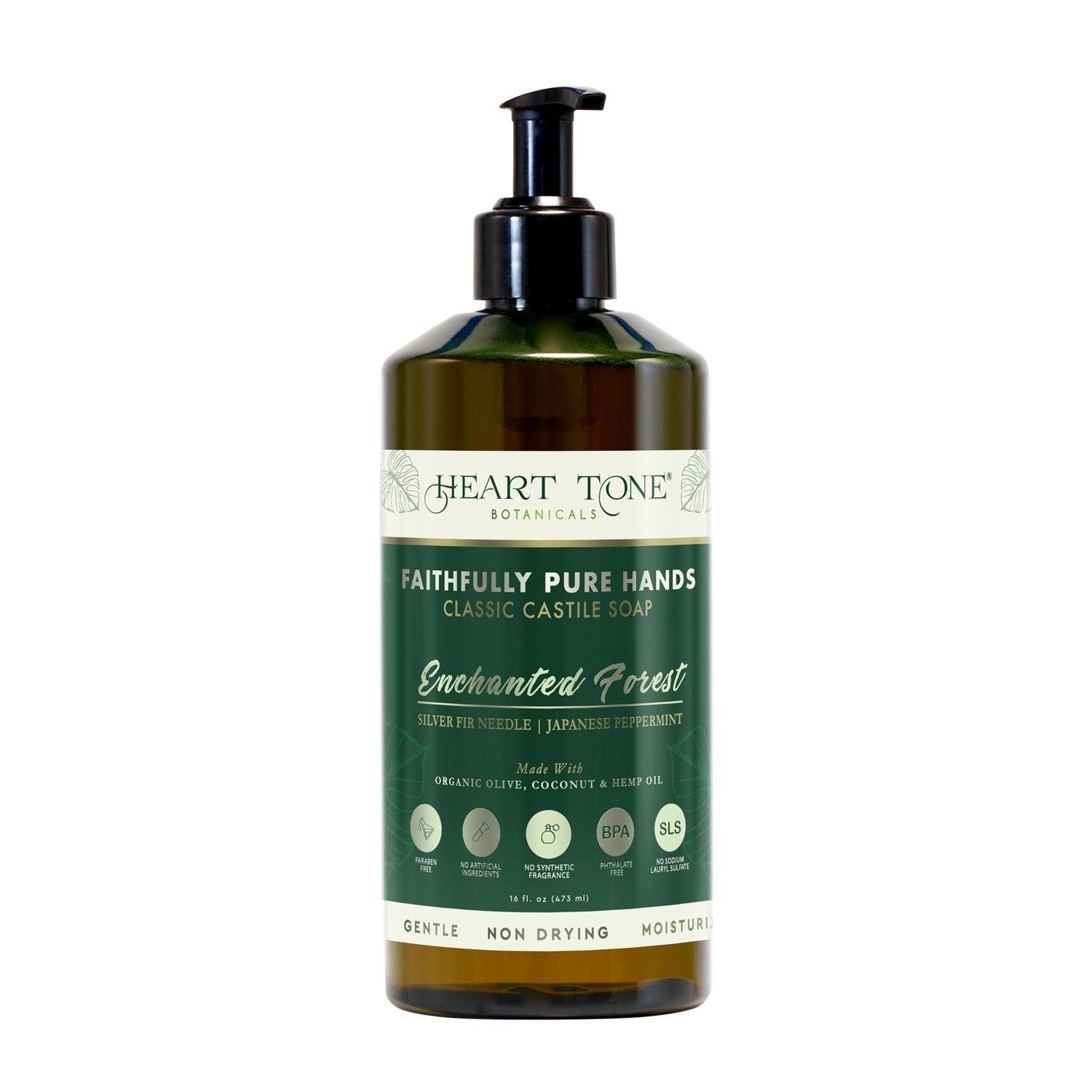
At Heart Tone Botanicals, our household cleaning products follow the same philosophy as our body care: farm-grown botanicals, no synthetic shortcuts, small-batch quality. When you use a Counter Defense spray or Pristine Clean dish soap, you're getting plant-based formulas made with the same care as our organic bar soaps and castile liquid soaps.
Every ingredient is intentional. Every formula is concentrated so you use less. And everything is crafted in Vero Beach, Florida — not in a chemical plant, but in a facility connected to a working farm.
FAQ
Do natural household cleaners actually cleanses?
Plant-based cleaners effectively remove dirt, grease, and food residue. Certain essential oils (tea tree, thyme, eucalyptus) have natural botanical properties. For everyday cleaning, natural cleaners are highly effective. For heavy-duty disinfection needs (like raw meat spills), pair with hot water and thorough rinsing.
Are natural cleaners safe around pets?
Generally, yes — plant-based cleaners without ammonia, bleach, or phenol compounds are much safer around pets than conventional alternatives. Always allow surfaces to dry before pets contact them, and check for specific essential oils that may be sensitive for certain animals.
Why are natural cleaners often more concentrated?
Conventional cleaners are often mostly water with a small percentage of active ingredients. Natural cleaners tend to use more concentrated plant-derived actives, meaning you need less product per use. This saves money over time and reduces plastic waste.
Can I use natural products for my dishwasher?
Hand dish soap and dishwasher detergent are different products. Natural dish soaps like Pristine Clean are formulated for hand washing and would create too many suds in a dishwasher. For dishwashers, look for phosphate-free dishwasher tablets or powder.
Is washing produce with water enough?
Water removes some surface dirt but doesn't effectively remove wax coatings, oils, or many pesticide residues. Research shows that produce washes — especially citrus-based ones — remove significantly more residue than water alone. It's a simple step for cleaner food.

Leave a comment
This site is protected by hCaptcha and the hCaptcha Privacy Policy and Terms of Service apply.