

If you've ever read the back of your conditioner bottle and spotted words ending in -cone, -conol, or -siloxane — dimethicone, cyclopentasiloxane, amodimethicone — you've met silicones. They're in the majority of mainstream conditioners, and for good reason: they make hair feel smooth and shiny instantly. But more and more people are asking a different question: what are they actually doing to my hair long term?

If you've been searching for a conditioner without silicones, this is for you.
What Are Silicones and What Do They Do in Conditioner?
Silicones are synthetic compounds derived from silicon and oxygen. In conditioners, they work by coating the outside of the hair shaft — sealing the cuticle, reducing friction, adding slip, and creating a reflective surface that reads as "shine."
Short term, that feels great. Hair is immediately smoother, detangling is easier, and frizz is visibly reduced. That's why silicones are everywhere in conventional hair care.
The problem is what happens next.
Why People Are Moving Away from Silicones
1. Buildup — The Slow Suffocation
Most widely used silicones — dimethicone is the most common — are not water soluble. They don't rinse off with a normal wash. Every time you condition, another layer deposits on top of the last. Over weeks and months, that builds into a persistent film on the hair shaft.
The symptoms are recognizable:
- Hair that feels heavy, coated, or "plasticky"
- Curls that go limp and lose definition
- Dull hair despite conditioning regularly
- Products that suddenly stop working the way they used to
- Hair that feels greasy at the roots but dry at the ends
If your hair has ever felt like it hit a wall — like no amount of conditioning was actually helping — silicone buildup is often the culprit.
2. Blocked Moisture
Curly and coarse hair is naturally drier than straight hair because the curl pattern makes it harder for the scalp's natural oils to travel down the shaft. This hair type depends on being able to absorb moisture from conditioners and water.
When a silicone film sits on the strand, it creates a barrier. New moisture can't get in. Conditioning ingredients can't penetrate. Hair gets increasingly dry and brittle — while still feeling slippery on the surface. It's a deceptive cycle: the coating masks the dryness while making it worse.
3. The Clarifying Trap
The only reliable way to remove non-water-soluble silicones is with a strong clarifying or sulfate shampoo. For people with curly, coarse, or color-treated hair — who should ideally be washing with gentler formulas — this creates a problem. You need harsh shampoos to reset the buildup, but harsh shampoos strip natural oils and dry the hair further. Then you need more conditioning. And the cycle repeats.
A silicone-free routine breaks that cycle entirely.
4. Scalp Health
Silicone film doesn't stop at the hair shaft. It can accumulate on the scalp, potentially contributing to clogged follicles, greasiness, irritation, and an imbalanced scalp environment. For anyone focused on scalp health — especially those dealing with thinning, itchiness, or excess oil — this is a meaningful concern.
5. Environmental Impact
Silicones are not readily biodegradable. They rinse down the drain and persist in waterways and soil. For anyone choosing personal care products with an environmental lens, this matters.

What a Silicone-Free Conditioner Actually Does
Without the synthetic coating, the focus shifts to real conditioning — ingredients that work with the hair structure rather than masking it from the outside.
A well-formulated silicone-free conditioner:
- Delivers penetrative moisture — plant oils and botanical extracts that absorb into the hair shaft rather than sitting on top of it
- Smooths the cuticle naturally — through emollients, plant proteins, and amino acids that align the cuticle without sealing it shut
- Conditions without blocking — so every wash actually adds to the hair's health instead of layering on more film
- Supports natural texture — curls move freely, waves have definition, and hair responds the way it's supposed to
- Works with your scalp — a clean, unclogged scalp is the foundation of healthy hair, and silicone-free formulas support that
The Transition Period — What to Expect
If you've been using silicone-heavy conditioners, switching to silicone-free can feel rough for the first few weeks. That's not the new product failing — that's the buildup removal process. Your hair may feel different (sometimes drier, sometimes more textured) as the synthetic layers clear out and your hair adjusts to real conditioning.
Starting with a clarifying wash to strip existing silicone buildup helps speed up the transition. After that, most people find their hair responds better, feels lighter, and has more natural movement than it did under months of silicone coating.
What to Look for in a Silicone-Free Conditioner
When you're reading labels, the ingredients to avoid all follow a naming pattern:
- Anything ending in -cone (dimethicone, cyclomethicone, phenyl trimethicone)
- Anything ending in -conol (dimethiconol)
- Anything ending in -siloxane (cyclopentasiloxane, cyclohexasiloxane)
What you do want to see: plant oils (moringa, argan, jojoba), plant butters (shea, mango), botanical extracts, amino acids, natural proteins, and plant-derived conditioning agents. Ingredients that condition from within rather than coat from without.
Why We Don't Use Silicones
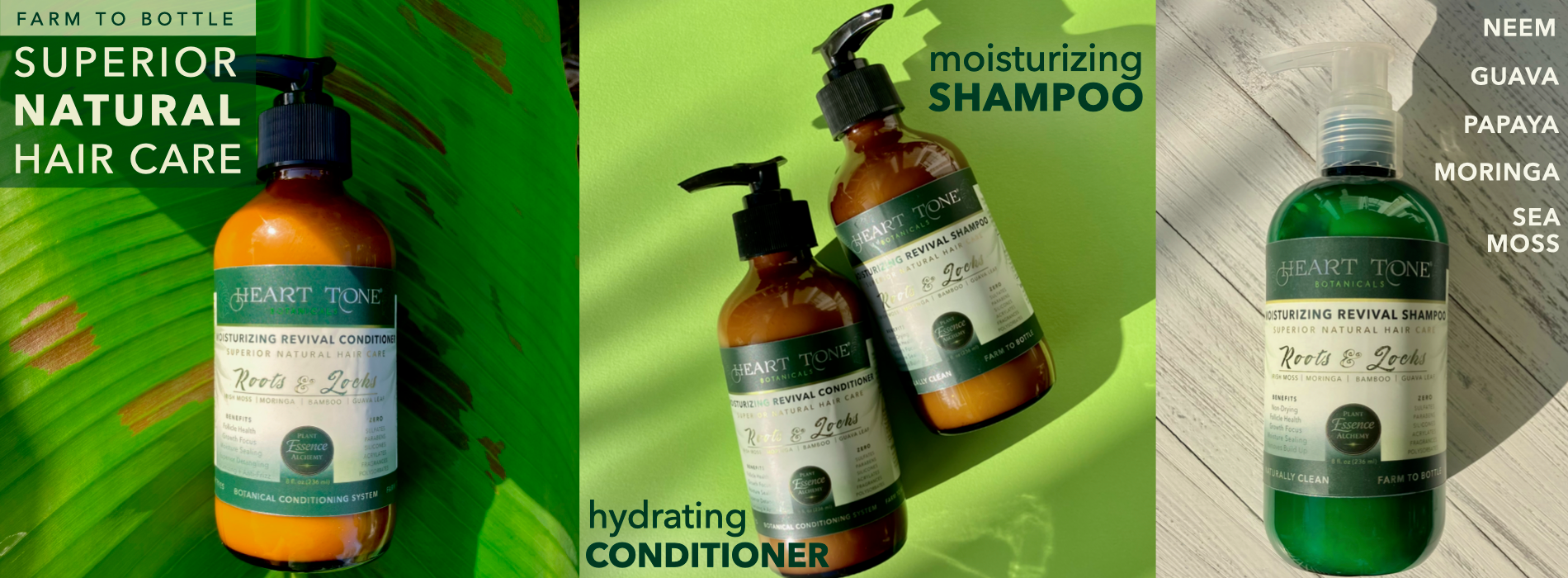
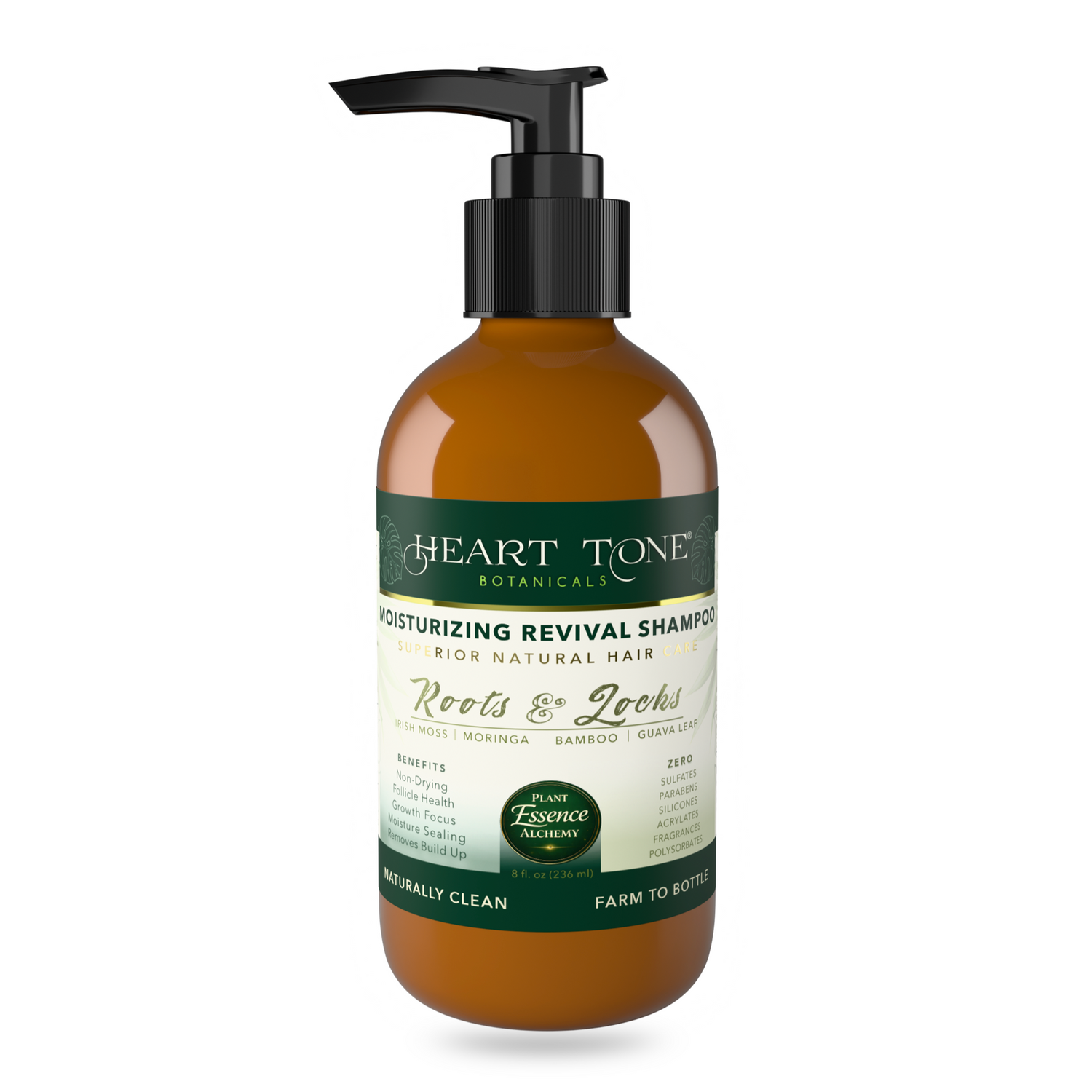
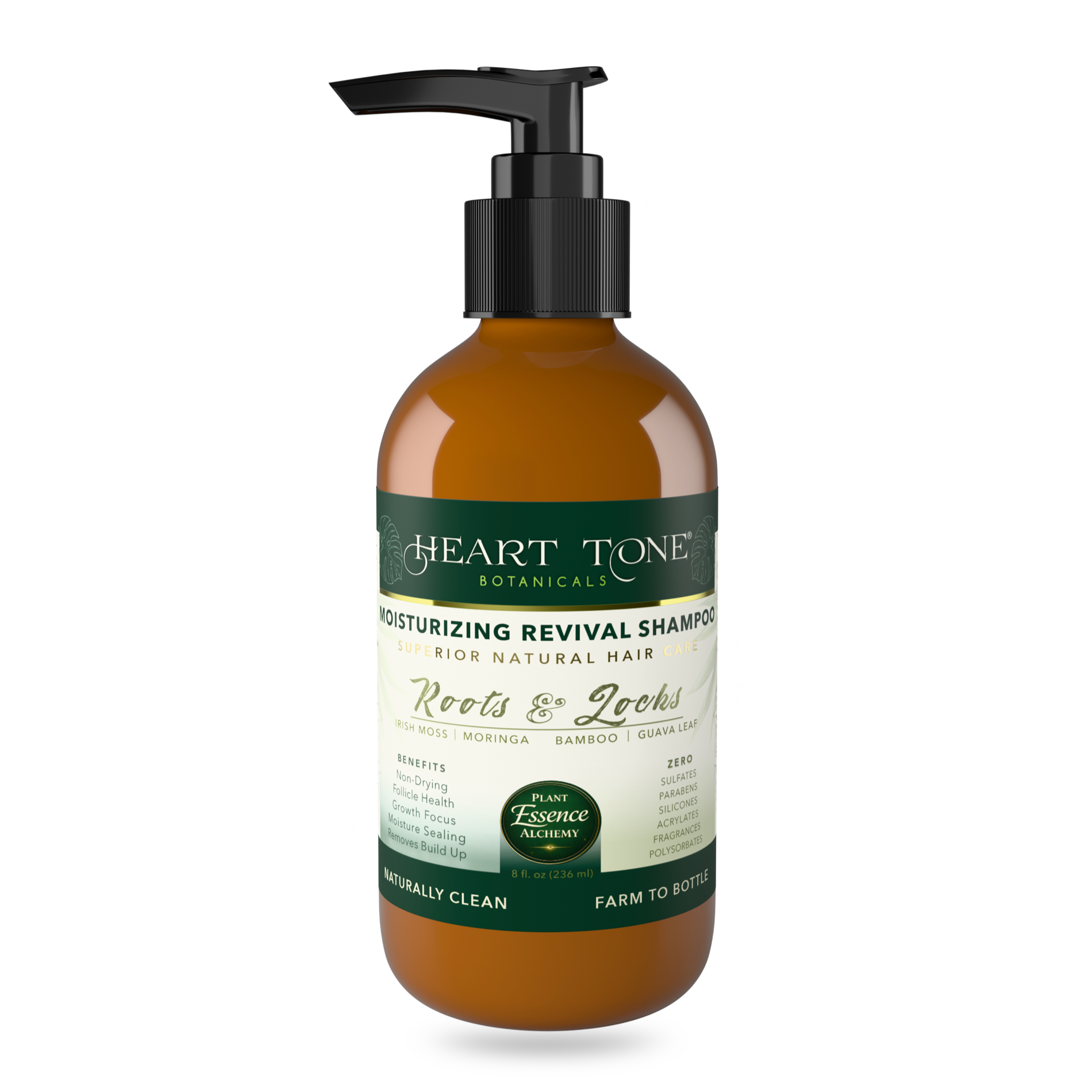
At Heart Tone Botanicals, our Roots & Locks Moisturizing Revival Conditioner is completely silicone-free — by design, not as an afterthought.
Our formula is built on a foundation of rare, beyond-organic botanicals grown on JD's farm in Vero Beach, Florida. Plant oils, herbal extracts, and botanical conditioning agents that penetrate, strengthen, and restore the hair shaft — not coat it. The result is genuine conditioning: hair that gains strength, retains moisture, and moves freely, without any of the buildup, weight, or long-term trade-offs that come with synthetic silicone chemistry.
For thick, coarse, and curly hair especially — the hair types that silicone marketing has always targeted — the difference is something you feel within a few washes.
The Bottom Line
Silicones aren't toxic. But they are a shortcut — one that creates real problems over time for many hair types. The growing demand for conditioners without silicones isn't a trend. It's people paying attention to what their hair actually needs: moisture that gets in, conditioning that lasts, and a formula that works with the hair instead of masking it.
Your hair will tell you the difference.
Browse the Heart Tone Botanicals hair care collection — silicone-free, farm-grown, and made for the way real hair works. Shop hair care →

Leave a comment
This site is protected by hCaptcha and the hCaptcha Privacy Policy and Terms of Service apply.