

What Is Crystal Toothpaste?
Something is shifting in the oral care aisle. People are searching for something better — not the same fluoride paste their dentist handed out in a sample bag, but a formula that works with their body's natural chemistry. That search is leading more and more people to ask: what is crystal toothpaste?

Crystal toothpaste isn't a brand gimmick. It's a category built around mineral-dense, remineralizing ingredients that mirror what your teeth are actually made of. Instead of relying on synthetic fluoride to harden enamel, crystal-formulas use hydroxyapatite, zinc, xylitol, and botanical actives to support tooth structure from the inside out. The result is a paste that looks, feels, and performs differently — and for many people, it's the first toothpaste they've actually noticed working.
What Makes a Toothpaste "Crystal"?
The "crystal" name comes from the crystalline mineral structure of hydroxyapatite — the same calcium phosphate compound that makes up approximately 97% of your tooth enamel. When a toothpaste delivers bioavailable hydroxyapatite, it's essentially giving your enamel the raw material it needs to repair micro-damage naturally.
A well-formulated crystal toothpaste typically includes:
- Hydroxyapatite (HAp) — the gold standard remineralizing mineral. Research increasingly shows micro-hydroxyapatite performs on par with fluoride for cavity prevention, without the systemic concerns. Learn how the shape of hydroxyapatite particles matters.
- Xylitol — a natural birch-derived sugar alcohol that disrupts the bacteria responsible for decay. Xylitol starves Streptococcus mutans (the primary cavity-causing bacteria) without harming beneficial microbes.
- Zinc — naturally antibacterial, zinc neutralizes the volatile sulfur compounds that cause bad breath while supporting gum tissue health.
Together, these minerals create a paste that doesn't just clean — it actively supports remineralization between brushings. That's a meaningful difference.
Theobromine — The Chocolate Compound That Outperforms Fluoride
If you haven't heard of theobromine toothpaste, you will soon. Theobromine is a naturally occurring alkaloid found in cacao — yes, the same plant behind dark chocolate. For decades, it was overlooked in oral care. Then researchers started looking closely at how enamel responds to it.
What they found: theobromine doesn't just harden enamel the way fluoride does — it promotes the formation of a fluoride-free, more stable crystalline structure. A 2013 study published in the Journal of Dentistry showed theobromine outperformed fluoride in enamel microhardness tests after simulated acid erosion cycles.
In practical terms, theobromine fills in the porous micro-fissures of weakened enamel with a tighter mineral lattice. For people who've moved away from fluoride, it's not a consolation prize — it's a genuine upgrade. And it's entirely plant-derived.
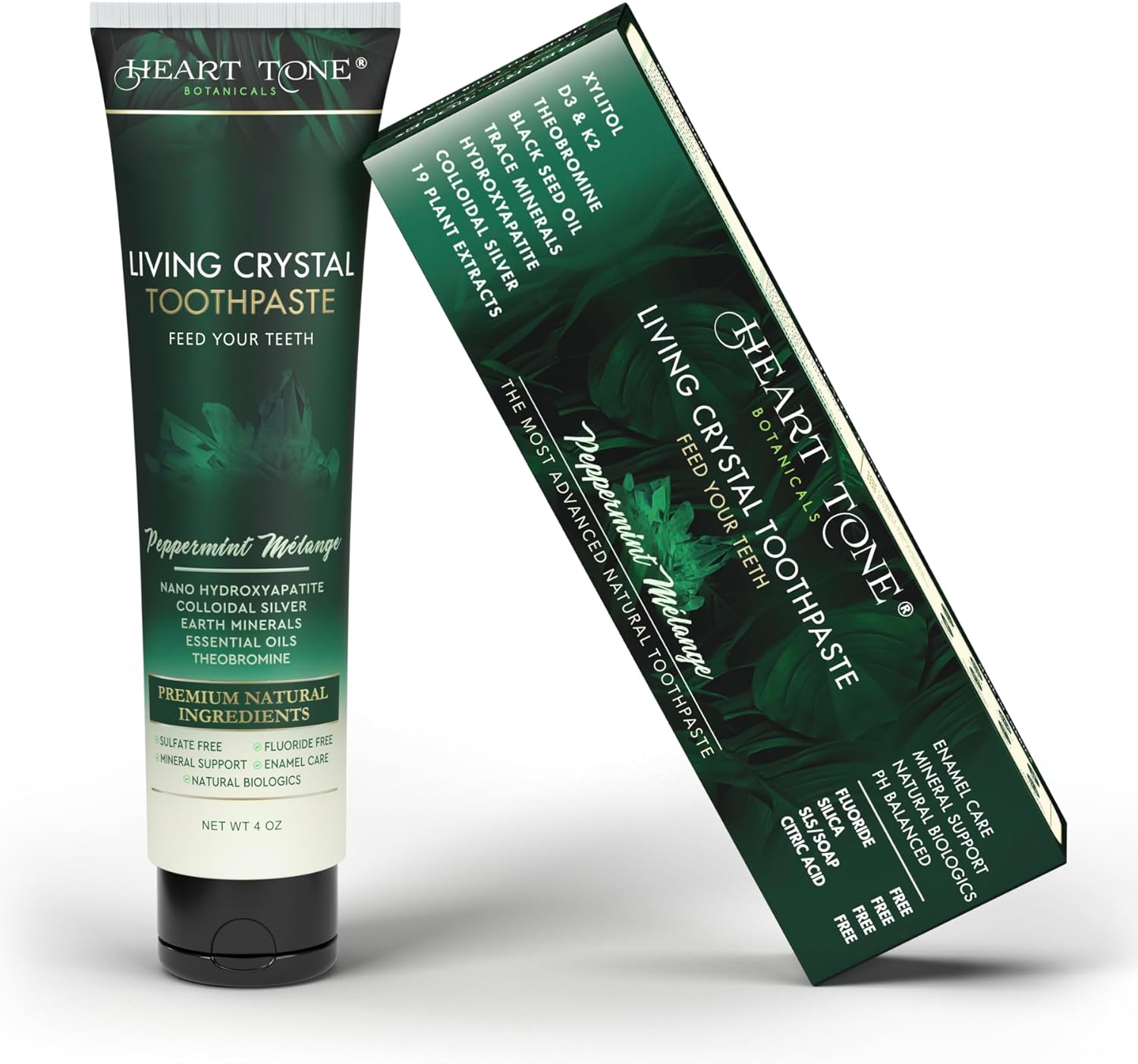
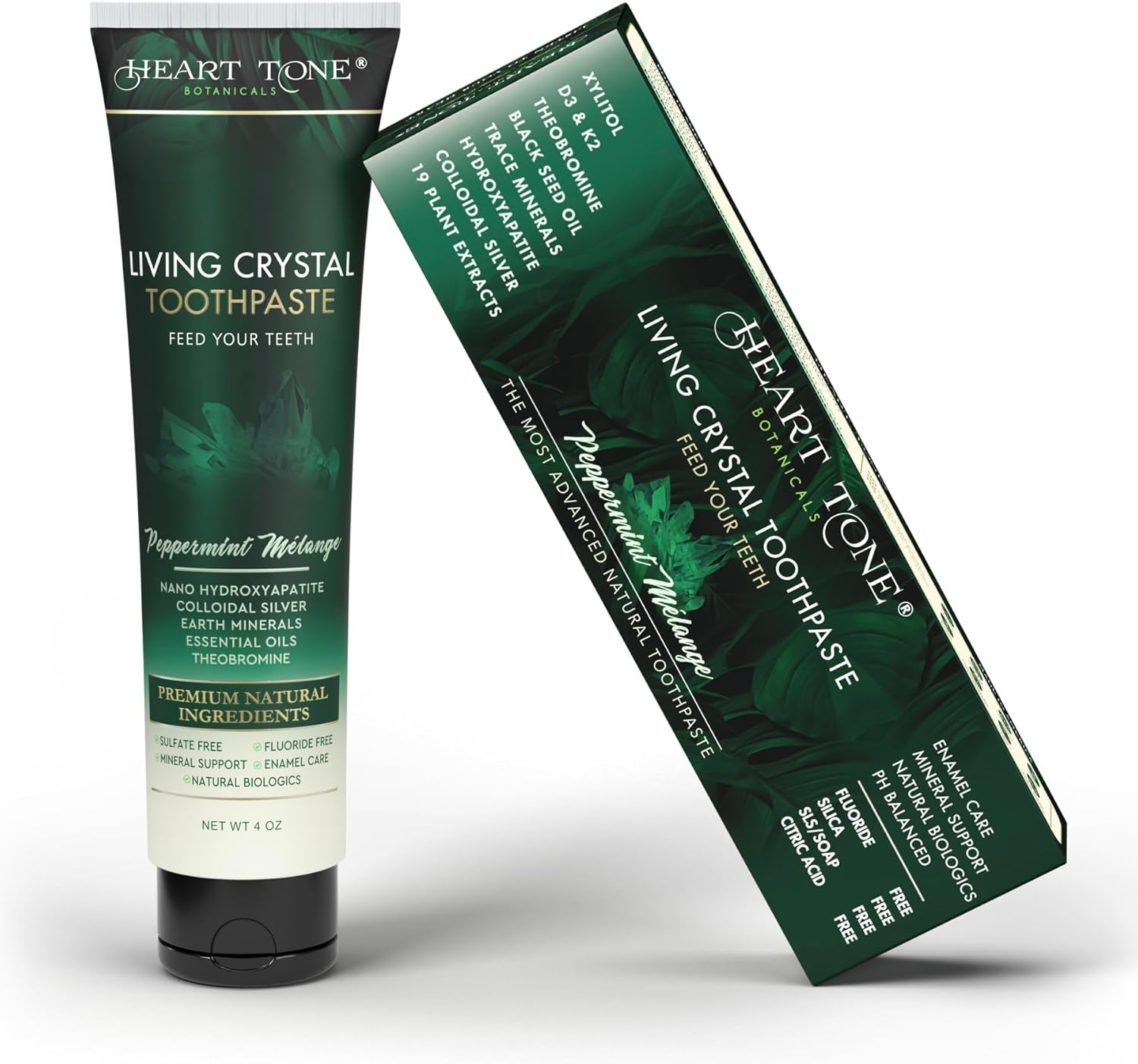
Our Living Crystal Toothpaste includes theobromine alongside hydroxyapatite for a dual-remineralization approach. Neither ingredient is a shortcut — together, they're a real formula.
Why Living Crystal Toothpaste Is Different
Heart Tone Botanicals is a farm-first company. JD and Christina grow neem, aloe vera, moringa, sour sop, mango, and papaya on their biodynamic farm in Vero Beach, Florida — no pesticides, no synthetic inputs. When they formulated Living Crystal Toothpaste, they didn't start in a lab. They started in the soil.
What's inside:
- Colloidal silver — a naturally antimicrobial element that targets oral pathogens without disrupting the beneficial microbiome the way alcohol-based rinses do
- 18 botanical actives — including farm-grown neem (antibacterial, anti-inflammatory, used in Ayurvedic oral care for thousands of years) and aloe vera (soothing, supports gum tissue)
- Micro-hydroxyapatite — pharmaceutical grade, not the industrial form used in cheap formulas
- Theobromine — for enamel crystallization support
- Xylitol + Zinc — protective and breath-freshening
- No fluoride. No SLS. No artificial flavors or sweeteners.
The "living crystal" name reflects what this formula is built to do: keep the mineral structure of your teeth alive and renewing, supported by botanicals that have been used in natural oral care traditions across cultures for generations.

Explore our full natural oral care collection to see how Living Crystal fits into a complete botanical routine.
Is Crystal Toothpaste Worth the Price?
Let's be honest: crystal toothpaste costs more than a tube of drugstore paste. If you search for "expensive toothpaste" or "most expensive toothpaste," Living Crystal Toothpaste tends to come up. We're not going to pretend otherwise.
Here's what we'd ask you to consider:
What's in the cheap stuff? Most conventional toothpastes contain sodium lauryl sulfate (a foaming agent linked to canker sores), synthetic dyes, artificial sweeteners, and preservatives you'd never choose for yourself. The paste is cheap because the ingredients are cheap.
What are you paying for with Living Crystal?
- Pharmaceutical-grade hydroxyapatite (not cheap filler calcium)
- Actual theobromine — an ingredient that costs real money to source cleanly
- Colloidal silver, zinc, xylitol at meaningful concentrations
- 18 botanical extracts, many grown on our own farm
- A formula developed by people who use it on their own family
Premium oral care is an investment that pays off over decades. Dental work is expensive. Prevention is not.
Frequently Asked Questions
What is crystal toothpaste?
Crystal toothpaste is a mineral-based toothpaste formulated around hydroxyapatite — a crystalline calcium phosphate mineral that naturally comprises tooth enamel. Crystal toothpastes focus on remineralization and natural ingredients rather than synthetic fluoride.
Is crystal toothpaste safe?
Yes. The core ingredients in crystal toothpaste — hydroxyapatite, xylitol, zinc, and theobromine — are all well-studied and recognized as safe for daily use. Hydroxyapatite specifically has been used in toothpastes in Japan and Europe for decades and is biocompatible with human tissue. Always check the full ingredient list of any product you choose.
Does crystal toothpaste work better than regular toothpaste?
For many people, yes — especially those looking to avoid fluoride, those with sensitive enamel, or those who want a formula that actively supports remineralization rather than just cleaning. Clinical studies on hydroxyapatite and theobromine show results comparable to or exceeding fluoride in certain enamel hardness measures.
What's in crystal toothpaste?
A quality crystal toothpaste typically contains hydroxyapatite, xylitol, zinc, and botanical actives. Living Crystal Toothpaste also includes theobromine, colloidal silver, and 18 farm-grown botanical extracts for a complete natural oral care formula.
Ready to try it? Shop Living Crystal Toothpaste — handcrafted in Vero Beach, Florida, from a biodynamic farm that grows what goes inside.

Leave a comment
This site is protected by hCaptcha and the hCaptcha Privacy Policy and Terms of Service apply.