

Curly hair is its own ecosystem. It has its own rules, its own needs, and its own relationship with moisture that straight hair simply doesn't have. If you've spent years fighting frizz, losing curl definition, or watching your routine stop working after a few months — the problem usually isn't your curls. It's what you've been putting on them.

This is a guide to finding a natural shampoo and conditioner that actually works for curly hair — what to look for, what to avoid, and why the conventional products most of us grew up using are often working against us.
Why Curly Hair Is Different
Curly hair is structurally different from straight hair in a few important ways:
- It's naturally drier. The curl pattern makes it harder for the scalp's natural oils to travel down the length of the strand. Straight hair gets naturally coated from root to tip. Curly hair doesn't — which means moisture retention has to come from somewhere else.
- The cuticle is more raised. Curly hair tends to have a more open cuticle layer, which means it absorbs things faster — but also loses moisture faster.
- It's more prone to mechanical damage. The bends and coils in curly hair create stress points that straight hair doesn't have. Detangling, friction, and heat all hit harder.
- It responds differently to buildup. Ingredients that sit on the hair shaft — silicones, heavy polymers — are far more problematic for curls than for straight hair. They flatten, weigh down, and block the moisture curly hair depends on.
This is why the shampoo and conditioner you use matters more for curly hair than for almost any other hair type.
What Most Shampoos Do to Curly Hair
Conventional shampoos are built around sulfates — sodium lauryl sulfate (SLS) and sodium laureth sulfate (SLES) being the most common. Sulfates are powerful detergents. They strip grease and buildup effectively, but they don't stop at the buildup. They strip the hair's natural oils along with it.
For curly hair, which is already dry by nature, this is a problem. A sulfate shampoo essentially resets your hair to zero — no oils, no moisture, nothing. Then you have to rebuild from scratch every wash. The cycle of stripping and re-moisturizing is exhausting, and it's why so many curly-haired people feel like they're constantly fighting their hair.
Natural, sulfate-free shampoos cleanse gently — removing actual dirt, sweat, and product buildup without stripping the oils and moisture the hair needs to thrive.
What to Avoid in Shampoo and Conditioner for Curly Hair
In shampoo:
- Sulfates (sodium lauryl sulfate, sodium laureth sulfate, ammonium lauryl sulfate) — strips natural oils, causes frizz and dryness
- Synthetic fragrance — "fragrance" or "parfum" on the label conceals dozens of undisclosed chemicals; a major source of scalp irritation and contact dermatitis
- Parabens (methylparaben, propylparaben) — synthetic preservatives with endocrine disruption concerns
- Formaldehyde-releasing preservatives (DMDM hydantoin, imidazolidinyl urea) — common in cheap formulas, known irritants
In conditioner:
- Silicones (-cone, -conol, -siloxane) — coat the hair shaft and block moisture from getting in; buildup flattens curls and kills definition over time
- Polyquaterniums (heavy grades) — film-forming synthetic polymers; can create the same buildup problem as silicones, especially for low-porosity or fine curly hair
- Mineral oil and petrolatum — petroleum-derived, non-water-soluble; heavy coating that blocks moisture
- Synthetic fragrance — same concern as in shampoo
What to Look for Instead
In a natural shampoo for curly hair:

- Gentle plant-derived cleansers — coco glucoside, decyl glucoside, sodium cocoyl isethionate; clean without stripping
- Scalp-balancing botanicals — moringa, neem, tea tree, rosemary; support a healthy scalp environment without harsh detergents
- Aloe vera — naturally pH-balancing, soothing, and conditioning; one of the best things you can put near a curly scalp
- Plant proteins — strengthen the hair fiber from within; particularly important for curly hair prone to breakage
In a natural conditioner for curly hair:
- Plant-based conditioning agents — amino acid-derived conditioners (like brassicyl valinate esylate) that match the hair's own chemistry rather than coating it synthetically
- Botanical butters and oils — shea butter, moringa oil, argan oil, jojoba; penetrate and nourish rather than just coating the surface
- Humectants — vegetable glycerin, aloe; draw moisture into the hair shaft and hold it there
- Plant proteins and amino acids — strengthen curl structure and improve elasticity, reducing breakage at the stress points in the coil
- Herbal extracts — beyond-organic botanicals that deliver antioxidant protection and support scalp and follicle health
The Curl Routine That Actually Works
For most curly hair types, a natural routine that works looks like this:
- Cleanse gently, not aggressively. A sulfate-free shampoo 1–2 times per week is usually enough. If your scalp feels clean and your hair isn't weighed down, you're doing it right. You don't need to strip to get clean.
- Condition every wash — generously. Curly hair needs more conditioner than straight hair. Apply from mid-shaft to ends, let it sit, and rinse well but not completely (leaving a small amount in is fine).
- Detangle in the conditioner. This is where you want the slip. Detangling dry or on shampooed hair causes unnecessary breakage.
- Clarify occasionally, not constantly. If you're using a genuinely silicone-free formula, you won't need heavy clarifying shampoos. A deeper cleanse every 4–6 weeks is usually enough to keep the scalp clear.
- Let the formula work. Natural conditioning takes a few weeks to show its full effect — especially if you're transitioning from a silicone-heavy product. Stick with it.
Why "Natural" on the Label Isn't Enough
Worth saying clearly: not every product marketed as "natural" actually is. "Natural" has no legal definition in U.S. cosmetics — brands can use the word with no minimum percentage of natural ingredients required. A product can be 95% synthetic and still call itself natural.
For curly hair especially, what's on the ingredient list matters more than what's on the front of the bottle. Read from the top — ingredients are listed in descending order of concentration. If the botanical ingredient you're paying for is near the bottom of a long list, it's present at trace levels. If you see silicones or heavy polyquaterniums in the top half of the list, the "natural" claim on the front is mostly marketing.
What Roots & Locks Was Made For
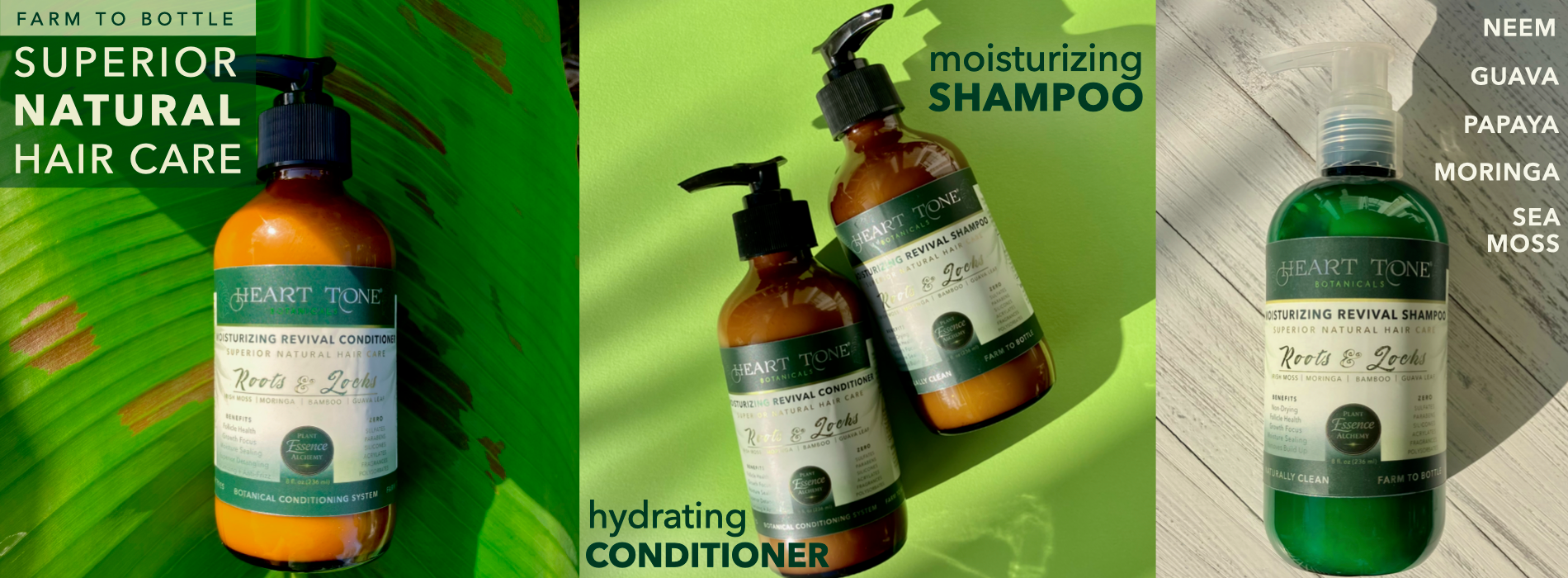
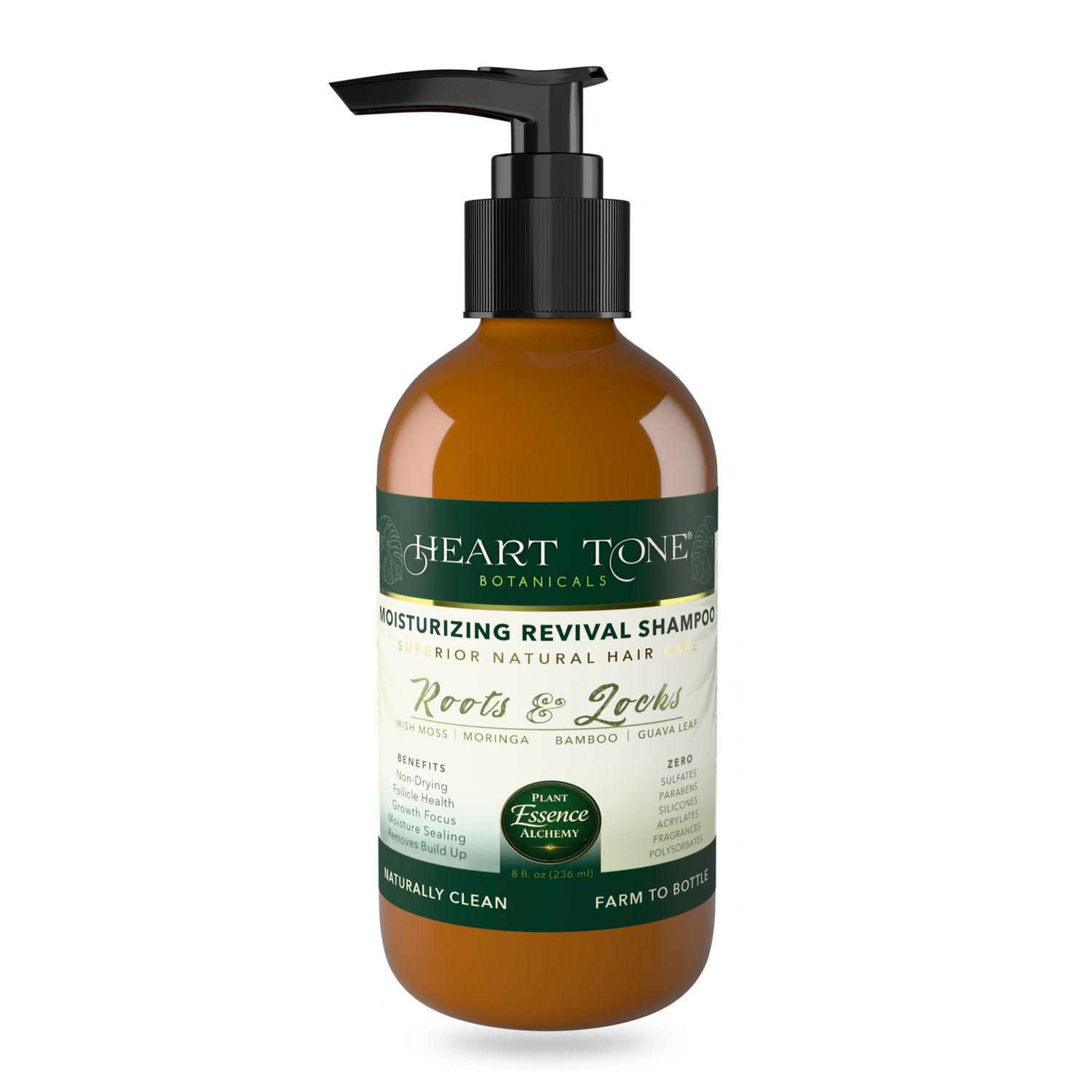
Our Roots & Locks Moisturizing Revival Shampoo and Roots & Locks Moisturizing Revival Conditioner were formulated specifically for the way curly, coarse, and thick hair actually works.
No sulfates. No silicones. No synthetic fragrance. No petroleum-derived conditioning agents. Just rare, beyond-organic botanicals grown on JD's farm in Vero Beach, Florida — hand harvested, carefully extracted, and built into a formula designed to deliver real moisture, real strength, and real curl definition.
The synergistic effect of the full botanical stack — the plant oils, herbal extracts, amino acids, and natural conditioning base — is what makes the difference. Ingredients that work together, the way plants do, rather than a synthetic base dressed up with a token natural extract.
Your curls know the difference. Give them a chance to show you.
Shop the full Roots & Locks hair care collection at htbotanicals.com/collections/hair-care →

Leave a comment
This site is protected by hCaptcha and the hCaptcha Privacy Policy and Terms of Service apply.