

Walk into any pharmacy or beauty retailer and you'll find dozens of face moisturizers making claims like "deep hydration," "skin-quenching," and "nature-inspired." But flip most of those bottles over and the ingredient list tells a very different story: petrolatum, dimethicone, mineral oil, PEGs, synthetic fragrance — the same petroleum-derived ingredients that have anchored conventional skincare for decades.

If you've ever wondered why your skin still feels tight or dry an hour after applying a "moisturizer," or why you keep needing more and more product just to feel comfortable, the formula itself may be working against you.
This guide breaks down what real hydration actually means, what ingredients to seek out in a natural face moisturizer, what to avoid, and how to tell the difference between a truly clean formula and one that just wears green packaging.
Why Conventional Moisturizers Don't Actually Hydrate
Most conventional face creams don't hydrate your skin — they seal it. The workhorse ingredients in mainstream moisturizers are synthetic occlusives: petrolatum (petroleum jelly), mineral oil, and silicones like dimethicone and cyclopentasiloxane. These ingredients form a film over the surface of the skin that temporarily reduces water loss, which can make skin feel softer — but only for as long as the film stays intact.
Here's the problem: occlusives don't add moisture. They trap whatever moisture is already there. If your skin is already dehydrated, you're just locking in dryness. And over time, heavy occlusive use can make your skin more dependent on that external barrier, suppressing your skin's natural ability to regulate moisture on its own.
Silicones in particular create a smooth, almost rubbery texture that reads as "moisturized" on first touch — which is why so many consumers (and brands) use them. But that sensation is largely cosmetic. The silicone is sitting on top of your skin, not working with it.
The result? You apply moisturizer, feel fine for a while, and then have to reapply — repeatedly — because nothing has actually changed in the deeper layers of your skin.
What Real Hydration Looks Like
Genuine skin hydration works through three mechanisms working together:
1. Humectants — Draw Water In
Humectants attract water molecules from the environment (and from deeper skin layers) and hold them in the upper layers of the skin. Natural humectants include aloe vera, glycerin derived from plant oils, and certain botanical mucilages. They make the skin feel plump and supple rather than just coated.
2. Emollients — Fill the Gaps
Emollients work between skin cells, softening and smoothing the texture of skin by filling in the spaces where the skin's lipid barrier has broken down. The difference between a good emollient and a bad one comes down to molecular weight and origin. Plant oils like moringa, jojoba, and rosehip function as highly compatible emollients — their fatty acid profiles closely mirror the skin's own sebum, allowing them to be absorbed rather than sitting on the surface.
Mineral oil and petrolatum are also emollients in a technical sense — but they're derived from crude oil, their molecules are too large to penetrate the skin, and they bring none of the phytonutrients, antioxidants, or essential fatty acids that plant oils carry.
3. Barrier Support — Protect What You've Built
Once moisture is in the skin, the goal is to keep it there without blocking gas exchange or disrupting the skin's microbiome. Lightweight plant waxes, seed butters, and botanical extracts can reinforce the skin's natural lipid barrier without smothering it.
The difference in how skin looks and feels over time when you shift from synthetic occlusives to plant-based emollients and humectants is significant — not just a smoother finish today, but genuinely more resilient, better-regulated skin over weeks and months.
Ingredients to Avoid in a Face Moisturizer
Knowing what to skip is just as important as knowing what to look for. Here are the ingredients that should give you pause:
- Petrolatum / Petroleum Jelly — Derived from crude oil. Coats rather than nourishes. Often contaminated with polycyclic aromatic hydrocarbons (PAHs) in unpurified forms. Listed as a potential carcinogen in the EU.
- Mineral Oil — Also petroleum-derived. Creates occlusive barrier but provides zero nutrition to skin cells.
- Silicones (dimethicone, cyclopentasiloxane, cyclomethicone) — Smooth texture, zero nutritional value. Some forms bio-accumulate in aquatic environments and are being phased out in the EU.
- PEGs (Polyethylene Glycols) — Used as penetration enhancers, emulsifiers, and softeners. Often contaminated with 1,4-dioxane, a probable carcinogen. Listed by several clean beauty standards as an ingredient of concern.
- Synthetic Fragrance — "Fragrance" on an ingredient label can represent a cocktail of hundreds of undisclosed chemicals, including known allergens and endocrine disruptors like phthalates and synthetic musks.
- Parabens (methylparaben, propylparaben, butylparaben) — Synthetic preservatives with estrogenic activity. Detected in breast tissue in bioaccumulation studies.
- Formaldehyde releasers (DMDM hydantoin, imidazolidinyl urea) — Slowly release formaldehyde as a preservative. Known skin sensitizer and carcinogen.
Ingredients to Look For in a Clean Face Moisturizer
The good news: there's a rich world of botanical ingredients that genuinely work — and have the research to support it.
Moringa Oil
Cold-pressed from Moringa oleifera seeds, moringa oil is rich in oleic acid, palmitoleic acid, and behenic acid — a fatty acid profile that makes it exceptionally stable and deeply penetrating. It's naturally high in antioxidants including quercetin and kaempferol, which help neutralize free radical damage and support collagen integrity.
Jojoba Oil
Technically a liquid wax ester, jojoba's molecular structure is almost identical to the skin's natural sebum. It absorbs quickly, doesn't clog pores, and helps regulate sebum production — making it suitable for a wide range of skin types, including oily and acne-prone skin.
Rosehip Seed Oil
Rich in trans-retinoic acid (a natural form of Vitamin A), linoleic acid, and lycopene, rosehip is one of the most studied plant oils for skin regeneration. Clinical studies have shown it effective in reducing the appearance of scars, fine lines, and hyperpigmentation.
Aloe Vera
A natural humectant and anti-inflammatory, aloe vera contains polysaccharides that help skin retain moisture while soothing redness and irritation. Genuine aloe vera juice (not aloe powder reconstituted with water) is meaningfully different in bioactivity.

Botanical Extracts
Look for whole-plant extracts — green tea, calendula, chamomile, sea buckthorn — rather than isolated synthetic actives. These carry complex phytochemical profiles that work synergistically with skin biology in ways that isolated compounds can't fully replicate.
The Problem with "Non-Comedogenic" and "Dermatologist Tested"
These two phrases appear on thousands of moisturizer labels. They're also almost entirely meaningless from a regulatory standpoint.
"Non-comedogenic" has no standardized definition and no regulatory oversight in the United States. A brand can label any product non-comedogenic without conducting any testing at all. The comedogenicity ratings that do exist were developed on rabbit ear skin in the 1970s — a model that doesn't accurately predict human pore response.
"Dermatologist tested" means only that a dermatologist was involved in some form of testing — it says nothing about what was tested, what the results were, how many subjects were included, or whether the testing was independent. A single dermatologist testing a product on five people qualifies.
Neither phrase tells you anything about what's actually in the formula. The only way to evaluate a moisturizer is to read the full ingredient list — and know what you're reading.
How Heart Tone Botanicals Does It Differently
At Heart Tone Botanicals, the philosophy behind every formula starts not in a lab, but on a farm. The botanical ingredients in our skincare are grown, harvested, and processed with the same care you'd apply to food — because real plant chemistry depends on how the plants are raised.
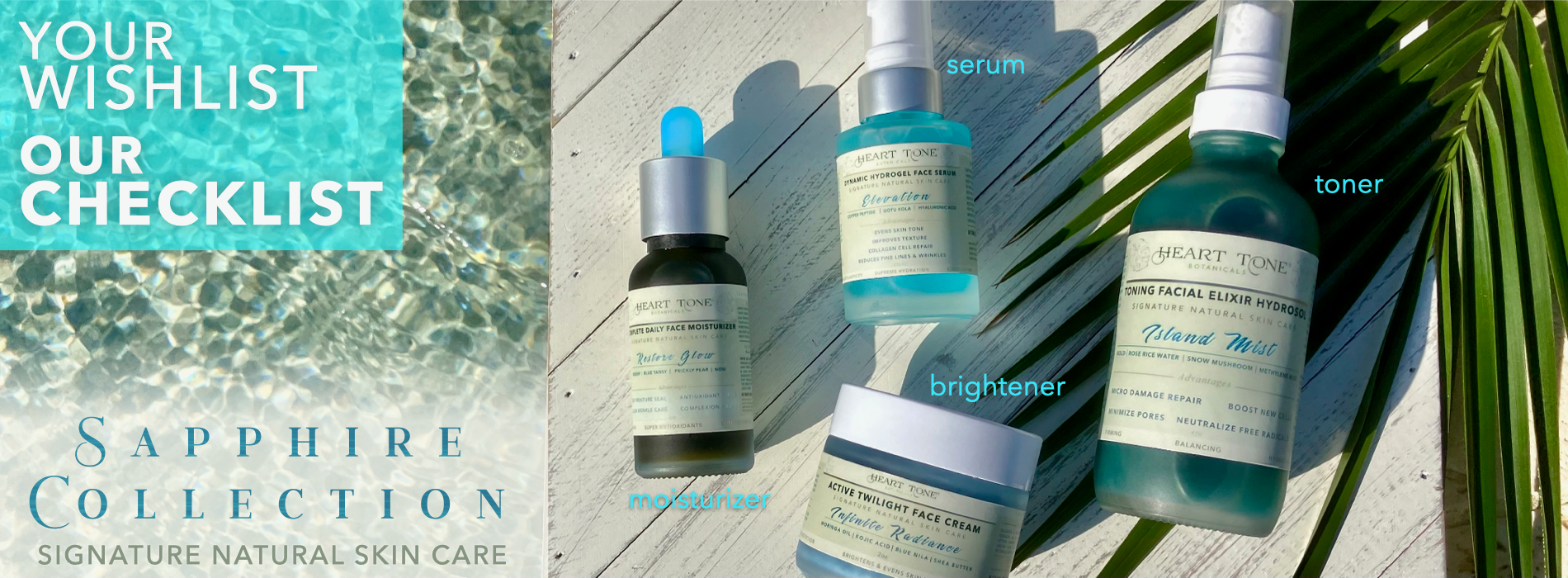
The Complete Daily Face Moisturizer was formulated around this principle: real botanicals that actually penetrate the skin and work with its biology, not around it. No petrolatum. No mineral oil. No synthetic fragrance. No fillers posing as actives.
What you get instead: a carefully balanced blend of plant oils chosen for their fatty acid profiles, botanical humectants that draw and hold moisture at a cellular level, and antioxidant-rich plant extracts that support long-term skin health — not just a temporary smooth finish.
The result is a moisturizer that doesn't just feel good the moment you apply it. It changes how your skin behaves over time: more balanced, more resilient, less dependent on constant product layering.
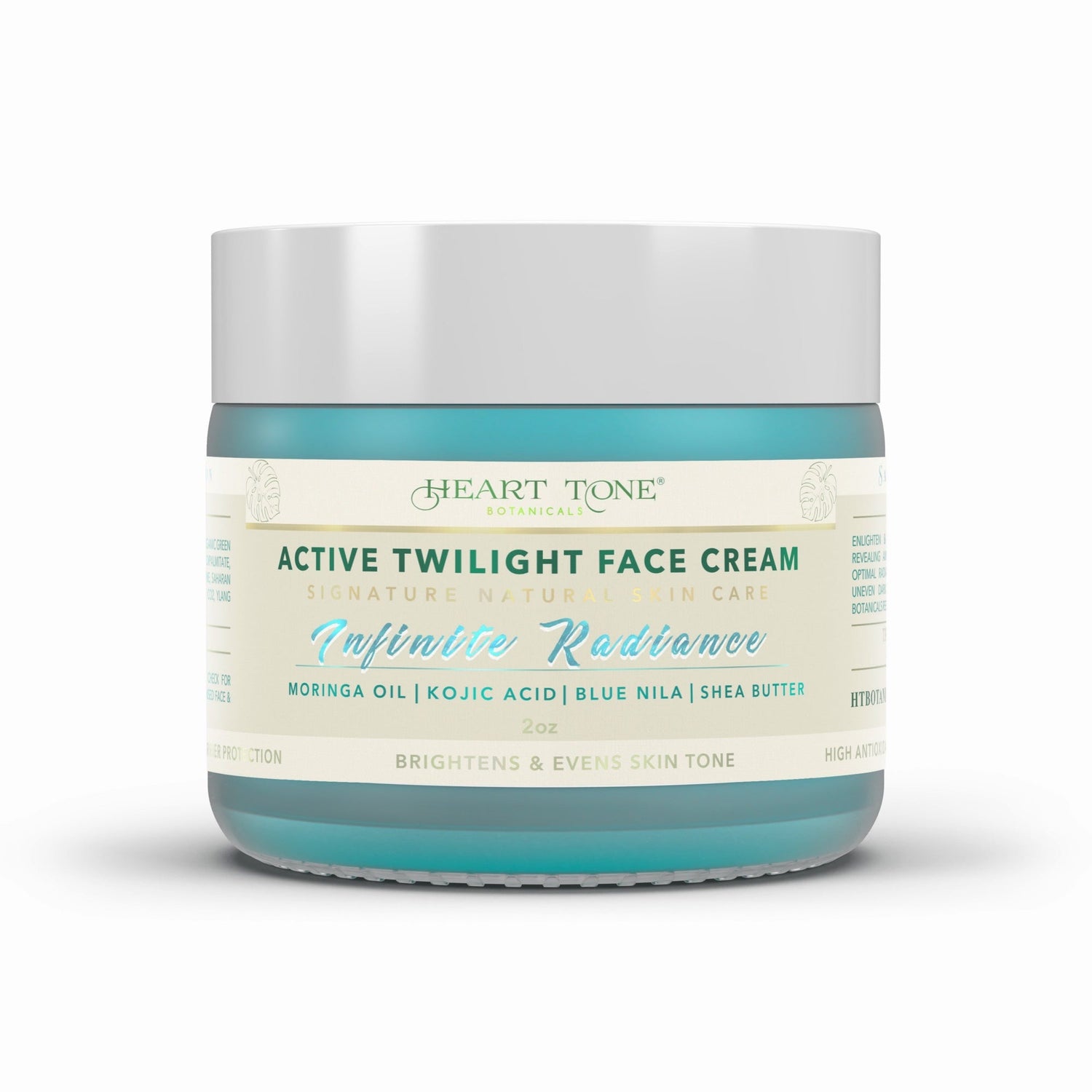
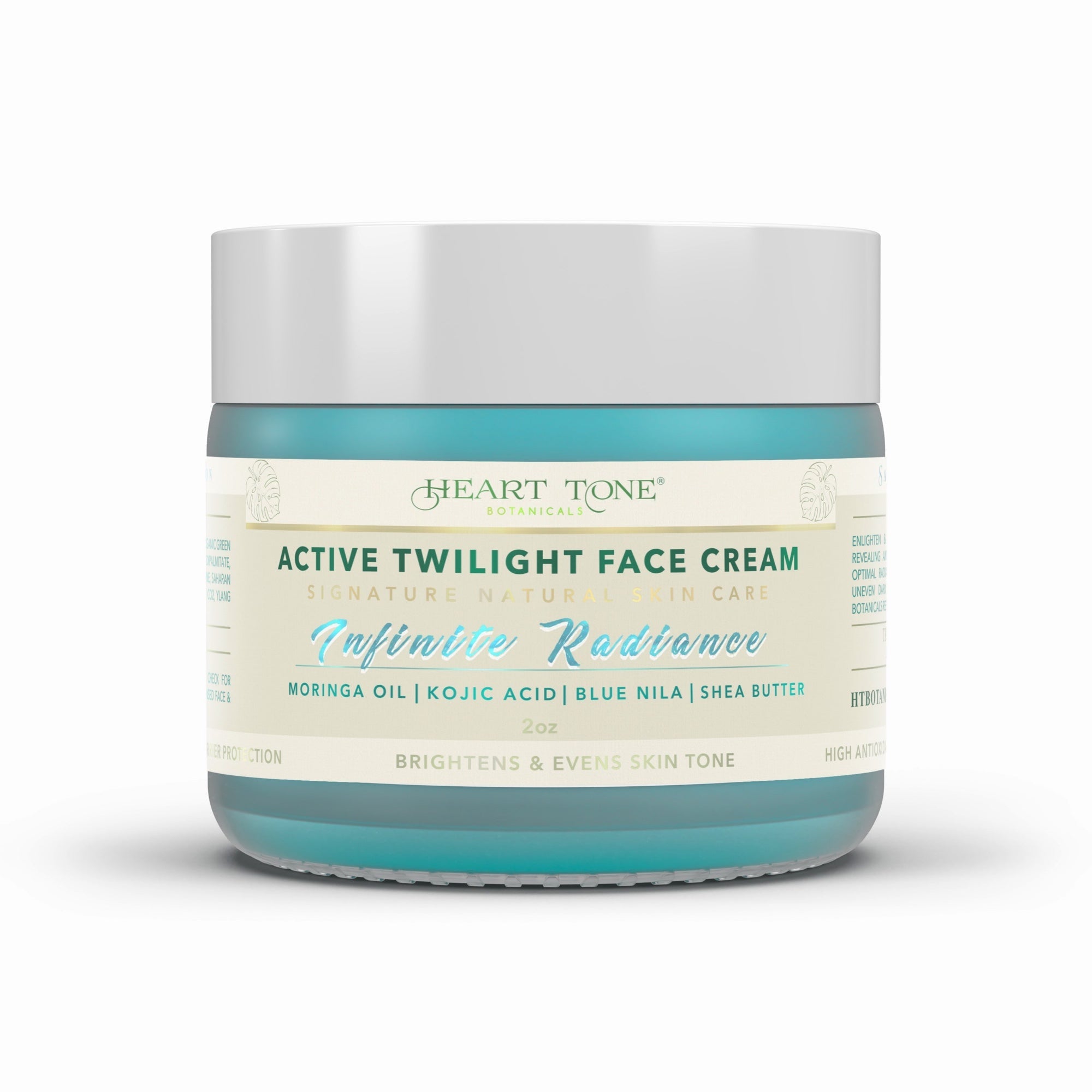
For targeted overnight recovery, our Active Twilight Face Cream works alongside your daily routine — deeper nourishment while your skin's natural repair processes peak during sleep.
"I've tried so many natural moisturizers that left my skin feeling greasy or still dry. This one actually absorbs and my skin feels balanced all day."
— Heart Tone customer
Finding the Best Natural Face Moisturizer for Dry Skin
If you have dry or very dry skin, the criteria shift slightly. You want to prioritize formulas with:
- Higher concentrations of oleic acid-rich oils (moringa, avocado, argan) — these penetrate deeply and are especially nourishing for a compromised lipid barrier
- Strong humectant presence — aloe vera, vegetable glycerin, or plant-derived hyaluronic acid alternatives that pull moisture into the skin
- No alcohol denat or ethanol — these are drying, even in "moisturizing" products
- Botanical barrier support — plant waxes or sea buckthorn extract to help hold moisture in without suffocating the skin
The Complete Daily Face Moisturizer was formulated to work for exactly this skin profile — rich enough to address dryness, light enough not to clog or congest.
Your Skin Deserves Better Than Petroleum
The mainstream moisturizer market has been built on cheap, petroleum-derived ingredients that feel good on first contact and cost almost nothing to source. The marketing is sophisticated. The formulas, often, are not.
You deserve to know what's actually going into your skin — and to have access to alternatives that are built from real plant chemistry, not synthetic approximations of it.
Explore the full Sapphire Facial Care Collection at Heart Tone Botanicals — or start with the Complete Daily Face Moisturizer and experience the difference that genuinely clean ingredients make.
Because real hydration isn't a film. It's a relationship between your skin and the plants that were grown to support it.

Leave a comment
This site is protected by hCaptcha and the hCaptcha Privacy Policy and Terms of Service apply.