












The Short Answer: Your Cleanser Matters as Much as What It Leaves Out

Sulfate-free shampoo has become one of the most searched terms in natural hair care — and for good reason. More people are moving away from harsh synthetic surfactants after noticing that their hair feels stripped, dry, or harder to manage after each wash. But reading "sulfate-free" on a label doesn't automatically mean the formula works. A sulfate-free shampoo is only as good as what it uses instead.
Here's what to look for in a botanical sulfate-free shampoo — and what the formula should tell you beyond the free-from list.
Why People Switch to Sulfate-Free
Conventional shampoos typically rely on sodium lauryl sulfate (SLS) or sodium laureth sulfate (SLES) to create the lather that feels like cleaning. These are effective cleansers, but they are aggressive — they don't distinguish between excess oil and the natural moisture your hair and scalp need. After each wash, some people notice their hair feeling rough or dry, their scalp feeling tight, or their color fading faster than expected. These are common reasons someone starts looking for a gentler alternative.
A sulfate-free formula uses milder, plant-derived surfactants that cleanse without the same stripping sensation. The result is a wash that leaves hair feeling clean but not depleted.
What to Look for in the Cleanser Itself
The most important thing in a sulfate-free shampoo isn't the botanical extract list — it's the primary surfactant. This is the ingredient doing the actual cleansing. The best botanical formulas use surfactants derived from coconut, keeping them mild and easy to rinse while still cutting through oil and product buildup.
Two surfactants worth looking for:
- Coco Taurate — a coconut-derived cleanser with a mild, conditioning lather. It rinses cleanly and is well-suited for frequent use.
- Coco Betaine — another coconut-derived surfactant that contributes a gentler, creamy cleansing feel. Often used alongside coco taurate to build a balanced, non-stripping lather.
If the first few ingredients in a shampoo include sodium lauryl sulfate, ammonium lauryl sulfate, or similar, it is not a true sulfate-free formula regardless of what the front label says. Look at the ingredient list, not the claims.
Botanical Ingredients With a Long History in Hair Care
Papaya Leaf Extract
Papaya leaf has a long history of use in traditional hair and body care in tropical regions. In botanical hair formulations, it contributes to a fresh, clean feel after washing and has been used in natural personal care for generations.
Moringa Leaf Extract
Moringa has been used in traditional botanical care for centuries across Africa, South Asia, and the Caribbean. It is one of the more respected botanical extracts in natural personal care, with a long history of traditional use in hair and skin formulations.
Neem Leaf Extract
Neem has one of the longest traditional use records in botanical hair and skin care. Used in Ayurvedic traditions for centuries, neem leaf extract is a common addition to natural formulations intended to deliver a comfortable, clean scalp feel during washing.
Guava Leaf Extract
Guava leaf has been used in traditional botanical care in tropical and subtropical traditions, particularly across the Caribbean and Latin America. It appears in natural hair care formulations as a botanical complement to other tropical leaf extracts.
Aloe Leaf Juice Extract
Aloe vera is one of the most widely used botanical ingredients in traditional personal care. In a shampoo, it contributes to a soothing, non-drying wash experience — one that rinses away cleanly without leaving the scalp feeling tight. Aloe has a long, well-established history in botanical hair and skin care.
Chamomile Extract
Chamomile has been used in traditional European botanical care for centuries. In hair care formulations, it is valued for its gentle, calming sensory character — a classic complementary botanical in mild, plant-based formulas.
Irish Moss Extract
Irish moss (Chondrus crispus) has a long history of traditional use in Atlantic coastal communities. In hair care formulas, it contributes a naturally smooth, conditioning feel to the rinse experience.
What Makes a Sulfate-Free Shampoo Fall Flat
Not every sulfate-free shampoo delivers a satisfying wash. Common reasons a formula underperforms:
- Weak surfactant concentration — without enough cleanser, the shampoo doesn't remove oil and buildup, leaving hair feeling heavy or coated
- No supporting botanicals — a list of one or two plant extracts at the end of the ingredient deck does not constitute a botanical formula
- Heavy silicones added back in — these create a feeling of softness on the first wash but accumulate over time and require clarifying to remove
- No pH consideration — a well-formulated shampoo includes ingredients like lactic acid and sodium citrate to help maintain a balanced, gentle wash experience
A botanical sulfate-free shampoo works best when paired with a complementary conditioner — the shampoo cleanses, the conditioner seals and softens. Used together, they create a complete wash routine without the overstripping that makes many people feel like their hair is working against them after every wash.
The Bottom Line
When you're reading sulfate-free shampoo labels, look past the claims on the front and go straight to the ingredient list. The cleanser should be coconut-derived, the botanicals should be present in meaningful variety, and the formula should feel like it was thought through — not just assembled to check a box.
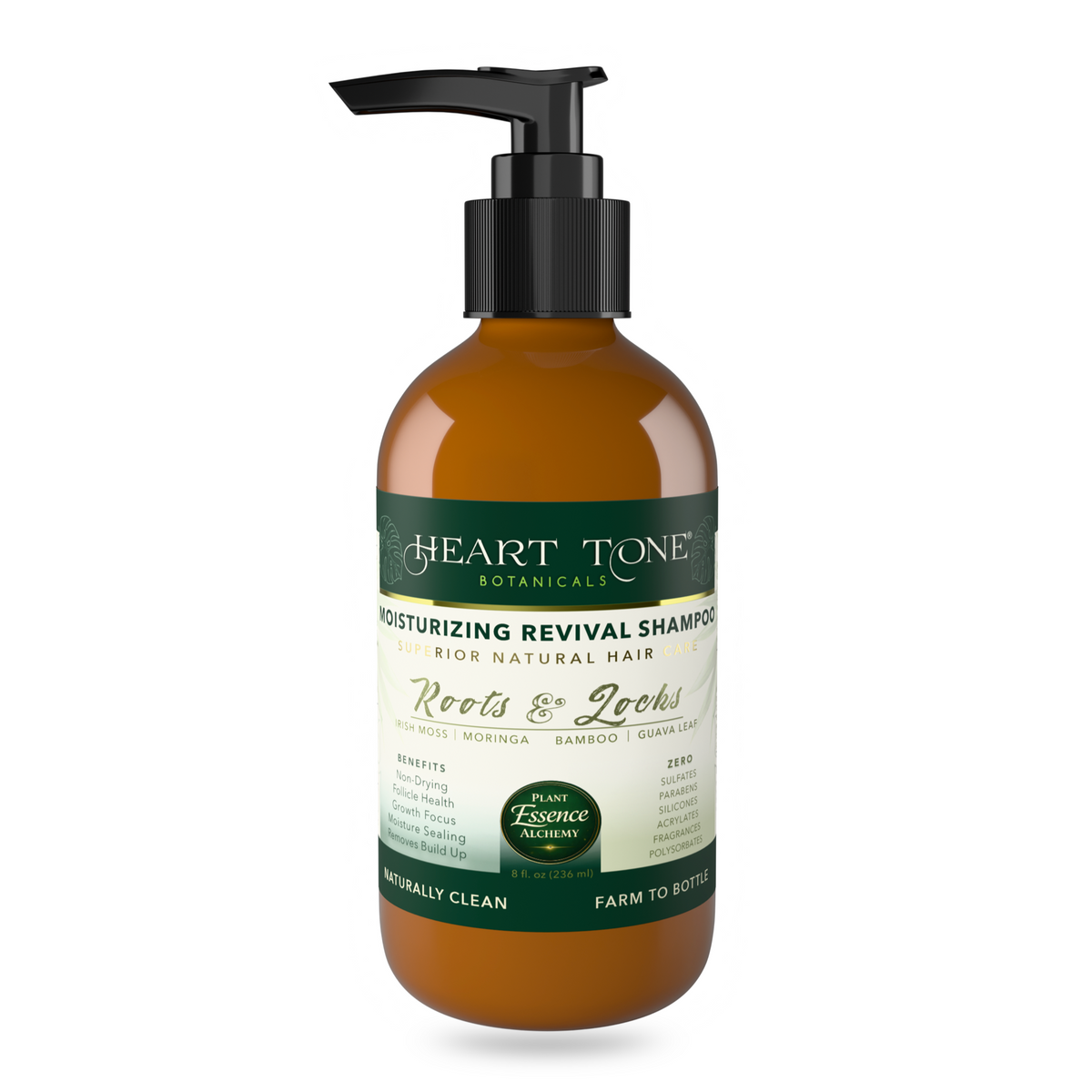
The Roots & Locks Moisturizing Revival Shampoo is built around coconut-derived cleansers — coco taurate and coco betaine — with a botanical blend that includes papaya leaf, moringa, neem, guava, bay leaf, aloe, chamomile, Irish moss, bamboo ferment, and a range of additional botanical extracts including clary sage, rosemary, and cardamom. No sulfates, no silicones, no synthetic fragrance. Pair it with the Roots & Locks Moisturizing Revival Conditioner for a complete wash day experience — or explore the full hair care collection.

Leave a comment
This site is protected by hCaptcha and the hCaptcha Privacy Policy and Terms of Service apply.