












Why Sulfate-Free Shampoo Feels Different at First

If you've recently switched to a sulfate-free shampoo and your hair feels a little off — heavier, less foamy, maybe even a bit greasier than you're used to — you're not doing anything wrong. This is one of the most common reasons people give up on sulfate-free formulas in the first week or two, right before they'd have started to see why they switched in the first place.
Sulfates like sodium lauryl sulfate and sodium laureth sulfate are strong detergents. They're excellent at stripping oil, and they lather aggressively, which is exactly the sensation most of us grew up associating with "clean" hair. A sulfate-free formula works differently: it cleanses gently, foams less, and leaves more of your hair's natural oils in place. That's the point — but it also means the first few washes can feel unfamiliar.
What Actually Happens During the Transition
Here's what people commonly notice in the first two to four weeks after switching:
- Less lather. Sulfate-free cleansers foam less by design. A smaller lather doesn't mean a formula is cleansing less effectively — it means it isn't relying on aggressive detergents to do the work.
- A heavier or slightly greasier feel, at first. Hair and scalp that have been washed with strong detergents for years are used to having their oils stripped on a regular schedule. When that stripping stops, it can take a few washes for hair to feel balanced again.
- A different texture underneath the surface. Some people notice their hair feels coated or waxy for the first wash or two, especially if they're also transitioning away from silicone-heavy conditioners at the same time.
- Then, a settling-in period. Most people report that by the third or fourth wash, their hair starts to feel more like itself — often softer and less prone to the dry, straw-like texture that frequent sulfate washing can leave behind over time.
None of this is a sign that a sulfate-free shampoo "isn't working." It's simply what happens when hair and scalp adjust to a gentler washing routine after being cleaned with a strong detergent.
How to Get Through the Transition Without Giving Up
A few things make the adjustment period easier:
- Give it at least three to four washes before judging results. One wash isn't enough information — your hair needs a few cycles to show you what it actually looks like without sulfates.
- Use less product than you think you need. Sulfate-free formulas are concentrated differently than sulfate-based ones. A smaller amount, worked in at the scalp, usually cleanses just as well as a larger amount of a sulfate shampoo.
- Focus the shampoo at the scalp, not the ends. The scalp is where oil and product buildup actually accumulate. Let the lather rinse through the lengths rather than scrubbing there directly.
- Pair it with a conditioner made for the same gentle approach. A rich sulfate shampoo needs a rich conditioner to undo the drying it causes. A sulfate-free shampoo doesn't strip as much to begin with, so a lighter, botanical conditioner can finish the job without weighing hair down.
- Don't wash more often to compensate. It's tempting to wash daily during the transition because hair feels different. Sticking to your normal wash schedule actually shortens the adjustment window.
What to Look for in a Sulfate-Free Formula
Not every "sulfate-free" label means the same thing. Some brands remove sulfates but replace them with other harsh detergents, or lean on silicones to fake the smoothness sulfates would have stripped away. A formula worth switching to should have:
- Coconut-derived cleansers in place of sulfates — ingredients like coco taurate and coco betaine cleanse gently without the aggressive stripping action of sodium lauryl or laureth sulfate.
- No silicones. Silicones coat the hair shaft to create an artificial smoothness, but that coating builds up over time and needs sulfates or clarifying washes to remove — which defeats the purpose of going sulfate-free in the first place.
- Botanical extracts and plant oils that contribute moisture and a soft, workable feel without relying on synthetic conditioning agents.
- A short adjustment window. A well-formulated sulfate-free shampoo shouldn't take months to feel right — three to four washes should be enough to notice a difference.
The Bottom Line
Switching to a sulfate-free shampoo isn't an overnight change, and that's normal. The first couple of washes can feel less lathery and, for some hair types, a little heavier than expected. That's your hair and scalp recalibrating after being washed with strong detergents — not a sign the new formula doesn't work. Give it a few washes, use less product than you're used to, and pair it with a conditioner built for the same gentle approach.
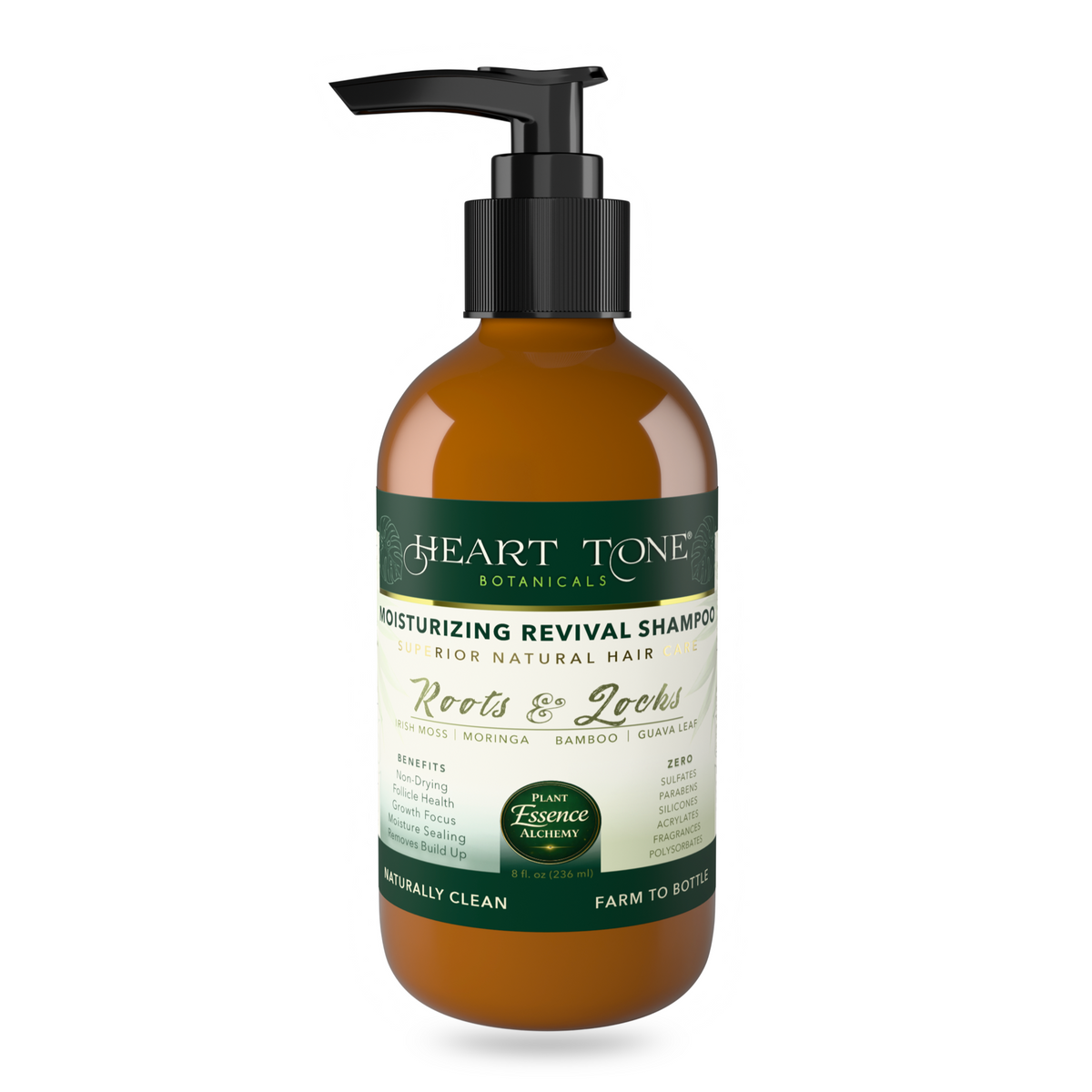
Heart Tone Botanicals' Roots & Locks Moisturizing Revival Shampoo is formulated with coco taurate and coco betaine — coconut-derived cleansers instead of sulfates — alongside papaya leaf, moringa leaf, neem leaf, and aloe leaf juice extracts. Pair it with the Roots & Locks Moisturizing Revival Conditioner to finish the routine, or explore the full natural hair care collection for everything you need to make the switch.

Leave a comment
This site is protected by hCaptcha and the hCaptcha Privacy Policy and Terms of Service apply.