












The Short Answer: It's About What Coats Your Curls, Not Just What Cleans Them

If your curls felt bouncy and defined for the first few washes with a new conditioner — and then started looking flat, dull, and strangely resistant to water a few weeks later — the ingredient list is usually the reason, not your hair. Many conventional conditioners rely on silicones for an instant, smooth feel. Silicones aren't inherently unsafe, but on curly and coily hair, they tend to build up in a way that a water-soluble, botanical formula generally does not.
Here's what's actually happening on the strand — and what a silicone-free conditioner uses instead to get a soft, detangled feel without the coating.
Why Silicones Build Up on Curly and Coily Hair
Silicones are synthetic polymers added to conditioners for slip and shine. The most common ones — dimethicone, cyclopentasiloxane, amodimethicone, dimethiconol — form a thin film around each strand. On straighter hair types that get washed frequently, this film is usually rinsed or washed away before it accumulates. Curly and coily hair has a different structure: more bends per strand, a naturally raised cuticle, and often a longer stretch of days between washes. That combination gives a coating ingredient more surface area to cling to and more time to build up before the next wash.
Signs this may be happening include:
- Hair that feels increasingly weighed down even as you use less product
- Curls that stop responding to water the way they used to — a sign moisture isn't reaching the strand
- A dull, waxy appearance even on freshly styled hair
- Needing a stronger clarifying wash more and more often just to feel "clean" again
None of this means silicone is a flaw in a formula — it simply interacts differently with a tighter curl pattern. A silicone-free conditioner sidesteps the buildup question entirely by using water-soluble, plant-derived ingredients that rinse cleanly with your regular shampoo.
What a Silicone-Free Conditioner Uses Instead
Guar Hydroxypropyltrimonium Chloride
This plant-derived conditioning agent, sourced from guar bean, is one of the most common natural stand-ins for silicone in curl-focused formulas. It provides slip for detangling and a smooth after-feel, but unlike silicone, it's water-soluble — so it rinses away with your next wash instead of layering on top of the last one.
Coconut Milk and Organic Shea Nut Butter
Coconut milk and shea nut butter have a long history in traditional hair care across West Africa, the Caribbean, and South Asia. In a modern conditioner, they contribute richness and a soft, cushioned after-feel — the texture people associate with a deeply conditioned wash day — without needing a synthetic film to get there.
A Botanical Leaf Complex: Papaya, Moringa, Neem, Guava, and Bay Leaf
Leaf extracts have been worked into hair oils and rinses for generations across Ayurvedic and Caribbean hair traditions. In a modern formula, this leaf complex rounds out the botanical profile alongside the peptide and fermented ingredients, rather than acting as the primary conditioning agent.
Radish Root Ferment, Lactobacillus Ferment, and Bamboo Ferment
Fermented plant ingredients are a newer addition to natural hair care, borrowed largely from fermentation-forward skincare. They're included for their light, non-greasy feel — a useful trait in a conditioner designed to work on finer or lower-porosity strands without leaving a heavy residue behind.
Clary Sage, Myrtle, Rosemary CO2, Clove CO2, Thyme CO2, and Vetiver
This essential oil and CO2 extract blend draws on herbs with centuries of traditional use in hair rituals across the Mediterranean and Middle East. Their role here is aromatic and traditional — they shape the scent profile of the formula rather than acting as treatment ingredients.
How to Read a Label for a Truly Silicone-Free (and Sulfate-Free) Formula
"Silicone-free" on a front label isn't always accurate — the ingredient list is the only reliable check. Most silicones share a handful of name endings, so scan for:
- -cone (dimethicone, cyclomethicone, phenyl trimethicone)
- -conol (dimethiconol)
- -siloxane (cyclopentasiloxane, cyclohexasiloxane)
- -silane (trimethylsilyamodimethicone)
The same label-reading habit applies to sulfates — sodium lauryl sulfate, sodium laureth sulfate, and ammonium lauryl sulfate are the ones to watch for on a shampoo label. Water-soluble conditioning agents like guar hydroxypropyltrimonium chloride, brassicyl valinate esylate, and cetyl alcohol are common in silicone-free formulas and show up on plenty of clean-formula labels — their presence isn't a red flag the way a silicone name is.
Building a Wash-Day Routine Around a Silicone-Free Conditioner
Switching to a silicone-free conditioner works best paired with a few wash-day habits:
- Detangle with conditioner in your hair — the slip from a water-soluble conditioner is usually enough to work through knots with a wide-tooth comb or fingers, before rinsing.
- Rinse with cool to lukewarm water — this helps the cuticle lie flatter, which supports a smoother, more defined look after styling.
- Layer products thin — without a silicone film to "lock in" a heavy layer, a lighter application of leave-in and styler tends to look and feel better on curls.
- Give it a few washes to compare — if you're coming off a silicone-heavy routine, it can take two or three washes for existing buildup to fully rinse away and for you to see how your curls behave without it.
The Bottom Line
A silicone-free conditioner isn't automatically "better" — it's a different approach built around what curly and coily hair actually does over several wash cycles. If your curls feel coated, flat, or unusually resistant to water no matter how much product you use, a water-soluble, botanical formula is worth the switch.
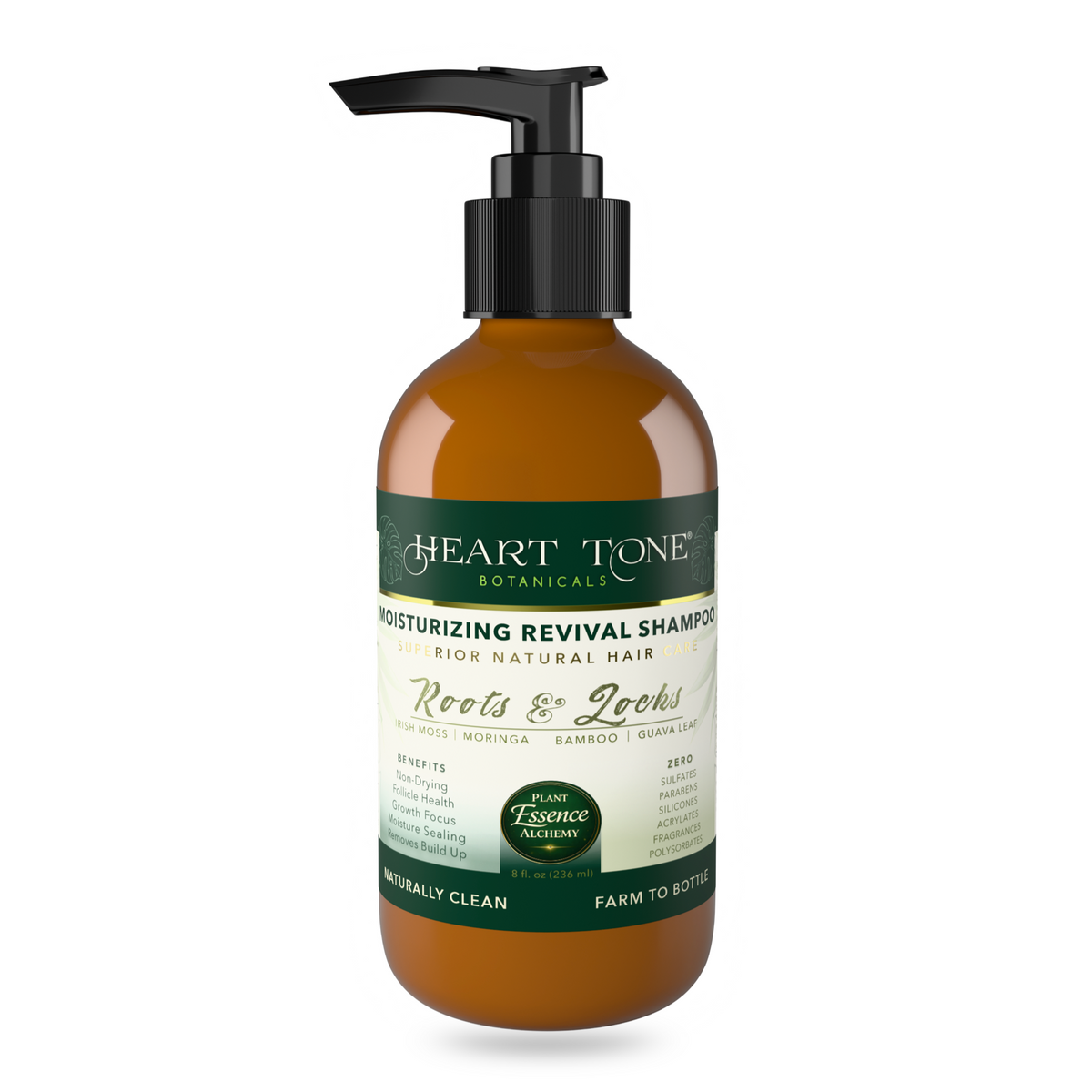
The Roots & Locks Moisturizing Revival Conditioner is formulated without silicones, using guar hydroxypropyltrimonium chloride, coconut milk, and organic shea nut butter alongside a botanical leaf and essential oil complex. Pair it with the Roots & Locks Moisturizing Revival Shampoo for a full wash-day routine, or browse the complete natural hair care collection.

Leave a comment
This site is protected by hCaptcha and the hCaptcha Privacy Policy and Terms of Service apply.