












Do You Actually Need a Protein Treatment?

Protein treatments have become a fixture in many natural hair routines — but they're also one of the most misunderstood categories in hair care. The short answer: some hair and some situations call for them, and some don't. Learning to read what your own hair is telling you is the key to getting it right.
This guide covers what protein treatments actually are, how to tell whether your hair is ready for one, and what botanical ingredients to look for when you choose a formula.
What Is a Protein Treatment for Natural Hair?
A protein treatment is a hair care product formulated with proteins, peptides, or amino acids — ingredients that have a long tradition of use in botanical hair care. Plant-derived options like pea peptides and amino acids such as L-Arginine have been used in natural hair formulations for decades. In use, these ingredients tend to leave hair looking and feeling more defined, more manageable, and visibly fuller.
The key word is feel. A protein treatment changes the tactile and visual quality of your hair — how it looks when dry, how it handles during styling, and how well it holds a style through the day.
What Kind of Hair Benefits Most From Protein?
Not every hair type needs protein at the same frequency. High-porosity hair — hair with an open, raised cuticle that absorbs moisture quickly but also loses it quickly — often notices the biggest difference after a protein treatment. Strands feel more defined after use, styles hold longer, and the overall appearance of the hair looks more polished and less frizzy.
Hair that has been colored, chemically processed, or exposed to frequent heat often responds well to a regular protein step in the routine as well. The same goes for hair that has been over-moisturized to the point of feeling soft and limp — adding a protein component can restore the sensation of structure and definition.
Low-porosity hair, on the other hand, already has a tighter cuticle. Too much protein applied too frequently can leave low-porosity strands feeling stiff and resistant to moisture — the opposite of what most people want. Low-porosity routines typically prioritize lightweight hydration above all else.
Signs Your Hair Might Be Asking for Protein
Watch for these cues:
- Hair that feels mushy or overly soft when wet
- Strands that snap easily during detangling, even when the hair feels moisturized
- Styles that fall flat or lose their definition within a few hours
- Hair that looks limp and lacks its usual body
- Color-treated or chemically processed hair that feels fragile to the touch
These are signals that your hair may be looking for the kind of structure that a peptide or protein-rich formula can provide.
Signs to Hold Off on Protein
Protein overload in hair care is a real thing. When hair has too much protein and not enough moisture, it starts to feel:
- Stiff, dry, or crunchy even after conditioning
- Brittle and prone to snapping under tension
- Resistant to moisture, no matter how much conditioner you apply
If your hair already feels coarse and stiff, adding more protein is not the answer. Focus on moisture first. The protein-moisture relationship in natural hair care is a balance — both sides matter, and swinging too far in either direction affects how hair looks and feels.
What Ingredients to Look For in a Botanical Protein Treatment
When reading a label, here's what a well-formulated botanical protein treatment formula might contain:
Pea Peptide (Pisum Sativum Peptide)
Pea-derived peptides have a long history in botanical hair care. As a plant-based peptide option, pea peptide is used in both rinse-out and leave-in formulas for the defined, manageable feeling it contributes after use. It's one of the gentler peptide options in natural formulation and works well across a range of hair types.
L-Arginine
L-Arginine is an amino acid with a long tradition of use in hair care. It has been included in botanical hair formulas for decades and remains a common ingredient in formulas designed to leave hair feeling well-conditioned and manageable after washing.
Bamboo Ferment
Bamboo has been used in traditional hair care across parts of Asia for generations. In contemporary botanical formulation, bamboo ferment is often included for the sensation of body and structure it contributes to the finished look and feel of styled hair.
Irish Moss (Chondrus Crispus) Extract
Irish moss is a sea-derived botanical with a rich history of use in both hair and skin care. In hair formulas, it's traditionally valued for the silky, conditioned feeling it leaves behind — and it pairs well in formulas that aim to offer both protein and moisture support in a single step.
What to Avoid
As you read labels, watch for a few common additions that can work against a botanical routine. Silicones — listed as dimethicone, cyclopentasiloxane, or anything ending in -cone or -xane — coat the strand and can make it harder for botanical ingredients to deliver their intended feel over time. Heavy sulfate surfactants don't belong in a protein treatment formula at all. And products that lead with synthetic fragrance ahead of their botanical ingredients often don't deliver what the label implies.
How to Use a Protein Treatment in Your Natural Hair Routine
Protein treatments work best when paired thoughtfully with moisture. A sequence that works well for most natural hair types:
- Start with a gentle, sulfate-free cleanse to remove product buildup before the treatment step
- Apply your protein treatment or use a conditioner rich in peptides and amino acids — let it sit for several minutes before rinsing
- Follow with a moisturizing step (deep conditioner or leave-in) if hair feels dry or stiff after rinsing
- Seal with a light botanical oil or butter to retain moisture
Frequency matters. For most natural hair routines, once or twice a month is a reasonable starting point. Hair that has been heavily processed may benefit from more frequent use; low-porosity hair may only need the protein step occasionally, as needed.
The Roots & Locks Approach: Protein and Moisture Together
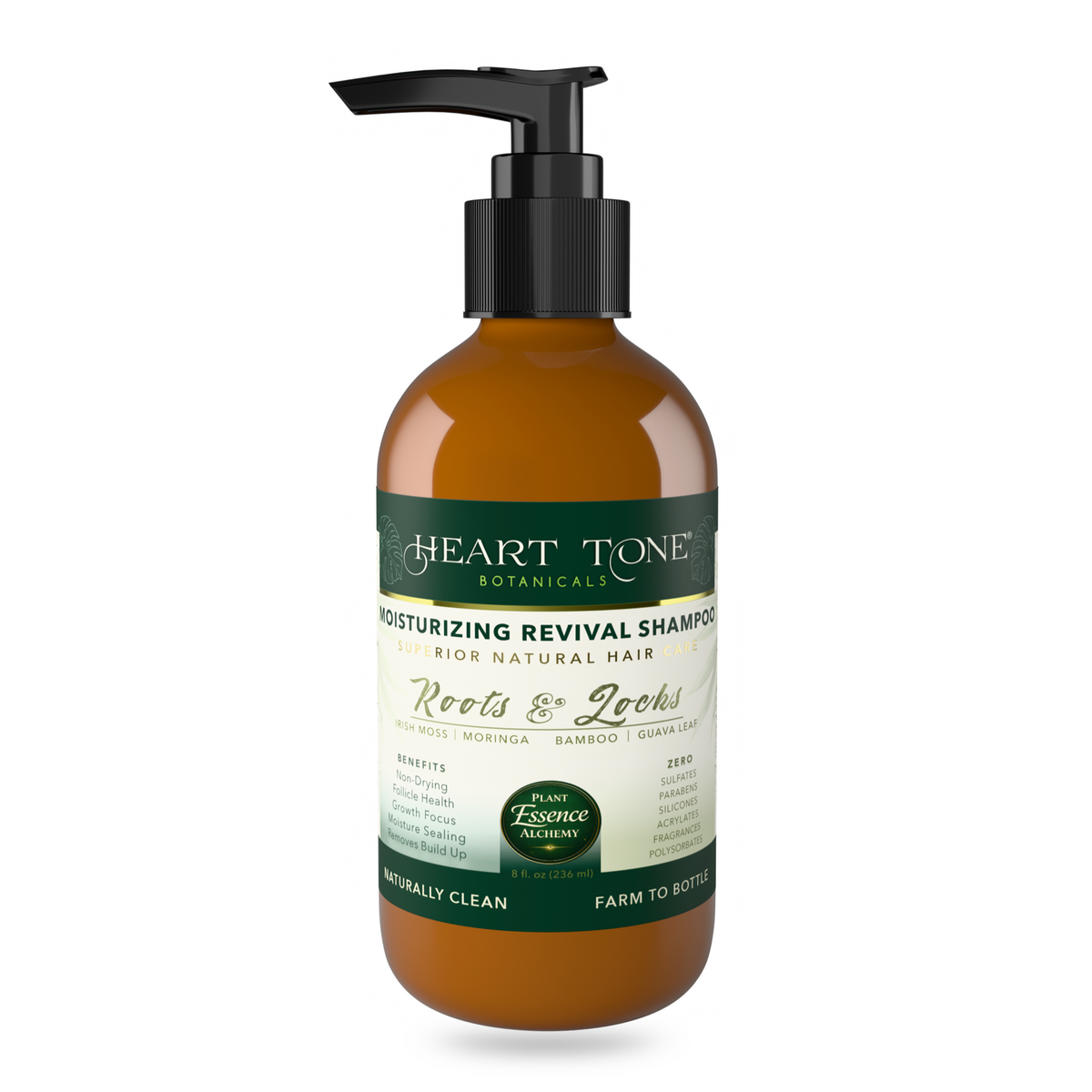
For a botanical formula that doesn't ask you to choose between a protein step and a moisture step, the Roots & Locks Moisturizing Revival Shampoo and Roots & Locks Moisturizing Revival Conditioner were designed to work as a pair.
The shampoo is formulated with Pisum Sativum Peptide (pea peptide), L-Arginine, Bamboo Ferment, and Irish Moss Extract — alongside a botanical leaf complex of papaya, moringa, neem, guava, and bay. It contains no sulfates, no parabens, and no synthetic silicones. The cleanse feels thorough without leaving hair feeling stripped or dry afterward.
The conditioner builds on the same botanical core: Pisum Sativum Peptide, L-Arginine, Bamboo Ferment, and Irish Moss Extract — with the addition of organic shea nut butter and coconut milk for a deeper moisture feel. After rinsing, hair feels soft, defined, and manageable without the heaviness of a formula built on synthetic emollients.
Used together, they offer a natural hair routine that works with the protein-moisture balance rather than picking a side.
Ready to build a botanical hair routine around real ingredients? Explore the full HTB Hair Care collection — or start with the Roots & Locks shampoo and conditioner pair.


Leave a comment
This site is protected by hCaptcha and the hCaptcha Privacy Policy and Terms of Service apply.