












The Short Answer: A Rare Fatty Acid Profile, Not a Miracle Fruit Extract

Pomegranate seed oil turns up in more face oils and serums every year, usually described with words like "antioxidant-rich" and "prized." If you've seen it listed on a botanical moisturizer label and wondered what it actually is beyond the marketing language, the honest answer is a specific and genuinely uncommon one: it's a cold-pressed carrier oil with a fatty acid profile that's rare among plant oils, and formulators include it in multi-oil blends for that composition — not because it's a single-ingredient fix.

Here's what pomegranate seed oil is, what makes its composition unusual, and what's genuinely worth knowing before you buy a product because of it.
What Is Pomegranate Seed Oil?
Pomegranate seed oil is cold-pressed from the seeds inside the fruit — the small, hard seeds most people discard rather than eat. It takes a large volume of seeds to yield a small amount of oil, which is part of why it's typically a supporting ingredient in a blend rather than a base carrier oil on its own.
What sets it apart chemically is punicic acid, an omega-5 fatty acid that makes up a large share of the oil and isn't common in the plant oils most people know — olive, sunflower, coconut. That unusual fatty acid composition is the reason formulators reach for it specifically, rather than substituting a more common oil in its place.
A Long History in Botanical Tradition
The pomegranate itself has a documented place in Mediterranean, Middle Eastern, and South Asian botanical traditions stretching back thousands of years, valued in skin and hair preparations long before "antioxidant" was a marketing term. Pressed pomegranate seed oil specifically is a newer addition to formulation — cold-press extraction at commercial scale is a relatively modern development — but it draws on that same long-standing regard for the fruit as a botanical ingredient.
Why Formulators Include It in Face Oil Blends
Pomegranate seed oil is valued in botanical formulation for a straightforward reason: it's a lightweight, fast-absorbing oil with a distinctive fatty acid profile that blends cleanly into multi-oil formulas without leaving a heavy or greasy residue. That's a formulation property, not a claim about what happens once it's on your skin — and it's why it typically appears as one name in a longer ingredient list rather than standing alone as a "hero" ingredient.
In a well-built face oil, pomegranate seed oil sits in a supporting role next to ingredients like:
- Jojoba and moringa oil — lightweight carrier oils that help the blend feel non-greasy
- Rosehip and sea buckthorn oil — traditional botanical oils with a long history in facial skincare
- Vitamin E — a common companion antioxidant in oil-based formulas
- Bakuchiol — a plant-derived ingredient popular in botanical formulas as a retinol alternative
The appeal of a formula like this isn't any single ingredient — it's the combination, applied consistently, as part of a daily routine.
What Pomegranate Seed Oil Feels and Looks Like
On skin, pomegranate seed oil tends to feel lightweight rather than rich or occlusive, absorbing without a lingering oily film. In a well-formulated moisturizer, that translates to skin that looks and feels smoother and more comfortable after application, particularly in a blend layered under a heavier night cream or worn on its own during the day.
What Pomegranate Seed Oil Does Not Do
This is the part most skincare marketing skips. Pomegranate seed oil is not a drug ingredient, and no cosmetic product — botanical or conventional — is permitted to claim that it is used for, prevents, or reverses any skin condition. A moisturizer containing pomegranate seed oil can visibly improve the appearance of skin and contribute to a smoother, more radiant-looking complexion when used consistently as part of a routine. It cannot alter what's happening biologically underneath the skin, and any product claiming otherwise is making a claim that belongs to drugs, not cosmetics.
If a product's entire pitch rests on one fruit-derived oil promising a dramatic transformation, that's a marketing signal worth being skeptical of — for pomegranate seed oil or any other single ingredient. A well-formulated face oil is a blend working together, applied over time, as part of a consistent routine.
How to Look for It in a Formula
If you're evaluating a product that lists pomegranate seed oil, a few practical questions are more useful than the marketing copy:
- What else is in the formula? Pomegranate seed oil alongside a recognizable list of other named botanical oils tends to reflect a more thoughtfully built product than one where it's buried behind a long list of fillers.
- Is it cold-pressed? Heat and solvent extraction can degrade the fatty acid profile that makes this oil worth including in the first place.
- Does the brand make appearance claims or treatment claims? "Visibly improves the appearance of" is a cosmetic claim. "Repairs," "reverses," or "is used for" are drug claims that shouldn't appear on a cosmetic label at all.
Where This Fits in a Botanical Face Routine
Heart Tone's Complete Daily Face Moisturizer includes pomegranate seed oil as one ingredient in a blend of 22 botanical oils — jojoba, moringa, rosehip, sea buckthorn, bakuchiol, and more — designed to be applied daily rather than relied on as a single fix.
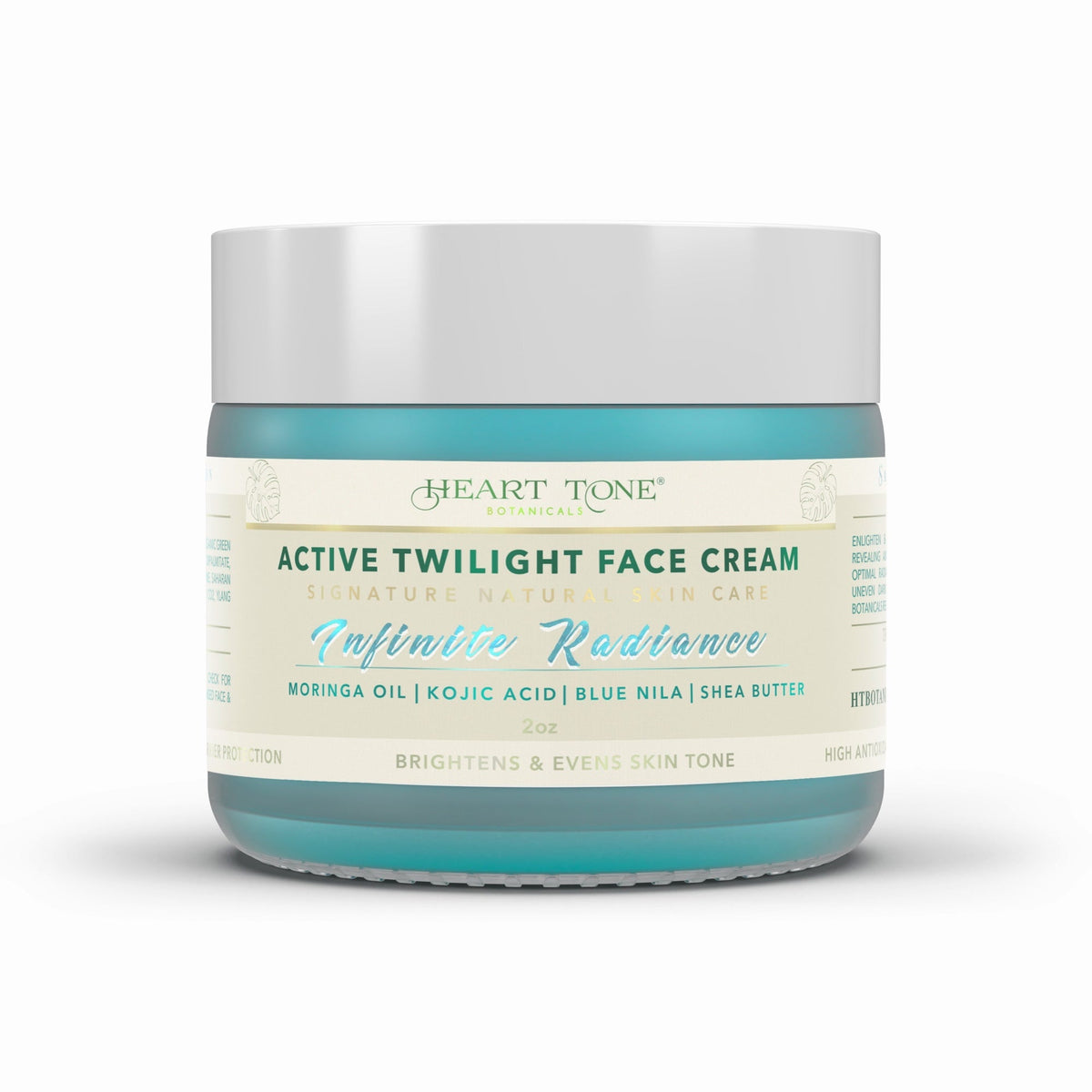
In a full routine, that moisturizer typically comes after toning and before a heavier night cream. The Island Mist Toning Facial Elixir Hydrosol preps clean skin first, the Dynamic Hydrogel Face Serum layers in a lightweight, water-based step, Complete Daily Face Moisturizer locks in daytime hydration, and the Active Twilight Face Cream is built as a richer overnight step for PM use. For anyone who wants a gel-based option for a lighter feel, Botanical Skin Gel is a lightweight alternative in the lineup.
If you'd rather not piece a routine together product by product, The AM/PM Face System and The Complete Face Ritual bundle these steps in the order they're designed to be used.
The Bottom Line
Pomegranate seed oil is a real, cold-pressed carrier oil with an unusually rich fatty acid profile — but it's one ingredient in a blend, not a standalone solution. Look for it alongside a thoughtfully chosen list of other named botanical oils, in a formula that makes appearance claims rather than treatment claims, and expect it to do its job as part of a consistent daily routine rather than overnight.
Explore the full natural facial care collection from Heart Tone Botanicals to see how pomegranate seed oil and other botanical oils fit into a complete routine. For more on how a related antioxidant ingredient shows up in the same formula, read our guide to Sea Buckthorn Oil for Skin: What This Botanical Oil Actually Is.

Leave a comment
This site is protected by hCaptcha and the hCaptcha Privacy Policy and Terms of Service apply.