

Oil pulling is one of the oldest practices in Ayurvedic medicine. The idea is simple: swish oil in your mouth for several minutes, spit it out, and let the oil carry away bacteria and debris before it can settle onto your teeth and gums.

It sounds almost too simple to work. And yet, a growing body of small clinical studies suggests that regular oil pulling can meaningfully reduce the bacteria responsible for plaque, gum inflammation, and bad breath — when done consistently and alongside a solid brushing routine.
This post breaks down what the science actually shows, what it doesn't show, and how to make oil pulling a part of a genuinely effective natural oral care routine.
Where Oil Pulling Comes From
Oil pulling, known in Sanskrit as kavala or gandusha, has roots in Ayurvedic medicine stretching back thousands of years. Traditional practitioners used sesame or sunflower oil, swishing it for 10 to 20 minutes each morning before eating or brushing.
The practice crossed into Western wellness culture in the early 2000s, largely on the back of coconut oil's rise in popularity. Today, coconut oil is by far the most commonly used oil for pulling — partly because it tastes better than sesame, and partly because it contains lauric acid, a medium-chain fatty acid with documented antibacterial properties.
What the Research Actually Shows
This is where it gets nuanced. Oil pulling has real supporters in the clinical literature — and real detractors.
Reducing Oral Bacteria
The most consistent finding across multiple studies is that oil pulling can reduce total oral bacterial counts. A 2022 meta-analysis of randomized controlled trials found that oil pulling significantly reduced salivary bacterial colony counts. Crucially, this includes Streptococcus mutans — the primary bacteria responsible for tooth decay.
A separate review found that regular oil pulling could reduce oral microbial counts by roughly 20% after 40 days of consistent practice.
The mechanism isn't complicated. Oil has a lipid structure that physically attracts lipid-coated bacteria. When you swish vigorously, the oil emulsifies and picks up bacteria from surfaces in your mouth. When you spit it out, those bacteria go with it.
Plaque and Gingivitis
Several trials have reported improvements in both plaque index scores and gingivitis markers after 15 to 45 days of oil pulling. One randomized trial comparing oil pulling to chlorhexidine mouthwash found significant decreases in modified gingival index and plaque scores in both groups.
Another study found a 52–60% reduction in gingivitis scores and an 18–30% reduction in plaque scores over 45 days. These aren't small numbers.
Where the evidence thins out: pooled analyses have found inconsistent results. The Oxford Centre for Evidence-Based Medicine reviewed four trials and found no significant difference between oil pulling and control groups for most plaque outcomes — largely because study quality was poor and reporting was incomplete. The research is promising, but it's not settled.
Bad Breath
By reducing the anaerobic bacteria that produce sulfur compounds, oil pulling has been shown to improve breath freshness. This is one of the more consistently reported benefits — possibly because the mechanism (bacterial reduction) is more direct than the chain of events involved in reducing plaque or reversing gum disease.
What Oil Pulling Won't Do
Here's where honest communication matters: oil pulling does not whiten teeth in any clinically meaningful way. The American Dental Association reviewed the available evidence and found no reliable studies supporting whitening claims. Any perceived brightening is likely due to surface stain removal from prolonged swishing — not an actual change in tooth enamel color.
Oil pulling also will not reverse established periodontal disease, treat cavities once they've formed, or substitute for a professional cleaning. If you have active gum disease, oil pulling is not a treatment — it's a supportive habit that may slow progression or reduce inflammation alongside proper professional care.
How to Do It Correctly
The method matters. Most people who try oil pulling and get no benefit are either swishing too gently, for too short a time, or using an oil that doesn't have meaningful antimicrobial properties.

The protocol that the clinical literature typically uses:
- Take 1 tablespoon of oil (or about 10–15 ml)
- Swish gently but actively for 10 to 20 minutes — don't gargle
- Spit into the trash, not the sink (oil will clog drains over time)
- Rinse your mouth thoroughly with water
- Brush your teeth afterward
- Do this on an empty stomach, first thing in the morning
The 10-to-20-minute window isn't arbitrary. Studies that show benefit typically use this range. Shorter sessions may not allow enough time for the emulsification process to work effectively.
Why the Type of Oil Matters
Not all oils are equal in the mouth. Coconut oil has the advantage of lauric acid, which has demonstrated antibacterial activity against S. mutans and Candida species. Sesame oil has a longer traditional history and contains antioxidants like sesamolin and sesamol that have anti-inflammatory properties. Sunflower oil is the most neutral option and was used in some of the earliest clinical trials.
The most effective oil pulling formulas go further than plain coconut or sesame oil. Some incorporate additional botanicals — like ozone-infused oil, astringent herbs, or antioxidant-rich plant extracts — that add another layer of antimicrobial or anti-inflammatory support.
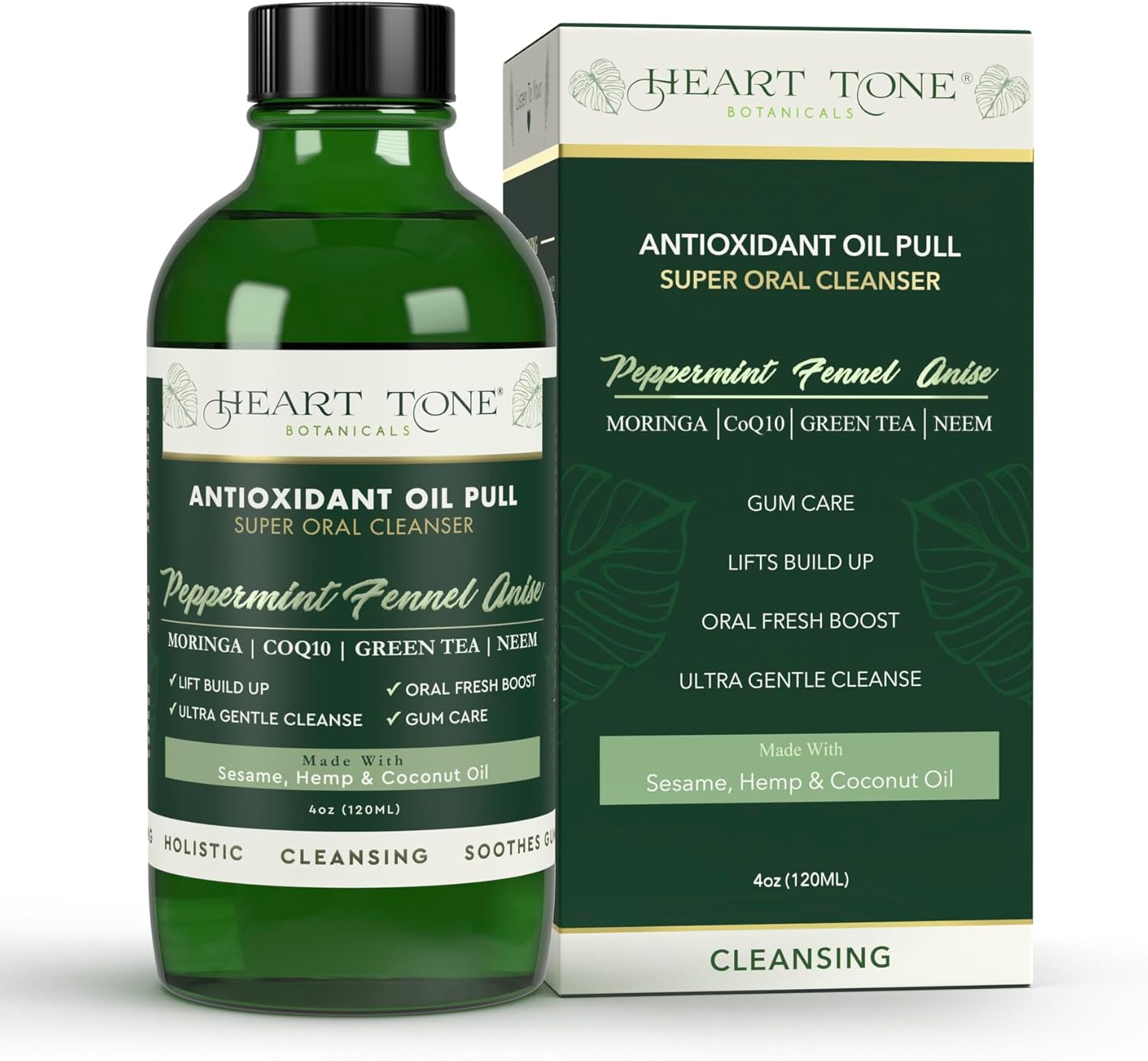
At Heart Tone Botanicals, we've taken this approach with two dedicated oral care formulas designed specifically for oil pulling:
- Antioxidant Oil Pull — formulated with antioxidant-rich botanicals to support gum tissue and reduce oxidative stress in the oral environment
- Ozonated Oil Pull — uses ozone-infused oil, a potent antimicrobial approach that's been studied for its ability to neutralize bacterial biofilms without the harshness of chemical antiseptics
Both are part of our broader oral care collection, designed to work together with other elements of a natural daily routine.
Where Oil Pulling Fits in Your Routine
Think of oil pulling as a first step — a morning reset that clears your mouth of the bacteria that accumulated overnight before you do anything else.
Here's how it works best alongside other natural oral care practices:
- Morning oil pull — before eating, before brushing, before anything else (10–15 minutes)
- Rinse and brush — with a mineral-rich, fluoride-free toothpaste like Living Crystal Toothpaste, which uses hydroxyapatite and remineralizing minerals in place of fluoride
- Evening rinse — finish with a botanical mouth rinse like our Restorative Mouth Rinse to support gum tissue overnight
This kind of layered approach — oil pulling, mineral toothpaste, botanical rinse — is what actually shifts the baseline over time. No single product does it alone.
Who Benefits Most from Oil Pulling?
Based on the evidence and what we see from customers, oil pulling tends to be most valuable for:
- People with chronically high plaque buildup despite regular brushing
- Those dealing with mild gingivitis or persistently bleeding gums
- Anyone sensitive to the alcohol or antiseptics in conventional mouthwash
- People who want a morning oral care ritual that's genuinely cleansing rather than just masking symptoms
- Those committed to keeping their oral care as natural and additive-free as possible
If you're already dealing with significant gum disease or decay, oil pulling is a complement to dental care — not a replacement for it. See your dentist. Use oil pulling to support what they're doing, not to avoid going.
The Honest Bottom Line
Oil pulling isn't magic. The research is real but limited — mostly small, short-term studies that show promising results without the kind of large-scale, rigorous evidence that would satisfy a clinical guideline.
What we do know: it reduces bacteria. It can improve gum health scores. It freshens breath. And it's genuinely low-risk when done correctly alongside standard oral care.
For anyone building a natural oral care routine that goes beyond generic toothpaste and mouthwash, oil pulling is one of the most time-tested tools available. Especially when you're starting with a formula that's been designed for the purpose — not just a jar of cooking oil.
Explore our full natural oral care collection — including our Antioxidant Oil Pull and Ozonated Oil Pull — and build a morning routine that actually does something.

Leave a comment
This site is protected by hCaptcha and the hCaptcha Privacy Policy and Terms of Service apply.