

You've decided to clean up your skincare routine. Maybe you've been reading ingredient labels and not loving what you see. Maybe your skin has been reacting to something and you want to start fresh. Or maybe you're just done letting a product you don't fully trust sit on your face for eight hours every night.

Whatever brought you here: welcome. Building a non-toxic skincare routine doesn't have to be complicated, expensive, or confusing. This guide will walk you through every step — what to use, what to avoid, and how to layer products so they actually work.
What Does "Non-Toxic Skincare" Actually Mean?
Here's the honest answer: it's not a regulated term. The FDA doesn't define "non-toxic" or "clean" for cosmetics. Neither does anyone else with legal authority. That means any brand can print it on a label without accountability.
What most people mean by non-toxic skincare is this: products formulated without ingredients that have been linked to hormone disruption, carcinogenicity, skin sensitization, or accumulation in the body. The common offenders include:
- Parabens (methylparaben, propylparaben, butylparaben) — preservatives with weak estrogenic activity
- Synthetic fragrance — a catch-all term that can hide hundreds of undisclosed chemicals
- Phthalates — plasticizers that act as endocrine disruptors
- Sulfates (SLS/SLES) — aggressive surfactants that strip the skin barrier
- Formaldehyde-releasing preservatives — DMDM hydantoin, imidazolidinyl urea
- Synthetic dyes — often petroleum-derived and irritating for sensitive skin
A genuinely clean formula leaves these out and replaces them with plant-based alternatives that do the same job without the concern. That's the standard Heart Tone Botanicals holds itself to — small-batch, botanically driven formulas made on a working farm in Florida.
Step 1: Cleanser — Start Without Stripping
The first rule of a non-toxic skincare routine is: do no harm at step one. A cleanser that strips your skin barrier sets up every product that follows to underperform (or worse, irritate).
What to look for: gentle surfactants like coco-glucoside or decyl glucoside, or oil-based cleansers that dissolve sebum without disrupting your acid mantle. Avoid sodium lauryl sulfate, synthetic fragrance, and alcohol-heavy formulas.
Signs your cleanser is too harsh: skin feels tight or "squeaky clean" after washing. That's not clean — that's stripped.
Step 2: Toner — Hydrate, Don't Shock
Old-school toners were alcohol-heavy astringents designed to remove every last trace of oil. Modern, non-toxic toning is the opposite of that.
A clean toner should balance your skin's pH after cleansing, hydrate, and prep your skin to absorb what comes next. The most gentle and effective option? Hydrosols — steam-distilled plant waters that carry the water-soluble constituents of botanicals directly onto the skin.
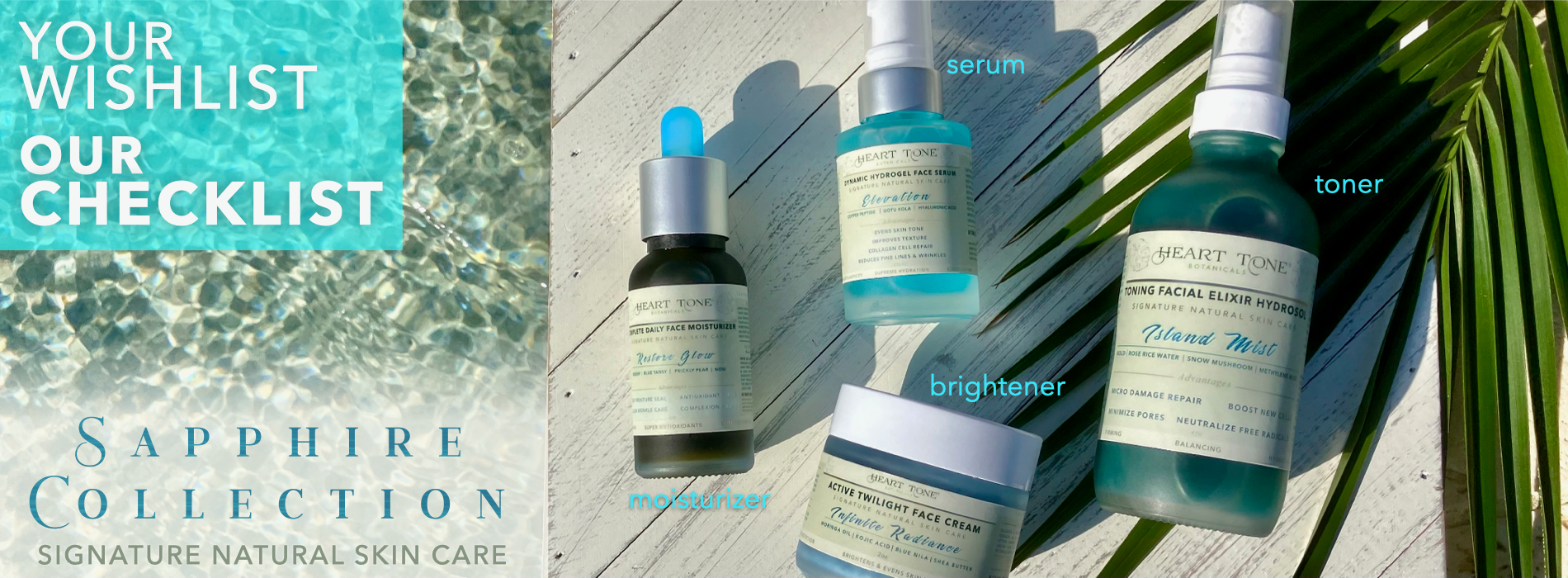
Heart Tone's Island Mist Toning Facial Elixir Hydrosol is a pure botanical hydrosol — no alcohol, no synthetic fragrance, no filler water. It's real plant medicine in a spray bottle. Mist it on after cleansing and let it absorb before your serum.
Step 3: Serum — Targeted Treatment
Serums deliver active ingredients in concentrated form to address specific concerns: dehydration, dullness, uneven texture, early fine lines. In a non-toxic routine, you want actives that are genuinely effective — not just on the label for marketing purposes.
Botanical actives worth seeking out:
- Hyaluronic acid — holds up to 1,000x its weight in water; a rare ingredient that's both effective and clean
- Vitamin C (from botanical sources) — antioxidant protection and collagen support
- Bakuchiol — plant-derived, performs like retinol without the sensitivity or synthetic concern
- Niacinamide — brightening, pore-minimizing, barrier-supporting
- Plant peptides — support skin structure and firmness
The Dynamic Hydrogel Face Serum from Heart Tone is formulated around this philosophy — deep hydration paired with botanical actives that work at the cellular level, not just on the surface.
Step 4: Moisturizer — Lock It In
Moisturizer does two things: it seals hydration into the skin (occlusives and emollients) and it delivers additional nutrients (botanical oils, plant extracts). In a non-toxic routine, this is where most people make their biggest upgrade.

Conventional moisturizers often use petrolatum or mineral oil as occlusives — petroleum derivatives that sit on the skin and block moisture loss without adding anything. They work, but you can do better.
Plant-based alternatives like shea butter, jojoba, rosehip, and sea buckthorn not only seal moisture but deliver fatty acids, vitamins, and phytonutrients your skin can actually use.
The Complete Daily Face Moisturizer is Heart Tone's everyday anchor. Rich without being heavy, it feeds skin with botanicals while holding moisture throughout the day — no synthetic thickeners, no petrolatum, no synthetic fragrance. For a full daytime routine in one system, the AM/PM Face System bundles cleanser, serum, and moisturizer designed to work together.
Step 5: Night Cream — Let the Botanicals Work Overnight
Your skin's repair cycle is most active while you sleep. That means your night product has a bigger window to work — and deserves to be more concentrated.
A good non-toxic night cream is richer than your daytime moisturizer, with a higher concentration of nourishing oils and any actives you want to work on long-term (anti-aging botanicals, barrier repair, brightening). Avoid night products with synthetic fragrance — it's one of the most common sensitizers, and overnight application means prolonged skin contact.
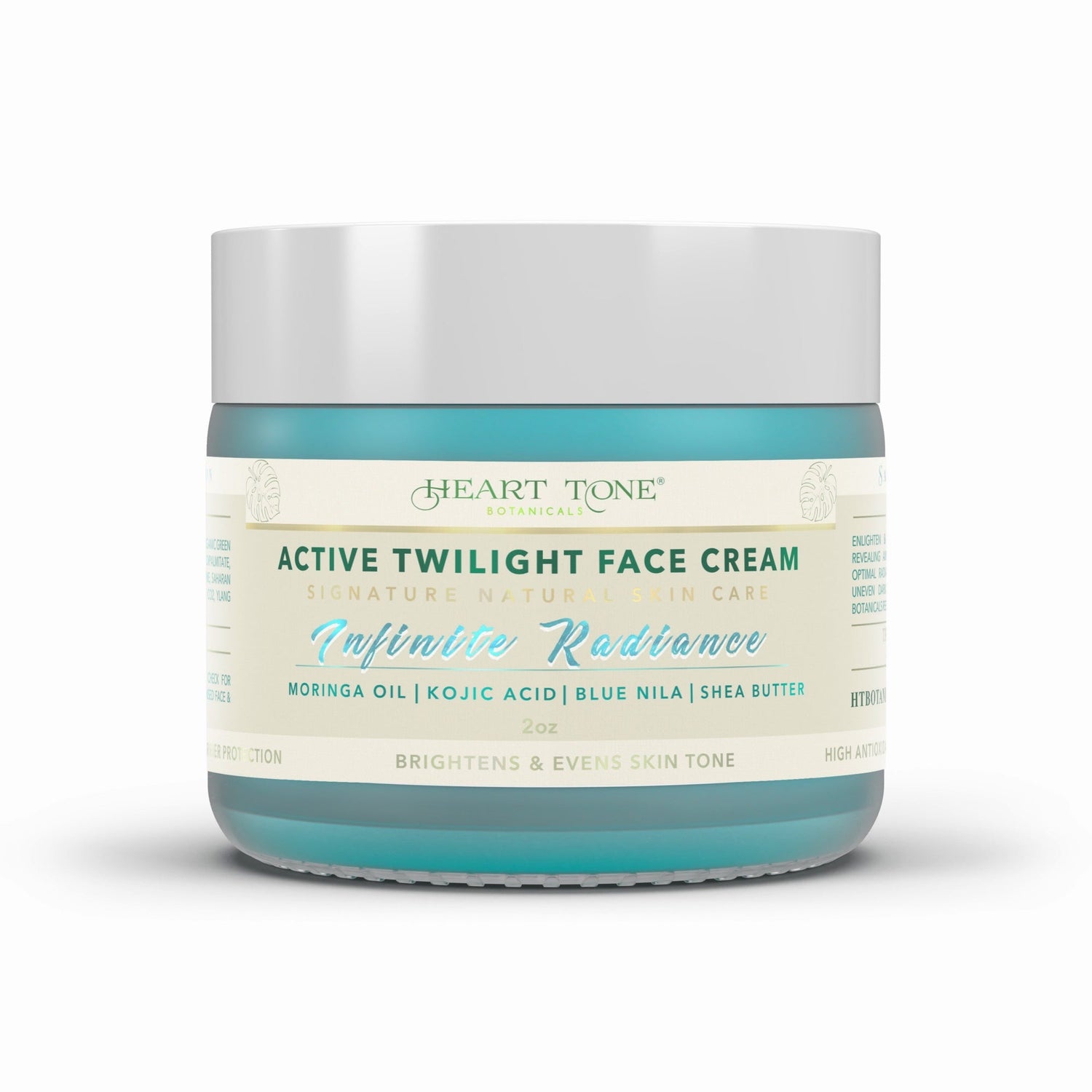
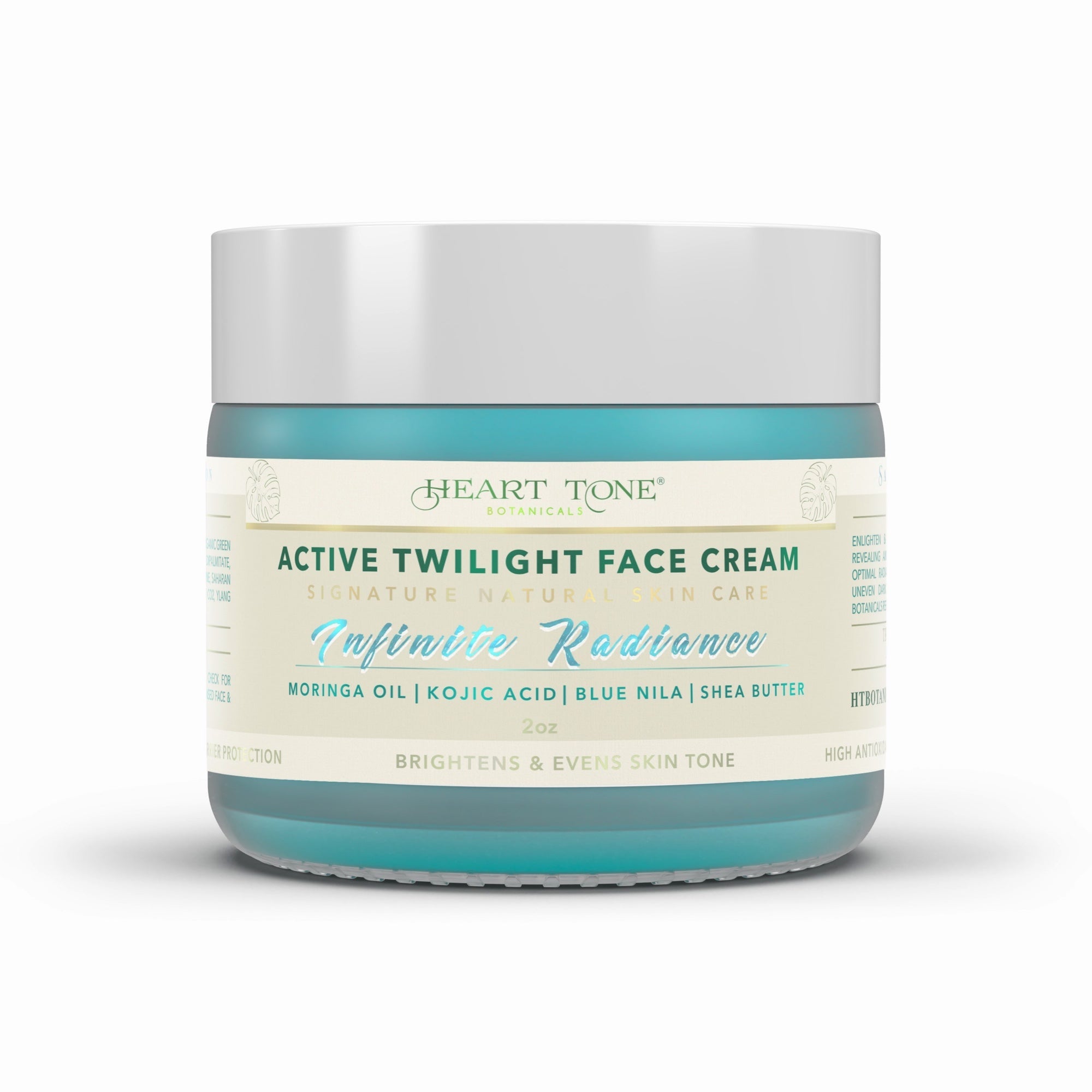
Active Twilight Face Cream is Heart Tone's overnight formula — a botanical-rich night cream formulated to support cell renewal and deep nourishment through the night. Pair it with the Botanical Skin Gel as a targeted treatment for areas that need extra attention.
Building an AM/PM Non-Toxic Routine
Morning Routine (5 Minutes)
- Rinse or gentle cleanse — in the morning, a water rinse or gentle botanical cleanser is often enough
- Toner — mist with Island Mist Hydrosol; let absorb
- Serum — Dynamic Hydrogel Face Serum for hydration and actives
- Moisturizer — Complete Daily Face Moisturizer to seal everything in
- SPF — always, even in winter; look for a non-toxic mineral (zinc oxide) sunscreen
Evening Routine (5 Minutes)
- Double cleanse if wearing makeup — oil cleanser first, then gentle cleanser
- Toner — Island Mist Hydrosol
- Serum or treatment — Dynamic Hydrogel Serum, or Botanical Skin Gel on trouble spots
- Night cream — Active Twilight Face Cream; apply generously
Want everything dialed in as a complete system? The Complete Face Ritual or the Farm-to-Face Full Ritual bundles Heart Tone's full facial lineup so you're not guessing about compatibility.
Ingredients to Always Avoid
When you're reading labels on any non-toxic product claim, these are the ingredients that should trigger a put-it-back response:
- Fragrance / parfum (when not disclosed as 100% essential oil-based)
- Methylparaben, propylparaben, butylparaben, ethylparaben
- Sodium lauryl sulfate (SLS), sodium laureth sulfate (SLES)
- DMDM hydantoin, imidazolidinyl urea, quaternium-15
- Oxybenzone, octinoxate (in sunscreens)
- PEG compounds (polyethylene glycols) — often contaminated with 1,4-dioxane
- Triclosan
- BHA and BHT (as preservatives)
The "Natural" Paradox: Not Every Natural Ingredient Is Safe
One thing worth saying directly: natural doesn't automatically mean safe. Poison ivy is natural. Some essential oils are irritating at high concentrations. A few plant extracts are phototoxic (meaning they sensitize your skin to UV damage when applied before sun exposure).
Formulation matters as much as ingredients. A product made from 100% natural ingredients can still irritate your skin if the concentrations are wrong or the pH is off. That's why working with a formulator who understands not just ingredient sourcing but skincare chemistry matters — and why Heart Tone's farm-to-bottle process isn't just a story, it's a quality standard.
Transitioning to a Non-Toxic Routine Without Overwhelm
You don't have to throw out everything tomorrow. The most sustainable approach:
- Start with leave-on products — night cream and serum stay on your face the longest, so upgrade these first
- Replace one product at a time — as a product runs out, replace it with a cleaner option
- Give new products 4–6 weeks — skin adaptation takes time; don't write something off in a week
- Watch for reactions, not just results — redness, persistent breakouts, or tightness after using a product are signals worth heeding
Your skin is the largest organ in your body. What you put on it daily adds up. A non-toxic skincare routine isn't about perfection — it's about making intentional choices about what you're applying to your skin, every day, for years.
Browse Heart Tone's full facial care collection to find the products that fit your skin and your routine.

Leave a comment
This site is protected by hCaptcha and the hCaptcha Privacy Policy and Terms of Service apply.