

If your hair feels perpetually parched — rough to the touch, dull, prone to breakage — the first instinct is usually to reach for something that promises "intense moisture." But most conventional shampoos do the opposite: they strip the oils your scalp produces naturally, leaving your hair more dehydrated than before you washed it.

The real fix isn't more product. It's the right product — one that cleans without stripping, and that contains the botanical ingredients your hair can actually absorb and use.
Why Hair Gets Dry in the First Place
Dry hair isn't a defect. It's usually a signal that something in your routine is pulling out more moisture than you're putting back in.
The most common culprits:
- Harsh sulfates (SLS and SLES). These detergents are extremely effective at cleaning — so effective, they don't stop at dirt. They strip away the natural sebum that coats and protects each strand. Done frequently, this creates a chronic moisture deficit your conditioner struggles to overcome.
- Hot water. It opens the hair cuticle wide, letting moisture escape. Washing with cooler water does real work here — it's not just a myth.
- Over-washing. Your scalp produces oil at a rate calibrated for your biology. Washing every day interrupts that balance. For most people with dry hair, washing every 2–4 days is closer to ideal.
- Heat styling without protection. Blow dryers and flat irons extract water from the hair shaft. Do it often, without protection, and dryness compounds.
- Climate and environment. Low-humidity conditions — dry winter air, air-conditioned spaces — pull moisture out of hair continuously. You can't control the climate; you can control how well your hair is sealed against it.
What to Look for in a Shampoo for Dry Hair
Forget the marketing language. "Moisturizing," "hydrating," and "nourishing" mean nothing without looking at the actual ingredient list. Here's what matters:
Gentle Plant-Based Surfactants
Surfactants are what create lather and lift dirt from the scalp. The harshest ones — sodium lauryl sulfate, ammonium lauryl sulfate — are effective but damaging over time for dry hair types. Gentler coconut-derived alternatives (like coco-glucoside or decyl glucoside) clean effectively without stripping protective oils. If you have dry hair and your shampoo contains SLS as the first surfactant, that's the problem.
Humectants: Ingredients That Draw Moisture In
Humectants attract water molecules from the environment and hold them against the hair shaft. Look for:
- Glycerin — affordable, effective, widely used in quality shampoos
- Aloe vera juice — hydrates and soothes the scalp simultaneously
- Honey — a natural humectant with antimicrobial properties
Emollients: Ingredients That Smooth and Soften
Plant oils don't just sit on the surface — the right ones penetrate the hair shaft and displace water loss. Look for:
- Argan oil — high in oleic acid, absorbed easily, adds shine without grease
- Jojoba oil — mimics the structure of sebum; excellent for dry scalp alongside dry hair
- Avocado oil — rich in fatty acids, penetrates deeply into the cortex
Proteins (Used Carefully)
Hydrolyzed proteins — wheat, silk, keratin — can temporarily fill gaps in the hair cuticle, improving strength and reducing breakage. For dry hair, small doses are beneficial. Too much, too often, creates protein overload: hair that feels stiff and brittle. Balance is everything.
The Right Shampoo Routine for Dry Hair
Even the best shampoo underperforms in a broken routine. A few adjustments compound quickly:

- Pre-wash oil treatment. Before shampooing, apply a small amount of coconut or jojoba oil to dry lengths. This creates a barrier that limits how much moisture the wash strips. Leave it for 30–60 minutes before rinsing.
- Scalp-focused application. Shampoo belongs on your scalp, not your lengths. Work it into the scalp, then let the lather drift down as you rinse. Scrubbing lengths with shampoo is unnecessary and drying.
- Cool or lukewarm water. Hot water is the enemy of moisture retention. Rinse with the coolest water you can tolerate — especially at the end. A cool final rinse seals the cuticle and adds noticeable shine.
- Follow with a conditioning step. No dry-hair routine works without conditioner. Apply it from mid-shaft to ends, let it sit for 2–3 minutes, and rinse thoroughly.
- Reduce wash frequency. If you're currently washing daily, try cutting back to every other day, then every 2–3 days. Your scalp will recalibrate within a week or two.
Heart Tone's Approach: Botanicals That Actually Work for Dry Hair
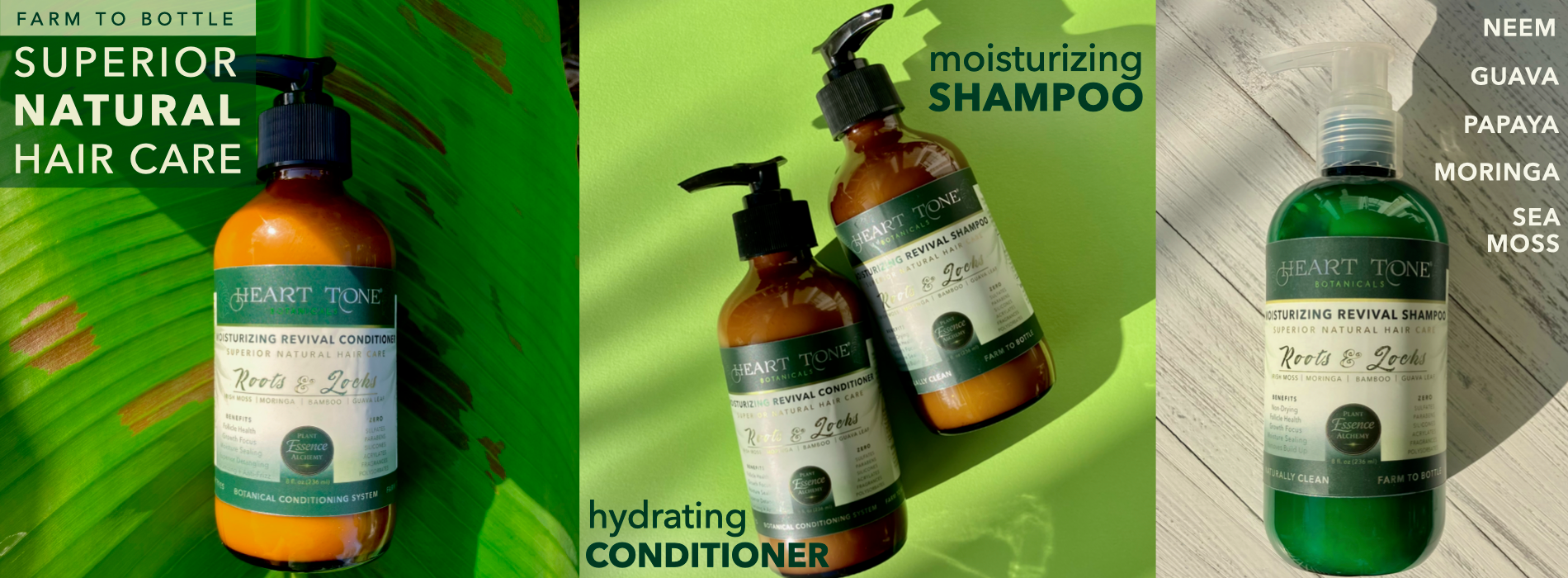
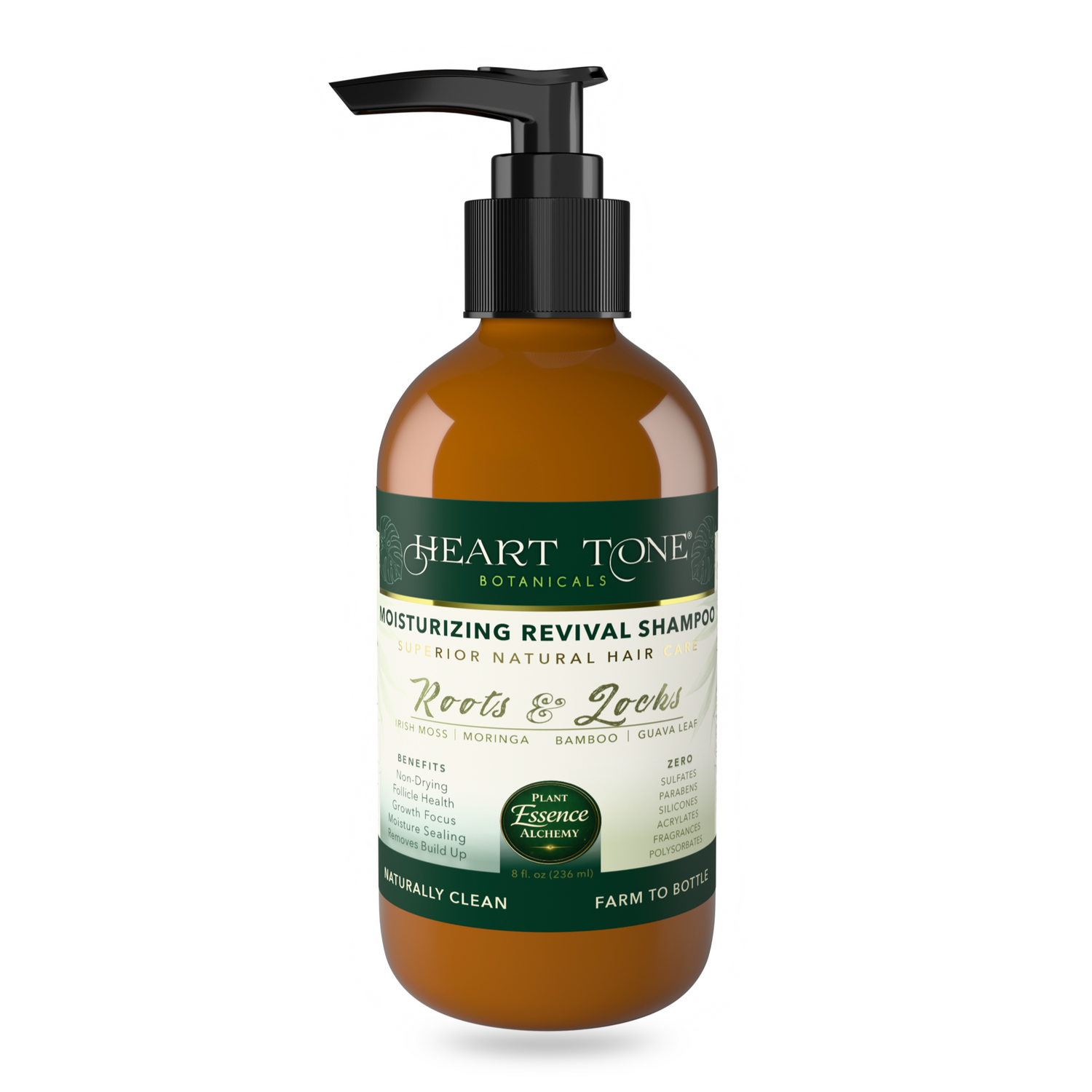
At Heart Tone Botanicals, we formulate with the understanding that most hair problems are caused by what's in your products — not by an absence of expensive technology. Our Roots & Locks Moisturizing Revival Shampoo was built specifically for hair that's been stripped and depleted.
It uses gentle plant-derived cleansers instead of harsh sulfates, botanical humectants and oils to replenish moisture as it cleans, and nothing that's going to leave residue or synthetic coating behind. It's not trying to simulate moisture with silicones — it's working with your hair's natural moisture cycle.
Pair it with our Roots & Locks Moisturizing Revival Conditioner, which delivers deeper conditioning — smoothing the cuticle, adding slip for detangling, and sealing the moisture the shampoo replenished. Together they form a complete wash-day system for dry, thirsty hair.
Browse the full hair care collection if you're building a routine from scratch or want to see everything we carry for scalp and strand health.
What About Deep Conditioning?
If your hair is severely dry — to the point where it breaks easily or has a rough, sandpaper texture — a weekly shampoo/conditioner routine may not be enough on its own. Deep conditioning treatments (left on for 20–30 minutes under a shower cap or heat) penetrate further than a standard rinse-out conditioner. Look for treatments with shea butter, avocado oil, or ceramides for the most reparative effect.
The goal is always the same: get moisture in, keep moisture in. A moisturizing shampoo is the foundation of that process — the step that determines whether everything after it works or fights an uphill battle.
Common Mistakes That Undermine Dry Hair Care
- Using dry shampoo as a substitute for washing. Dry shampoo absorbs oil but doesn't clean. Buildup from over-relying on it can block the scalp and worsen dryness long-term.
- Applying too much product. More doesn't mean better. Overloading hair with oils or leave-ins creates buildup that clogs the cuticle and makes hair look greasy without adding real moisture.
- Skipping heat protection. If you're heat styling dry hair without protection, you're evaporating the moisture you just worked to put back in.
- Switching products constantly. Hair takes 4–6 weeks to fully respond to a routine change. Rotating products every few weeks means you never know what's actually working.
The Takeaway
Dry hair is almost always a moisture-in, moisture-out problem — and it almost always starts in the shower. A shampoo that cleans without stripping, combined with consistent conditioning and a slightly less frequent wash schedule, is the foundation of genuinely healthier hair.
Natural formulations, done well, solve this without relying on synthetic coatings that create the illusion of moisture without the reality. If you haven't tried a truly botanical shampoo, your hair likely hasn't had a fair chance to recover.
Start with the Roots & Locks Moisturizing Revival Shampoo — and give it at least a month. The results are usually quieter than a marketing promise, and more lasting.

Leave a comment
This site is protected by hCaptcha and the hCaptcha Privacy Policy and Terms of Service apply.