

If you've spent more than five minutes in the toothpaste aisle — or down a parenting rabbit hole at 11pm — you know the confusion is real. Natural toothpaste for kids sounds simple enough. But once you start reading labels, the ingredient names blur together and the marketing claims start to contradict each other.

This guide cuts through the noise. We'll cover what actually matters in a kids' natural toothpaste, which ingredients you want, which ones you don't, and what makes fluoride-free formulas a legitimate choice for many families.
Why Parents Are Choosing Natural Toothpaste for Kids
The shift toward fluoride-free, natural toothpaste for children isn't a fringe trend — it's a response to real questions parents are asking:
- What happens when my toddler swallows toothpaste? (Spoiler: they always do.)
- Is fluoride safe in the quantities found in standard toothpaste?
- Do SLS and artificial dyes need to be in my child's mouth twice a day?
These are fair questions. And the answer isn't "fluoride is poison" — it's more nuanced than that. The real reason parents move toward natural kids' toothpaste is control. Control over what goes into developing systems. Control over what's absorbed through sensitive oral tissue. And a desire to introduce healthier daily habits early.
The good news: there are genuinely excellent natural options — formulas that clean effectively, protect enamel, and taste good enough that brushing actually happens.
What to Look for in a Natural Toothpaste for Kids
1. Hydroxyapatite (the smart fluoride alternative)
Hydroxyapatite is the mineral that makes up roughly 97% of tooth enamel and 70% of dentin. When it's used in toothpaste — particularly in nano or spherical form — it works by filling in microscopic surface imperfections, supporting remineralization, and creating a protective layer on enamel.
Crucially for kids: hydroxyapatite is biocompatible and considered safe if swallowed. That's not something you can say about fluoride, which is why fluoride toothpaste carries a "keep out of reach of children" warning and instructions to call Poison Control if swallowed in excess. Hydroxyapatite sidesteps that concern entirely.
Multiple studies — including research published in the Journal of Clinical Dentistry — show nano-hydroxyapatite is comparable to fluoride for enamel protection in children. It's now used in kids' toothpastes from premium natural brands across the US, Canada, and Europe.
2. Xylitol
Xylitol is a natural sugar alcohol found in birch trees, corn, and various fruits. For oral health, it works by starving Streptococcus mutans — the primary cavity-causing bacteria — of the sugars it needs to multiply and produce acid.
In kids' natural toothpaste, xylitol serves a dual purpose: it gently supports a healthy oral environment and it makes the paste palatable enough that children will actually use it. It tastes mildly sweet without feeding the bacteria that cause cavities.
Recommended dose for meaningful oral health benefit is about 6–10g of xylitol per day across all sources. A toothpaste that includes it is a good start.
3. Gentle abrasives
Kids' enamel is thinner and softer than adult enamel. That means abrasive cleaning agents need to be genuinely gentle. Look for:
- Calcium carbonate — mild, effective, derived from chalk or limestone
- Fine baking soda — low-abrasion, naturally alkaline
- Fine hydrated silica — gentle polisher used in most premium pastes
Avoid anything marketed as "extra whitening" for kids — those formulas typically use more aggressive abrasives that aren't appropriate for developing teeth.
4. Soothing botanicals
Aloe vera, coconut oil, and vegetable glycerin are common in quality natural kids' toothpastes. They help with texture, moisture, and mild cleansing without harsh foaming agents. Some formulas also include calendula or chamomile for their soothing properties on sensitive gum tissue.
5. SLS-free
Sodium lauryl sulfate (SLS) is a foaming agent added to most conventional toothpastes to create lather. The foam itself does nothing for cleaning — it's purely psychological. But SLS is known to irritate oral mucosa, disrupt the mouth's natural protective barrier, and in some people, trigger canker sores.
For children with sensitive gums, teething toddlers, or kids who already experience mouth sensitivity, SLS-free is the right call. Most natural kids' toothpastes omit it entirely.
Ingredients to Avoid in Kids' Natural Toothpaste
Not all "natural" toothpastes are created equal. Watch out for:
- Artificial dyes and colorants — Blue 1, Red 40, and similar dyes are unnecessary and flagged by pediatric health organizations as worth avoiding in young children
- Artificial sweeteners — Aspartame and saccharin show up in some "natural" formulas despite having no business in a children's product. Xylitol, erythritol, and stevia are far better options
- Parabens — Preservatives that have raised enough questions about hormonal interference that most quality brands have dropped them
- Propylene glycol — A solvent commonly used in antifreeze; not something that needs to be in toothpaste, period
- Titanium dioxide nanoparticles — Used for whiteness; avoided by several European regulatory bodies in food products for children
- Strong essential oils — Clove, cinnamon, and eucalyptus are powerful antimicrobials, but they can be irritating at higher concentrations in very young children. Use with caution for toddlers; fine for older kids
Age-by-Age Guide: What Kids Actually Need
Babies and toddlers (under 2 years)
Before the first tooth: a clean damp cloth or soft finger brush. Once teeth emerge, a grain-of-rice amount of toothpaste — fluoride-free, definitely safe-if-swallowed, very short ingredient list. Toddlers swallow most of what goes in their mouths. This is not negotiable.

Ages 2–5
Pea-sized amount. Supervision required. Fluoride-free formulas with hydroxyapatite and xylitol are appropriate and effective. Avoid strong mint flavors — many kids in this range prefer mild fruit or bubblegum flavors, which is fine as long as the sweetener is xylitol or erythritol, not sugar or artificial alternatives.
Brushing should happen twice daily, ideally with a soft-bristled brush. If you're fighting over brushing: let them choose the brush, choose the flavor, and control the timer. Make it theirs.
Ages 6–12
Kids in this range are losing baby teeth and growing permanent ones — a period when enamel health actually matters most. They can usually spit reliably now, which expands options. Natural toothpastes with stronger botanical ingredients (colloidal silver, zinc citrate, theobromine) become appropriate here.
If your child is in orthodontic treatment: stick to fluoride-free gentle formulas (hydroxyapatite-based) and add xylitol gum or mints to the routine — braces create more plaque traps and the extra bacterial support helps.
What Makes Living Crystal Toothpaste Different
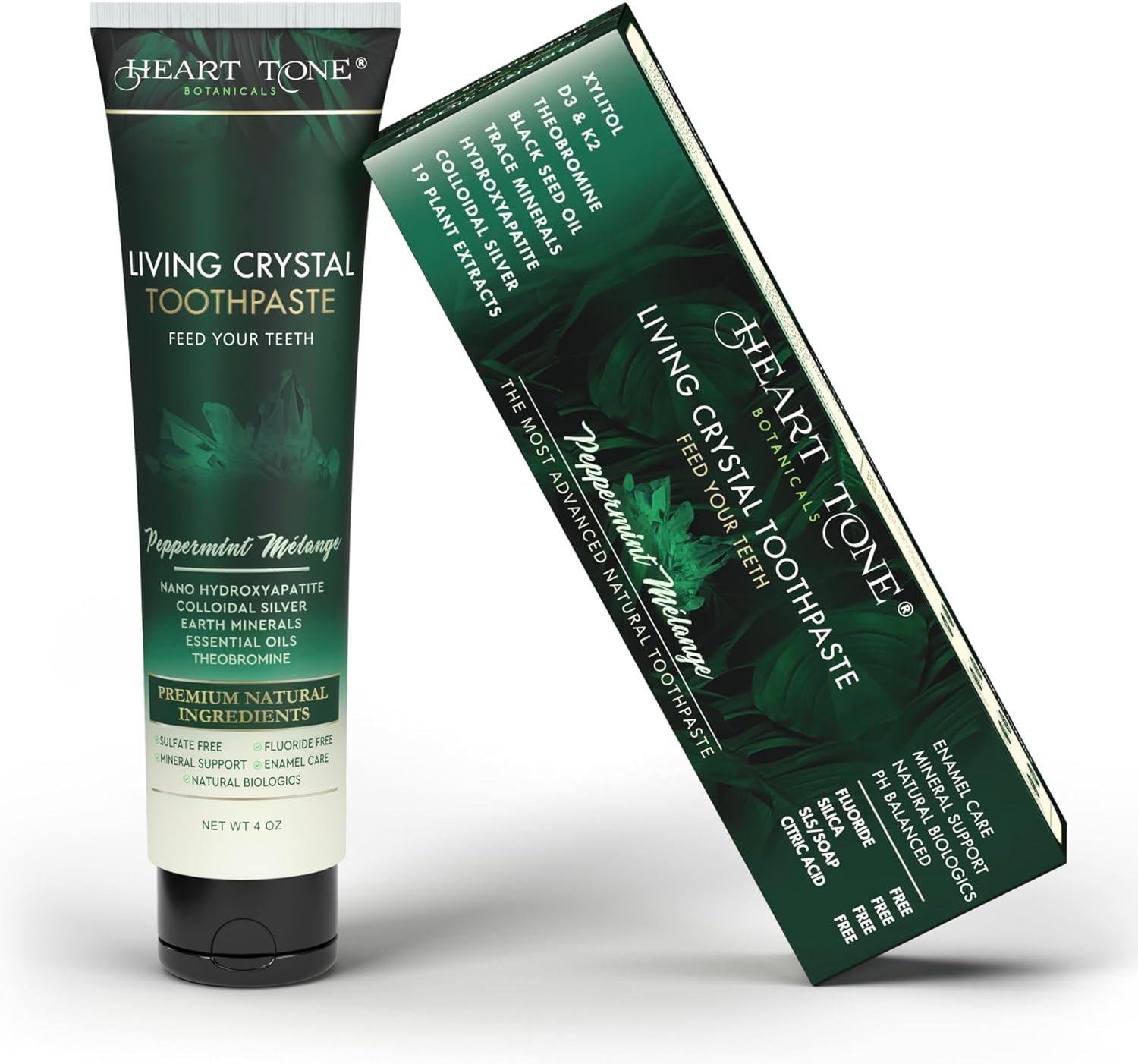
Most natural toothpastes designed for families stop at xylitol and a few botanical extracts. Living Crystal Toothpaste goes further — and that's not a marketing claim, it's a formula difference.
The base includes spherical hydroxyapatite for enamel remineralization, theobromine (a naturally occurring compound shown to support enamel hardening), and colloidal silver for antimicrobial support — all without fluoride, SLS, artificial dyes, or synthetic preservatives.
It's made on a biodynamic farm in Vero Beach, Florida, with 30+ botanical extracts. The flavor is clean mint — not a candy-sweet children's flavor — so it's more appropriate for school-age kids than toddlers. But for families with older children (7+) who want one high-quality formula the whole family can use, it's worth knowing about.
We also offer a Living Crystal sample if you want to try it before committing.
For the complete system — toothpaste + rinse — pair it with our Restorative Mouth Rinse, which is alcohol-free and formulated with colloidal silver and botanical actives. Alcohol-free is essential for kids, and the rinse delivers it.
A Note on the Fluoride Debate
We're not anti-dentist, anti-science, or anti-fluoride as a concept. Fluoride has a strong track record for cavity prevention, particularly in communities with limited dental care access.
But the context matters. Many children today live in areas with fluoridated water. They eat and drink other fluoride sources throughout the day. The risk of fluorosis — white spots on permanent teeth caused by excess fluoride exposure during development — is real, and it primarily affects children under 8.
Choosing a high-quality fluoride-free formula with hydroxyapatite and xylitol isn't rejecting science. It's applying it thoughtfully. Many pediatric dentists now recommend exactly this approach for young children, particularly those in fluoridated water areas who are already getting their baseline exposure.
Talk to your child's dentist. Show them the ingredient list. A good one will engage with you on the evidence rather than dismiss the conversation.
The Bottom Line
The best natural toothpaste for kids is one your child will actually use — twice a day, every day, without a battle. Getting the ingredients right matters. So does getting the flavor right. And making it a habit they own, not one they dread.
Look for: hydroxyapatite, xylitol, SLS-free, no artificial dyes, safe-if-swallowed for young children.
Avoid: SLS, artificial sweeteners, parabens, artificial dyes, propylene glycol.
For the whole family — or for older children who've grown into real oral care habits — explore the Heart Tone Botanicals oral care collection. Everything is fluoride-free, handcrafted, and made with the same standard we'd hold for our own families.

Leave a comment
This site is protected by hCaptcha and the hCaptcha Privacy Policy and Terms of Service apply.