

If you have curly hair, you already know the struggle: you rinse out your shampoo, and instead of bouncy, defined curls, you're left with a frizzy, dry, stripped-out mess. The culprit? More often than not, it's your shampoo — specifically the harsh detergents, synthetic additives, and pore-clogging silicones hiding inside it.

The good news: switching to a genuinely natural shampoo for curly hair can change everything. Not in a vague, marketing-speak kind of way — in a measurable, curl-by-curl way. This guide breaks down exactly what to look for, what to avoid, and how to build a wash routine that actually works for your curls.
Why Curly Hair Needs Different Shampoo
Here's the science most shampoo brands don't want you to think about: curly hair is structurally different from straight hair. The twists and bends in the hair shaft make it harder for your scalp's natural oils to travel down the length of the strand. That means curly hair is naturally drier than straight hair — and it needs to be treated accordingly.
Standard shampoos are typically formulated for the average (read: straight) hair type. They use aggressive surfactants — most commonly sodium lauryl sulfate (SLS) or sodium laureth sulfate (SLES) — that are incredibly effective at removing oil and dirt. Too effective, in fact. For curly hair, that deep-cleaning stripping action removes the very moisture curls depend on to stay defined and frizz-free.
The result? A wash cycle that damages what it's supposed to clean. Every time you shampoo with a sulfate-heavy formula, you're essentially pushing your curls further into the frizz-dry-breakage spiral.
The 5 Things to Look For in a Natural Shampoo for Curly Hair
1. Sulfate-Free Cleansers
This is non-negotiable. A truly curl-friendly, natural shampoo should be completely free of SLS and SLES. Instead, look for plant-derived cleansers like coco-glucoside, decyl glucoside, or sodium cocoyl isethionate. These mild surfactants clean effectively without stripping your hair's natural moisture barrier. If you see any variation of "lauryl sulfate" or "laureth sulfate" on the label — put it back.
2. Humectant-Rich Botanicals
Humectants attract and hold moisture in the hair shaft. For curly hair, this is critical. Look for ingredients like aloe vera, vegetable glycerin, and panthenol (vitamin B5). Aloe vera in particular is a curly hair hero — it's naturally pH-balanced, anti-inflammatory, and provides slip that makes curls easier to detangle after washing.
3. Lightweight Plant Oils
Not all oils are created equal for curly hair. Heavy oils like castor oil or coconut oil (as a rinse-off in shampoo) can weigh fine curls down. But lighter botanical oils — moringa, jojoba, argan, marula — deliver moisture and shine without buildup. These oils also help smooth the hair cuticle, which is what gives curls that defined, frizz-free look after wash day.
4. Amino Acids and Plant Proteins
Curly hair tends to have more open, porous cuticles — especially if it's been heat-styled or chemically processed. Amino acids (often derived from rice, pea, or quinoa) help fill in gaps along the hair shaft, temporarily strengthening and smoothing the cuticle. A natural shampoo that includes these ingredients gives you cleansing and light repair in one step.
5. No Heavy Silicones or Mineral Oil
Dimethicone and other heavy silicones coat the hair shaft and create the illusion of moisture — but over time, they build up, blocking actual moisture from penetrating. If you're using a silicone-heavy shampoo or conditioner, your curls may feel soft immediately after washing, but progressively drier and limper over days. Natural, silicone-free formulas let your hair breathe and absorb moisture the way it's supposed to.
The HTB Roots & Locks Approach
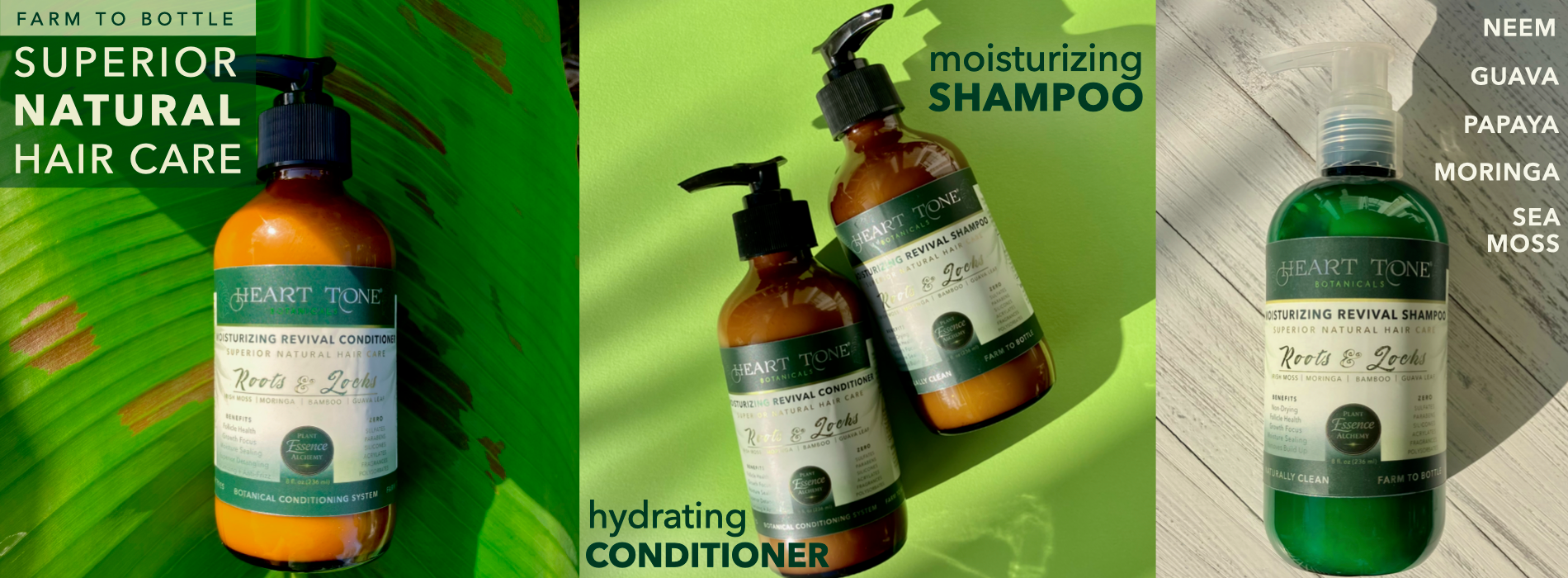
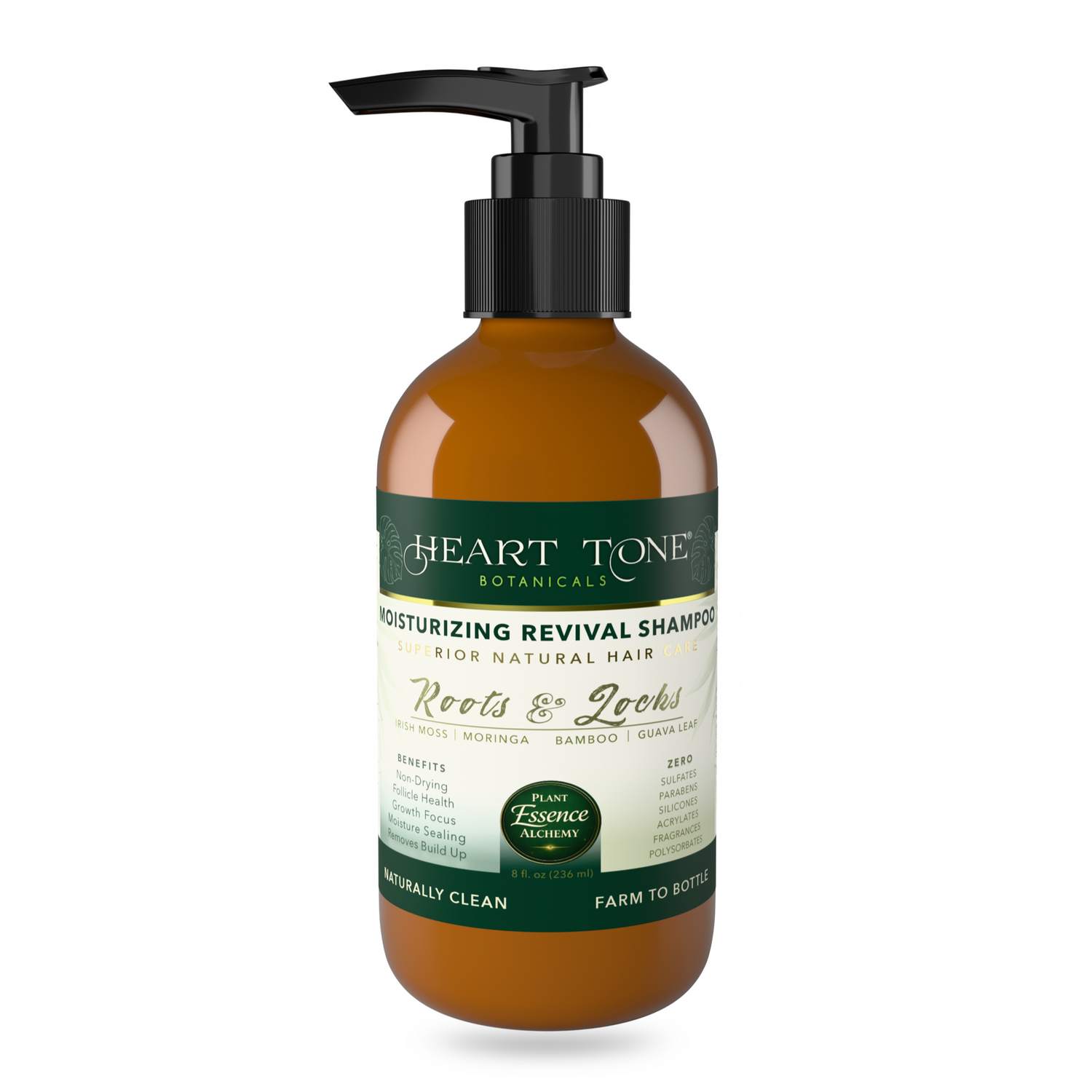
At Heart Tone Botanicals, the Roots & Locks Moisturizing Revival Shampoo was built from the ground up around these principles. It's sulfate-free and formulated with farm-sourced botanicals — the kind of whole-plant ingredients that work with your hair's natural biology instead of against it.
The formula includes moringa leaf extract (a nutrient-dense botanical with natural cleansing and scalp-nourishing properties), papaya leaf for gentle enzymatic action, and a blend of plant-based humectants that leave curls hydrated and defined — not stripped and puffy. No synthetic fragrances. No parabens. No mystery chemicals.
Pair it with the Roots & Locks Moisturizing Revival Conditioner for a complete wash day routine that keeps curls moisturized from root to tip. The conditioner's botanical oils and amino acid complex provide the slip you need to detangle easily — a huge deal for curly and coily textures — while building long-term moisture retention over time.
How to Wash Curly Hair the Right Way
Even the best natural shampoo won't work miracles if your wash technique is fighting against you. Here's a wash-day method that maximizes results for curly hair:

Step 1: Pre-soak thoroughly. Wet your hair completely with lukewarm (not hot) water for at least 30 seconds before applying shampoo. This softens the cuticle and allows the cleanser to distribute evenly.
Step 2: Apply shampoo to the scalp first. Curly hair doesn't need shampoo focused on the lengths — that's a common mistake. Apply your natural shampoo to your scalp and massage in small circles with your fingertips (not your nails). The rinse water will cleanse the length of your hair as it flows down.
Step 3: Rinse thoroughly. Product buildup is often caused by incomplete rinsing. Take an extra 30 seconds to make sure all shampoo is fully rinsed out before you condition.
Step 4: Condition generously. This is where the real moisture work happens for curly hair. Apply conditioner from mid-shaft to ends, detangle gently with your fingers or a wide-tooth comb while it's in, then rinse with cool water. Cool water seals the cuticle and enhances curl definition.
Step 5: Apply stylers to soaking-wet hair. Curl creams, gels, and leave-ins all work better when applied to drenched hair, while the cuticle is open and absorbing.
How Often Should You Wash Curly Hair?
One of the most common curly hair mistakes is over-washing. Unlike straight hair (which can look oily quickly as oil travels easily down straight strands), curly hair benefits from longer periods between wash days. Most curl types do well with 1–2 washes per week.
Between wash days, you can refresh your curls with water and a small amount of leave-in conditioner or curl refresher spray. This keeps curls hydrated without the repeat surfactant exposure that strips moisture.
If your scalp tends toward oiliness, you might experiment with co-washing (using only conditioner) on some days and shampooing less frequently. A gentle, sulfate-free formula like Roots & Locks makes this easier — because you're not fighting a harsh cleanser, your scalp's oil production tends to regulate more naturally over time.
Signs Your Shampoo Is Wrong for Your Curls
Not sure if your current shampoo is doing more harm than good? Look for these signs:
- Curls feel dry and rough immediately after washing
- More frizz on wash day than on day 2 or day 3
- Scalp feels tight or itchy after shampooing
- Curls lose definition quickly (within hours of drying)
- Hair feels like straw, not silk
- You dread wash day because your hair "never looks good" right after
If any of these sound familiar, the formula is the problem — not your curls. Switching to a genuinely natural, botanical shampoo designed for moisture retention can turn wash day from a chore into a ritual.
The Bottom Line
Your curls don't need more product. They need better product. A natural shampoo for curly hair that's sulfate-free, botanically rich, and genuinely formulated for moisture retention can transform your wash day experience — cleaner scalp, defined curls, less frizz, more moisture.
Explore the full Heart Tone Botanicals natural hair care collection and discover what farm-sourced botanicals can do for your curls. Your best wash day is still ahead of you.

Leave a comment
This site is protected by hCaptcha and the hCaptcha Privacy Policy and Terms of Service apply.