












Why the Shampoo You Choose Matters More When Your Hair Is Color-Treated

If you color your hair — or maintain color regularly — you've probably noticed that not all shampoos feel the same. Some leave hair feeling rough and stripped. Others feel gentle but don't clean well. And most conventional options make trade-offs you don't fully understand until you read the label.
Color processing changes the texture of the hair strand. It can leave hair feeling more porous, more prone to dryness, and more sensitive to harsh ingredients. That's why what you use every wash day matters — not just for how your hair looks and feels today, but for how your color and texture hold up over time.
Here's what to look for — and what to avoid — when shopping for a natural shampoo that's genuinely gentle on color-treated hair.
Start With the Surfactant
Every shampoo cleans through surfactants — the ingredients that lift residue, product buildup, and excess oil from the hair and scalp. But not all surfactants feel the same, and this is especially true for hair that has been chemically processed.
Sulfates like sodium lauryl sulfate (SLS) and sodium laureth sulfate (SLES) are among the most common surfactants in conventional shampoos. They produce a rich, foamy lather — but many people with color-treated, textured, or dry hair find that regular use leaves hair feeling rough, stripped, or prone to visible dryness over time. The stripping sensation comes from how aggressively these surfactants lift oil from the strand.
What to look for instead on a label:
- Coco taurate — a gentle, coconut-derived surfactant with a milder character than conventional sulfates. It produces a lighter, softer lather that leaves hair feeling clean without the tight, stripped sensation.
- Coco betaine — another coconut-derived ingredient that pairs with primary surfactants for a more balanced cleanse and a smoother rinse-out feel.
- No SLS or SLES — when a formula is free of these, that's meaningful information about how it's likely to feel on processed hair over repeated use.
Botanical Ingredients With a Long History in Hair Care
Beyond the surfactant system, what separates a botanical shampoo from a conventional one is the roster of plant-based ingredients behind it. Here are the key ones to recognize when reading a hair care label:
Papaya Leaf Extract
Papaya has been used in traditional botanical personal care across tropical regions for generations. It's one of the most botanically rich leaf extracts used in natural hair formulations and has a long history of inclusion in products designed for dry, textured, or processed hair.
Moringa Leaf Extract
Moringa is among the most historically documented botanicals in traditional personal care. It has a long record of use in hair care formulations across South Asia and Africa, and is valued for the smooth, manageable feel it lends after washing.
Neem Leaf Extract
Neem has been a staple of traditional Ayurvedic personal care for centuries. In hair formulations, it's valued for its distinctive botanical character and its long history of use on the scalp as part of a traditional cleansing routine.
Aloe Leaf Juice Extract
Aloe vera is one of the oldest cosmetic ingredients on record — and one of the most widely used in natural hair care. In a shampoo, it contributes a soothing, non-drying feel to the wash experience, leaving the scalp feeling comfortable and calm rather than tight after rinsing.
Chamomile Extract
Chamomile has been used in hair care formulations in Europe for centuries, traditionally associated with a gentle, calming sensation and a soft cleanse. It's a natural fit for everyday formulas intended for sensitive or chemically processed hair.
Irish Moss Extract
Irish moss (Chondrus crispus) has a long tradition in botanical personal care. In hair formulations, it contributes texture and is associated with leaving hair feeling conditioned and manageable after washing — without the heavy, coated feel that some richer ingredients can produce.
Abyssinian Oil
Derived from the crambe plant, Abyssinian oil has a long history in botanical hair care. It's a lightweight botanical oil known for its smooth, non-greasy feel — a natural fit for shampoo formulas where the goal is a lightweight sensory result without buildup.
What the Label Should Not Contain
Reading the absence of ingredients is just as important as reading what's there. A natural shampoo designed for color-treated hair should be free of:
- Sulfates (SLS, SLES, ammonium lauryl sulfate) — associated with a stripping sensation on repeated use, particularly on processed or dry hair
- Silicones (dimethicone, cyclomethicone, amodimethicone) — these build up on the strand over time and can make hair look dull and weighed down between washes
- Parabens — synthetic preservatives that many consumers prefer to avoid in their personal care routine
- Synthetic fragrances — listed simply as "fragrance" or "parfum," which can mask dozens of undisclosed ingredients
- Artificial colorants — unnecessary in a hair cleansing product, typically listed as FD&C or D&C dyes
When none of these appear on the label, that tells you something about what the formulator was — and wasn't — trying to accomplish.
Pairing Your Shampoo With a Botanical Conditioner
For color-treated hair, using a conditioner that complements your shampoo matters as much as the shampoo choice itself. A well-formulated botanical conditioner brings:
- Organic shea butter — a staple of West African botanical tradition, long used for a rich, nourishing feel on dry or textured hair
- Coconut milk — a traditional ingredient in South Asian and Caribbean hair care, associated with leaving hair feeling soft and manageable after washing
- L-arginine — an amino acid included in modern botanical hair care formulations for its smooth, conditioning character
- No sulfates or silicones — the same label principles that apply to your shampoo apply here too
A well-matched shampoo-and-conditioner pair leaves hair feeling consistently soft and nourished — not just on wash day, but through the days that follow.
A Simple Wash Routine for Color-Treated Hair
If you're switching to a botanical routine, the process is straightforward:
- Use a sulfate-free botanical shampoo. Work gently into the scalp and rinse thoroughly with lukewarm — not hot — water.
- Follow immediately with a botanical conditioner. Focus on the mid-lengths and ends. Leave on for 2–3 minutes before rinsing.
- If your hair is very porous or dry, consider a weekly deep conditioning treatment with a longer processing time.
- Give your routine a few weeks to settle. Hair that's been used to conventional formulas may feel different at first as it adjusts to a gentler cleansing system.
A Formula Built for Color-Treated and Processed Hair
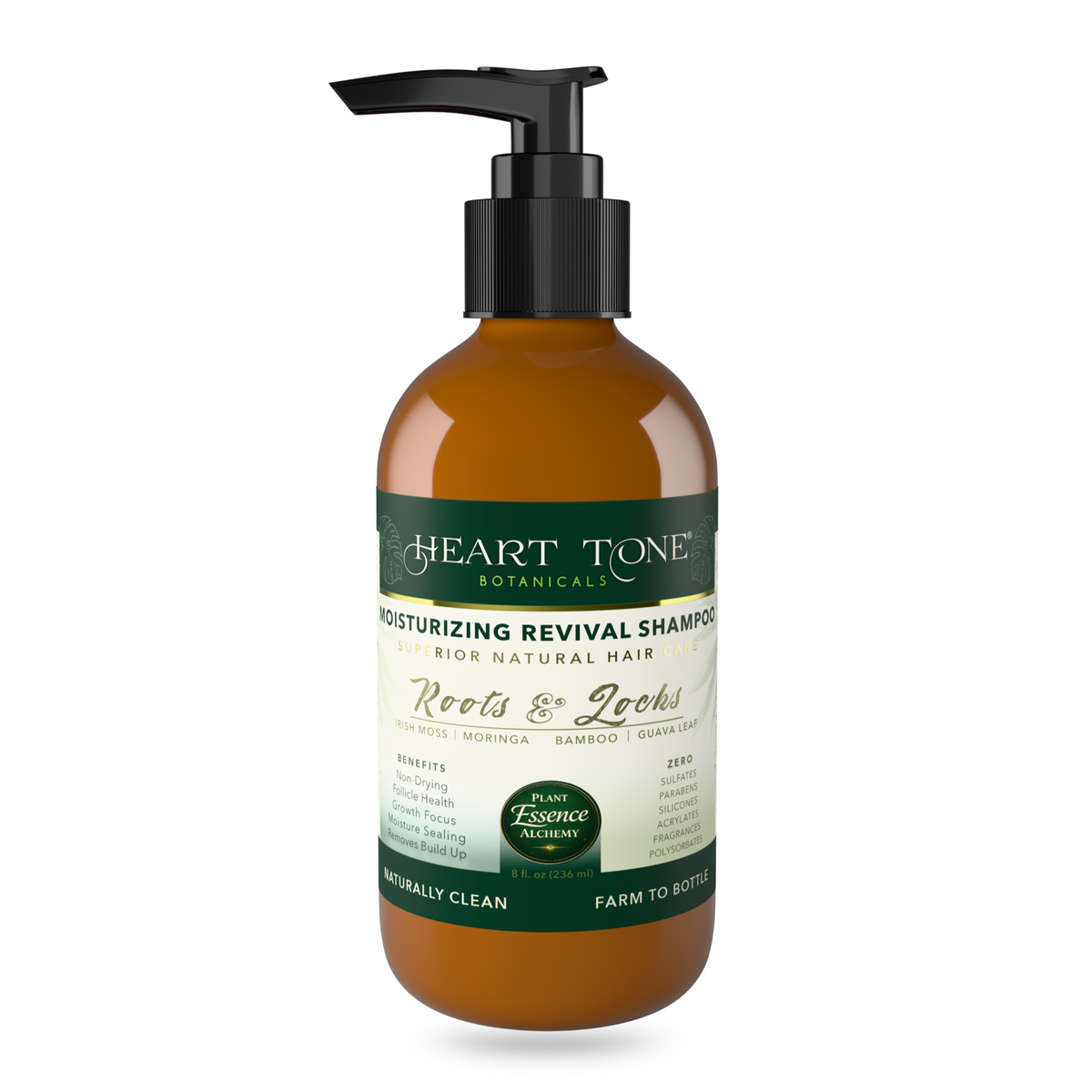
The Roots & Locks Moisturizing Revival Shampoo from Heart Tone Botanicals uses coco taurate and coco betaine as its primary surfactants — free of SLS, SLES, silicones, parabens, and synthetic fragrances. The botanical blend includes papaya leaf, moringa, neem, guava leaf, aloe, chamomile, Irish moss, and Abyssinian oil, alongside clary sage, lavender tea tree, cardamom, and rosemary essential oils.
Pair it with the Roots & Locks Moisturizing Revival Conditioner, which brings organic shea butter, coconut milk, L-arginine, and the same core botanical blend to leave hair feeling soft and conditioned after every wash — without silicones or heavy synthetic ingredients.
Both are made in small batches in Vero Beach, Florida, and are free of sulfates, silicones, parabens, and synthetic fragrances.
The Bottom Line
For color-treated hair, the label is your most important shopping tool. Look for gentle coconut-derived surfactants — not sulfates. Look for botanical ingredients with documented histories of use in traditional hair care. And pay attention to what's not in the formula — no sulfates, no silicones, no synthetic fragrances.
A well-formulated botanical shampoo won't make dramatic claims — but it will leave color-treated hair feeling consistently cleaner, softer, and more manageable with every wash.
Explore the full Heart Tone Botanicals hair care collection →

Leave a comment
This site is protected by hCaptcha and the hCaptcha Privacy Policy and Terms of Service apply.