












Your scalp is skin. That sentence alone changes the way most people think about hair care.
The products you apply to your scalp — shampoos, conditioners, treatments — come into direct contact with living tissue, follicles, and sebaceous glands. If you'd be reluctant to pour your shampoo on your forearm and leave it there for ten minutes, it's worth asking what makes your scalp any different.
More people are extending their clean beauty values from their face and body into their hair care routines. The shift makes sense. The same synthetic sulfates, silicones, and fragrances that draw scrutiny in skin care products show up prominently in mainstream shampoos and conditioners — and the scalp absorbs them just the same.
What Your Scalp Is Actually Doing

The scalp is one of the most vascularized areas of skin on the body. It contains a high density of sebaceous glands, which produce sebum — the natural oil that lubricates the scalp and gives hair its natural sheen. It's also home to hair follicles, which are embedded deeper in the dermis than on most other areas of skin.
A healthy scalp typically feels comfortable, non-itchy, and balanced — not overly dry and not visibly oily in an uncomfortable way. Disrupting that balance through harsh cleansers or occlusive, coating ingredients is one of the most commonly reported results of using conventional hair care products long-term.
What Conventional Shampoos Often Contain
Most conventional shampoos are built around ammonium lauryl sulfate, sodium lauryl sulfate, or similar sulfate-based cleansers. These are effective at removing oil — very effective. The issue is that they tend to strip the scalp's natural sebum entirely, which can leave the scalp feeling tight, dry, and uncomfortable after washing.
Silicone conditioners create a separate category of concern. Cyclopentasiloxane, dimethicone, and other silicones coat the hair shaft with a synthetic film. The hair looks smooth and glossy in the short term, but that film tends to build up over time, preventing moisture from reaching the hair shaft and requiring increasingly aggressive cleansers to remove it.
For people who prefer to know what they're putting on their scalp and hair, both categories are worth understanding before selecting a routine.
Botanical Ingredients Traditionally Associated With Scalp Care
Traditional hair care practices across South and Southeast Asia, the Caribbean, and West Africa have long incorporated plant-based ingredients into scalp rituals. Here's what some of those botanical traditions look like and why they've persisted.
Neem leaf: Neem is one of the most recognized plants in Ayurvedic botanical practice. It has a centuries-long history of use in traditional scalp and hair care rituals across South Asia. The scent is distinctly earthy — herbal and slightly pungent — which is why it's typically balanced with lighter botanical aromas in formulas.
Moringa: Moringa has been used in traditional botanical care across East Africa and South Asia for generations. It has a long history in hair and scalp applications, and its lightweight character makes it well-suited to cleansing and conditioning formats.
Aloe vera: Aloe has a centuries-long record of use in hair and scalp care traditions across tropical regions. It's known for the cool, refreshing sensation it produces on the scalp — and because it is primarily water-based, it doesn't leave the heavy, coated feeling that some conditioning ingredients do.
Papaya leaf extract: Used in traditional botanical practices across tropical regions, papaya leaf has a long history in hair care rituals. It contributes a gentle, fresh quality to formulas where it appears.
Irish moss (sea moss): Irish moss is a sea-harvested botanical with a rich emollient character. It has a history of use in traditional coastal botanical practices, particularly in the Caribbean, where it appears in both food and body care traditions.
Chamomile: Chamomile is one of the most recognizable botanical ingredients in European hair care tradition. It's known for its delicate, apple-like scent and its gentle, comfortable feel when used in rinse-off applications.
Rosemary CO2: Rosemary has one of the longest recorded histories in European botanical hair care, appearing in traditional formulations going back centuries. Its distinctly herbal aroma makes it easy to identify in a formula, and it pairs well with clary sage, cardamom, and vetiver.
Clary sage: Clary sage has a long history in European botanical tradition, where it was commonly used in hair care applications. Its scent — herbaceous, slightly floral — balances well in multi-botanical formulas.
Building a Botanical Scalp Routine
A botanical scalp routine doesn't have to be complicated. The basics are the same regardless of what products you use:
1. Cleanse with something that's actually gentle. Look for cleansers that leave the scalp feeling clean but not stripped. Coco-derived surfactants like coco taurate and coco betaine are gentler alternatives to sulfates and have become the standard in natural hair care formulas.
2. Condition without silicones. A silicone-free conditioner allows moisture to reach the hair shaft rather than just coating the outside. The slip and manageability you want from a conditioner can come from botanical emollients instead — shea butter, Irish moss, and plant-derived conditioning agents all deliver detangling and softness without buildup.
3. Let the scalp breathe. Avoiding heavy, synthetic oils and petroleum-based ingredients on the scalp allows the sebaceous glands to regulate naturally. Lighter botanicals sit on the skin more comfortably and are easier to cleanse away at the next wash.
4. Give the routine time. Transitioning from conventional to botanical hair care often comes with a brief adjustment period, particularly if silicone buildup needs to clear. Allow three to four weeks before drawing conclusions about how the formula is working for your hair.
A Botanical Formula Designed for This
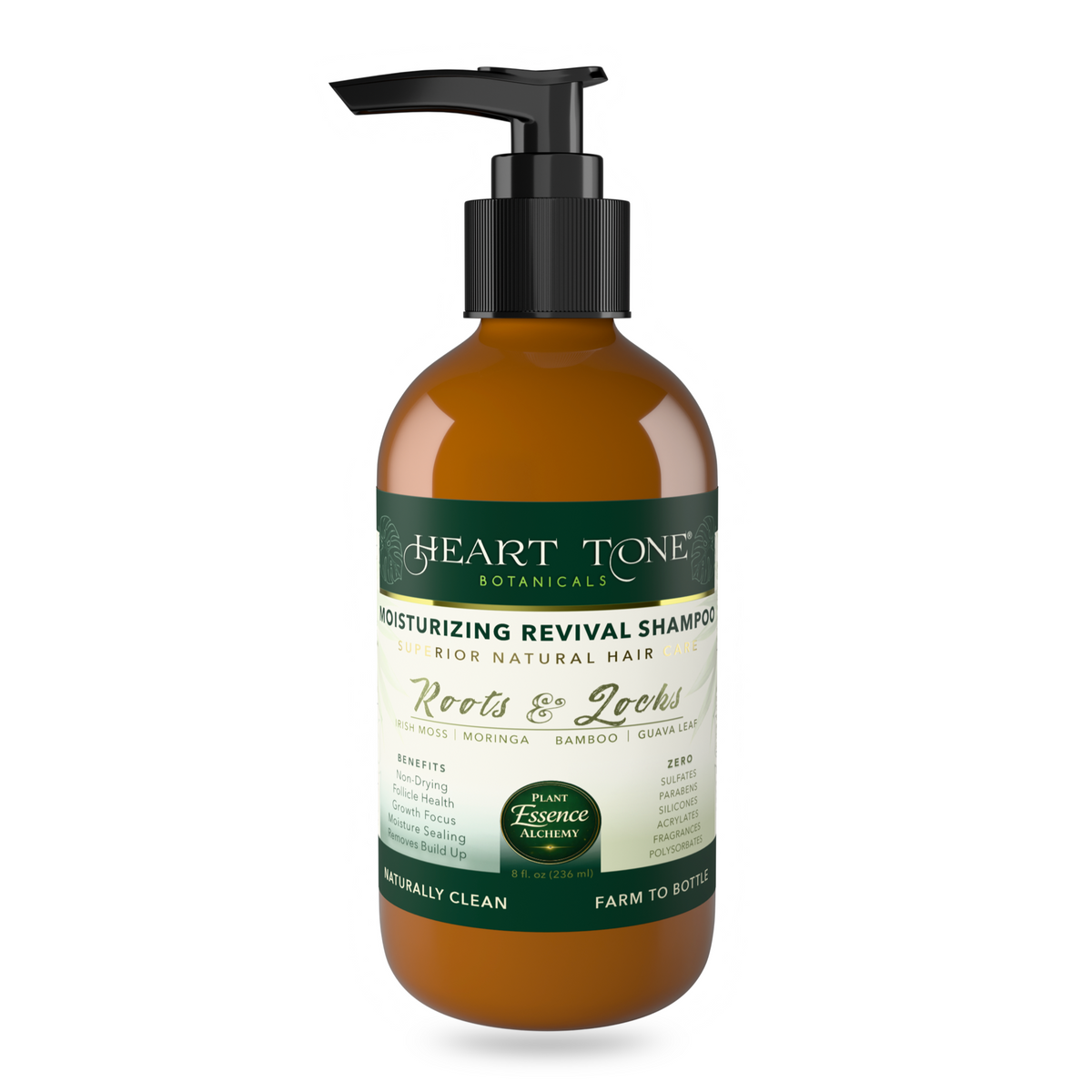
The Roots & Locks Moisturizing Revival Shampoo is formulated around a five-botanical extract base that includes papaya leaf, moringa leaf, neem leaf, guava leaf, and aloe — ingredients drawn from traditional hair care practices across tropical and subtropical regions. The cleansing system uses coco taurate and coco betaine rather than sulfates, and the formula includes Irish moss, chamomile, daikon seed extract, and pea peptide alongside a botanical essential oil blend of rosemary, clary sage, cardamom, myrtle, and vetiver.
The Roots & Locks Moisturizing Revival Conditioner is silicone-free, built on organic shea nut butter, coconut milk, and Irish moss with the same five-botanical extract base. Conditioning agents are plant-derived — brassica alcohol, cetyl alcohol, and glyceryl oleate provide slip and softness without synthetic film-formers. The botanical essential oil profile matches the shampoo: rosemary, clary sage, myrtle, cardamom, thyme, and vetiver.
Both are sulfate-free, silicone-free, and formulated without synthetic fragrance.
Browse the full Hair Care collection to see the complete line.
The Bottom Line
Scalp care and hair care are the same conversation. The scalp is living skin, and the products you apply to it every week deserve the same scrutiny you'd apply to anything else in your routine. Botanically formulated alternatives to conventional shampoos and conditioners exist — and they don't require giving up the feel or performance you're used to.
Whether you're transitioning away from sulfates for the first time or looking to understand what's actually in your hair care products, starting with clean botanical formulas and realistic expectations about the adjustment period is the most straightforward path forward.

Leave a comment
This site is protected by hCaptcha and the hCaptcha Privacy Policy and Terms of Service apply.