












Retinol has been the gold standard of mature-skin skincare for decades. Dermatologists swear by it. Beauty editors name-drop it constantly. And yet — millions of people can't use it. Dry patches, peeling, redness, and that dreaded "retinol purge" send sensitive-skin shoppers running. Pregnant women are advised to avoid it entirely. And even those who tolerate it find themselves stuck in a complicated dance of frequency adjustments and SPF vigilance.
Here's the good news: botanical science has quietly caught up. The best natural retinol alternatives today aren't just consolation prizes for people who can't handle the real thing — they're genuinely effective, beautifully tolerated, and in many cases, smarter choices for your skin's long-term health.
This guide covers what those alternatives are, how they work, and how to build a retinol-free routine that actually delivers results.
Why People Are Ditching Retinol (Even When It Works)

Conventional retinol — a synthetic form of vitamin A — works by accelerating cellular turnover. That's the source of its mature-skin power and its side effects. Faster turnover means temporarily compromised skin skin nourishment, which leads to the flaking, dryness, and sensitivity most users experience during the adjustment period.
For sensitive skin types, reactive skin skin, or anyone going through hormonal fluctuations (postpartum, perimenopause), that barrier disruption can be genuinely damaging — not just uncomfortable. And beyond the skin effects, conventional retinol is notoriously unstable, degrading quickly when exposed to light or air, which is why it requires dark packaging and careful storage.
Natural retinol alternatives sidestep these issues. They work with your skin's biology rather than forcing rapid turnover — and many of them do far more than smooth fine lines.
The Best Natural Retinol Alternatives (Backed by Actual Evidence)
Bakuchiol: The Botanical Breakthrough
If you've heard one name in the natural retinol conversation, it's bakuchiol (pronounced buh-KOO-chee-ol). Derived from the seeds of the Psoralea corylifolia plant — used for centuries in Ayurvedic medicine — bakuchiol has earned its status as the most evidence-backed natural retinol alternative available.
A landmark clinical study published in the British Journal of Dermatology found that bakuchiol performed comparably to retinol in reducing the appearance of fine lines, wrinkles, and hyperpigmentation — with significantly less irritation. It stimulates retinol-like gene expression without the inflammatory response that conventional retinol triggers.
It's also photostable (safe to use day and night), and unlike retinol, it doesn't thin the skin barrier over time — it supports it. For sensitive skin types, this distinction is everything.
Rosehip Seed Oil: Vitamin A the Way Nature Packaged It
Cold-pressed from the seeds of wild rose hips, rosehip seed oil is rich in trans-retinoic acid — a naturally occurring form of vitamin A — alongside vitamin C, vitamin E, and essential fatty acids including linoleic and linolenic acid.
This combination makes it uniquely effective for:
- Fading hyperpigmentation and sun spots — the vitamin A and C work synergistically on melanin regulation
- Softening the look of fine lines — the essential fatty acids support ceramide synthesis and plump the skin
- Strengthening the skin barrier — linoleic acid is a key component of healthy, resilient skin
- helping skin look calmer and post-inflammatory marks — especially relevant for breakout-prone and sensitive skin
Unlike synthetic retinol, rosehip oil nourishes as it works. There's no adjustment period, no barrier disruption — just steady, cumulative improvement with consistent use.
Sea Buckthorn: The Vitamin A Powerhouse You Haven't Heard Enough About
Sea buckthorn berry oil is one of the most nutrient-dense botanical oils in skincare. It contains extraordinarily high concentrations of carotenoids (including beta-carotene, which converts to vitamin A in the skin), vitamin C (reportedly up to 15 times the concentration of oranges), and omega-7 fatty acids — a rare traditionally used lipid that's particularly protective for mature and stressed skin.
The result is a plant oil that brightens, repairs, and defends — making it an ideal nighttime ingredient for anyone seeking mature-skin results without synthetic actives.
Plant-Derived Peptides: The Gentle toning Alternative
Peptides are short chains of amino acids that signal the skin to produce collagen, elastin, and other structural proteins. While they work differently than retinol, their end results — firmer texture, smoother appearance, reduced depth of wrinkles — overlap significantly.
Botanical peptide formulas are increasingly positioned as the gentlest, most barrier-supportive path to long-term skin renewal. They work with your skin's repair processes rather than forcing artificial turnover, making them ideal for daily use without the risk of over-exfoliation.
Carrot Seed Oil: Antioxidant-Rich Vitamin A Support
Often overlooked, cold-pressed carrot seed oil offers a rich source of beta-carotene and antioxidants. It supports cellular regeneration, protects against oxidative stress, and brings a warming, skin-conditioning quality to formulas — particularly in nighttime creams where deep nourishment is the goal.
How to Build a Retinol-Free Mature-Skin Routine
The power of natural retinol alternatives comes from layering. No single ingredient replaces retinol — but the right combination delivers comparable results with none of the drawbacks. Here's a framework:
Morning Routine
- Gentle botanical cleanser — don't strip your barrier at the start of the day
- Hydrating face serum — plant actives like hyaluronic alternatives and antioxidants prep your skin for the day
- Lightweight moisturizer — seals in hydration and supports skin nourishment
- Sunscreen — non-negotiable with any Mature-Skin Routine, natural or not
Evening Routine
- Cleanse thoroughly — remove the day's oxidative stressors
- Toning mist — a hydrosol or botanical toner rebalances skin pH and preps for actives
- Active facial serum — target fine lines, pigmentation, and texture with your botanical actives (bakuchiol, rosehip, peptides)
- Rich nighttime face cream — this is where deep repair happens; look for shea butter, sea buckthorn, carrot seed, and plant oils that work while you sleep
How Heart Tone Botanicals Approaches This
At Heart Tone Botanicals, every product in the facial care collection is built around this philosophy: give your skin the actives it recognizes, in forms it can use, without compromising the barrier that holds everything together.
A few standouts for a natural retinol-free Mature-Skin Routine:
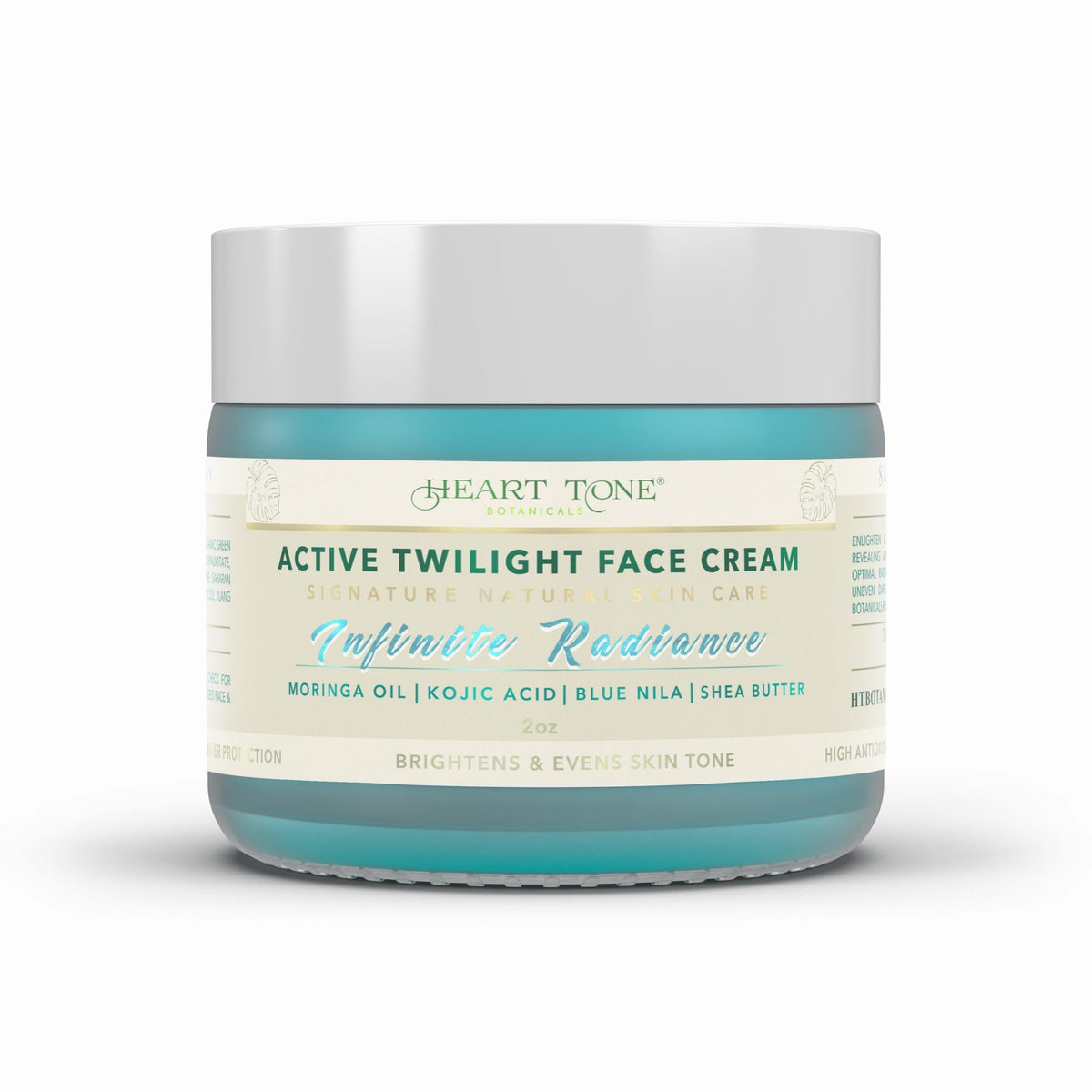
Active Twilight Face Cream
Our PM nighttime renewal cream is formulated specifically for the skin's overnight repair window. Ultra-rich raw shea butter anchors deep moisture while botanical actives work to restore elasticity and luminosity while you sleep. If you're making the switch from retinol night creams, this is your replacement — and then some.
Dynamic Hydrogel Face Serum
Built at the intersection of botany and holistic science, this serum targets the exact concerns that drive people toward retinol in the first place: fine lines, UV-stressed skin, loss of elasticity, dull complexion, and dark marks. It delivers that targeted support without synthetic retinoids, making it appropriate for sensitive skin and year-round daily use.
Complete Daily Face Moisturizer
A botanical daily moisturizer that goes beyond surface hydration — supporting the skin's structure over time. The kind of everyday foundation that makes the rest of your routine more effective.
Island Mist Toning Facial Elixir Hydrosol
Used between cleansing and serum, this botanical hydrosol rebalances skin pH, preps the barrier for actives, and delivers a burst of plant-sourced micronutrients. It's the step most retinol routines are missing — and one of the reasons botanical routines can feel better than conventional ones.
Botanical Skin Gel
A versatile, lightweight botanical gel that layers beautifully under heavier formulas — great for targeting specific areas of concern without overloading skin.
For those ready to commit to a complete routine, the AM/PM Face System and Complete Face Ritual bring the morning and evening protocols together as thoughtfully curated sets.
What to Realistically Expect
Natural alternatives are not slower versions of retinol — they're different tools with a different risk profile. Here's an honest benchmark:
- Weeks 1–2: Improved hydration, softness, and overall skin quality. No adjustment period, no purge.
- Weeks 3–6: Noticeable texture refinement, evening of tone, and early improvement in fine line depth with consistent use.
- Month 2 and beyond: Cumulative results in elasticity, firmness, and luminosity. This is where botanical actives shine — steady, sustainable improvement without the boom-bust cycle of aggressive retinol use.
The key, as with any skincare approach, is consistency. Botanical actives build up. The skin responds to steady nourishment more reliably than to forced acceleration.
The Bottom Line
The question isn't really "natural retinol alternative vs. retinol." It's a question of what your skin actually needs: a synthetic signal to turn over faster, or the right botanical support to regenerate, protect, and thrive on its own terms.
For most people — and especially for sensitive, pregnant, or retinol-reactive skin — the botanical path is not a compromise. It's a smarter approach.
Explore the full Heart Tone Botanicals facial care collection to find the combination that works for your skin.

Leave a comment
This site is protected by hCaptcha and the hCaptcha Privacy Policy and Terms of Service apply.