












If you've spent any time reading skincare labels or browsing clean beauty content, you've probably come across the phrase natural retinol alternative. It shows up on product pages, in ingredient guides, and in just about every conversation about aging-focused skincare. But what does it actually mean — and what are you really looking at when you see bakuchiol, rosehip oil, or sea buckthorn on a label?
This guide breaks down what retinol is, what botanicals show up as alternatives in modern formulas, and what to look for when you want a plant-based approach to your skincare routine.
What Retinol Actually Is

Retinol is a form of vitamin A — a cosmetic ingredient that has been used in skincare formulas for decades. It's derived from animal sources or synthesized in a lab, and it became popular because of its reputation for changing the texture and appearance of skin over time. You'll find it in everything from drugstore night creams to high-end serums.
It also comes with a reputation for irritation. Redness, flaking, and a required adjustment period are commonly reported by people who use conventional retinol products — especially at higher concentrations. This is part of what sends many people looking for something gentler.
What Bakuchiol Is
Bakuchiol (pronounced buh-KOO-chee-ol) is a plant-derived ingredient extracted from the seeds and leaves of Psoralea corylifolia, a plant with roots in Ayurvedic and traditional Chinese botanical practices. It has a long history of use in botanical beauty traditions across South and East Asia, where it appeared in preparations for skin care long before modern cosmetic science gave it a name.
In contemporary botanical formulas, bakuchiol has become one of the more recognized plant ingredients in the "retinol alternative" conversation — not because it contains vitamin A, but because formulators working in the clean beauty space often reach for it when building formulas intended for daily use without the irritation profile associated with conventional retinol.
Bakuchiol has a lightweight, slightly waxy texture and blends well into both oil-based and water-based formulas. It doesn't have a strong scent on its own, which makes it easy to layer with other botanical ingredients without altering the sensory experience of a product.
Other Botanicals in This Category
Bakuchiol isn't the only plant ingredient that shows up in natural retinol alternative conversations. A few others you'll see regularly:
Rosehip Oil
Pressed from the seeds of the rosa canina rosehip, rosehip oil has been used in botanical skincare traditions for generations — particularly in South America, where it was used by indigenous communities for skin care and botanical soothing traditions. It's rich in naturally occurring fatty acids and has a dry, fast-absorbing texture that many people prefer for face use. You'll find it in botanical face oils and moisturizers formulated for daily wear.
Sea Buckthorn Oil
Sea buckthorn is a small shrub that grows in harsh, cold climates from the Himalayas to Siberia. The oil pressed from its orange berries has a distinctive golden-orange color and a naturally dense nutrient profile. It has been used in traditional Tibetan and Chinese botanical preparations for skin and hair for centuries. Because of its intensity, it's typically used in small percentages in face formulas and blended with lighter carrier oils.
Carrot CO2 Extract
Derived from the carrot root using supercritical CO2 extraction, carrot extract has a deep orange hue and a distinctive earthy aroma. It shows up frequently in botanical formulas positioned alongside retinol alternatives, and has been part of traditional European herbalism for skin care for many years.
What to Look For on a Label
When you're reading a botanical skincare label with any of these ingredients, a few things are worth checking:
- Position on the ingredient list. Ingredients are listed in descending order of concentration. An ingredient that appears near the middle or end of a long list is present at a low percentage — that's not necessarily a problem, but it's useful to know.
- Carrier oils used. Bakuchiol and carrot extract are almost always carried in a base oil. Look at what that base is — jojoba, moringa, apricot, and rosehip are all commonly used and have their own long histories in botanical skincare.
- Form of the ingredient. Bakuchiol oil and rosehip oil behave differently than their CO2-extracted counterparts. Neither is inherently better, but they'll contribute differently to the feel and stability of a formula.
- What the formula doesn't contain. If you're looking for a gentler daily option, you may also want to check for alcohol, synthetic fragrance, and added preservatives that can increase sensitivity for some people.
How the HTB Facial Care Line Approaches This
Heart Tone Botanicals' facial formulas were built around botanical ingredients with long traditions of use — not synthetic derivatives. The Complete Daily Face Moisturizer is a 22-oil blend that includes bakuchiol oil, rosehip oil, sea buckthorn oil, carrot CO2 extract, and a range of other botanicals — moringa, prickly pear seed, blueberry, pomegranate seed, and more. It's designed as a daily moisturizer and the formula is deliberately oil-based to seal without silicone or synthetic emollients.
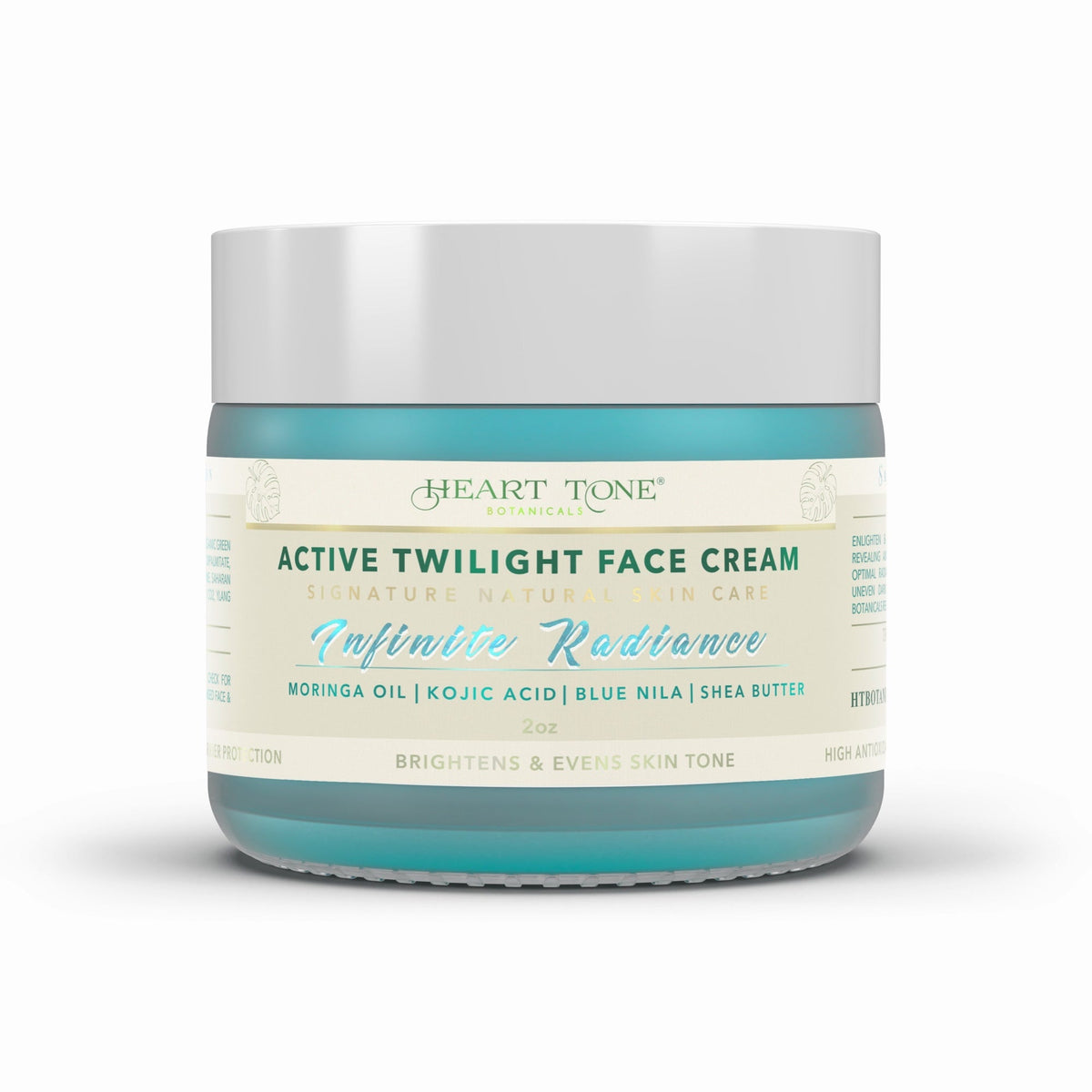
For PM use, the Active Twilight Face Cream is a richer, butter-based formula with moringa oil, shea butter, licorice root extract, and vitamin E — formulated for overnight wear when you want something more substantial on the skin.
The Dynamic Hydrogel Face Serum takes a different approach: it's water-based, built on rose and neroli hydrosols, and includes hyaluronic acid, copper peptides, pea peptides, niacinamide, and gotu kola. It's the treatment step in the HTB routine and is designed to go on before oils or cream.
The Island Mist Toning Facial Elixir Hydrosol starts the routine — a mist of rose and orange blossom hydrosols, witch hazel, fermented rice water, colloidal silver, and snow mushroom extract that tones and preps skin before serums or moisturizers.
If you want to use all four products together in their designed order, the The AM/PM Face System and The Complete Face Ritual bundle them. The Botanical Skin Gel — with aloe vera, calendula, chamomile, and gotu kola — is a separate topical gel that some people use as a prep or spot-use step.
The full Facial Care collection is available if you want to see everything together.
The Honest Short Answer
A "natural retinol alternative" on a skincare label almost always means the formula uses bakuchiol, rosehip oil, or a similar plant ingredient in place of conventional vitamin A derivatives. These ingredients have genuine histories in botanical skincare traditions, they feel different from synthetic retinol on the skin, and they're commonly chosen by formulators who want to avoid the irritation associated with conventional retinol products.
What they are, where they come from, and how they're used in a formula matters more than the label claim. Reading past the marketing language and looking at the actual ingredient list is the most reliable way to understand what you're actually buying.

Leave a comment
This site is protected by hCaptcha and the hCaptcha Privacy Policy and Terms of Service apply.