

Why Most Mouthwashes Are the Wrong Tool for Gum Disease
Gum disease — or periodontitis — is one of the most common chronic conditions affecting American adults, yet the mouthwash aisle offers very little that actually addresses it. Most commercial rinses rely on alcohol, chlorhexidine, and synthetic antiseptics that kill bacteria indiscriminately, stripping the mouth's natural microbiome and leaving gum tissue irritated and drier than before.

If you're dealing with gum disease, you need a mouthwash that does something different: one that calms inflammation, supports the gum tissue lining, and works with your oral microbiome rather than against it.
The goal isn't to sterilize your mouth. It's to create an environment where healthy bacteria thrive and harmful bacteria can't dominate.
Here's what the research says about natural mouthwash for gum disease — and exactly which ingredients to look for.
What Gum Disease Actually Is (and Why It Matters)
Gum disease progresses in two stages. Gingivitis — the early, reversible stage — involves gum inflammation, redness, and bleeding when you brush or floss. Left untreated, it advances to periodontitis, where the infection moves below the gumline, damaging the bone and connective tissue that hold your teeth in place.
The driver in both stages is the same: an imbalanced oral microbiome that allows anaerobic bacteria to form deep pockets of biofilm along the gumline. A mouthwash that genuinely helps gum disease needs to:
- Reduce bacterial biofilm along and below the gumline
- Calm chronic gum inflammation
- Support the integrity of gum tissue
- Not disrupt the healthy bacterial balance already protecting your mouth
Natural Ingredients That Actually Address Gum Disease
Colloidal Silver
Colloidal silver has been used in botanical oral care formulas for over a century. It works by interfering with the enzyme systems that harmful bacteria use to replicate — targeting the pathogens most associated with periodontitis without the broad-spectrum destruction that synthetic antiseptics cause. Unlike chlorhexidine, which kills indiscriminately and stains teeth with long-term use, colloidal silver is a targeted botanical tool.
A natural mouthwash built around colloidal silver as its primary active is formulated specifically for people who want effective pathogen management without pharmaceutical side effects.
Aloe Vera
Multiple studies have examined aloe vera's role in gum health. A 2011 study published in the Journal of Indian Society of Periodontology found aloe vera gel to be as effective as chlorhexidine in reducing plaque and gingivitis scores over a 30-day trial — without the staining or dysbiosis side effects.
Aloe vera's anti-inflammatory and wound-healing properties make it particularly valuable for gum disease: it soothes inflamed tissue while supporting cellular repair. When aloe vera is farm-grown rather than concentrate-processed, its bioactive polysaccharides remain intact — a meaningful difference in potency.
Myrrh
Myrrh resin has appeared in natural oral care traditions for thousands of years, and modern research is beginning to confirm why. Its active compounds — sesquiterpenes and terpenoids — have demonstrated antimicrobial activity against streptococcal bacteria, one of the primary organisms driving gingivitis. Myrrh also has a mild astringent quality that helps tighten gum tissue, making it particularly relevant for inflamed, bleeding gums.
Licorice Root
Licorice root contains licoricidin and licorisoflavan A, compounds that research has shown to inhibit the growth of Streptococcus mutans and Porphyromonas gingivalis — two bacteria directly linked to gum disease and tooth decay. It's been used in Ayurvedic oral care formulas for centuries and is now attracting attention from researchers studying natural alternatives to synthetic antibacterials.

Xylitol
Xylitol doesn't kill bacteria directly — instead, it creates an environment where they can't thrive. Harmful bacteria absorb xylitol in place of sugar but can't metabolize it, which disrupts their energy production and limits acid formation. Over time, regular xylitol exposure has been shown to reduce the populations of S. mutans in the mouth and lower the overall acid load at the gumline.
Peppermint, Clove, and Thyme Essential Oils
The aromatic botanicals in natural mouthwash formulas serve more than a freshness function. Clove bud oil contains eugenol, one of the most studied natural antimicrobials in oral care, with documented activity against multiple periodontal pathogens. Thyme oil contains thymol — the same active compound that gives Listerine its antimicrobial claims, but in its natural plant-derived form. Peppermint essential oil has demonstrated broad-spectrum antimicrobial activity in vitro, particularly against gram-negative bacteria associated with gum disease.
What to Avoid in a Mouthwash if You Have Gum Disease
Knowing what to avoid is just as important as knowing what works.
- Alcohol — Dries out oral tissue, disrupts the oral microbiome, and can irritate already-inflamed gum tissue. Long-term alcohol-based mouthwash use has been associated with increased oral dryness, which reduces saliva's natural protective effects.
- Artificial antiseptics (chlorhexidine) — Highly effective for short-term clinical use, but with well-documented drawbacks for daily use: tooth staining, altered taste sensation, and disruption of beneficial bacteria. Chlorhexidine is a tool for acute infections, not a long-term daily rinse.
- Synthetic fragrances and dyes — No therapeutic value, potential irritants for sensitive gum tissue.
- SLS (sodium lauryl sulfate) — A foaming agent linked to increased occurrence of canker sores and mucosal irritation in sensitive individuals.
How to Use Mouthwash Effectively for Gum Disease
Mouthwash is a complement to brushing and flossing — not a replacement. For people managing gum disease, consistency matters more than intensity:
- Floss first — breaking up the biofilm between teeth before rinsing maximizes the mouthwash's contact with the gumline.
- Rinse for a full 60 seconds — most people underestimate how long this actually is. Set a timer once to calibrate.
- Don't rinse with water immediately after — let the botanicals continue to work on the gum tissue for a few minutes.
- Morning and evening — twice daily is the standard recommendation for managing active gum inflammation.
An alcohol-free formula matters here: if your mouth is already inflamed, a burning rinse isn't something you'll want to sustain twice daily. A botanical rinse that feels gentle is one you'll actually keep using — and consistency is what moves the needle with gum disease.
The Formula We Built for This
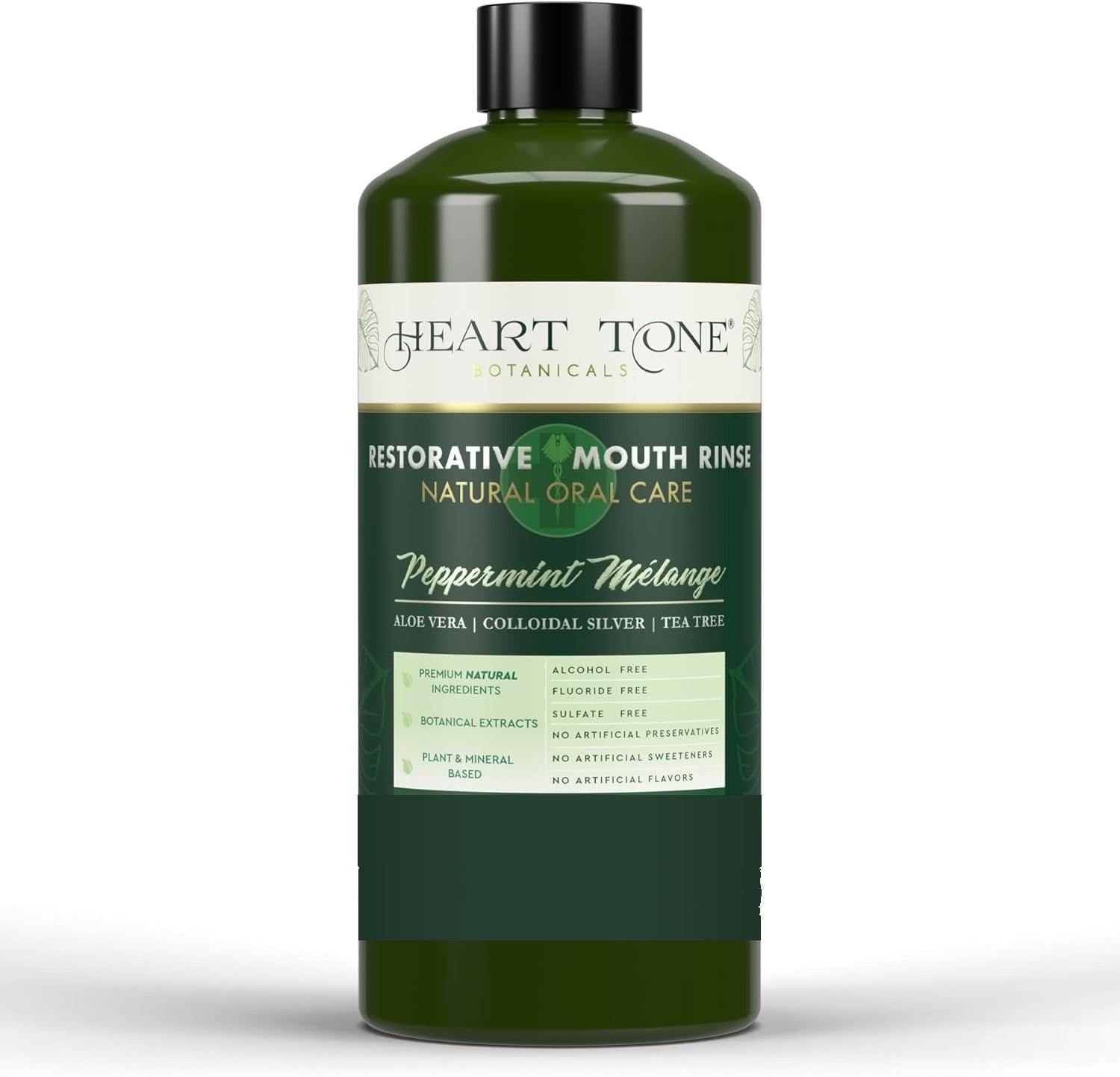
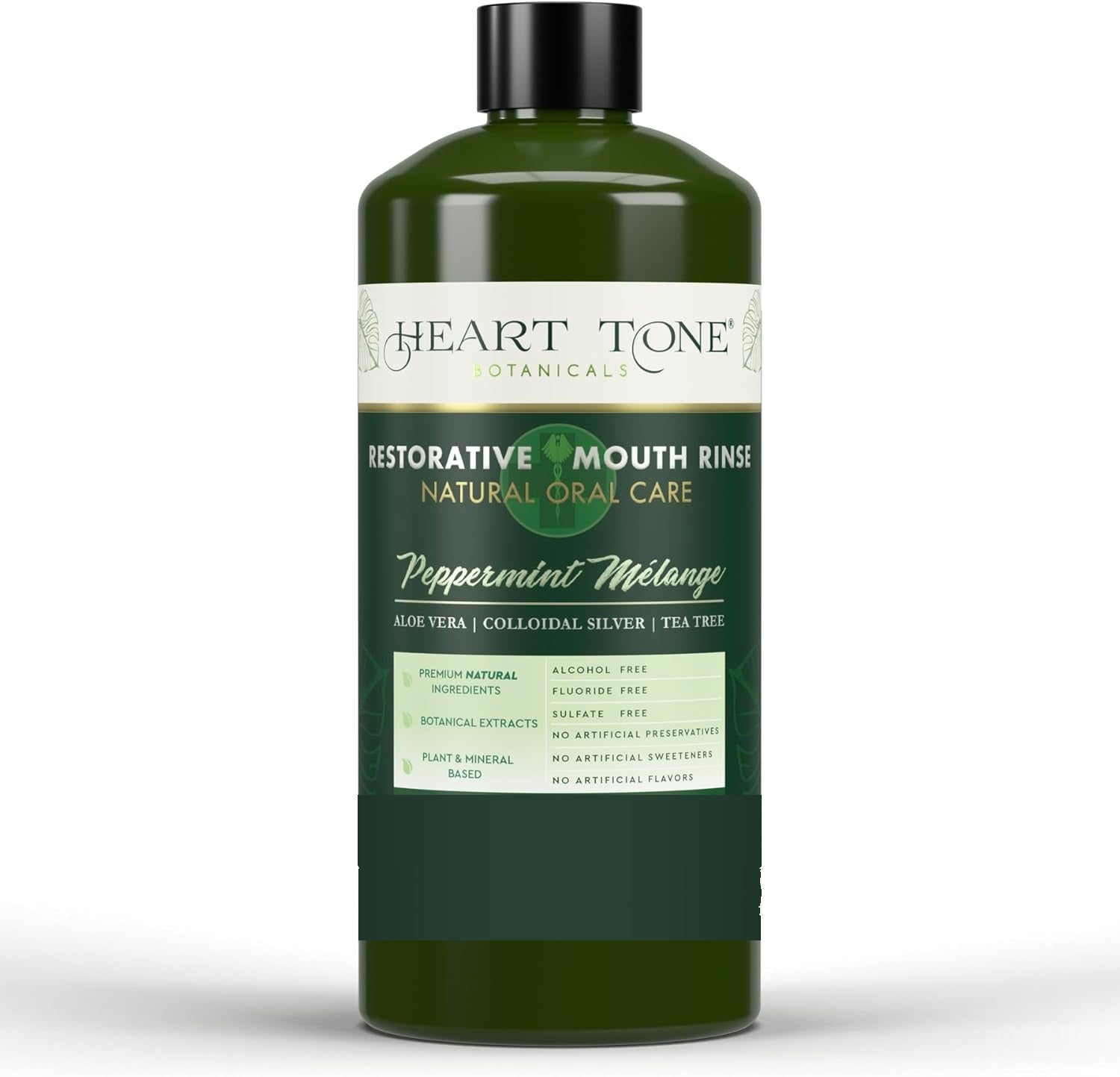
Heart Tone Botanicals' Restorative Mouth Rinse was formulated specifically around the botanical ingredients that support gum health: colloidal silver as the primary active, farm-grown aloe vera, myrrh CO2, licorice root CO2, xylitol, and a layered essential oil blend including clove bud, thyme, oregano, and peppermint — 22 botanical ingredients total, with no alcohol, no artificial antiseptics, and no synthetic fragrances.
It's the formula we'd want to use if we were managing gum disease ourselves: thorough enough to matter, gentle enough to use every single day.
If you're also working on the toothpaste side of your routine, Living Crystal Toothpaste pairs naturally with the Restorative Mouth Rinse — colloidal zinc, hydroxyapatite, xylitol, and zeolite for a complete mineral-rich oral care system.
For more on what goes into a clean formula, read our guide on natural mouthwash ingredients — what each active botanical does and what to look for on the label.
All Heart Tone Botanicals products are handcrafted in small batches from farm-grown and carefully sourced botanical ingredients in Vero Beach, Florida. No synthetic additives, no compromises.

Leave a comment
This site is protected by hCaptcha and the hCaptcha Privacy Policy and Terms of Service apply.