












The Short Answer: It Depends on What Your Skin Needs Right Now

"Natural moisturizer for body" is a broad search — and that's the problem. Lotion, body butter, and body oil all get lumped into the same category, but they're built to do different jobs. A thin lotion that feels great on your arms in July can feel like nothing at all on cracked heels in January. A rich body butter that's perfect for rough elbows can feel heavy and greasy on the rest of your skin. The right natural moisturizer isn't the one with the prettiest label — it's the one whose texture actually matches how dry your skin is and where.

Here's how to tell the formulas apart, what a natural body butter should actually contain, and how to figure out which one belongs in your routine.
Lotion, Body Butter, and Body Oil Aren't Interchangeable
The difference comes down to how much water is in the formula and how the remaining ingredients sit on the skin:
- Body lotion is mostly water with a smaller amount of oils and butters emulsified in. It spreads thin, absorbs fast, and feels light — which makes it a good everyday choice for skin that isn't especially dry.
- Body butter is the opposite ratio: mostly plant butters and oils, little to no water. It's thicker, sits on the skin longer, and is built for the driest, roughest spots — elbows, knees, heels, and skin that feels tight or flaky after a shower.
- Body oil is pure oil, no water at all. It works best on damp skin right after a shower, when it can seal in the water that's already on your skin rather than trying to add moisture on its own.
None of these is universally "better." A lotion on already-dry winter skin can feel like it disappears in minutes. A heavy body butter on humid summer skin can feel like too much. Matching the format to the season and the spot is most of the battle.
What a Natural Body Butter Formula Should Actually Contain
"Natural" on a label doesn't tell you much on its own. What matters is which butters and oils are actually doing the work, and in what order they're listed.
Shea Nut Butter
Shea butter is one of the most traditional moisturizing ingredients in botanical body care, used for generations across West African skincare traditions before it became a staple in modern natural formulas. It has a thick, rich texture that sits on the skin and softens rough, dry patches on contact — which is why it's usually the base of any serious body butter rather than a minor add-in.
Kokum Butter
Kokum butter comes from the seeds of the kokum tree and is prized in natural formulations for being firm at room temperature but melting smoothly into the skin on contact. It has a lighter, less greasy finish than shea alone, which is part of why pairing the two butters together tends to feel more balanced than either one on its own.
Meadowfoam Seed Oil
Meadowfoam seed oil is valued in natural formulations for its light texture and its unusual shelf stability compared to many plant oils. It has a silky, non-greasy feel that helps a rich butter formula spread more easily instead of sitting on top of the skin.
Organic Arrowroot Powder
Arrowroot powder is a plant starch traditionally used in natural formulas to soften the after-feel of rich butters, cutting down on any residual tackiness so a body butter can feel silky rather than sticky as it sets in.
Together, that's the difference between a body butter that just sounds natural and one that's actually formulated to work: real plant butters as the base, a lighter oil to balance the texture, and nothing designed to leave a heavy film behind.
When a Lighter Formula Makes More Sense Than a Butter
Not every part of the body — or every season — calls for a thick butter. If your skin isn't flaky or rough, just a little dry or tight-feeling, a lighter gel-based formula can be the more comfortable everyday option. The Botanical Skin Gel from Heart Tone Botanicals is built around aloe vera and a blend of farm-grown botanical extracts in a lightweight gel base — a different texture entirely from a butter, and a good fit for anyone who wants a natural moisturizing step that absorbs quickly and doesn't feel heavy.
What Makes a "Natural" Moisturizer Different from a Drugstore Lotion
A lot of mass-market lotions lead with water, a synthetic emulsifier, and mineral oil, with plant ingredients appearing far down the ingredient list in trace amounts. A natural body moisturizer built the other way around — real butters and oils as the majority of the formula — tends to feel and perform differently:
- Fewer, more concentrated ingredients — a short list of real plant butters and oils rather than a long list of fillers and synthetic thickeners
- No mineral oil or petrolatum — ingredients derived from petroleum rather than plants
- No added synthetic fragrance — scent coming from essential oils and botanical extracts instead
- A texture that matches its ingredient list — a butter that behaves like a butter, not a thin lotion trying to pass as one
How to Match the Formula to Your Skin
If you're not sure where to start, the spot and the season are the two best guides. Rough elbows, knees, and heels usually call for a body butter — they're the areas that dry out fastest and benefit most from a thicker, longer-sitting formula. Everyday skin on arms and legs, especially in warmer months, often does better with something lighter. And if you're moisturizing right after a shower while skin is still damp, an oil-based finish can help make the most of the water that's already there.
The Bottom Line
There's no single "best" natural moisturizer for body — there's a best format for what your skin is doing right now. For rough, dry patches that need real richness, a body butter built on real plant butters like shea and kokum is the more serious formula. For everyday use or lighter dryness, a gel-based moisturizer can be the more comfortable choice.
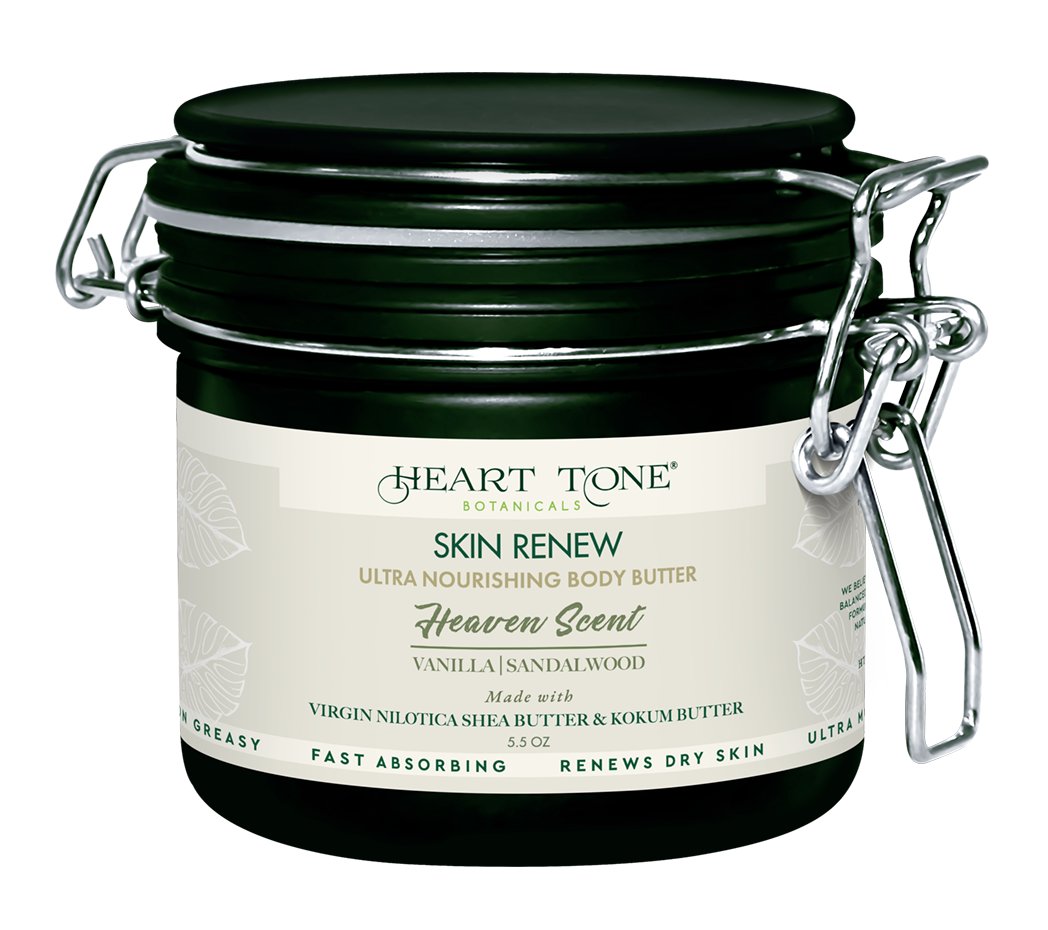
The Botanical Renew Body Butter from Heart Tone Botanicals is formulated with virgin Nilotica shea nut butter, kokum butter, meadowfoam seed oil, and organic arrowroot powder — built for the driest, roughest spots without a heavy, greasy finish. For something lighter, the Botanical Skin Gel offers an aloe-based alternative for everyday use. You can also browse the full natural body care collection to build out a complete routine.

Leave a comment
This site is protected by hCaptcha and the hCaptcha Privacy Policy and Terms of Service apply.