












Why Face Oils Have Become a Skincare Staple

Natural face oils aren't new. Botanical oils have been used in skin care for thousands of years — from ancient Egyptian moringa and castor oil to the jojoba wax extracted by Indigenous communities in the desert Southwest. What feels new is the conversation around them.
Today, more people are reaching for oils as a core part of their daily skincare routine — not just as an occasional treatment but as a primary moisturizing and sealing step. And as clean beauty continues to gain ground, botanical face oils have emerged as one of the most searched categories in natural skincare.

Face Oil vs. Moisturizer: What's the Difference?
Standard moisturizers are typically water-based emulsions — they combine water with oils using emulsifiers, plus humectants like glycerin or hyaluronic acid to draw water into the skin. A face oil is oil-based. It works primarily at the surface to create a nourishing, occlusive feel that leaves skin looking soft, radiant, and visibly smooth.
Some people use a botanical face oil in place of a moisturizer. Others layer it on top of a water-based serum. The right approach depends on your skin type and the oils in the formula — lighter oils tend to absorb quickly, while richer blends are especially suited to an evening routine.
One distinction worth noting: a well-formulated botanical face oil is not greasy. A greasy feel typically indicates low-quality or poorly matched oils. Premium botanical blends leave skin with a luminous, healthy look rather than a heavy or congested feel.
Who Benefits Most from a Natural Face Oil?
- Dry and combination skin — botanical face oils can leave dry skin looking softer, more radiant, and visibly smoother with regular use.
- Mature skin — the rich, nourishing feel of botanical oils is a long-standing favorite for those looking to support a visibly plump, dewy complexion.
- Sensitive skin — face oils free of alcohol, synthetic fragrance, and harsh preservatives are often a comfortable choice for reactive skin that doesn't tolerate water-based formulas well.
- Anyone transitioning away from synthetic skincare — botanical oils are among the simplest, most ingredient-transparent options in natural skincare.
Botanical Oils With a Long History in Skincare
Jojoba Oil
Jojoba (technically a liquid wax rather than a true oil) has been used in traditional skincare formulations for decades. Valued for its lightweight, skin-compatible texture, it absorbs readily without leaving a heavy residue. It has a long history of use in botanical skincare and remains one of the most widely trusted carrier oils in natural formulations.
Moringa Oil
Moringa oil has been a staple of traditional botanical skincare in South Asia and East Africa for centuries. Known for its silky, elegant feel, it's appreciated in premium face oil formulations for the rich, comfortable sensation it leaves on skin. The Complete Daily Face Moisturizer from Heart Tone Botanicals includes organic moringa oil as one of its foundational botanical ingredients.
Rosehip Oil
Extracted from the seeds of wild rose plants, rosehip oil has a long history in botanical skincare — particularly in South American and European herbalist traditions. Its warm, golden color contributes to a visibly luminous, healthy look when applied to skin. It's one of the most recognized oils in natural facial care, valued for its lightweight texture and rich botanical character.
Bakuchiol
Bakuchiol comes from the seeds of the Psoralea corylifolia plant, a botanical with centuries of use in Ayurvedic tradition. Over the past decade it has become one of the most popular ingredients in natural skincare — appreciated for its elegant, skin-compatible texture and its compatibility with a wide range of skin types. Unlike many synthetic skincare actives, bakuchiol has a genuinely long botanical lineage behind it.
Prickly Pear Seed Oil
Extracted from the tiny seeds of the Opuntia cactus, prickly pear seed oil is one of the most labor-intensive botanical oils in existence — it takes the seeds of thousands of cactus fruits to produce even a small amount. It has a long history of use in Moroccan and North African botanical traditions, and it leaves skin feeling luxuriously nourished with a finish that looks visibly radiant.
Sea Buckthorn Oil
This vivid orange oil has been a staple of traditional Tibetan, Mongolian, and Russian botanical traditions for centuries. Sea buckthorn is one of the most visually distinctive face oils — its deep golden-orange pigment gives skin an immediately warm, radiant appearance when used at the right concentration in a balanced blend.
Blue Tansy Essential Oil
Blue tansy (Tanacetum annuum) is a Moroccan botanical that has been used in traditional North African skincare for generations. Its distinctive deep blue color comes from chamazulene, a naturally occurring compound formed during steam distillation. In small concentrations it contributes a delicate, floral botanical character to premium face oil blends.

What to Look for in a Natural Face Oil
The difference between a genuinely botanical face oil and an ordinary one comes down to what's actually inside:
- Cold-pressed oils — cold-pressing retains more of the natural botanical character of the oil than refined or heat-extracted alternatives.
- A multi-oil blend — a single oil delivers a single experience. A blend allows lighter oils (quick absorption), mid-weight oils (comfortable feel), and specialty oils (richer botanical profile) to work together.
- No silicones — silicones like dimethicone create a smooth, velvety feel but don't provide the botanical experience of genuine plant-derived oils. Check for "-cone" or "-siloxane" suffixes on the label.
- No synthetic fragrance — if the label lists "fragrance" or "parfum" without further specification, it typically means a synthetic fragrance blend rather than botanical essential oils.
- Organic sourcing where possible — cold-pressed organic oils avoid residual synthetic agricultural inputs that can end up in the finished product.
How to Use a Botanical Face Oil in Your Routine
Face oil typically works best as a final sealing step after water-based products. The general principle: apply from lightest texture to richest.
- Step 1 — Tone and prep: Mist with a hydrosol or toning spray to prime skin and boost hydration uptake. The Island Mist Toning Facial Elixir Hydrosol includes rose hydrosol, orange blossom hydrosol, fermented rice water, and colloidal silver.
- Step 2 — Serum: Apply a water-based serum while skin is still slightly damp. The Dynamic Hydrogel Face Serum contains hyaluronic acid, niacinamide, copper peptide, and pea peptide in a rose hydrosol base.
- Step 3 — Oil/moisturizer: Press (don't rub) a small amount of botanical oil into skin, working from the center outward. Allow to absorb before applying SPF or makeup.
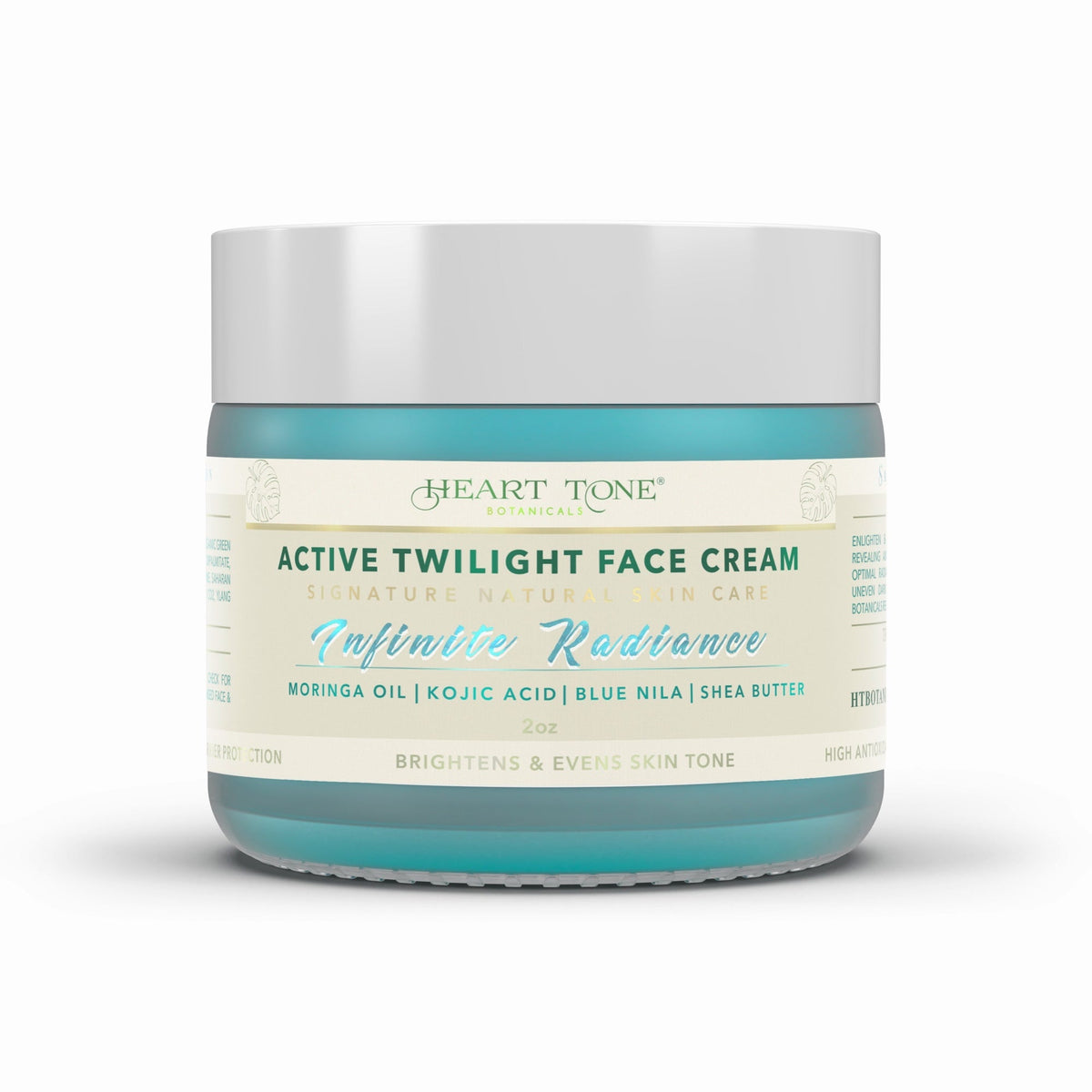
- Evening option: Layer the Active Twilight Face Cream — with organic moringa oil and organic shea butter — on top for an extra-rich overnight feel.
A note on morning versus evening use: lighter botanical oil blends work well in the morning under sunscreen. Richer, more occlusive blends tend to feel especially comfortable used at night, when skin is in a natural resting phase.
The HTB Approach to Botanical Face Oil
The Complete Daily Face Moisturizer from Heart Tone Botanicals is a comprehensive botanical oil blend — 22 ultra-premium plant oils including organic jojoba, organic moringa, organic rosehip, organic sea buckthorn, prickly pear seed, bakuchiol, pomegranate seed, noni seed, black seed, blueberry, and blue tansy. No silicones, no synthetic fillers, no synthetic fragrance — just a carefully curated lineup of botanical oils that leaves skin looking radiant and feeling deeply nourished.
For evening, the Active Twilight Face Cream brings organic moringa oil and organic shea butter together in an ultra-rich overnight format designed to seal in moisture and nourish skin while you sleep.
Ready to build a complete botanical face routine? Explore the Complete Face Ritual or the full AM/PM Face System — or browse everything in the Facial Care collection.

Leave a comment
This site is protected by hCaptcha and the hCaptcha Privacy Policy and Terms of Service apply.